
Best Books for Shy Kids (Ages 5–7)
You may have noticed it in moments other people miss.
Your child standing just outside the group, watching. Taking a little longer to answer a question.
Holding back at school, but talking your ear off at home once the day finally settles.
Between ages five and seven, the world gets louder. Classrooms get busier. Social expectations become more visible.
There’s more emphasis on participation, performance, and speaking up—often before a child feels ready.
If your child is shy or slow to warm, this stage can feel especially tender.
Not because something is wrong—but because the environment isn’t always built for quiet processing.
Many early elementary spaces reward speed, confidence, and verbal fluency, even though those traits develop differently for every child.
Shyness isn’t a flaw. In fact, it’s often a sign of thoughtfulness, sensitivity, and awareness.
Many shy kids are deeply observant.
They read rooms carefully. They notice tone, facial expressions, and emotional shifts long before others do.
Their confidence grows inwardly first, taking shape privately before it ever shows up out loud.
Books can be a gentle ally here. Stories give shy kids distance and safety—someone else’s experience to step into without pressure.
They offer reassurance without instruction.
And over time, they quietly reinforce a powerful message: you don’t have to change who you are to belong. You’re allowed to arrive at connection in your own way.
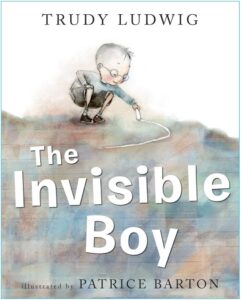
The Invisible Boy — Trudy Ludwig
Core Themes:
- Feeling unseen
- Quiet kindness
- Belonging through empathy
Story Snapshot:
Brian often fades into the background at school while louder classmates take center stage. When a small act of kindness enters his day, something subtle but meaningful begins to shift.
Why this book works well for shy kids:
You’re not asked to cheer Brian on or push him to change. Instead, the story slows down and notices him.
Shy children often feel deeply seen here, learning that being quiet doesn’t make them invisible—and that connection can arrive gently, without forcing themselves forward.

Quiet Violet — Gabrielle Tozer
Core Themes:
- Introversion
- Self-expression
- Gentle confidence
Story Snapshot:
Violet is thoughtful and quiet in a world that feels noisy and fast. Rather than changing herself, she finds subtle ways to share who she is.
Why this book works well for shy kids:
This story reassures you that confidence doesn’t require volume. Violet’s strength grows through self-knowledge, not transformation.
Shy kids see that they can express themselves in ways that feel authentic, calm, and true.
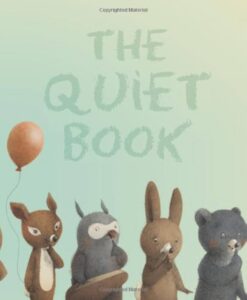
A Quiet Book — Deborah Underwood
Core Themes:
- Different kinds of quiet
- Mindfulness
- Emotional awareness
Story Snapshot:
This book explores many types of quiet moments—peaceful, thoughtful, nervous, and reflective—through simple, relatable examples.
Why this book works well for shy kids:
You’re not told how quiet should feel. You’re shown that it comes in many forms.
Shy kids often recognize themselves here, realizing their inner stillness isn’t strange—it’s shared and meaningful.
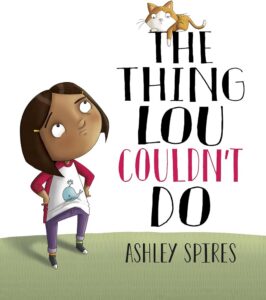
The Thing Lou Couldn’t Do — Ashley Spires
Core Themes:
- Hesitation
- Trying in your own time
- Self-trust
Story Snapshot:
Lou watches her friends try something new while she waits, unsure. When she does act, it’s in her own way—and her own time.
Why this book works well for shy kids:
This story treats hesitation with respect. You’re reminded that waiting isn’t failure—it’s listening to yourself.
Shy kids feel relieved seeing that courage doesn’t have a deadline.
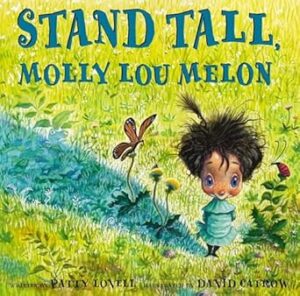
Stand Tall, Molly Lou Melon — Patty Lovell
Core Themes:
- Self-acceptance
- Inner strength
- Confidence without bravado
Story Snapshot:
Molly Lou Melon may be small, but she carries herself with quiet assurance shaped by kindness and self-belief.
Why this book works well for shy kids:
You see that confidence doesn’t need to announce itself. Shy kids learn that standing tall can happen internally first—and that self-respect is powerful.

The Rabbit Listened — Cori Doerrfeld
Core Themes:
- Emotional safety
- Listening
- Presence over fixing
Story Snapshot:
When something goes wrong, many characters rush in with advice—until the rabbit simply listens.
Why this book works well for shy kids:
This book honors quiet presence. Shy children often feel deeply understood here, learning that listening is not passive—it’s deeply supportive and strong.
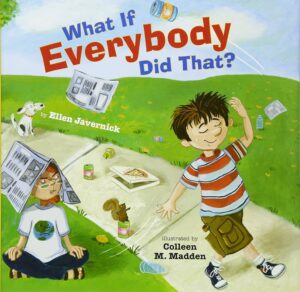
What If Everybody Did That? — Ellen Javernick
Core Themes:
- Thoughtful decision-making
- Awareness of impact
- Responsibility
Story Snapshot:
A curious child explores how small actions affect the larger world by imagining what would happen if everyone did the same thing.
Why this book works well for shy kids:
You’re affirming careful thinking. Shy kids see that pausing, reflecting, and considering others is a strength—not something to rush past.

Your Fantastic Elastic Brain — JoAnn Deak
Core Themes:
- Growth mindset
- Learning through effort
- Patience with yourself
Story Snapshot:
This book explains how brains grow through practice, mistakes, and time.
Why this book works well for shy kids:
You’re reminded that growth doesn’t need speed. Shy kids feel encouraged knowing that confidence builds quietly, through repeated safe experiences.
Confidence Grows Quietly
You don’t need to push your child into the spotlight.
Confidence doesn’t always look like raised hands or loud voices. Sometimes it looks like careful listening. Thoughtful pauses. Courage practiced privately, long before it’s ever visible to anyone else.
When you reread these books together, you’re offering something powerful: repetition without pressure. A safe rehearsal space where social moments can be explored slowly, predictably, and without expectation.
Over time, those stories become familiar companions—proof that quiet kids are allowed to take up space exactly as they are.
If your child wants to explore their inner world more actively, you might look into Scrively. It’s a place where shy kids can create stories centered on characters that feel familiar, helping them practice voice, choice, and confidence through imagination first.
Because quiet kids don’t need fixing. They need patience, trust, and stories that honor the way they move through the world.