

When the Plan Changes: Books to Help Kids Build Flexibility With Substitute
You know the exact feeling.
The morning starts out perfectly fine. You have a solid plan in place. Then, life unexpectedly happens.
Suddenly, your child’s daily routine breaks. Consequently, a massive meltdown quickly begins to brew.
You can clearly see the sudden panic in their wide eyes. The normal schedule changed without warning.
Perhaps their favorite teacher is out sick today. A brand-new substitute teacher is standing there instead.
For young kids, these unexpected changes feel incredibly huge. Routine gives them a deep sense of safety.
Therefore, a broken routine feels like real danger to them. Furthermore, flexibility is not a natural skill for most young minds.
It takes a lot of time and practice to build this mental muscle. We have to actively teach them how to bend.
Most importantly, we want them to bend so they do not break. Children need tools to handle the unexpected.
Stories are the absolute perfect way to do this safely. Books let kids practice flexibility from a cozy spot.
They can watch characters face sudden changes. Consequently, they learn how to pivot without falling apart.
Here are some of our favorite stories to help your child embrace the unexpected.
1. Miss Nelson is Missing! by Harry Allard
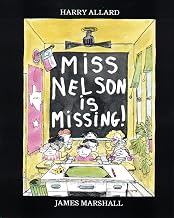
This classic story is pure, nostalgic fun for everyone. It shows exactly what happens when a sweet teacher is suddenly gone.
The classroom dynamic shifts in a major way. The students must figure out how to adapt to a shocking change.
What kids notice: They immediately notice the silly, dramatic disguises. Kids love the wild mystery of the missing teacher.
Story snapshot: A class constantly misbehaves for their gentle teacher. Suddenly, a very strict substitute arrives to take over.
Why this book helps: It introduces the very real concept of substitute teachers. Children often fear the unknown when their teacher is absent.
However, this story makes that exact scenario feel funny and light. Furthermore, it shows that temporary changes are entirely survivable.
Kids learn to deeply appreciate their normal, everyday routine. Most importantly, it strips the fear away from sudden classroom changes.
You can use this book to talk about school surprises. Therefore, the next time a substitute appears, your child will feel ready.
Consequently, the morning drop-off becomes much smoother for everyone. Flexibility grows when fear is replaced by familiar humor.
2. My Day is Ruined! by Bryan Smith
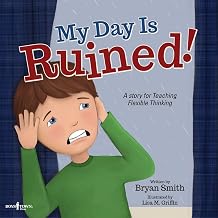
This clever book directly tackles the rigidity of childhood plans. It is incredibly practical and easy to understand.
The author uses simple language to explain a complex executive function skill. It speaks right to the frustrated child’s heart.
What kids notice: They instantly recognize the main character’s total frustration. The big, explosive reactions feel very familiar to them.
Story snapshot: Braden gets extremely upset whenever his plans change. Thankfully, a caring adult teaches him how to safely pivot.
Why this book helps: This book explicitly teaches the concept of flexible thinking. It does not just gloss over the hard feelings.
For example, it names the exact emotion of feeling completely ruined. Furthermore, it gives children a specific coping strategy to use.
Consequently, they feel empowered instead of completely trapped by the change. Most importantly, it normalizes the struggle of shifting gears.
You can use the catchphrases from this story as gentle reminders later. Therefore, it beautifully bridges the gap between reading and real life.
It provides a shared language for you and your child. This makes navigating broken routines much easier.
3. Pete the Cat: I Love My White Shoes by Eric Litwin

This bright book is a masterclass in staying calm. It features a very relaxed, happy cat who loves to walk.
The rhythmic text is highly engaging and fun to read aloud. Kids naturally want to sing along with the words.
What kids notice: They notice the messy puddles and the changing colors. The catchy, repetitive song is always a huge hit.
Story snapshot: Pete keeps stepping in large piles of messy things. However, he never cries and just keeps on walking.
Why this book helps: It perfectly models the ultimate flexible attitude. Pete faces constant, unexpected messes throughout his journey.
However, he absolutely refuses to let them ruin his good mood. Furthermore, he simply adapts to his new, colorful reality.
Consequently, children see that things do not have to be perfect. Most importantly, it teaches resilience in the face of accidents.
You can easily reference Pete when milk spills at breakfast. Therefore, it turns a potential meltdown into a silly, manageable moment.
Kids learn that they can keep their cool, just like Pete. This is a foundational step in building true adaptability.
4. A Little Spot of Flexible Thinking by Diane Alber
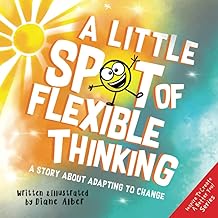
This helpful book turns an abstract concept into a visual tool. It uses cute, colorful spots to represent different mindsets.
The illustrations are clean, bright, and very accessible. It breaks down big psychological ideas for very little readers.
What kids notice: They love looking at the expressive little color spots. The visual difference between a stiff mind and a flexible mind is clear.
Story snapshot: A friendly spot explains how to stretch your brain. It gives specific tips for handling sudden changes in the schedule.
Why this book helps: It gives kids a tangible way to picture their thoughts. Sometimes, simply telling a child to be flexible is too confusing.
For instance, showing them what a flexible brain looks like changes everything. Furthermore, it validates that being flexible is actually hard work.
Consequently, children feel seen and deeply understood by the author. Most importantly, it provides actionable steps for calming down.
You can ask your child if their brain feels stiff or stretchy today. Therefore, you invite them to self-correct before a tantrum starts.
This active awareness is crucial for emotional regulation. It puts the power to pivot right back into their hands.
5. The Most Magnificent Thing by Ashley Spires

This lovely story is about creativity and sudden frustration. It beautifully captures the agony of a plan falling completely apart.
The main character is highly relatable and incredibly determined. Her journey is both funny and deeply moving.
What kids notice: They notice the messy, weird inventions she builds. They also clearly see her growing, explosive anger.
Story snapshot: A little girl wants to build something totally perfect. Unfortunately, she fails repeatedly and eventually decides to quit.
Why this book helps: It shows that flexibility is required for success. When our plans fail, our first instinct is to completely give up.
However, this story teaches the vital importance of stepping away. Furthermore, it highlights the benefit of taking a short, calming walk.
Consequently, a fresh perspective allows the girl to finally succeed. Most importantly, it proves that mistakes are just part of the process.
You can use this book when homework gets too frustrating. Therefore, it reminds kids to pivot their approach instead of quitting.
True flexibility means being willing to try a different way. This story perfectly illustrates that beautiful, messy journey.
6. Beautiful Oops! by Barney Saltzberg

This interactive book is a visual celebration of simple mistakes. It is packed with fun flaps, tears, and clever smudges.
It completely flips the idea of perfectionism upside down. The message is short, sweet, and incredibly profound.
What kids notice: They eagerly interact with the torn pages and folded flaps. The magical transformations of simple spills are mesmerizing.
Story snapshot: Every single page shows a mistake turning into art. A torn paper easily becomes the smiling mouth of an alligator.
Why this book helps: It forces a massive shift in a child’s perspective. Unexpected changes often feel like giant, ruinous mistakes to kids.
For example, a spilled drop of juice can easily ruin a whole morning. Furthermore, this book teaches kids to look for the hidden opportunity.
Consequently, they learn to pivot their view of an “accident.” Most importantly, it actively encourages creative, flexible problem solving.
You can enthusiastically yell “Beautiful Oops!” when things go wrong at home. Therefore, you instantly diffuse the mounting tension in the room.
Kids learn that broken plans can become something wonderfully new. This drastically reduces the fear of the unknown.
7. What Should Danny Do? by Adir Levy

This unique book puts the child completely in charge of the story. It uses a brilliant “choose your own adventure” style format.
The scenarios are based on real, everyday childhood struggles. It is highly engaging and demands active participation.
What kids notice: They love having the ultimate power to choose the path. They clearly see how one bad choice leads to another problem.
Story snapshot: Danny faces various minor setbacks throughout his day. The reader gets to decide if he reacts poorly or adapts flexibly.
Why this book helps: It actively demonstrates the sheer power of choice. When a routine breaks, children often feel totally powerless.
However, this book proves they control their own reactions. Furthermore, it shows the clear consequences of being totally inflexible.
Consequently, kids learn that adapting leads to a much better day. Most importantly, it turns the concept of flexibility into a fun game.
You can remind your child of Danny’s special “power to choose.” Therefore, you encourage them to pivot their attitude in real time.
It builds a strong sense of personal agency and control. This makes unexpected changes feel much less scary.
8. The Girl Who Never Made Mistakes by Mark Pett
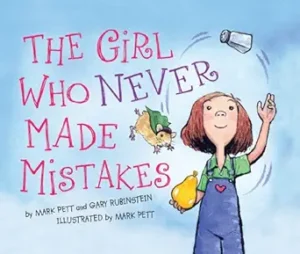
This endearing story tackles the heavy burden of constant perfectionism. It follows a girl who is terrified of ever messing up.
The illustrations are charming and capture her intense anxiety perfectly. The eventual resolution is deeply satisfying and joyful.
What kids notice: They notice how carefully and nervously the girl acts. The epic, messy mistake at the end is hilarious to them.
Story snapshot: Beatrice is famous for being absolutely perfect every day. One afternoon, she makes a massive mistake in front of everyone.
Why this book helps: It dismantles the intense need for complete predictability. Many kids cling to routines because they greatly fear doing something wrong.
For instance, an unexpected substitute teacher ruins their perfectly planned day. Furthermore, this story shows the absolute joy of finally letting go.
Consequently, children see that surviving a broken plan is actually liberating. Most importantly, Beatrice laughs at her own messy, public failure.
You can use this book to ease the pressure on an anxious child. Therefore, it reminds them that life is supposed to be slightly messy.
Flexibility comes when we stop demanding perfection from our schedules. This book is a wonderful, gentle reminder of that truth.
Put Your Child in the Heart of the Story
Sometimes, the very best way to teach flexibility is through a personal adventure. Children learn best when they can easily see themselves in the narrative.
With Scrively, you can effortlessly create 100% custom kids’ books in minutes. You can easily craft a story where your child is the brave hero.
Write a book about them meeting a friendly substitute teacher. Or, create a funny tale about their daily routine getting completely jumbled.
When they practice these flexible skills on the page, they carry them into real life. Give your child the magical gift of their own story today.
A Final Encouraging Word
Teaching a child to be flexible is a slow, gradual process. There will still be difficult mornings and sudden, loud meltdowns.
However, every single story you read plants a vital seed of adaptability. You are gently giving them the tools to bend with the wind.
Celebrate the tiny moments when they handle a change with grace. Soon, the unexpected will not feel quite so scary anymore.