

When Your Child’s Thoughts Race: Books to Calm the Worry Spiral
You have probably seen it happen right before bedtime. Your child suddenly asks a million questions about tomorrow.
Consequently, you realize their little mind is spinning incredibly fast. They are caught in a loop of “what ifs” and worst-case scenarios.
This is the classic worry spiral. It is a tricky and uncomfortable feeling that children often struggle to articulate.
Most importantly, it leaves parents feeling helpless. You want nothing more than to reach into their minds and untangle those anxious thoughts.
However, simply telling a child to stop worrying rarely works. They need something tangible to help them process these complex emotions.
Furthermore, gentle stories offer visual and narrative tools for managing anxiety and overthinking in a fast-paced world. Books give them a safe distance to explore their own fears.
Through reading, children can watch characters navigate the exact same nervous feelings. Therefore, they begin to understand that they are never alone in their struggles.
We have curated a beautiful list of books to help your family find calm. These stories gently guide children toward true inner peace.
Wemberly Worried by Kevin Henkes
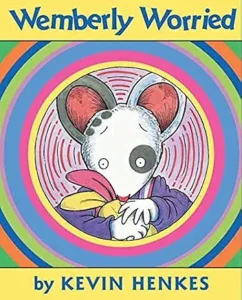
This classic story perfectly captures the heavy weight of childhood anxiety. It validates those big feelings with incredible warmth and gentle humor.
Furthermore, the delicate illustrations make the heavy topic feel approachable. It is a wonderful starting point for highly sensitive kids.
What kids notice: Children immediately relate to Wemberly’s constant, exhausting list of daily concerns.
Story snapshot: Wemberly worries about absolutely everything, from shrinking in the bathtub to the scary first day of school. However, she eventually meets a fellow worrier and realizes that playing is much more fun than panicking.
Why this book helps: First, this book normalizes the feeling of anxiety so your child does not feel strange. Consequently, it gently shows how facing a fear can make it shrink down to size. It proves that friendship and shared experiences are powerful tools against inner turmoil. Above all, kids learn that inner peace is possible even when the world feels incredibly big and overwhelming.
The Whatifs by Emily Kilgore
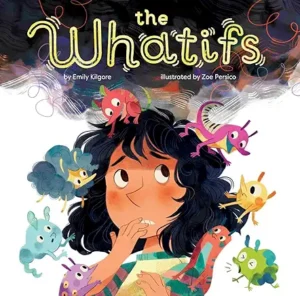
This clever book turns invisible worries into tangible little creatures. It gives your child a visual vocabulary for their racing thoughts.
Similarly, the artwork beautifully shifts from dark, heavy colors to bright, hopeful tones. This helps children literally see the emotional journey.
What kids notice: Kids love spotting the sneaky, gremlin-like “Whatif” creatures clinging to the main character.
Story snapshot: Cora is constantly followed by heavy, gloomy Whatifs that make her doubt herself before a big piano recital. Fortunately, she learns how to change her bad Whatifs into good, hopeful ones.
Why this book helps: This story perfectly addresses the specific habit of negative overthinking. Furthermore, it empowers children to flip their perspective when a worry attacks. It teaches them that they cannot banish thoughts, but they can definitely change them. As a result, your child learns how to cultivate inner peace by asking positive questions instead of scary ones.
Ruby Finds a Worry by Tom Percival
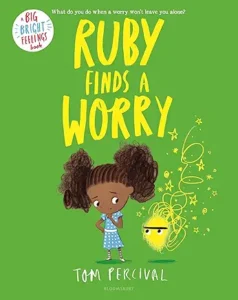
This beautifully illustrated book is a masterclass in emotional intelligence. It treats a worry like a physical object that grows when ignored.
Most importantly, it provides a clear, actionable step for shrinking that burden. It is an absolute must-have for any family library.
What kids notice: Children are captivated by how the yellow Worry physically grows larger and darker as Ruby ignores it.
Story snapshot: Ruby is a perfectly happy girl until she discovers a small Worry that soon grows massive and blocks out all her joy. However, she soon meets a boy with a Worry of his own and discovers that talking about it makes it shrink away.
Why this book helps: This book visually demonstrates how hiding our fears only makes them worse. Consequently, it gives parents an easy way to ask, “How big is your worry today?” It proves that communication is the ultimate remedy for an anxious mind. Ultimately, it guides children toward inner peace by encouraging open, honest conversations with trusted friends.
A Little Spot of Anxiety by Diane Alber

This incredibly practical guide breaks down big emotions into simple, manageable concepts. It feels less like a story and more like a gentle toolkit.
Furthermore, it empowers kids with physical actions they can take when panic sets in. It is fantastic for neurodivergent children and visual learners.
What kids notice: Readers easily connect with the simple, expressive gray anxiety spot and the bright, calming green peaceful spot.
Story snapshot: A friendly green Peaceful Spot teaches a nervous gray Anxiety Spot how to calm down using a specific breathing trick. They practice looking at their hand and tracing their fingers to slow down their racing thoughts.
Why this book helps: This book moves beyond theory and offers an immediate, physical coping skill. Therefore, your child can use this exact finger-tracing technique the next time they feel overwhelmed. It shows them that their body and mind are connected. Most importantly, it hands them the reins to their own inner peace, building deep emotional resilience.
What to Do When You Worry Too Much by Dawn Huebner
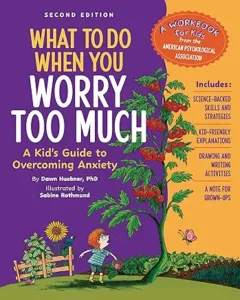
This is a highly interactive workbook disguised as an engaging story. It is perfect for older children who need concrete strategies.
Similarly, the metaphor of growing a worry like a tomato plant is brilliant. It makes psychological concepts totally accessible for kids.
What kids notice: Kids are fascinated by the idea that they might be accidentally “watering” their worries to make them grow.
Story snapshot: This interactive guide explains how worries are like weeds that take over a garden if you feed them. It then walks children through practical exercises to lock their worries in a mental box and reset their minds.
Why this book helps: It shifts the child from a passive victim of anxiety into an active problem solver. Furthermore, it teaches the concept of designated “worry time” to contain anxious thoughts. This is a proven cognitive behavioral therapy technique made simple for young minds. Consequently, it lays a lifelong foundation for managing stress and protecting their inner peace.
The Don’t Worry Book by Todd Parr
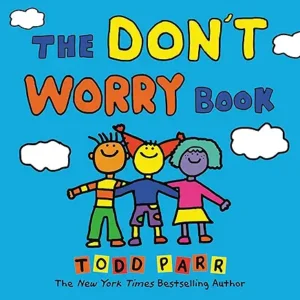
Todd Parr brings his signature bold, colorful, and silly style to a heavy topic. This book is perfect for toddlers and preschoolers.
However, do not let the simple artwork fool you. It delivers a deeply comforting message with incredible effectiveness.
What kids notice: Young readers delight in the brightly colored, quirky characters and silly situations.
Story snapshot: Through vibrant images, the book lists common things that make kids worry, from loud noises to wearing mismatched socks. It then provides funny, gentle, and practical ways to find comfort and move forward.
Why this book helps: This book is an excellent tool for stopping a worry spiral before it even starts. Additionally, its lighthearted tone prevents the topic of anxiety from feeling too scary. It reminds children that everyone gets nervous sometimes, and that is perfectly okay. Above all, it reassures them that they are safe, loved, and capable of finding inner peace.
Jonathan James and the Whatif Monster by Michelle Nelson-Schmidt
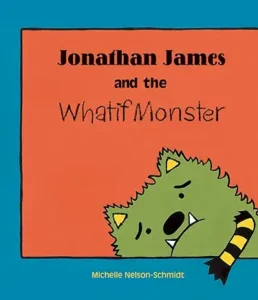
This delightful story takes the abstract concept of self-doubt and gives it a furry, tangible face. It tackles the specific anxiety of trying new things.
Furthermore, the rhythmic, rhyming text is incredibly soothing to read aloud. It naturally lowers the heart rate of an anxious child.
What kids notice: Children love the funny little green monster that whispers bad ideas into Jonathan’s ear.
Story snapshot: A little green Whatif Monster constantly follows Jonathan, telling him that everything he tries will end in disaster. However, Jonathan finally decides to ask “What if it works?” and discovers a world of fun waiting for him.
Why this book helps: It teaches children to challenge their inner critic directly. Consequently, they learn that thoughts are not facts. By flipping the script on the Whatif monster, they build incredible mental flexibility. This shift in perspective is the ultimate key to unlocking lasting inner peace.
Wilma Jean the Worry Machine by Julia Cook
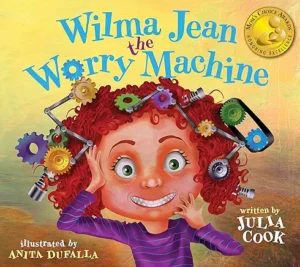
This deeply relatable book tackles the physical symptoms of anxiety. It is incredibly validating for kids who get stomach aches from stress.
Similarly, it provides a fantastic framework for parents and teachers to help organize a child’s chaotic thoughts. It is a wonderful educational tool.
What kids notice: Kids easily relate to Wilma Jean’s physical reactions, like feeling knots in her tummy when she is scared.
Story snapshot: Wilma Jean worries about everything, and it makes her body feel terrible. Fortunately, her teacher helps her sort her worries into things she can control and things she cannot control.
Why this book helps: This story introduces the incredibly powerful concept of the “circle of control.” Furthermore, it helps children stop wasting energy on things they cannot change. It gives them actionable steps to fix the problems they actually can influence. As a result, letting go of the uncontrollable brings profound inner peace.
Put Your Child in the Heart of the Story
Sometimes, the best way to help a child process complex emotions is to make them the hero of their own tale.
Scrively allows parents to create 100% custom kid’s books to help their child navigate specific emotional challenges. You can tailor the exact details to match their unique worry spiral.
Furthermore, the creation process is incredibly easy and point and click simple. You do not need any technical skills to craft a beautiful narrative.
Most importantly, the platform is entirely accessible and PC and Mac compatible. Give your child the gift of a personalized adventure where they safely discover their own brave inner peace.
Conclusion
Navigating a child’s anxiety can be an exhausting journey for any parent. However, you do not have to have all the answers.
Sometimes, simply sitting together and opening a book is the most powerful remedy. It creates a safe harbor where their racing thoughts can finally slow down.
Therefore, grab one of these gentle stories the next time the worry spiral begins. Read slowly, breathe deeply, and help your child find their inner peace.