When “I Didn’t Do It” Isn’t Quite True: A Guide to Practicing Integrity Through Stories
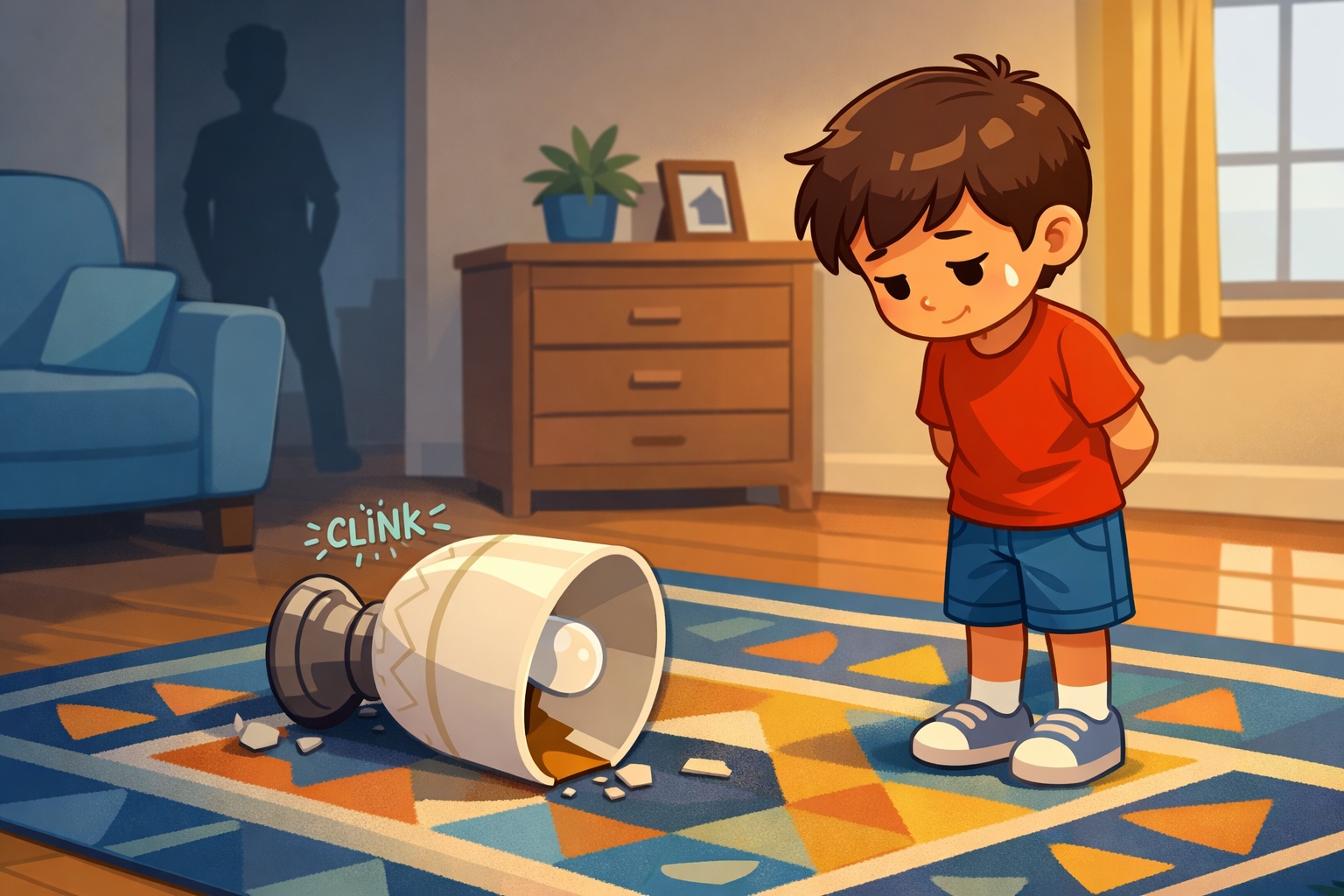
You’re in the kitchen when you hear that specific, heavy silence from the next room. It’s the kind of quiet that usually precedes a “clink,” a “thud,” or a very soft “uh-oh.”
When you walk in, you find a ceramic lamp leaning at an odd angle, and your child is suddenly very, very interested in the pattern on the rug.
“I didn’t do it,” they say, before you’ve even opened your mouth. In that moment, it’s easy to worry that you’ve missed a crucial lesson in honesty.
But here is the secret: integrity isn’t a factory-installed setting. It’s a muscle that children learn to flex through trial, error, and a whole lot of practice.
For a young child, the line between “what I wish happened” and “what actually happened” is remarkably thin.
Choosing the right thing when no one is looking—or when the truth feels scary—is a massive developmental leap. It requires courage and the ability to consider their “future self.” That is heavy lifting for a small brain.
Books serve as the perfect, low-stakes rehearsal space for these big moral moments.
When we read together, our kids watch a character face that same sinking feeling in their stomach. They see the messy middle of a lie and the sturdy relief of coming clean. It allows them to practice integrity from the safety of your lap.
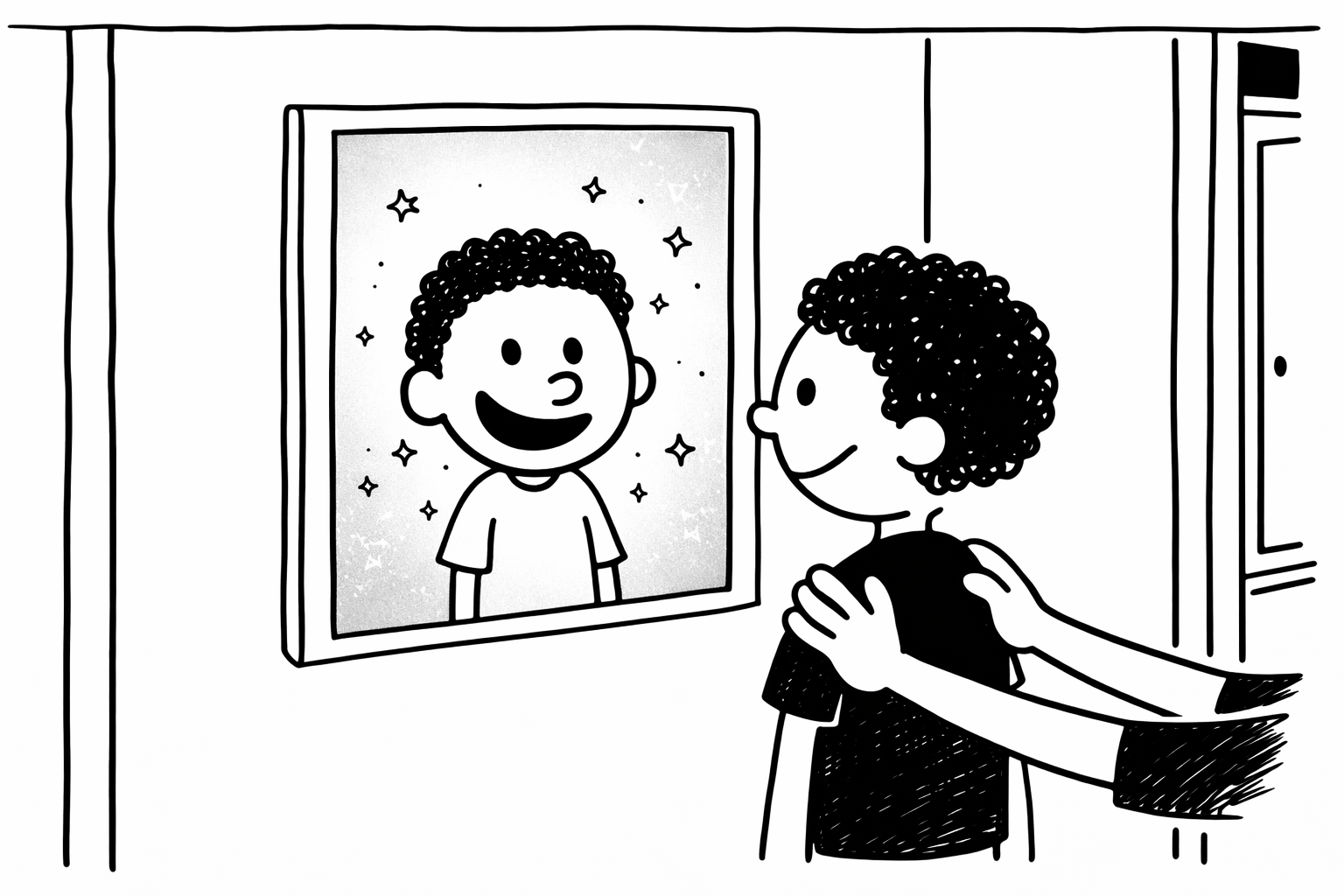
These stories don’t wag a finger. Instead, they hold up a mirror.
They show our kids that everyone makes mistakes, but who we choose to be after the mistake is what defines us. They turn “being good” into “being true,” which is a much more beautiful goal to aim for.
A Day’s Work — Eve Bunting
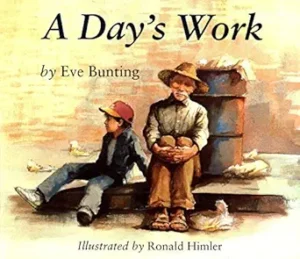
Francisco is a young boy eager to help his grandfather find work. In his desperation to secure a job, Francisco tells a lie, claiming his grandfather is an experienced gardener.
They are hired to weed a garden, only to realize that Francisco’s shortcut has led to a difficult mistake that they now must face together.
Abuelo doesn’t respond with anger; instead, he insists on making things right.
He teaches Francisco that a person’s word is their most valuable possession. It’s a powerful look at how integrity often means doing the hard work to fix what our dishonesty broke.
What kids notice in this story:
Kids pick up on Francisco’s nervous energy and his desire to take care of his family. They feel the weight of the mistake when the flowers are pulled instead of the weeds.
Story snapshot:
Francisco lies about his grandfather’s skills to get a job, leading to a gardening disaster. They stay to fix the mistake for free to regain their honor.
Why this book helps:
It moves the conversation from “lying is bad” toward “integrity is about taking responsibility.” It shows that we can reclaim our character through our actions.
The Empty Pot — Demi
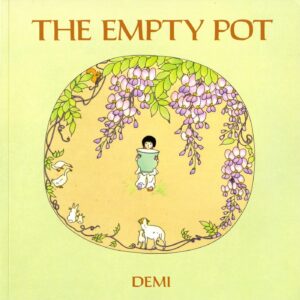
The Emperor gives every child a seed and promises his throne to whoever grows the best flower.
Ping is devastated when his seed refuses to sprout despite his best efforts. While other children show up with magnificent blooms, Ping arrives with nothing but an empty pot, certain he has failed.
This book is a stunning lesson in the courage it takes to be honest when everyone else seems to be succeeding through shortcuts.
The ending reveals that the Emperor was looking for a leader with the courage to tell the truth, as all the seeds had been cooked.
What kids notice in this story:
Children are struck by the contrast between the giant flowers and Ping’s small, brown pot.
They feel Ping’s shame deeply, which makes the final reveal even more impactful.
Story snapshot:
A boy enters a competition to grow a flower, but his seed never sprouts. He presents his empty pot to the Emperor rather than replace the seed with a fake one.
Why this book helps:
It teaches that integrity is often a lonely path, but it is the only one that leads to true respect. It’s perfect for discussing why we shouldn’t “cheat” even when we feel like the only ones following the rules.
Ruthie and the (Not So) Teeny Tiny Lie — Laura Rankin
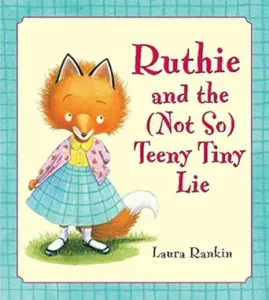
Ruthie loves tiny things, so when she finds a toy camera on the playground, she desperately wants to keep it.
When another student claims it, Ruthie panics and lies, saying she got it for her birthday. The rest of her day is overshadowed by a “heavy” feeling in her stomach that won’t go away.
The illustrations capture the physical sensation of guilt—that nagging weight that comes when our actions don’t match our inside truth.
Ruthie’s eventual confession is handled with gentleness, showing that while telling the truth is hard, the relief that follows is worth the discomfort.
What kids notice in this story:
Kids notice how much Ruthie wants the toy. They also pick up on her body language—how she can’t focus on school because the lie is taking up all the space in her head.
Story snapshot:
A fox finds a toy that isn’t hers and claims she owns it. The lie makes her miserable until she decides to tell the truth and return the toy.
Why this book helps:
It focuses on the internal emotional cost of a lie. It helps children identify that “bad feeling” as a signal from their conscience, encouraging them to listen to that inner voice.
A Bike Like Sergio’s — Maribeth Boelts
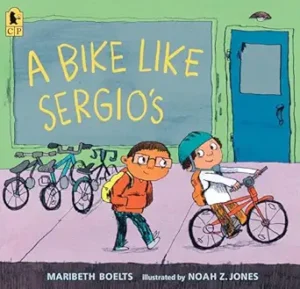
Ruben desperately wants a bike like his friend Sergio’s, but his family can’t afford it.
When Ruben finds a dropped hundred-dollar bill, he realizes he could finally buy one. The story follows his internal struggle as he weighs his own desires against the knowledge that someone else is missing that money.
This book is exceptional because it doesn’t make the choice easy. Ruben’s temptation is grounded in a very real desire.
When he sees the woman who lost the money in distress, the “right” choice becomes clear, but it remains a sacrifice. It’s a masterful look at integrity under pressure.
What kids notice in this story:
Kids notice the contrast between Ruben’s world and Sergio’s. They feel the tension in Ruben’s pocket where he’s hiding the money and recognize the sadness of the woman who lost it.
Story snapshot:
A boy finds a hundred-dollar bill and dreams of a new bike. After much conflict, he returns the money, realizing his integrity is worth more than a bicycle.
Why this book helps:
It validates that doing the right thing can be genuinely hard. It celebrates the “tough” side of integrity—the kind that requires us to put others’ needs before our own.
The Bad Seed — Jory John
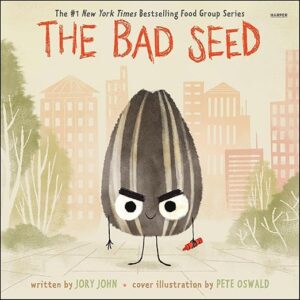
The Bad Seed has a reputation for being rude and dishonest. But as the story unfolds, we learn he wasn’t always “bad.”
The core of the book is when the seed decides he doesn’t want to be bad anymore. He makes a conscious choice to start doing the right thing, even though he doesn’t always get it right.
This is a brilliant book for discussing integrity because it shows that our past doesn’t dictate our future. Integrity is a series of choices we make every day.
The Bad Seed’s journey is relatable because he isn’t perfect; he’s just “trying,” and that effort is what builds character.
What kids notice in this story:
Kids love the humor and the exaggerated bad behaviors. They also notice how much happier the seed looks when he starts being kind and honest, even when he still has “bad” moments.
Story snapshot:
A “bad” seed decides to change his ways and try to be good, proving that character is something we can choose and build at any time.
Why this book helps:
It removes the “fixed mindset” around character. It shows kids that they aren’t “bad” just because they made a mistake—integrity is a path they can choose to step back onto.
The Boy Who Cried Wolf — B.G. Hennessy
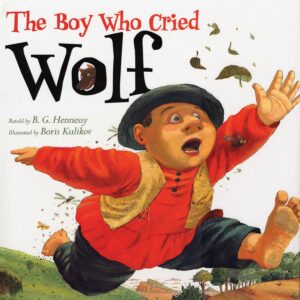
This retelling focuses on a bored shepherd boy who tricks his village for fun by calling out “Wolf!”
When a real threat finally appears, he discovers the consequence of losing his neighbors’ trust: they no longer believe him, even when he’s telling the truth.
This version focuses on the importance of trust within a community. It helps children understand that integrity is the foundation of our relationships. If we play with the truth for attention, we might find ourselves without a safety net when we actually need help.
What kids notice in this story:
Children find the boy’s trickery funny at first, but they quickly become anxious when the real wolf shows up. They feel the fear of being ignored when you finally have something important to say.
Story snapshot:
A boy repeatedly tricks his village by pretending a wolf is attacking. When a wolf actually arrives, the villagers stay home, thinking it’s another prank.
Why this book helps:
It illustrates the “bank account” of trust. It shows kids that every time they tell the truth, they are making a deposit, and every lie is a withdrawal that can leave them bankrupt.
The Adventures of Beekle — Dan Santat
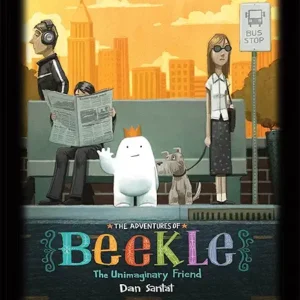
Beekle is an imaginary friend who waits to be chosen.
When he is repeatedly passed over, he takes matters into his own hands and ventures into the “real world” to find his person. It’s a story about being true to yourself and having the courage to seek out where you belong.
Integrity is about wholeness—being the same person on the inside as you are on the outside.
Beekle doesn’t change who he is to fit in; he maintains his “Beekle-ness” until he finds a friend who sees him exactly as he is. It’s a celebration of staying true to one’s own nature.
What kids notice in this story:
Children are captivated by the imaginative world.
They empathize with Beekle’s loneliness and cheer for his bravery as he navigates a strange world to find a friend who values his unique qualities.
Story snapshot:
An imaginary friend goes on an epic journey to find his perfect match in the real world, staying true to himself along the way.
Why this book helps:
It encourages authenticity. It teaches that integrity isn’t just about following rules, but about being brave enough to be yourself even when you don’t fit the standard mold.
When Your Child Is the Main Character
Reading about Ping’s pot or Ruthie’s lie is a wonderful way to start the conversation, but sometimes kids need to see themselves in the middle of the action to really “get” it.
That’s where Scrively comes in. Imagine a story where your child is the one who finds the toy on the playground or the one who has to choose between a shortcut and the truth.
By putting your child at the center of the narrative, you give them a personalized “practice run” for integrity. It turns a lesson into an adventure, helping them build that character muscle in a way they’ll never forget.
At the end of the day, integrity isn’t about being perfect; it’s about being whole. It’s about teaching our kids that even when they stumble, they have the power to stand back up and tell the truth.
By filling their shelves with stories of characters who choose the right path, we’re giving them a roadmap for their own lives.
We’re showing them that while the truth might be hard to say, it’s always the lightest thing to carry.