When “Fair” Doesn’t Mean “Equal”: Children’s Books About Justice and Fairness
Children have an incredibly sensitive fairness radar. Give one child a slightly larger cookie, let a sibling stay up ten minutes later, or ask one kid to do a different chore, and you may hear the verdict immediately: “That’s not fair!”
At first, fairness often means sameness. Everyone gets the same amount. Everyone follows the same rule. Everyone gets the same turn. That understanding matters, but as children grow, they begin encountering a more complicated truth: sometimes treating people fairly means noticing that people have different needs, circumstances, abilities, and obstacles.
That is where the virtue of justice begins to take shape. Justice asks children to look beyond whether everyone received exactly the same thing and ask a deeper question: did everyone have a real chance to participate, belong, be heard, and receive what they needed?
These books can help you explore that distinction without turning the conversation into a lecture. Through shoes, bicycles, classrooms, pets, bus rides, bullying, and even a beloved pebble, children can begin to see that fairness is not simply about dividing everything into identical pieces. It is about learning to notice people clearly and respond with courage and care.
Children’s Books That Help Explain Fairness, Equity, and Justice
Fair is Fair! by Jennifer Dussling, illustrated by Diane Palmisciano
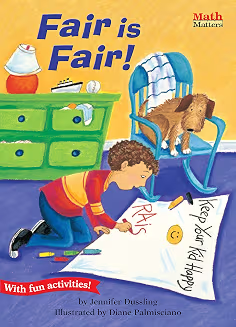
Marco is convinced that something is wrong: other kids receive bigger allowances while doing fewer chores. His complaint is wonderfully familiar because children often begin thinking about fairness by comparing what they receive with what someone else receives.
The story gives families an approachable way to talk about comparison, responsibility, and the information we need before deciding whether something is truly unfair.
What kids notice: Marco does not quietly accept the situation. He gathers information and tries to make a case for himself, which turns a frustrated feeling into a question he can investigate.
Story snapshot: Marco compares chores and allowances and uses what he learns to argue that his own allowance should change. The book connects his fairness question with simple mathematical thinking.
Why this book helps: Justice requires more than reacting to what looks unequal. Children can learn to ask what responsibilities, needs, and circumstances sit behind the difference. That shift from “they got more” to “what is actually happening here?” is an important first step toward mature fairness.
Those Shoes by Maribeth Boelts, illustrated by Noah Z. Jones
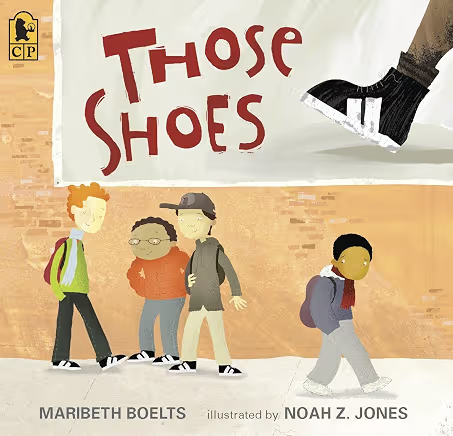
Jeremy wants the shoes that seem to be everywhere at school. But his grandmother is working with a limited budget, and what Jeremy needs is winter footwear. The gap between what other children have and what his family can afford is painful and visible.
This is a tender book for helping children understand that people standing beside one another can be living with very different resources.
What kids notice: Jeremy’s longing is not shallow. He wants to belong. Children can recognize how possessions sometimes become tangled up with status, embarrassment, and the desire not to feel different.
Story snapshot: Jeremy searches for the coveted shoes, even trying a thrift-store pair that does not fit. Along the way, he begins noticing another child’s needs and eventually makes a generous choice.
Why this book helps: Justice grows when children stop assuming that everyone begins with the same choices. The story opens space to discuss economic differences while preserving Jeremy’s dignity and helping readers notice how generosity can respond to another person’s need.
A Bike Like Sergio’s by Maribeth Boelts, illustrated by Noah Z. Jones
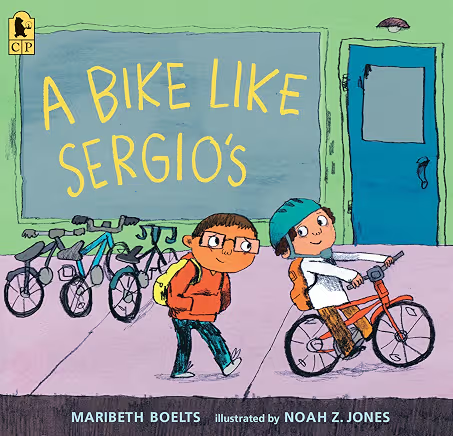
Ruben wants a bicycle like his friend Sergio’s, but he knows money works differently in his family. Sometimes even the grocery list has to be adjusted. Then Ruben finds a large bill that could suddenly make the bike possible.
His dilemma makes justice personal: what happens when something that could solve your problem actually belongs to someone else?
What kids notice: Ruben is pulled in two directions. He can imagine exactly what the money could do for him, yet he also begins to imagine what losing it might mean for its owner.
Story snapshot: After picking up money dropped by another shopper, Ruben discovers that it is enough to buy the bicycle he desperately wants. His experience with nearly losing the money himself deepens his understanding of the person who lost it.
Why this book helps: Justice becomes more than following a rule when children practice perspective-taking. Ruben’s choice invites a rich conversation about ownership, economic inequality, temptation, and why another person’s need still matters when our own need feels very real.
The Smallest Girl in the Smallest Grade by Justin Roberts, illustrated by Christian Robinson
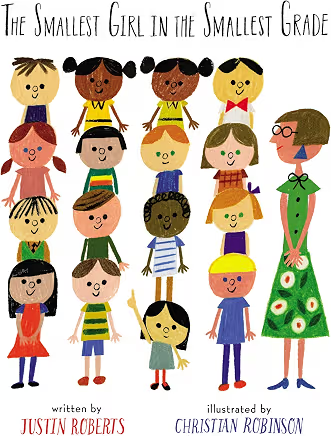
Sally McCabe may be easy to overlook, but she is paying attention. She notices the small details around her, including moments when other children are teased, excluded, or treated badly.
Eventually, noticing is no longer enough. Sally decides to speak.
What kids notice: The child with the least obvious power can still recognize injustice and act. Sally’s size does not determine the importance of what she sees.
Story snapshot: Sally quietly observes the world of her school until repeated unkindness pushes her to stand up and call attention to what is happening. Her courage helps change the community around her.
Why this book helps: Children sometimes imagine fairness as something adults enforce. Sally shows that justice also depends on ordinary people noticing when someone is being harmed and refusing to treat that harm as normal. It is a gentle introduction to being an upstander.
I Walk with Vanessa by Kerascoët
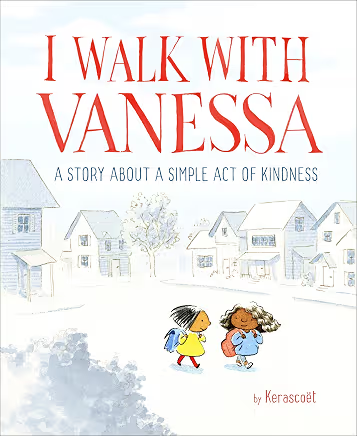
This wordless picture book begins with a child witnessing another student being bullied. She cannot immediately fix what happened, and the discomfort follows her home. The next day, she chooses a simple response: she walks with Vanessa.
That small act grows as more children join them.
What kids notice: Justice does not always begin with a dramatic speech. Sometimes it begins when one person refuses to let someone face a difficult situation alone.
Story snapshot: Through pictures alone, readers see Vanessa being mistreated, another child wrestling with what she witnessed, and a community gradually gathering around Vanessa in support.
Why this book helps: Because there are no words, children have room to interpret expressions, body language, fear, hesitation, and courage. You can ask what each character needs in each scene and why giving Vanessa extra support is not “special treatment” but a response to the harm she experienced.
Strictly No Elephants by Lisa Mantchev, illustrated by Taeeun Yoo
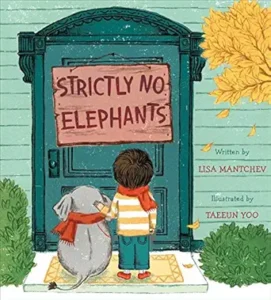
A pet club may appear to have a simple rule, but that rule leaves one child and his tiny elephant outside. When he meets another excluded pet owner, the children create a different kind of gathering—one built around welcome rather than sameness.
The playful premise makes exclusion visible without making the lesson feel heavy.
What kids notice: A rule can apply consistently and still produce an unfair result. That is a powerful idea for children who are beginning to move beyond “same rule equals fair.”
Story snapshot: After the local club refuses to admit his elephant, a boy meets others with unusual pets and helps create a place where differences are not grounds for exclusion.
Why this book helps: Justice asks us to examine not only whether a rule is enforced equally, but whom the rule leaves out and why. This story gives children a concrete way to wonder whether a community’s rules make room for everyone who should belong.
Lubna and Pebble by Wendy Meddour, illustrated by Daniel Egnéus
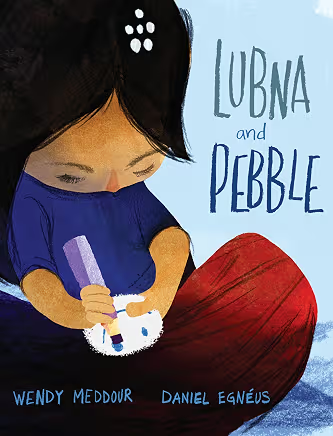
Lubna lives with her father in a world of tents after fleeing war. Her treasured pebble is more than an object; it is a source of comfort and a listener when she feels afraid. Then a younger child arrives who is frightened and alone.
Lubna begins to see that he may need the comfort of Pebble even more than she does.
What kids notice: Two children can both need comfort, yet one may be carrying a different kind of loneliness in that particular moment.
Story snapshot: Lubna cares for her pebble as a trusted companion. When Amir arrives alone, she befriends him and eventually makes a deeply generous decision about the object that has helped her feel safe.
Why this book helps: This is one of the clearest emotional examples of why fair does not always mean equal. Justice begins with seeing actual need. Lubna does not calculate sameness; she pays attention to another person’s vulnerability and responds with empathy.
Last Stop on Market Street by Matt de la Peña, illustrated by Christian Robinson
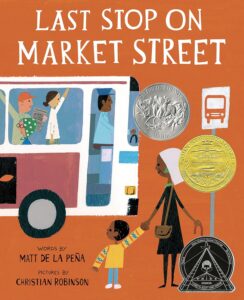
CJ notices differences everywhere. Other people have a car. Other kids have things he does not. He wonders why his life looks the way it does. His nana never dismisses his questions; instead, she helps him see the people, beauty, music, and possibility already around them.
Their bus ride eventually leads to an act of service, widening CJ’s view of both what people have and what people need.
What kids notice: CJ compares his life with other people’s lives, just as children naturally do. Nana helps him look again without pretending that differences do not exist.
Story snapshot: CJ and his grandmother ride a city bus across town, meeting neighbors along the way before arriving at a soup kitchen where they volunteer together.
Why this book helps: Justice needs both gratitude and awareness. Children can appreciate what they have while also recognizing that resources and opportunities are not distributed evenly. The story encourages attention to community without reducing people to what they lack.
Helping Children Understand That Fairness Is About People, Not Just Portions
When your child says, “That’s not fair,” you do not always need to correct them immediately. That sentence can become an invitation. You might ask, “What would fair look like to you?” Then go one step further: “Does everyone in this situation need the same thing?”
A child with a broken leg may need the elevator while classmates take the stairs. A younger sibling may need more help getting ready. A classmate who is learning English may need extra time. A friend who has just been hurt may need more attention for a while. None of those differences automatically mean someone else is receiving less love, respect, or worth.
Children can also learn that justice is not only about individual needs. Sometimes a group, classroom, or community has rules and habits that make participation harder for certain people. Books such as Strictly No Elephants and The Smallest Girl in the Smallest Grade help children notice that fairness can require changing the environment, not simply telling the excluded person to try harder.
The goal is not to give children a perfect definition of justice. It is to strengthen a habit of attention: Who is being left out? Who needs help? What happened before this moment? Is the rule helping everyone participate? What could make this situation more fair?
Put Your Child in the Heart of the Story
One reason stories work so well for conversations about justice is that they allow children to feel a situation before they have to define it. They can imagine wanting Jeremy’s shoes, holding Ruben’s found money, walking beside Vanessa, or standing outside a club that says their friend does not belong.
A personalized Scrively story can bring that reflection even closer. Your child can become the character who notices that two people need different kinds of help, who questions a rule that leaves someone out, or who discovers that giving everyone the exact same thing is not always the fairest answer.
That kind of story does not have to hand your child a moral in bold letters. It can let them wrestle with the decision. What would they notice? What would they choose? How would another character feel? When children see themselves inside a dilemma, justice becomes less like an abstract vocabulary word and more like a way of looking at the people around them.
Fairness Grows as Children Learn to Look Again
Young children often begin with a beautifully simple instinct: fair means everybody gets the same. We do not need to erase that instinct. We can help it grow.
Over time, fairness becomes more spacious. Children learn that equal portions do not solve every problem, equal rules do not always create equal access, and another person receiving more help does not necessarily mean someone else is valued less.
Justice asks for curiosity before judgment. It asks children to notice circumstances, listen to people’s experiences, protect belonging, and sometimes use their own voice for someone who is being overlooked. Those are big ideas, but children practice them in small moments every day.
And sometimes the most important fairness question is not “Did everybody get the same thing?” It is simply: “What does this person need in order to have a fair chance?”