When They Both Dig Their Heels In: Books That Teach the Art of Compromise
You have absolutely been there before.
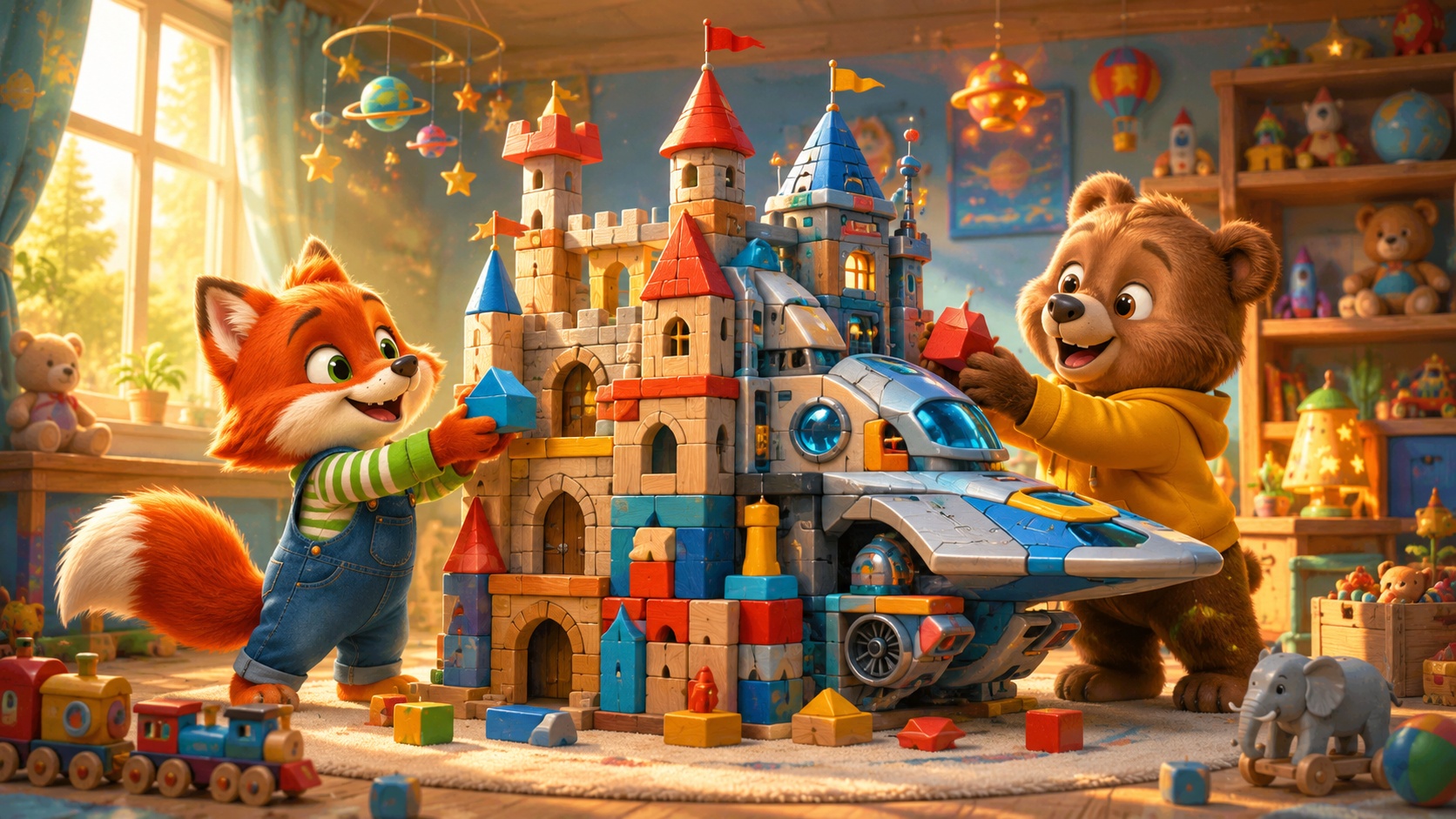
It is the classic standoff in the middle of the playroom, where one child wants to build a towering castle, and the other is fiercely determined to construct a sprawling spaceship.
Suddenly, the collaborative energy vanishes. Consequently, you are left staring at two crossed sets of arms and two very stubborn scowls.
Nobody wants to give an inch. Most importantly, neither child possesses the emotional vocabulary yet to realize they do not have to choose between winning and losing.
Finding the middle ground is an incredibly complex skill for young minds to grasp.
Exploring the hard work of finding the “win-win” in a stubborn disagreement takes immense patience. However, learning to bend without completely breaking is one of the most vital relational tools they will ever acquire.
Therefore, we can use stories to show them what compromise actually looks like in practice. Books provide a safe, neutral space to watch characters navigate gridlock, helping children see that sharing an idea often leads to a much better outcome than fighting over it.
1. A Little SPOT of Compromise by Diane Alber
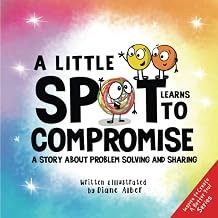
This book is an absolute staple for any parent trying to explain abstract emotional concepts to very young children. Diane Alber has a brilliant way of making big, complicated social dynamics feel completely approachable.
Furthermore, the visual representation of feelings as tangible “spots” gives kids an immediate, practical way to identify what is happening in their own bodies. It is direct, highly engaging, and wonderfully clear.
What kids notice: Children instantly connect with the bright, expressive little spots that visually demonstrate the blending of different ideas.
Story snapshot: A helpful little Spot teaches children the exact steps needed to reach a compromise when two people want completely different things. Through very clear, everyday examples, the characters learn how to combine their ideas to create a solution that makes everyone happy.
Why this book helps: First and foremost, it breaks the concept of compromise down into an actionable, step-by-step process. Consequently, children are not just told to “work it out,” but are actually given a practical script to use during a conflict. Most importantly, it visually reinforces the idea that exploring the hard work of finding the “win-win” in a stubborn disagreement is a skill they can practice and master.
2. The Zaks by Dr. Seuss
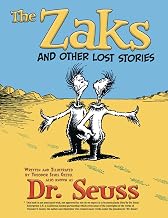
Sometimes, the best way to teach a virtue is to show the absolute absurdity of its absence. Dr. Seuss delivers a hilarious, rhyming masterclass in what happens when nobody is willing to budge.
Additionally, the vintage charm of the illustrations combined with the ridiculous premise makes this an incredibly fun read-aloud. It effortlessly sparks conversations about stubbornness without feeling preachy.
What kids notice: Kids are deeply amused by the sheer ridiculousness of the two characters standing in the exact same spot while an entire highway is built around them.
Story snapshot: A North-Going Zax and a South-Going Zax meet face-to-face in the Prairie of Prax. Because neither is willing to take a single step to the east or the west, they stubbornly stand there for years while the rest of the world quite literally passes them by.
Why this book helps: It provides a profoundly memorable, humorous metaphor for gridlock. Furthermore, when your child digs their heels in over a minor disagreement, you can gently reference the Zax to lighten the mood. Therefore, it helps them realize that refusing to compromise usually just leaves everyone stuck in the same frustrating place.
3. That’s (Not) Mine by Anna Kang
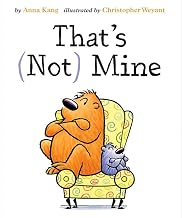
This book perfectly captures the intense, territorial feelings that arise when two children want to claim the exact same item. The dialogue is snappy, simple, and instantly relatable to any sibling or playdate dynamic.
Moreover, Christopher Weyant’s expressive illustrations do most of the heavy lifting, conveying deep emotion with just a few simple lines. It is a brilliant, fast-paced read that children will ask for again and again.
What kids notice: Young readers always giggle at the escalating, silly arguments between the two fuzzy friends over a single, comfortable chair.
Story snapshot: Two lovable friends find themselves in a heated debate because they both want to sit in the exact same chair. They argue back and forth, eventually realizing that their constant fighting is ruining their playtime, leading them to finally discover a creative way to share the space.
Why this book helps: It validates the very real, immediate frustration of wanting something that someone else has. However, it gently pivots the narrative to show that the relationship is ultimately more important than the object. Most importantly, it demonstrates that exploring the hard work of finding the “win-win” in a stubborn disagreement leads to a much happier playtime for everyone involved.
4. The Squirrels Who Squabbled by Rachel Bright
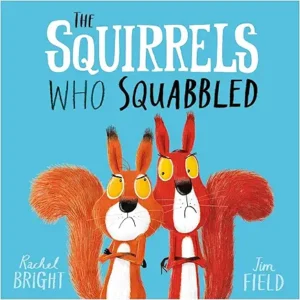
If you are looking for a high-energy, adventurous story about the pitfalls of greed and the power of teamwork, this is it. The rhythmic, bouncing prose makes it an absolute joy to read aloud.
Consequently, it keeps even the most active toddlers deeply engaged while delivering a powerful message about sharing. The vibrant, autumnal illustrations are simply stunning.
What kids notice: Children are completely captivated by the fast-paced, action-packed race down the river as the two squirrels desperately chase their prize.
Story snapshot: Cyril and Bruce, two very different squirrels, spot the very last pinecone of the season and immediately engage in a frantic, wild race to claim it. Their intense competition leads them straight into dangerous waters, forcing them to realize that they must compromise and work together if they want to survive the rapids.
Why this book helps: It beautifully illustrates how hyper-focusing on “winning” can blind us to the bigger picture. Furthermore, it shifts the concept of compromise from a quiet negotiation into a thrilling, necessary survival skill. Therefore, children learn that working together is often the only way to successfully navigate a tricky situation.
5. It’s Mine! by Leo Lionni
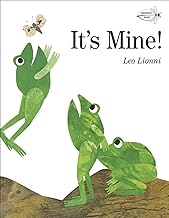
Leo Lionni is a master of using simple, natural settings to explore deep philosophical and social themes. This beautifully crafted fable about three selfish frogs is a timeless exploration of community and shared resources.
Additionally, the beautiful collage artwork instantly draws children into the lush, island environment. It is a quiet, contemplative book that leaves a lasting impression.
What kids notice: Kids quickly recognize the repetitive, selfish shouting of the frogs and love watching how a sudden, dramatic storm changes their entire perspective.
Story snapshot: Three bickering frogs live on a small island and spend their entire days claiming the water, the earth, and the air as their own personal property. However, when a massive flood threatens their home, they are forced to huddle together on a single rock, finally learning the immense value of sharing their space.
Why this book helps: It provides a clear, dramatic example of why constant bickering is ultimately self-destructive. Moreover, it gently teaches children that peace and safety come from community, not from claiming ownership over everything. Most importantly, it makes the abstract concept of finding a middle ground feel incredibly grounded and real.
6. Llama Llama Time to Share by Anna Dewdney
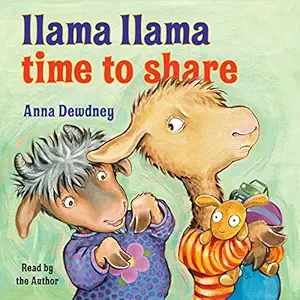
For younger readers, the Llama Llama series is an absolute goldmine for navigating tricky emotional hurdles. Anna Dewdney’s signature rhymes expertly capture the overwhelming intensity of toddler feelings.
Consequently, this specific installment perfectly mirrors the high-stakes drama of learning to share a beloved toy. It is empathetic, rhythmic, and incredibly practical.
What kids notice: Toddlers deeply relate to Llama Llama’s sudden panic and frustration when the new neighbor tries to play with his absolute favorite stuffed animal.
Story snapshot: When Nelly Gnu comes over for a playdate, Llama Llama struggles to share his toys, culminating in a tug-of-war that ends with a ripped teddy bear. After some gentle adult intervention and a quick sewing repair, the two toddlers learn how to compromise and play together peacefully.
Why this book helps: It does not shame the child for having a hard time sharing; rather, it completely validates that sharing is a genuinely difficult skill to learn. Furthermore, it models the exact language and adult guidance needed to help children de-escalate a conflict. Therefore, it serves as a perfect blueprint for exploring the hard work of finding the “win-win” in a stubborn disagreement.
7. Duck! Rabbit! by Amy Krouse Rosenthal
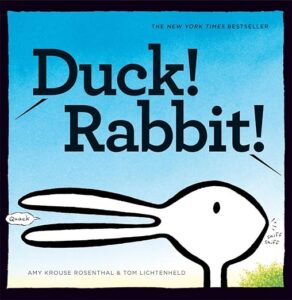
While not a traditional story about a playground argument, this clever book is foundational for teaching the cognitive flexibility required for compromise. It is a brilliant, interactive lesson in perspective-taking.
Additionally, the minimalist art style forces the reader to focus entirely on the optical illusion at the center of the debate. It is guaranteed to spark lively, fun debates in your own living room.
What kids notice: Children absolutely love arguing with the narrator about whether the drawing is actually a duck with a bill or a rabbit with long ears.
Story snapshot: Two unseen narrators fiercely debate the identity of a single illustration, with one insisting it is a duck and the other absolutely certain it is a rabbit. As they point out different features to support their claims, they eventually realize that they might both be right.
Why this book helps: Empathy and perspective-taking are the vital precursors to any successful compromise. Consequently, this book teaches kids that two people can look at the exact same situation and see something completely different. Most importantly, it shows that you do not have to prove the other person wrong in order to find a peaceful resolution.
8. The Day the Crayons Quit by Drew Daywalt
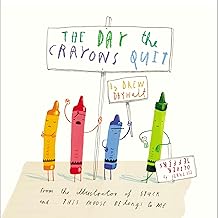
This creative, hilarious book is a masterclass in managing conflicting needs and finding a creative middle ground. Drew Daywalt gives a distinct, passionate voice to every single color in the crayon box.
Moreover, Oliver Jeffers’s child-like illustrations make the crayons’ grievances feel incredibly authentic and funny. It is a joyful read that subtly teaches high-level conflict resolution.
What kids notice: Kids are fascinated by the personalized letters and find the specific complaints of each crayon—like the overworked Red or the naked Peach—absolutely hilarious.
Story snapshot: A young boy named Duncan just wants to color, but he opens his crayon box to find a stack of letters from his disgruntled crayons, who are all deeply unhappy with how they are being used.
To solve the crisis, Duncan must listen to everyone’s complaints and create a completely new, imaginative drawing that compromises with all of their specific demands.
Why this book helps: It highlights the reality that true compromise often requires outside-the-box thinking.
Furthermore, Duncan does not just force the crayons to behave; he actively listens to their feelings and changes his own behavior to accommodate them. Therefore, it beautifully models how exploring the hard work of finding the “win-win” in a stubborn disagreement can lead to a spectacular, creative result.
Put Your Child in the Heart of the Story
Sometimes, the absolute best way to help a child process a difficult relational skill is to let them see themselves succeeding in a story. Scrively allows parents to create 100% custom kid’s books to help their child navigate specific emotional challenges.
Imagine reading a high-quality, beautifully illustrated book where your child is the main character learning how to compromise with their actual sibling or best friend.
You can instantly make 100% custom kid’s books with Scrively in minutes, providing a personalized roadmap for their exact social hurdles. It is a powerful, engaging way to make these vital life lessons truly stick.
Compromise is rarely easy, and it certainly does not happen overnight. It requires children to pause, manage their own frustration, and actively listen to someone else’s perspective.
However, every time you read one of these stories together, you are slowly planting the seeds of cooperation. Furthermore, you are giving them the emotional vocabulary they need to step away from a standoff and search for a solution.
Keep reading, keep guiding, and keep celebrating those small moments when they choose connection over being right. Most importantly, remember that every successful negotiation, no matter how small, is a massive step toward their future relational success.