The Open Circle: Navigating the 3-Person Playdate and Teaching Kids to Welcome Others
You know the exact moment the energy shifts.
You are hosting a playdate, and a third child has just been dropped off at your front door.
For a few fleeting minutes, everything is fine. The kids are loud, the toys are scattered, and the laughter is genuine. But then, almost inevitably, the invisible walls go up.
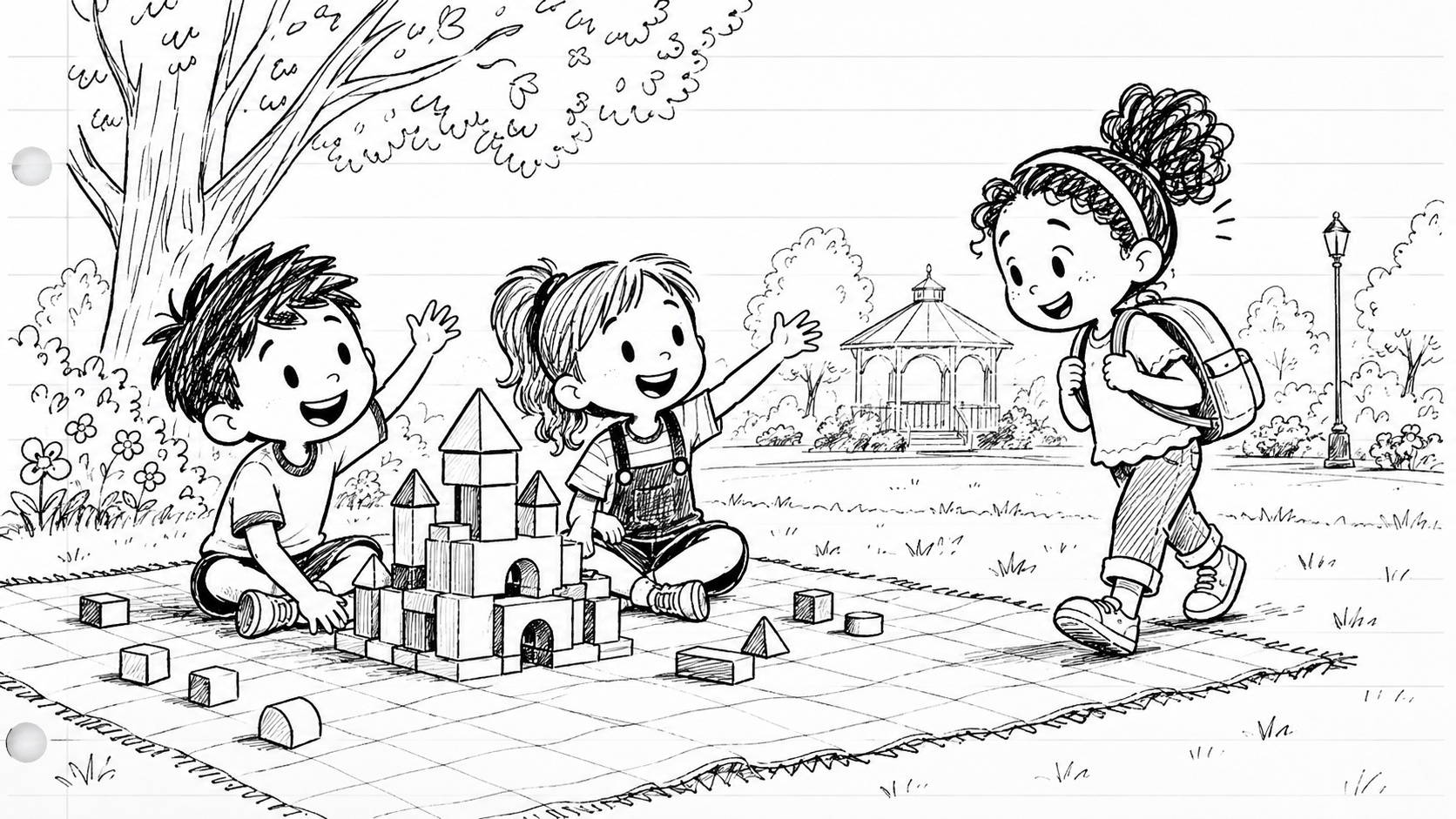
Two children drift off into the corner to build a magnificent block tower, their heads huddled together in a secret alliance. The third child is left standing alone on the edge of the rug, holding a stray plastic dinosaur, unsure of where they belong.
It is the universal dread of the three-person playdate. The math simply never seems to work in their favor.
Someone always becomes the odd one out, the third wheel, the forgotten friend. As a parent, watching this unfold is quietly heartbreaking.
If your child is the one left out, you feel their sudden, sharp sting of rejection. If your child is the one doing the excluding, you feel a heavy rush of panic and guilt. You want to step in and fix it immediately. You want to force them to play together.
But forced inclusion rarely creates genuine connection. What our children actually need is a deeper understanding of what it means to make space.
They need to learn the subtle, beautiful art of opening the circle. Welcoming is not just about sharing toys or taking turns.
It is about actively noticing when someone is standing on the outside and having the emotional courage to invite them in. It is about realizing that your fun does not diminish just because another person joins the game.
This is a complex social muscle, and it takes years of practice to develop. Fortunately, you do not have to teach this lesson entirely on your own.
Children process these tricky social dynamics best through storytelling.
When they see a beloved character navigate the awkwardness of a shifting friendship trio, they suddenly understand their own playroom struggles. They see that opening the circle is not a chore, but an opportunity for a bigger, better adventure. Here are the most powerful, conversation-starting books to help your child master the virtue of welcoming.
Big Friends by Linda Sarah and Benji Davies
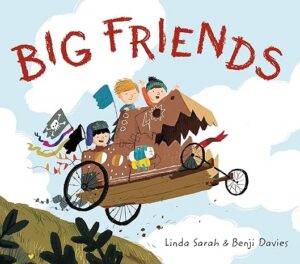
This is arguably the most accurate, touching representation of the three-person playdate dynamic ever put to paper. Birt and Etho are best friends who do everything together. They have their own rhythms, their own inside jokes, and their own two-person cardboard box adventures on Sudden Hill. Their world feels perfectly complete.
Then a new boy named Shu arrives, carrying his own cardboard box and a quiet hope to join their game.
Etho immediately welcomes the new addition, but Birt feels deeply threatened.
The story masterfully captures the very real jealousy and insecurity that bubbles up when a beloved duo is suddenly forced to become a trio.
What kids notice: Children immediately lock onto Birt’s body language. They see him pull away, cross his arms, and eventually retreat to his home because he feels like his special friendship is being stolen.
Story snapshot: Two best friends spend their days playing creatively in large cardboard boxes on a hill.
When a third child asks to join, one friend welcomes him warmly, while the other feels completely displaced and runs away.
Eventually, the two friends must figure out a grand, creative gesture to show the excluded boy that there is absolutely enough room for all three of them to play together.
Why this book helps: It validates the complex grief a child feels when their exclusive friendship shifts.
Instead of shaming Birt for being jealous, the narrative gives him the time and space to process his feelings. It teaches your child that a friendship is not a finite resource.
Welcoming a third person does not mean you lose your best friend.
It simply means your cardboard castle gets an extra tower, and your adventures become even more vibrant. It proves that expanding the circle is worth the initial discomfort.
Chester’s Way by Kevin Henkes
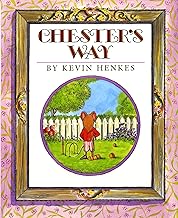
Chester and Wilson are the ultimate inseparable duo. They cut their sandwiches the exact same way, they ride their bikes the exact same way, and they never, ever deviate from their established routine. They are perfectly content in their closed, predictable little bubble.
Then, the wildly unpredictable Lily moves into the neighborhood. She wears disguises, she talks backward, and she completely disrupts their tidy two-person world. At first, the boys reject her entirely. They refuse to let her into their circle because she is simply too different from what they know.
What kids notice: Kids love the stark contrast between the careful, quiet boys and the loud, wonderfully weird Lily. They laugh at Lily’s antics while simultaneously understanding exactly why Chester and Wilson are hesitant to let her in.
Story snapshot: Two rigid, best-friend mice have their peaceful lives upended by a vibrant, eccentric new neighbor.
They ignore her attempts to play until a group of bullies corners them, and Lily swoops in wearing a fierce disguise to save the day.
The boys quickly realize they judged her too harshly and invite her into their highly exclusive friendship.
Why this book helps: This story perfectly addresses the \”we were here first\” mentality that often ruins three-person playdates.
Children frequently reject a third player simply because that new child wants to change the rules of an established game. Chester and Wilson teach your child that rigid boundaries keep you safe, but they also keep you bored.
By learning to welcome Lily’s unique energy, the boys discover a whole new level of joy. It shows kids that the \”third wheel\” might just be the spark their game was missing all along.
Can I Play Too? by Mo Willems
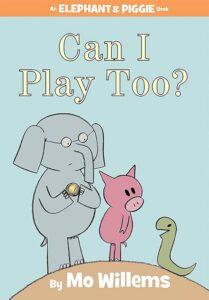
Elephant and Piggie are the undisputed champions of the two-person dynamic. In this beloved installment of the series, the famous duo is happily playing a game of catch.
Everything is going smoothly until a new friend, Snake, slithers up and asks a very simple, yet highly complicated question: \”Can I play too?\”
The problem is immediately obvious. Snake does not have any arms to catch the ball.
The tension builds as Gerald and Piggie desperately try to figure out how to include someone who fundamentally cannot play the game the way they do.
What kids notice: Children are instantly drawn to the hilarious physical comedy of a snake trying to catch a ball.
They giggle at the repeated failures, but they also deeply connect with Snake’s visible sadness when things do not work out.
Story snapshot: Elephant and Piggie are interrupted during a game of catch by a snake who wants to join.
They try several awkward, unsuccessful methods to include him, leading to frustration for everyone.
Finally, they realize that to truly welcome their new friend, they must completely change the rules of the game to fit his unique abilities.
Why this book helps: This is a masterclass in true inclusivity and adaptive play. When a third child joins a playdate, they often bring different skills, interests, or limitations.
The easy route is to tell the new child they simply cannot play. Gerald and Piggie model a different, much kinder path.
They show your child that true welcoming requires cognitive flexibility. If the game does not work for everyone, you do not ditch the friend.
You change the game. It is a powerful, hilarious lesson in keeping the circle wide open.
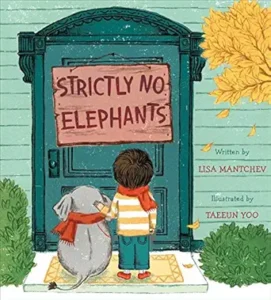
Strictly No Elephants by Lisa Mantchev
Sometimes, the pain of being left out is explicit and purposeful.
In this gentle, poignant story, a young boy and his tiny pet elephant are incredibly excited to attend the local Pet Club meeting.
However, when they arrive, they are greeted by a harsh, exclusionary sign on the treehouse door.
The boy is heartbroken. He knows exactly what it feels like to be standing on the wrong side of a closed circle.
But rather than walking away in defeat, he decides to take action and change the social landscape of his neighborhood entirely.
What kids notice: The visual impact of the heavy, wooden \”Strictly No Elephants\” sign immediately registers with young readers.
They deeply feel the unfairness of the rule and the sudden, quiet sadness of the boy and his tiny pet.
Story snapshot: A boy is turned away from a neighborhood club because his pet is considered too different.
While walking home in the rain, he meets a girl who was also excluded for having a pet skunk. Together, they decide to start their own club in a treehouse across the park, painting a new sign that proudly declares, \”All Are Welcome.\”
Why this book helps: This book tackles the devastating nature of exclusive cliques. It empowers your child to realize that they do not have to accept the rules of a closed circle.
If a playdate dynamic turns toxic and exclusionary, your child has the agency to step away and create their own space.
It teaches them that the best response to rejection is radical, uncompromising hospitality. By starting their own inclusive group, the characters model exactly how to be an \”upstander\” in everyday social situations.
Room on the Broom by Julia Donaldson
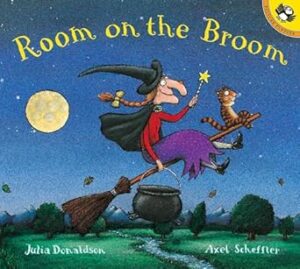
This modern classic is a fast-paced, rhythmic adventure about making space when there physically does not seem to be any space left.
A kind witch and her cat are flying happily on their broomstick, enjoying a lovely two-person journey.
Along the way, the wind blows away the witch’s hat, bow, and wand. Every time they land to retrieve an item, they meet a new, helpful animal who asks if there might be room for them on the broom.
Despite the cat’s obvious annoyance, the witch repeatedly answers with a joyful \”Yes!\”
What kids notice: Children love the repeating, rhythmic cadence of the animals asking to join the ride.
They also eagerly point out the cat’s grumpy facial expressions every time the witch agrees to take on another passenger.
Story snapshot: A generous witch continuously invites new, helpful animals to ride on her increasingly crowded broomstick, much to the dismay of her original companion.
When a terrifying dragon threatens to eat the witch, all the new friends she welcomed into her circle band together to save her life. Ultimately, they build a brand-new, magical broom with luxurious seats for everyone.
Why this book helps: The cat in this story perfectly embodies the child who wants to hoard their best friend all to themselves.
The cat wants the circle closed. The witch, however, models the expansive joy of a generous heart.
She teaches your child that making room for others might feel crowded or chaotic at first, but it ultimately builds a stronger, more resilient community.
When the dragon attacks, it is the collective power of all those newly welcomed friends that saves the day. It proves that there is immense safety and joy in a wider circle.
The Invisible Boy by Trudy Ludwig
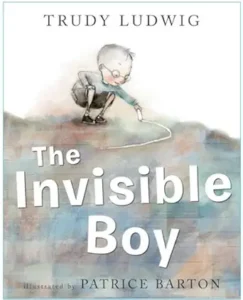
Not all exclusion is loud or dramatic. Sometimes, a child is not actively pushed out of a circle; they simply are never invited in.
Brian is the invisible boy in his classroom. He does not take up much space, he never makes a fuss, and consequently, he goes completely unnoticed by his peers.
When it is time to pick teams for a game or choose a partner for a project, Brian is always the one left sitting alone.
His isolation is quiet, heavy, and universally relatable to any child who has ever hovered on the edge of a playgroup.
What kids notice: The illustrator brilliantly draws Brian in muted, grayscale tones while the rest of the classroom is bursting with vibrant color. Kids instantly grasp this visual metaphor.
They see that Brian feels like a ghost in his own life.
Story snapshot: A quiet, highly creative boy goes entirely unnoticed by his loud, bustling classmates.
When a new student named Justin arrives, Brian takes a small risk and leaves a friendly drawing on Justin’s desk. That tiny act of welcoming sparks a friendship.
As Justin gently pulls Brian into group activities with the other kids, Brian slowly begins to bloom into full, radiant color.
Why this book helps: This is an essential read for the child who is naturally outgoing and popular.
It trains their eyes to look for the \”Brian\” in the room. It teaches your child that the truest form of welcoming is noticing the kid who is too shy to ask to play.
It shows them that it only takes one person, extending one small invitation, to completely change the trajectory of someone’s day. It is a beautiful, quiet call to action for empathy and everyday leadership.
Stick and Stone by Beth Ferry

At its core, this is a story about the profound power of standing up for a friend.
Stick is tall and thin. Stone is round and quiet. They are both entirely alone until a serendipitous encounter at the playground brings them together.
They quickly form a tight, beautiful bond.
But the true test of their welcoming circle comes when a prickly Pinecone enters the scene, teasing Stone and trying to assert dominance. The dynamic instantly shifts from a peaceful duo to a tense trio.
What kids notice: The incredibly simple, rhyming text allows kids to focus entirely on the emotional expressions of the characters.
They feel the sharp sting of the Pinecone’s teasing and the immense relief when Stick stands up to defend his new friend.
Story snapshot: Two lonely items, a stick and a stone, find each other and become fast friends. When a mean pinecone bullies the stone, the stick bravely intervenes, proving his loyalty.
Later, when the stick gets stuck in a puddle, the stone rolls in to save him. By the end, they even manage to find a way to make peace with the pinecone, leaving no one entirely left out.
Why this book helps: This book tackles the negative side of the three-person dynamic. Sometimes, a third child enters a playdate not to join the fun, but to exert control or cause friction.
Stick models the exact boundary your child needs to learn: you can be welcoming, but you must also fiercely protect your friends from cruelty.
It teaches your child that a healthy circle has strong, kind boundaries. You welcome others in, but you do not tolerate bullying once they arrive.
You Will Be My Friend! by Peter Brown
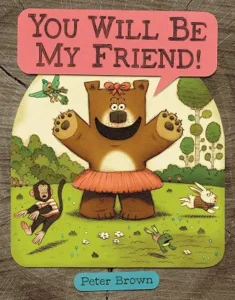
Lucy the bear is incredibly enthusiastic about making a new friend. In fact, she is a little too enthusiastic.
She wakes up one morning and declares to the forest that today is the day she will secure a best friend, no matter what it takes.
She stomps through the woods, aggressively trying to force animals into playing with her.
She interrupts their activities, demands their attention, and completely steamrolls over their boundaries. Her desperation to create a connection ends up pushing everyone away.
What kids notice: Kids find Lucy’s over-the-top, aggressive friendship tactics hilarious.
They can clearly see that shouting \”Love me!\” at a frog is not a highly effective way to start a playdate, even if Lucy cannot see it herself.
Story snapshot: A highly energetic bear tries desperately to force the other woodland creatures into being her friend.
Her intense, bossy approach terrifies the animals, leaving her feeling frustrated and entirely alone. Just when she gives up and sits quietly by a pond, a flamingo gently approaches her, and a natural, unforced friendship blossoms.
Why this book helps: We often talk about the child who feels left out, but we rarely talk about the child who tries too hard to break in.
If your child struggles to join a two-person playdate gracefully, this book is a lifesaver. It teaches them that you cannot bully your way into a circle. You cannot force people to welcome you.
True welcoming happens when you calm your energy, respect the space of others, and allow connections to form naturally. It is a brilliant, funny lesson in social pacing.
Put Your Child in the Heart of the Story
Reading about welcoming is a wonderful first step, but what if your child could literally see themselves opening the circle?
With Scrively, you can create a 100% custom children’s book where your child is the main character navigating their own tricky playdate dynamics.
Imagine handing them a beautifully illustrated story where they are the hero who notices the lonely kid on the playground.
You can customize the names, the settings, and the specific social hurdles they are currently facing.
It transforms an abstract lesson about inclusion into a deeply personal, empowering adventure.
When they see themselves making space for others on the page, they are infinitely more likely to make space for others in the real world.
Navigating the three-person playdate will always require a little bit of emotional heavy lifting.
There will still be moments of jealousy, tears over who gets the red block, and frantic whispers in the hallway.
But by filling your shelves with these stories, you are giving your child a blueprint for grace.
You are teaching them that a closed circle is a lonely place to live, and that the greatest adventures happen the moment you decide to pull up an extra chair.
Keep reading, keep modeling that warm hospitality, and trust that their little hearts are expanding with every page.