The Unfair Advantage: Books to Help Kids Navigate Jealousy and Gain Perspective
You know the exact moment the emotional temperature in the room completely changes.
You have just handed out two slightly different snacks, or perhaps you allowed an older sibling to stay up fifteen minutes later. Instantly, the younger child’s eyes well up with hot, stinging tears.
They look at you with utter betrayal and shout the three most dreaded words in modern parenting.
“It is not fair!”
Those four simple words can completely derail a peaceful evening.
The perceived injustice of an “unfair advantage” hits young children with the force of a hurricane.
To a developing brain, a sibling getting a bigger toy or a friend getting a special privilege feels like a profound, personal attack.
It feels as if the entire universe has conspired against them.
As a parent, your first instinct is usually to logically explain the situation.
You desperately try to point out that they got to choose the movie last night, or that they actually have a larger piece of the cake.
However, logic completely bounces off a child who is deeply entrenched in jealousy. They do not need a mathematical breakdown of fairness. They desperately need the virtue of perspective.
Perspective is the incredible emotional ability to zoom out.
It is the quiet realization that one singular moment of disadvantage does not mean you are unloved or forgotten.
Teaching perspective helps a child understand that everyone has a different path, different privileges, and different timelines.
Most importantly, it teaches them how to celebrate someone else’s win without feeling like they have personally lost.
You do not have to tackle the green-eyed monster all by yourself.
Beautifully illustrated children’s books provide a safe, neutral ground for exploring the ugly feelings of jealousy.
Through these stories, your child can watch characters navigate unfair situations, shift their viewpoints, and find their footing again. Let us dive into the best stories that teach the profound, life-changing magic of perspective.
Alexander and the Terrible, Horrible, No Good, Very Bad Day by Judith Viorst
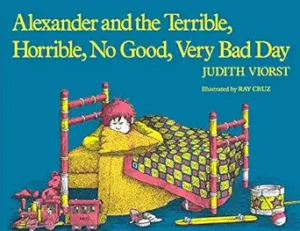
This book is the absolute gold standard for validating a child who feels like the universe is entirely against them.
Alexander wakes up with gum in his hair, and things only go downhill from there.
It perfectly captures the heavy, sinking feeling of watching everyone around you get exactly what they want.
The tone is wonderfully dramatic and deeply relatable.
It never belittles Alexander’s frustration, but rather allows him to feel every single ounce of his perceived bad luck.
What kids notice: Children immediately notice the sheer unfairness of the breakfast scene.
They deeply empathize with Alexander when his brothers find amazing toys in their cereal boxes, while he only gets cereal.
Story snapshot: Alexander is having a spectacularly bad day where absolutely nothing goes his way.
His brothers get the coveted window seats in the car, his best friend demotes him to third-best friend, and he gets scolded by his teacher.
He constantly threatens to move to Australia to escape his streak of terrible, unfair luck. Eventually, his mother gently reminds him that some days are just like that, even in Australia.
Why this book helps: When your child is hyper-fixated on a sibling’s unfair advantage, they often feel entirely alone in their misery.
This book helps by providing massive, comforting validation. It shows your child that everyone has days where they get the short end of the stick.
Furthermore, it teaches the perspective that a bad moment—or even a bad day—is temporary. Ultimately, it helps them zoom out and realize that unfair days are just a universal, passing part of life.
The Pain and the Great One by Judy Blume

Judy Blume is an absolute master at capturing the raw, messy reality of sibling dynamics.
This book is split into two distinct halves, offering a brilliant look at how the exact same family is viewed through two entirely different lenses.
It perfectly illustrates how both sides can feel completely disadvantaged at the exact same time.
The voice of each character is sharp, funny, and unmistakably authentic. It reads exactly like a real argument between a big sister and a little brother.
What kids notice: Kids are fascinated by the dual narrative structure. They quickly realize that the sister and the brother are complaining about the exact same events, but telling the story completely differently.
Story snapshot: An eight-year-old girl (The Great One) passionately lists all the reasons why her six-year-old brother (The Pain) gets an unfair amount of love and attention from their parents.
Then, the book flips over.
The six-year-old brother takes over the narration, listing all the reasons why his older sister gets better privileges and unfair praise.
In the end, it becomes hilariously clear that they actually love each other, even if they both think the other has it easier.
Why this book helps: This is the ultimate tool for teaching the virtue of perspective.
When your child screams that their sibling gets everything, they are trapped in their own narrow viewpoint.
This book helps by physically demonstrating how two people can experience the same reality completely differently.
It teaches your child that their sibling likely feels just as disadvantaged by different rules. Ultimately, it softens their jealousy by showing that fairness is a matter of perspective, not cold, hard math.
You Get What You Get by Julie Gassman
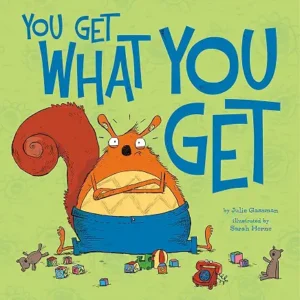
This book is incredibly direct, highly practical, and a must-have for any household struggling with constant complaints.
It introduces a simple, catchy phrase that parents have utilized for generations. It tackles the specific meltdown that occurs when a child does not receive their preferred color, flavor, or turn.
The illustrations are bright, energetic, and perfectly capture the absolute chaos of a full-blown childhood tantrum. It brings a necessary dose of humor to the exhausting reality of negotiating with a toddler.
What kids notice: Children immediately recognize Melvin’s classic meltdown behavior. They notice how his massive tantrums disrupt the entire classroom and make his friends uncomfortable.
Story snapshot: Melvin the squirrel absolutely hates it when things do not go exactly his way.
If he does not get his favorite backpack or the perfect cookie, he throws a spectacular, screaming fit.
His teacher finally introduces a classroom rule: “You get what you get and you don’t throw a fit.” Melvin struggles immensely to apply this new perspective, especially when he has to use it at home with his own family.
Why this book helps: Sometimes, children need a hard reset on their expectations.
This book helps by providing a memorable, repeatable script for moments of perceived unfairness.
It teaches your child that they cannot always control what advantage they are handed in life.
Furthermore, it shows them that throwing a fit over a minor disadvantage actually ruins their own happiness. It builds the crucial perspective of accepting your lot with grace.
It’s Not Fair! by Amy Krouse Rosenthal
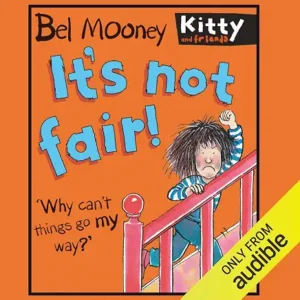
This book is a hilarious, rapid-fire collection of all the tiny, frustrating injustices of childhood.
It does not focus on one single narrative, but rather hops from one universally unfair scenario to the next. The energy is lighthearted, incredibly witty, and deeply validating.
Amy Krouse Rosenthal had a unique gift for turning everyday friction into joyous, relatable art. This book takes the sting out of jealousy by proving just how silly our complaints can sometimes be.
What kids notice: Kids laugh out loud at the ridiculous, exaggerated scenarios.
They relate deeply to the unfairness of a friend getting a cooler band-aid or someone else getting the bigger half of the treat.
Story snapshot: The book presents a series of vignettes where characters are faced with incredibly unfair situations.
One child has to go to bed while the adults stay up laughing.
Another child gets the broken cookie while their friend gets the perfect one. Every single page ends with the passionate, familiar cry of “It’s not fair!”
Why this book helps: Humor is one of the most effective tools for shifting a child’s perspective.
When a child is deep in a jealousy spiral, they feel like the victim of a massive conspiracy.
This book helps by playfully mirroring their dramatic feelings back to them.
It teaches them to take a deep breath and laugh at the small injustices of life. Ultimately, it helps them zoom out and realize that minor unfair advantages are not actually the end of the world.
Julius, the Baby of the World by Kevin Henkes
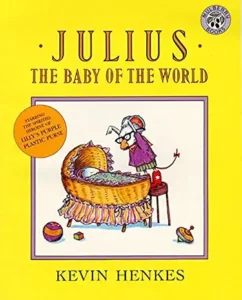
Kevin Henkes is a genius at capturing the complex, often ugly emotions of early childhood.
This story tackles the ultimate unfair advantage: the arrival of a brand new, highly celebrated baby sibling.
Lilly loved being the center of the universe, and she is absolutely furious when she is dethroned.
The book does not shy away from Lilly’s intense, bitter jealousy. It allows her to feel angry and resentful before beautifully guiding her toward a protective, loving perspective.
What kids notice: Children are completely captivated by Lilly’s hilarious, dramatic attempts to sabotage her baby brother. They notice how she whispers mean things into his crib when her parents are not looking.
Story snapshot: Lilly is the perfect older sister right up until Julius is actually born.
Suddenly, Julius gets all the presents, all the praise, and all the attention for simply blowing bubbles. Lilly is consumed by jealousy and insists he is the worst baby in the world.
However, when an annoying cousin comes over and insults Julius, Lilly’s perspective completely shifts. She fiercely defends him, realizing that he is her brother and she actually loves him.
Why this book helps: Sibling jealousy is arguably the most intense form of the “unfair advantage” complex.
This book helps by completely normalizing those dark, resentful feelings.
It shows your child that it is perfectly okay to feel jealous when someone else gets the spotlight.
Furthermore, it models a beautiful shift in perspective. It teaches them that a sibling is not a rival stealing their resources, but rather a teammate worth protecting.
Pig the Pug by Aaron Blabey
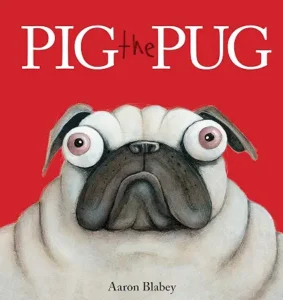
This book is frantic, incredibly funny, and perfect for exploring the absolute disaster of greed.
Pig is a pug who possesses every single unfair advantage in the house.
He has a massive pile of toys, and he absolutely refuses to share a single one with Trevor the dachshund.
The rhyming text is punchy and perfect for reading aloud with lots of expression.
It visually demonstrates exactly what happens when you fiercely guard your privileges instead of sharing the wealth.
What kids notice: Kids are instantly drawn to Pig’s ridiculous, bulging eyes and his massive, towering mountain of hoarded toys.
They also notice how sad and polite Trevor is in comparison.
Story snapshot: Pig the Pug has a massive collection of toys and fiercely refuses to share any of them with his housemate, Trevor.
When Trevor politely asks to play,
Pig throws a massive tantrum and climbs to the very top of his toy pile to guard it.
His greed causes the entire pile to collapse, sending Pig flying out the window. Ultimately, Pig ends up in a full body cast, entirely dependent on Trevor’s kindness.
Why this book helps: Sometimes, your child is not the one feeling jealous; they are the one hoarding the unfair advantage.
If your child struggles to share their privileges, this book acts as a hilarious, cautionary tale.
It helps by showing that being greedy and guarding your advantages ultimately leads to loneliness and disaster.
It teaches the perspective that sharing your good fortune actually makes the game vastly more fun for everyone involved.
The Berenstain Bears and the Green-Eyed Monster by Stan & Jan Berenstain
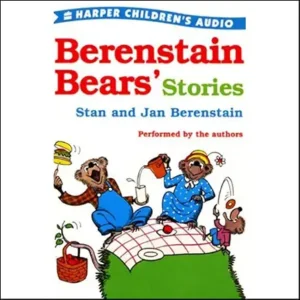
This classic trip to Bear Country hits the nail perfectly on the head.
It deals directly with the specific, burning jealousy that occurs when a sibling gets a massive, exciting new privilege.
The tone is cozy, familiar, and packed with the gentle, guiding wisdom that parents rely on.
It beautifully illustrates the physical and emotional toll that jealousy takes on a child. It shows how the green-eyed monster literally steals your ability to enjoy your own life.
What kids notice: Children immediately spot Brother Bear’s heavy, physical sulking. They notice how the green-eyed monster is drawn as a sneaky, invisible presence whispering in his ear.
Story snapshot: Sister Bear is finally old enough to get a brand new, shiny two-wheeler bicycle.
Brother Bear, who usually gets to enjoy all the big-kid privileges first, is suddenly overcome with intense jealousy.
He cannot even enjoy his own hobbies because he is so fixated on his sister’s new advantage.
Papa Bear gently pulls him aside, helping him see the bigger picture and remembering all the wonderful things Brother already has.
Why this book helps: This book directly tackles the exact pain point of a sibling getting a coveted privilege.
It helps your child understand that jealousy is a normal visitor, but not one they should listen to.
Furthermore, Papa Bear’s advice provides a perfect template for parents. It teaches your child to zoom out, count their own blessings, and find the perspective needed to realize that everyone’s special turn eventually comes around.
A Tale of Two Beasts by Fiona Roberton
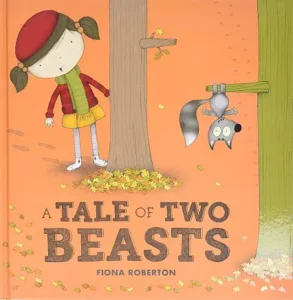
This is a profound, beautifully illustrated lesson in literal perspective.
It takes a single, simple event and proves that the “truth” entirely depends on who is telling the story. The artwork is expressive, charming, and perfectly complements the dual narrative.
It challenges children to step outside of their own immediate feelings. It is a brilliant, gentle way to introduce the concept of empathy and cognitive flexibility.
What kids notice: Kids are absolutely fascinated by the sudden shift in the middle of the book. They love noticing the tiny, visual details that completely change meaning when the beast starts telling his side of the story.
Story snapshot: In part one, a little girl finds a strange, sad beast in the dark woods.
She “rescues” him, brings him home, dresses him in a sweater, and feeds him, believing she is being a wonderful friend.
In part two, the beast tells the exact same story.
From his perspective, he was happily minding his own business when a terrible girl “kidnapped” him, forced him into a hot sweater, and fed him terrible food.
Why this book helps: When a child feels they have an unfair disadvantage, they are looking strictly through their own lens.
This book forcefully and hilariously stretches that narrow mindset.
It helps by teaching them that their sibling or friend might view the exact same situation completely differently.
It builds the profound perspective that our own feelings, while valid, are not the only truth in the room.
Put Your Child in the Heart of the Story
Books are truly incredible teachers for navigating complex emotions.
However, reading a beautiful story with your own name printed on the pages is pure, undeniable magic.
Therefore, Scrively helps you create 100% custom children’s books easily and beautifully.
You can seamlessly build a vibrant story where your child is the brave protagonist learning to manage their own green-eyed monster.
For instance, they can practice shifting their perspective, celebrating a friend’s win, and letting go of jealousy right on the printed page.
Ultimately, this places them at the very heart of their own emotional growth, allowing them to rehearse the virtue of perspective before the next unfair moment strikes.
Navigating the intense landscape of childhood fairness is rarely smooth.
In fact, cries of “It is not fair!” will likely echo through your hallways for years to come.
However, every single one of those frustrating moments is a profound chance to learn.
By reading these carefully curated stories, you give your child the right words and the right visual anchors.
Most importantly, you teach them that life does not have to be perfectly equal to be incredibly beautiful.
Finally, they will learn to zoom out, shift their lens, and view the world with a deep, peaceful perspective.