Better Together: Best Books About Teamwork for Kids
You’ve likely witnessed that sudden shift on the playground when a cooperative game turns into a standoff.
Maybe it’s two children tugging on the same truck or a fort-building project where everyone wants to be the boss. These moments are natural; for a child, the world often feels like a solo mission where winning is the only goal.
As a guide, you can shift this narrative by showing that life isn’t a series of individual races.
Teamwork is the genuine magic that happens when children decide the “we” is more interesting than the “me”. It’s about moving from competition to a shared sense of wonder and accomplishment.
Books serve as a beautiful rehearsal space for these developmental shifts. Within a story, a child can watch a character struggle alone, then feel the relief when a friend steps in.
They practice the emotional math of collaboration before applying it to their own real-life projects or playdates.
Up the Creek — Nicholas Oldland
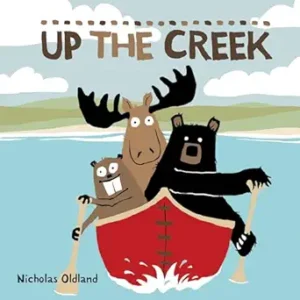
A bear, a moose, and a beaver go on a canoeing trip but struggle to agree on who should lead. Their constant bickering leads them toward a waterfall, forcing them to choose between arguing or synchronized paddling.
The lighthearted tone is perfect for children who might feel defensive about being “bossy.”
It allows them to laugh at the absurdity of the conflict while absorbing the lesson that a team needs a shared plan.
What kids notice: The physical comedy of the animals clumsily tipping the canoe.
Story snapshot: Three headstrong friends must put aside their egos to survive a dangerous river trip.
Why this book helps: It highlights the practical necessity of listening and compromising to reach a common goal.
The Antlered Ship — Dashka Slater
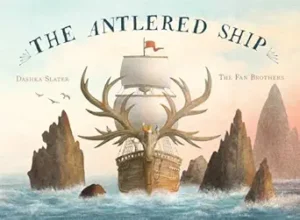
Marco the fox joins a crew of deer on a magnificent ship to find answers to his big questions.
Though they aren’t expert sailors, this diverse group realizes that their different perspectives are exactly what they need to navigate the high seas.
This story celebrates the idea that a ragtag group of friends can achieve greatness. It encourages children to value the unique skills others bring to the journey.
What kids notice: The detailed illustrations of the ship and the fox’s curious nature.
Story snapshot: A fox and a group of deer work together to pilot a ship through storms and challenges.
Why this book helps: It shows that a team doesn’t have to be perfect to be successful; it just needs to be supportive.
Swimmy — Leo Lionni
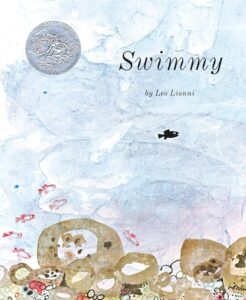
Swimmy is a small fish in a world of big predators. Rather than staying hidden, he organizes his community into a formidable shape that keeps them safe.
It’s a visual, powerful example of what happens when we stop being afraid and start working together.
The story demonstrates that while one person might lead the way, every individual contribution makes the larger vision possible. It reframes collective effort as a superpower rather than a chore.
What kids notice: The cleverness of the solution and how the tiny fish look like one giant creature.
Story snapshot: A lone survivor teaches a school of fish to swim in formation to scare off predators.
Why this book helps: It shows that individual differences, like Swimmy being black while the others are red, are vital strengths in a team.
Stone Soup — Jon J. Muth

Three monks visit a village hardened by suspicion and famine. By starting a pot of “stone soup,” they entice the villagers to contribute small ingredients until a communal feast is created, breaking down walls of isolation.
The virtue of teamwork here is shown through community and generosity. It demonstrates how a single collaborative idea can transform a group of strangers into a neighborhood.
What kids notice: How the soup changes and grows as more people share what they have.
Story snapshot: A village learns that sharing small amounts leads to an abundance for everyone.
Why this book helps: It teaches children about the “compound interest” of kindness and working for the common good.
The Invisible Boy — Trudy Ludwig
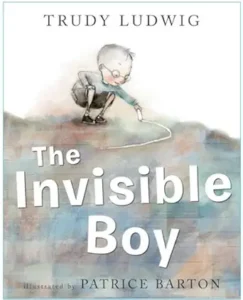
Brian feels invisible in his classroom until a new student arrives. Through a collaborative art project, Brian finally finds his voice and is welcomed into the group, showing that teamwork begins with noticing others.
This story reminds us that effective collaboration requires making space for every voice. It’s about the “social teamwork” of ensuring no one is left behind.
What kids notice: The way color returns to Brian’s world as he begins to feel included and valued.
Story snapshot: A quiet boy finds his place in the group through a shared school project.
Why this book helps: It encourages children to look for the “missing piece” of their team—the person who hasn’t been invited yet.
Boxes for Katje — Candace Fleming

In post-war Holland, a young girl receives a care package that sparks a massive relief effort between two communities. It illustrates how a shared purpose can mobilize people across oceans to solve large-scale problems.
The scale of teamwork here is inspiring, expanding a child’s definition of what a team can be. It shows that organized empathy is a powerful force for change.
What kids notice: The tangible items in the boxes and how the effort grows with every shipment.
Story snapshot: Two girls spark a movement that brings food and hope to an entire town.
Why this book helps: It demonstrates that being part of a team can mean being part of a global community of helpers.
A Sick Day for Amos McGee — Philip C. Stead

Amos McGee is a zookeeper who takes dedicated care of his animal friends. When he falls ill, the animals reciprocate by taking the bus to his house to care for him, showcasing the reciprocal nature of a healthy “pack.”
This story highlights the relational side of teamwork. It’s about noticing when a partner is struggling and stepping in to fill the gap without being asked.
What kids notice: The sweet, unexpected sight of zoo animals visiting a city home to help their friend.
Story snapshot: Animals work together to provide companionship and care for their sick zookeeper.
Why this book helps: It celebrates the “give and take” of partnership and the responsibility we have to look out for each other.
The Big Umbrella — Amy June Bates

An umbrella by the door magically expands to keep everyone dry, no matter how many people or animals join. It serves as a beautiful metaphor for the inclusivity that lies at the heart of the best collaborative efforts.
This book suggests that a collaborative spirit is expansive rather than restrictive. It teaches that there is always space for someone else to help hold the handle.
What kids notice: The vibrant red umbrella growing larger to protect a diverse group from the rain.
Story snapshot: A simple object provides shelter and a gathering place for an entire neighborhood.
Why this book helps: It removes competition from social situations and shows that welcoming others makes the group stronger.
Put Your Child at the Center of the Story
While these books show characters collaborating, there is something more powerful about seeing yourself as the hero of a team effort.
At Scrively, we believe the best way to internalize the virtue of teamwork is to experience it firsthand. Our platform lets you create custom books where your child stars as the main character.
Imagine a story where your child and their best friend must solve a mystery together. By putting your child in the “driver’s seat,” you provide a digital practice round for real-life cooperation.
When children see themselves succeeding as part of a team, they begin to believe they are exactly the kind of person who knows how to say, “Let’s do this together.”
As you read these stories, look for openings to discuss the “we.” These quiet conversations are the seeds of a collaborative spirit.
Eventually, the tug-of-war will transform into a conversation about how to build a bigger road together, and you’ll know the magic of teamwork has taken root.