
The Quiet Hero: 9 Children’s Books That Celebrate Unseen Good Deeds
Your child carries a cup to the sink without being asked. They tuck a blanket around a sleeping sibling.
At school, they slide a lonely classmate a crayon or pick up the paper towels that everyone else stepped over. No audience gathers. No trumpet sounds. The moment passes so quickly that even you might miss it.
But this is where character often begins: in the small decision to help when praise is unlikely. Children live in a world that makes visible achievements easy to count. There are scores, stickers, certificates, and cheerful announcements. Quiet goodness works differently.
It asks your child to notice a need, choose a response, and accept that the warm feeling inside may be the only reward.
That lesson can be difficult to explain directly.
Tell a child not to seek attention, and the conversation can sound like a warning against being proud. Stories offer a gentler route. A picture book lets your child watch someone make a generous choice, feel the cost of that choice, and see how goodness travels even when nobody keeps score.
The books below widen the definition of a hero. Some characters give away something precious. Some notice a problem that louder people overlook. Others plant, listen, include, or quietly stand beside someone who needs a friend. Together, they show your child that courage does not always make a speech. Sometimes it simply sees what needs doing—and does it.
A Good Deed Can Grow by Jennifer Chambliss Bertman, illustrated by Holly Hatam
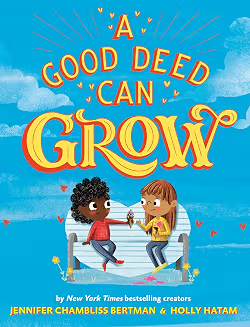
Bright, buoyant, and wonderfully expansive, this picture book begins with a single good deed and follows its influence outward. The idea feels almost botanical: kindness can be planted, tended, and passed along until something much larger blooms.
What kids notice: Children will follow the visual connections between one caring choice and the next. They see that the person who begins the chain does not need to direct it or even know where it eventually leads.
Story snapshot: A small act becomes an invitation. Others respond with helpful choices of their own, allowing goodwill to move through people and places in ways the first giver could never have planned.
Why this book helps: Your child learns that a deed does not become meaningful only when someone says thank you. Its meaning may live in what another person feels able to do afterward. That shifts the focus from recognition to impact—a powerful distinction for a child who is still learning why goodness matters.
A Small Kindness by Stacy McAnulty, illustrated by Wendy Leach
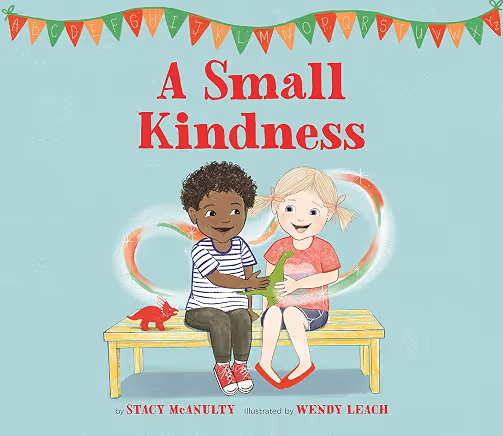
With minimal text and a school community full of expressive details, this book makes kindness feel wonderfully doable. There are no impossible sacrifices here. The acts are small enough to fit inside an ordinary day, which is precisely why they carry weight.
What kids notice: Color becomes a quiet storyteller. As kindness moves from child to child, the visual world changes, encouraging young readers to study faces, gestures, and background moments rather than waiting for the text to explain everything.
Story snapshot: One considerate action begins a pay-it-forward movement through a school. Students and teachers respond to one another until the community itself feels warmer and more connected.
Why this book helps: Your child can picture themselves inside this story immediately. Holding a door, making room, or offering encouragement requires no special talent and no adult instruction. The book turns goodness from an abstract virtue into a collection of choices your child can make before lunch.
The Starkeeper by Faith Pray
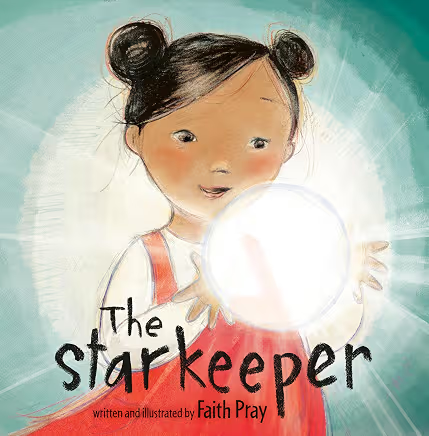
This luminous story gives kindness a magical glow without making it feel sugary. Its once-dreary town offers a striking emotional landscape, while the fallen star becomes a tender symbol of the light people carry for one another.
What kids notice: The world brightens as good deeds accumulate. Children can watch the palette and atmosphere change, discovering that illustration can reveal an emotional truth before a character fully understands it.
Story snapshot: A girl finds a fallen star and tries to care for it. When its light begins to fade, a chance gesture of kindness rekindles the glow and inspires a chain of good works across the town.
Why this book helps: The star offers your child a memorable metaphor: goodness needs to be shared to shine. Yet the girl cannot manufacture or control every later act. She contributes one honest gesture, and the community carries the light forward. That is quiet influence, not performance.
I Walk with Vanessa by Kerascoët
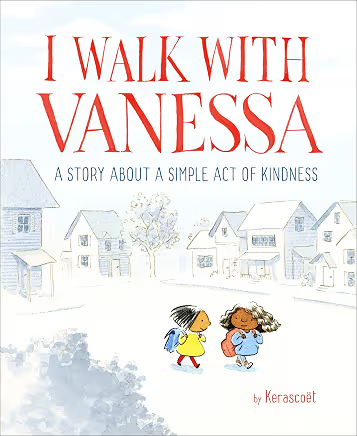
Wordless and emotionally precise, this book slows your child down. There is no narrator to announce who is brave. Your child must read posture, distance, expression, and movement—the same subtle signals that help someone notice hurt in real life.
What kids notice: Small visual decisions carry enormous meaning. A witness’s worried face, a lonely walk home, and the narrowing space between two children all invite careful observation and compassionate interpretation.
Story snapshot: After seeing a new student being bullied, another child wrestles with what happened. The next morning, she chooses to walk with Vanessa. Others join them, and a private act of solidarity becomes a community response.
Why this book helps: Your child sees that helping does not always mean confronting someone with a perfect speech.
Sometimes the first courageous act is simply refusing to let another person stand alone. Because the story is wordless, you can ask what each character may be thinking and let your child practice noticing what has not been said.
Those Shoes by Maribeth Boelts, illustrated by Noah Z. Jones
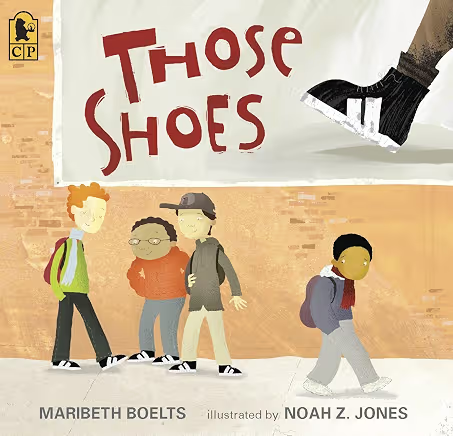
Jeremy wants the fashionable shoes everyone seems to have, and that wanting feels immediate and real. The story respects his longing instead of dismissing it. That honesty makes his later generosity feel earned rather than assigned.
What kids notice: Children recognize the social pressure surrounding clothes and belongings. They also notice that Jeremy and his classmate share an understanding that does not require a long conversation or a public display.
Story snapshot: Jeremy finds a thrift-store pair of the coveted shoes, but they are painfully small. He eventually gives them to a classmate who needs them and can wear them, surrendering something he desperately wanted.
Why this book helps: Quiet generosity often costs something. Jeremy’s choice matters because he knows exactly what he is giving up. Your child can explore the difference between discarding what is unwanted and offering what is precious—and why the second kind of giving reaches deeper.
Maddi’s Fridge by Lois Brandt, illustrated by Vin Vogel
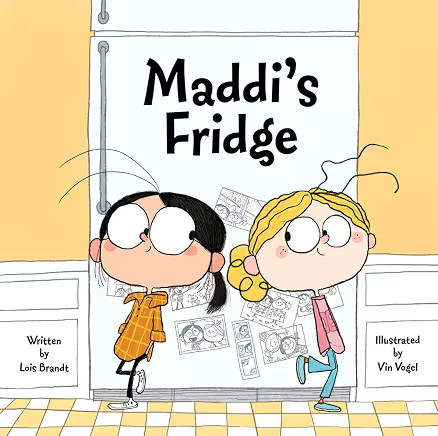
This warm story approaches childhood hunger through friendship, humor, and a problem a child genuinely wants to solve. It neither turns Maddi into a lesson nor makes Sofia’s first attempts perfectly wise. Both girls remain full characters.
What kids notice: Your child will notice the sharp contrast between two friends’ refrigerators and the care Sofia takes with Maddi’s feelings. They may also spot that good intentions sometimes need better information.
Story snapshot: Sofia discovers that Maddi has almost no food at home. After several secret and impractical attempts to carry food in her backpack, she realizes that keeping the secret leaves her friend hungry and turns to a trusted adult for real help.
Why this book helps: This is an important complication of the quiet-hero idea. Doing good discreetly can protect someone’s dignity, but secrecy is not always safe or effective. Your child learns that a trustworthy helper knows when a problem is too large to carry alone. Asking an adult for help can itself be the bravest good deed.
The Smallest Girl in the Smallest Grade by Justin Roberts, illustrated by Christian Robinson
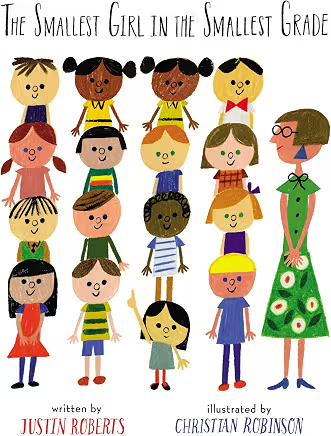
Sally McCabe is easy to overlook, but she is paying close attention. The rhythmic language and vivid school scenes celebrate a kind of power children do not always hear praised: the ability to observe before acting.
What kids notice: Sally remembers tiny details, including the hurts others ignore. Her size and quiet presence contrast with the size of the change she eventually helps begin.
Story snapshot: After repeatedly noticing bullying and exclusion at school, Sally decides she has seen enough. She speaks up, and her carefully gathered courage prompts others to reconsider how they treat one another.
Why this book helps: Unseen goodness starts with attention. Before your child can help, they must recognize who is being pushed aside, what has been left undone, or which joke has stopped being funny.
Sally shows that quiet children are not passive. Their observation can become moral clarity, and their voice can arrive exactly when it is needed.
Lubaya’s Quiet Roar by Marilyn Nelson, illustrated by Philemona Williamson
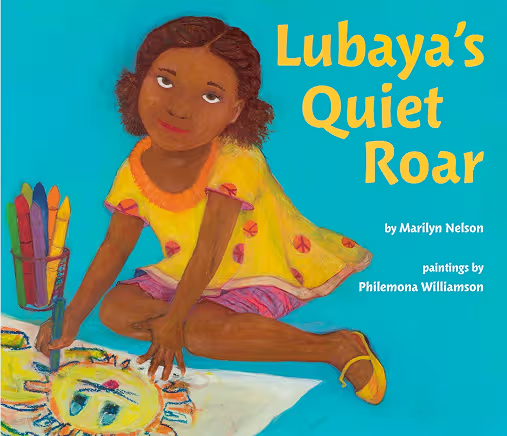
Lubaya prefers drawing behind the sofa while her family watches the news. She is not the loudest person in the room, but her imagination is active, generous, and deeply connected to the world outside her home.
What kids notice: Children see that art can communicate before its creator steps forward. Lubaya’s pictures begin in a private space, yet they hold ideas large enough to travel into a public gathering.
Story snapshot: Lubaya draws hopeful scenes on the backs of her parents’ old protest posters. When the family later carries those posters to a march, her images become part of the message and give her quiet creativity a powerful public life.
Why this book helps: Your child learns that contribution does not require becoming the loudest version of themselves. A thoughtful drawing, a carefully made sign, or an idea offered from the edge of the room can serve a community. The good deed may begin privately and still help others imagine a better world.
Quiet Is Strength by Mary Rand Hess, illustrated by Dow Phumiruk
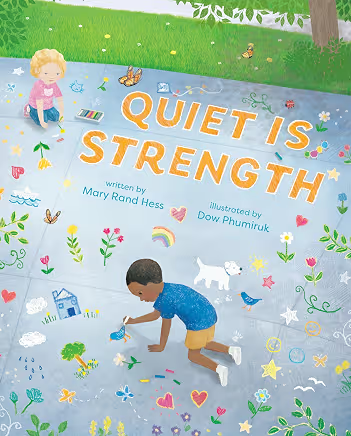
Gentle and lyrical, this book pauses the action. It treats stillness not as an empty space between important events, but as a source of perception, connection, and strength.
What kids notice: The peaceful park scenes invite readers to observe people enjoying solitude and companionship in different ways. Quiet is shown as warm and alive, never lonely or lesser.
Story snapshot: Rather than following a conventional plot, the book moves through moments of hush, nature, reflection, and togetherness, revealing what becomes possible when people are still enough to notice.
Why this book helps: Some children assume a hero must be bold, fast, and highly visible. This book loosens that belief. Quiet can help your child hear a friend’s hesitation, notice a creature in need, or pause before making a kinder choice. Stillness becomes the place where a good deed first takes shape.
Put Your Child in the Heart of the Story
When your child recognizes themselves inside a story, an idea can move from the page into their emotional world. A personalized Scrively story can place your child at the center of a meaningful adventure where noticing matters, compassion guides the next step, and a small deed changes someone else’s day.
The Best Heroes Are Not Always the Loudest
Your child may never receive a medal for including someone, protecting a confidence, watering a neglected plant, or giving away something they wanted. That is exactly why these moments deserve stories. They teach your child to measure goodness by the care it creates, not the attention it attracts. Read these books slowly. Look into the corners of the illustrations. Then keep watching the corners of your own day. A quiet hero may already be at work there.