How to Teach Your Child the Art of True Listening
You have probably seen it happen right in front of you.
Your child is nodding their head while a friend tells a story. However, their eyes are darting around the room.
They are physically present, but their mind is miles away. Most importantly, they are simply waiting for their turn to speak.
This is completely normal, because true listening is incredibly hard work. It requires us to pause our own busy thoughts.
Furthermore, it asks a child to create a quiet space for someone else’s feelings. That level of attentiveness takes years of practice.
Consequently, we cannot just tell our kids to “listen better” and expect instant results. We have to show them what deep, empathetic listening actually looks like.
For instance, we can use beautiful stories to model the magic of giving someone your full attention. The books below will help your child build this vital connection muscle.
Listen by Gabi Snyder
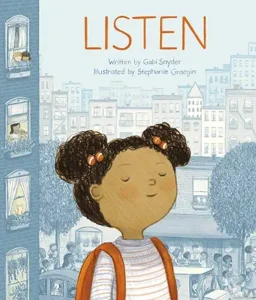
Our modern world is incredibly loud and full of distractions. This gentle book serves as a much-needed deep breath for busy minds.
It invites readers to pause, close their eyes, and tune into the subtle noises around them. Consequently, it turns a simple walk into an act of mindfulness.
What kids notice: Kids love the engaging, sensory illustrations that make the invisible sounds feel colorful and alive.
Story snapshot: A young girl steps out into a noisy, overwhelming street. Slowly, she learns to filter through the loud chaos to hear the quiet, beautiful sounds hidden beneath the surface.
Why this book helps: Learning to listen to others starts with learning to listen to the environment. For instance, this book helps children build their core focus. Most importantly, it teaches them how to calm their own bodies down so they can actually process what is happening around them.
Lacey Walker, Nonstop Talker by Christianne C. Jones
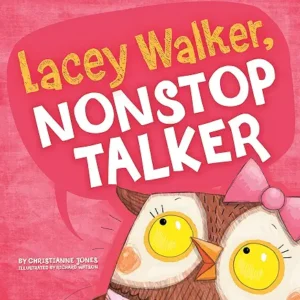
Some children process their big world by talking constantly. While enthusiasm is wonderful, a nonstop talker often misses out on the magic around them.
Lacey is a cheerful owl who simply cannot stop chatting. However, a sudden lost voice teaches her a very valuable lesson.
What kids notice: Young readers easily recognize themselves in Lacey’s joyful, bubbling energy and her struggle to stay quiet.
Story snapshot: Lacey Walker talks all day long, ignoring her family and missing important cues at school. When she loses her voice, she is forced into silence and discovers that her friend tells great jokes and her brother is actually quite helpful.
Why this book helps: This funny story provides a gentle mirror for very talkative children. Furthermore, it frames listening not as a punishment, but as a gateway to discovering new joys. Most importantly, it proves that when we close our mouths, our ears finally get a chance to learn.
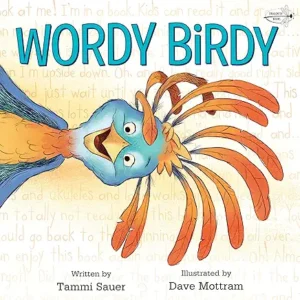
Wordy Birdy by Tammi Sauer
Listening is not just a social skill. Often, it is a vital tool for personal safety and basic awareness.
Wordy Birdy loves the sound of her own voice more than anything. Consequently, her lack of attention leads her right into a very silly, dangerous situation.
What kids notice: Kids find Wordy Birdy’s absolute oblivion hilarious, especially when danger is sneaking up right behind her.
Story snapshot: A very chatty bird talks her way through a deep, dark forest. Because she refuses to listen to her friends’ warning signs, she marches directly into the territory of a hungry bear.
Why this book helps: Humor is often the best teacher for stubborn habits. For instance, this book uses silly stakes to show exactly why tuning out your friends is a bad idea. Furthermore, it reinforces that good friends will still help you out, even when you forget to listen.
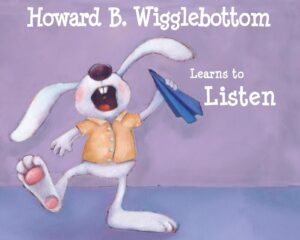
Howard B. Wigglebottom Learns to Listen by Howard Binkow
For some children, their bodies move faster than their brains can process words. Howard is a classic example of a well-meaning kid with highly distracted ears.
His bouncy energy constantly lands him in hot water. Eventually, he realizes that tuning in makes his days much easier.
What kids notice: Children instantly connect with Howard’s bouncy, restless energy and his desire to just play instead of paying attention.
Story snapshot: Howard the bunny gets into trouble at school because he refuses to listen to his teacher or his peers. After a particularly rough day, he decides to practice specific, active listening techniques to turn his behavior around.
Why this book helps: This story breaks the abstract concept of “listening” into concrete, physical steps. Furthermore, it shows kids that making eye contact and keeping a quiet body are active choices they can control. Most importantly, it empowers children to take charge of their own focus.
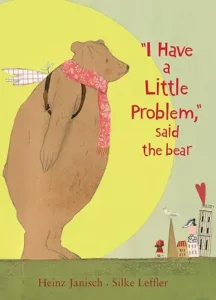
I Have a Little Problem, Said the Bear by Heinz Janisch
It is incredibly frustrating when someone interrupts you before you can finish your thought. This book perfectly illustrates the annoyance of assumptions.
The bear just needs a little help, but everyone he meets immediately jumps to the wrong conclusion. Consequently, his simple problem remains completely unsolved.
What kids notice: Kids feel a strong sense of empathy for the poor, interrupted bear as the other animals keep forcing silly solutions on him.
Story snapshot: A bear tries to tell various villagers about a problem he is having. However, every single person cuts him off and hands him a random item, completely failing to hear what he actually needs.
Why this book helps: This is a powerful lesson about the danger of jumping to conclusions. For instance, it shows children that guessing what someone wants is not the same as listening. Furthermore, it teaches the vital virtue of patience when a friend is trying to find the right words.
Quiet Please, Owen McPhee! by Patrice Barton
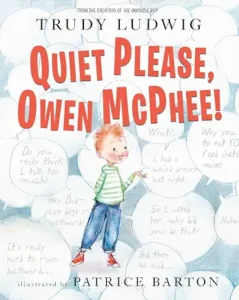
Sometimes, our own noise prevents us from connecting with the people we care about the most. Owen learns this the hard way.
He means well, but his constant chatter steamrolls his classmates. However, a case of laryngitis forces him to change his entire approach.
What kids notice: Children notice how annoyed the other kids get when Owen talks over them during group projects.
Story snapshot: Owen McPhee talks so much that he accidentally ruins his friends’ playtime and science experiments. When a sore throat steals his voice, he spends the day actively listening and realizes how much better teamwork can be.
Why this book helps: It highlights the direct link between listening and successful teamwork. Most importantly, it shows that making space for others’ ideas actually makes the final result much better. Furthermore, it celebrates the quiet strength of observation.
The Listening Walk by Paul Showers
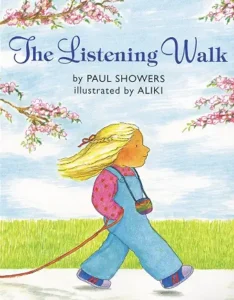
Deep listening is a habit that we can practice anywhere. This classic story turns a simple neighborhood stroll into a rich sensory experience.
It reminds us that the world is full of fascinating stories if we just stop talking long enough to hear them.
What kids notice: Young readers are drawn to the fun, onomatopoeic words used to describe the everyday sounds of the neighborhood.
Story snapshot: A young girl goes for a walk with her father and her dog, keeping completely quiet the entire time. By staying silent, she notices the distinct sounds of lawnmowers, sprinklers, tapping shoes, and chirping crickets.
Why this book helps: This book is an excellent primer for mindfulness and grounded focus. For instance, it provides parents with an immediate, real-world activity they can recreate with their kids right after reading. Most importantly, it proves that attentiveness is its own special kind of adventure.
The Rabbit Listened by Cori Doerrfeld
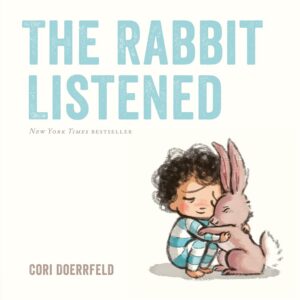
Sometimes the best way to help a friend is to say absolutely nothing. This beautifully illustrated book perfectly captures the quiet power of holding space.
When Taylor’s block tower falls down, every animal tries to fix the problem. However, only the rabbit knows exactly what to do.
What kids notice: Children immediately spot how frustrated Taylor gets when the other animals offer loud, bossy advice.
Story snapshot: Taylor experiences a sudden disappointment when a grand block tower crashes to the ground. Various animals rush in to suggest ways to react, but the rabbit simply sits quietly nearby until Taylor is ready to talk.
Why this book helps: This story brilliantly separates fixing a problem from hearing a problem. Furthermore, it shows kids that they do not need to have the perfect advice to be a great friend. Most importantly, it teaches children that true attentiveness is an act of deep love and patience.
Put Your Child in the Heart of the Story
Does your child struggle to pause and truly listen when big feelings take over?
With Scrively, an adult can use AI to create a personalized story around a child’s interests. Review the words and illustrations before reading together. A cover and sample pages are free to preview; finishing or downloading a book requires a paid purchase. Book and editing allowances depend on the plan and available credits. Generation time and results vary. These stories are for creative reading, not therapy or a guarantee of learning or behavior changes.
It is point-and-click simple to generate unlimited stories tailored exactly to your child’s current emotional hurdles.
The Quiet Strength of Hearing Others
Teaching a child to truly listen is one of the greatest gifts you can give them.
It is the absolute foundation of deep empathy, lasting friendship, and strong teamwork. When we show them how to quiet their own minds, we open up their entire world.
Most importantly, by reading these stories together, you are modeling the exact focused attention that you want them to learn.