

Best Detective Books for Kids Who Love Solving Mysteries
Some kids don’t just read stories — they investigate them.
They notice tiny details, ask sharp questions, and feel a quiet thrill when pieces start fitting together.
For these kids, mystery stories aren’t about danger or darkness. They’re about curiosity, reasoning, and the deep satisfaction of figuring something out.
Detective and mystery books tap into a powerful developmental instinct: the desire to understand how things work.
When kids follow clues, track patterns, and make predictions, they’re practicing critical thinking in a way that feels playful rather than academic.
They’re learning to slow down, pay attention, and trust their own observations.
The best children’s mystery books balance intrigue with emotional safety.
They offer puzzles without fear, suspense without chaos, and questions without pressure.
Instead of relying on villains or high-stakes danger, these stories focus on logic, teamwork, kindness, and persistence — reinforcing that thinking carefully is a strength.
Mystery stories also build confidence.
Each solved clue sends a quiet message: You can figure this out. For kids who sometimes doubt themselves, detective books provide reassurance that careful thinking, patience, and curiosity matter just as much as speed or bravado.
Below, you’ll find eight wonderful detective and mystery books for kids who love solving problems.
Each one invites children to observe, reason, and engage — all while feeling safe, supported, and empowered along the way.
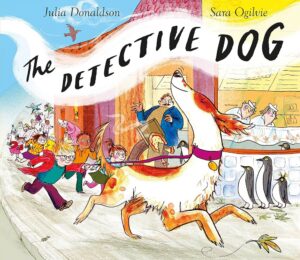
Detective Dog Nell — Julia Donaldson
Core Themes:
• Problem-solving and logical thinking
• Observation and attention to detail
• Emotional safety while exploring mystery
Story Snapshot:
Nell the dog has an extraordinary sense of smell, which she uses to solve everyday mysteries at school.
When classroom items go missing, Nell follows clues with calm determination, leading readers through a gentle, satisfying investigation.
Why this book is great for kids who love solving mysteries:
This story models careful observation and step-by-step reasoning without urgency or fear.
Kids are encouraged to notice details alongside Nell and trust that patient thinking leads to clear answers — a perfect introduction to detective-style problem solving.
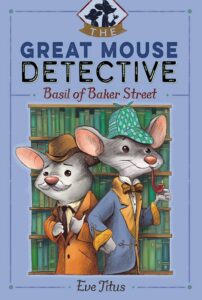
The Great Mouse Detective — Eve Titus
Core Themes:
• Problem-solving and logical thinking
• Observation and attention to detail
• Emotional safety while exploring mystery
Story Snapshot:
Basil of Baker Street, a brilliant mouse detective, uses sharp reasoning to solve the mystery of missing twins.
With clever deductions and steady pacing, the story keeps young readers engaged without overwhelming them.
Why this book is great for kids who love solving mysteries:
Basil demonstrates how thinking carefully and connecting clues leads to solutions.
The mystery unfolds logically, inviting kids to predict outcomes while reinforcing that intelligence and curiosity are powerful tools.
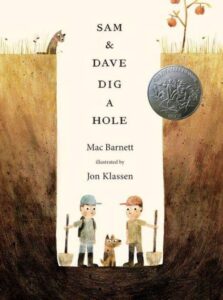
Sam and Dave Dig a Hole — Mac Barnett
Core Themes:
• Problem-solving and logical thinking
• Observation and attention to detail
• Emotional safety while exploring mystery
Story Snapshot:
Sam and Dave set out to dig a hole, narrowly missing extraordinary discoveries along the way. The mystery lies not in danger, but in noticing what’s hidden just out of sight.
Why this book is great for kids who love solving mysteries:
This book rewards attentive readers. Kids who notice visual clues feel a spark of insight, learning that observation matters — even when characters miss what readers can see.
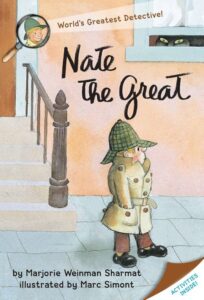
Nate the Great — Marjorie Weinman Sharmat
Core Themes:
• Problem-solving and logical thinking
• Observation and attention to detail
• Emotional safety while exploring mystery
Story Snapshot:
Nate, a calm and confident young detective, solves neighborhood mysteries using logic and careful questioning. Each case is short, approachable, and satisfying.
Why this book is great for kids who love solving mysteries:
Nate models thoughtful reasoning and persistence. The mysteries are simple enough for kids to follow yet rich enough to encourage predictions and clue-tracking.
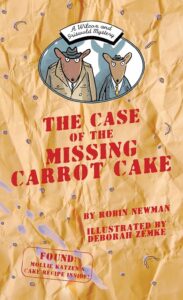
The Case of the Missing Carrot Cake — Robin Newman
Core Themes:
• Problem-solving and logical thinking
• Observation and attention to detail
• Emotional safety while exploring mystery
Story Snapshot:
Wilcox, the detective dog, investigates the disappearance of a prized carrot cake. The mystery unfolds through polite questioning and gentle humor.
Why this book is great for kids who love solving mysteries:
This story emphasizes fairness, logic, and empathy. Kids learn that solving mysteries doesn’t require confrontation — just listening, thinking, and asking good questions.
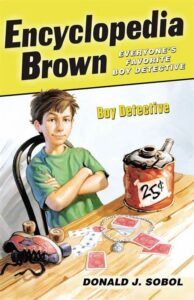
Encyclopedia Brown — Donald J. Sobol
Core Themes:
• Problem-solving and logical thinking
• Observation and attention to detail
• Emotional safety while exploring mystery
Story Snapshot:
Each short mystery challenges readers to solve the case before the answer is revealed. Clues are hidden in plain sight, rewarding careful reading.
Why this book is great for kids who love solving mysteries:
Kids are treated as capable thinkers. The format invites active participation, reinforcing confidence and sharpening attention to detail.

Mr. Lemoncello’s Library Olympics — Chris Grabenstein
Core Themes:
• Problem-solving and logical thinking
• Observation and attention to detail
• Emotional safety while exploring mystery
Story Snapshot:
A group of kids navigates puzzles, riddles, and challenges inside a remarkable library. The mystery unfolds through teamwork and intellectual play.
Why this book is great for kids who love solving mysteries:
This book celebrates thinking as fun. The puzzles encourage collaboration and curiosity without relying on fear or urgency.

The Boxcar Children — Gertrude Chandler Warner
Core Themes:
• Problem-solving and logical thinking
• Observation and attention to detail
• Emotional safety while exploring mystery
Story Snapshot:
Four siblings encounter small mysteries as they build a life together and uncover secrets along the way. The tone remains steady and reassuring.
Why this book is great for kids who love solving mysteries:
The mysteries unfold through cooperation and thoughtful observation. Kids see how patience and trust lead to understanding.
Encouraging Young Detectives
Mystery stories don’t need high stakes or scary twists to be powerful.
For kids, the real magic lies in noticing details, asking questions, and discovering that their thoughts matter.
When children are given space to wonder — without pressure to be right — they build confidence that lasts far beyond the page.
Honoring a child’s pace is key.
Some kids will race ahead, eager to solve every clue. Others will linger, rereading passages and quietly piecing things together. Both approaches are valuable.
Mystery books offer a safe space where thinking is celebrated, not rushed.
If your child feels inspired to go beyond reading and start creating, Scrively is a gentle place to begin.
Kids can experiment with writing their own mystery stories or imaginative adventures — even simple ones — building confidence through creativity and curiosity.
In the end, detective books remind kids of something powerful: the world is full of clues, and they are more than capable of understanding them.