The Love We Carry: Best Books for Kids Who Have Siblings With Disabilities
In many families, love is not a simple story — it’s a layered one.
When a child has a sibling with a disability, their world can feel both extraordinary and ordinary at once.
They learn to notice things others might miss — the sound of a laugh, the rhythm of a good day, the quiet victories that mark progress.
They also feel things more deeply: pride, confusion, frustration, tenderness, and joy can all live side by side.
Parents often see this complexity reflected in their children’s eyes — the way one moment overflows with affection and the next holds a tinge of jealousy or protectiveness that words can’t quite reach. It’s not something to fix; it’s something to honor.
These children are learning one of life’s most profound lessons early: love is not perfect, but it’s wide enough to hold everything.
Stories can help make sense of that.
When a child sees their own feelings mirrored in a book — even the messy or confusing ones — it gives them language and permission to feel them fully.
Books become bridges, helping siblings find connection where words sometimes fail.
The following books open those bridges gently. They invite laughter, empathy, and honest conversation. Each one honors the truth that all feelings belong — and that love, in its truest form, can hold them all.
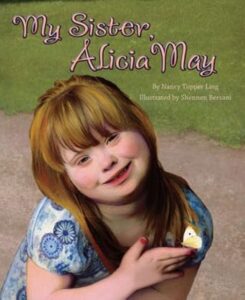
My Sister, Alicia May — Nancy Tupper Ling
Rachel’s younger sister, Alicia May, has Down syndrome — and a spark that makes every day unforgettable.
Through Rachel’s eyes, we see the delight, exasperation, and fierce loyalty that define their bond.
Alicia may frustrate her sister at times, but she also fills their world with laughter, wonder, and love that breaks every boundary.
The watercolor illustrations mirror the tenderness of sisterhood, showing that difference can be both ordinary and deeply beautiful.
Why it helps: This story normalizes disability while celebrating the sibling relationship as dynamic and real — not idealized, but deeply loving.
Best for: Ages 4–8; ideal for bedtime or shared reading between siblings.
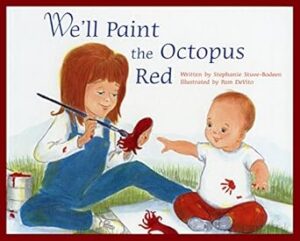
We’ll Paint the Octopus Red — Stephanie Stuve-Bodeen
Emma can’t wait to meet her new baby brother.
She’s already planning all the things they’ll do together — painting, playing, dancing.
When she learns that Isaac has Down syndrome, Emma’s excitement turns to uncertainty.
With her father’s gentle reassurance, she discovers that every dream she had for her brother is still possible — just with a little more patience and a lot of love.
The story closes with a sense of calm confidence that love adapts beautifully to what life brings.
Why it helps: It helps children voice their hopes and worries around a sibling’s diagnosis, turning uncertainty into empowerment.
Best for: Ages 3–7; a tender story to read together after a new sibling arrives.
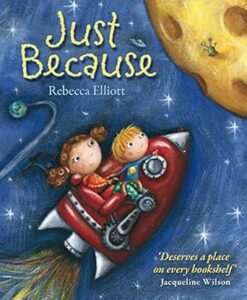
Just Because — Rebecca Elliott
Toby adores his sister Clemmie “just because.” She can’t walk or talk, but she can smile, listen, and make Toby laugh harder than anyone.
Told in Toby’s playful voice, the book flips assumptions upside down — reminding readers that love doesn’t depend on words or abilities.
It’s a gentle, funny, and affirming look at life with a disabled sibling, told from a place of pure affection and acceptance.
Why it helps: It gives siblings a way to see their brother or sister as whole — not defined by limitations, but by the joy they bring.
Best for: Ages 3–8; perfect for storytime or classroom sharing.
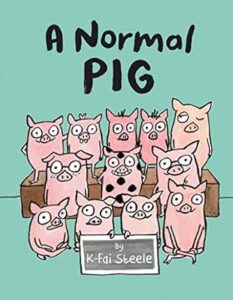
A Normal Pig — K-Fai Steele
Pip is a pig who loves art, sandwiches, and being herself — until someone at school points out how “different” she is. Suddenly, the things that made Pip proud start to make her feel small.
But with her family’s warmth and humor, she finds her way back to confidence and connection.
While not specifically about disability, A Normal Pig beautifully captures the feeling of being the “other” — a common experience for siblings navigating a world that doesn’t always understand their family’s story.
Why it helps: Encourages empathy and self-worth, helping siblings feel proud of their unique family identity.
Best for: Ages 4–9; a great read-aloud for discussing difference and belonging.
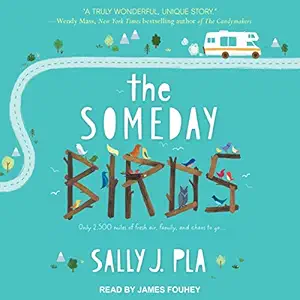
The Someday Birds — Sally J. Pla
Charlie, a boy on the autism spectrum, sets out on a cross-country trip with his siblings to visit their injured father.
Along the way, they chase a list of “someday birds” their dad once dreamed of seeing.
The journey is messy, funny, and profoundly human — full of sibling bickering, unexpected allies, and tender moments of growth. The story doesn’t shy away from the hard parts, but it keeps coming back to love as the compass that guides them home.
Why it helps: Offers a compassionate window into neurodiversity while honoring the resilience and humor of family bonds.
Best for: Ages 9–13; an ideal middle-grade novel for family book clubs or independent readers.
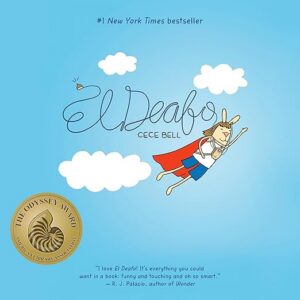
El Deafo — Cece Bell
In this graphic novel memoir, Cece Bell turns her childhood experience of hearing loss into a story that’s equal parts hilarious and heroic.
As Cece navigates school with her bulky hearing aid, she imagines herself as “El Deafo,” a superhero whose powers help her face the awkwardness and triumphs of growing up.
The story radiates warmth, humor, and vulnerability — showing siblings and families that difference can be a source of strength and self-discovery.
Why it helps: Normalizes assistive technology and self-advocacy while celebrating confidence and empathy.
Best for: Ages 8–12; perfect for graphic-novel lovers or families exploring disability pride.
What Siblings Often Feel (But Don’t Always Say)
- “I love them so much, but sometimes I wish things were easier.”
- “I feel proud — but also left out when all the attention goes to my sibling’s needs.”
- “I get angry at people who don’t understand our family.”
- “Sometimes I’m embarrassed, and then I feel guilty for that.”
- “I know my sibling is special — and so am I.”
- “I want to be seen for who I am, not just as the helper.”
- “I wouldn’t trade them for anything — but it can still be hard.”
How to Support the Sibling Bond
- Make space for honesty: Encourage your child to name feelings without judgment. Remind them that every emotion belongs.
- Celebrate both children individually: Give each child special moments that are about them — not their sibling.
- Share stories like these: Reading together helps siblings find language for their experience and builds empathy both ways.
- Involve siblings in care by choice, not duty: Invite, don’t assign. Let them participate in ways that feel empowering, not obligatory.
- Honor their need for normalcy: Let them have friends, activities, and quiet — moments that aren’t about their sibling’s disability.
- Model acceptance through your words: The way you talk about difference shapes how they see it — as something to cherish, not hide.
Simple 5-Minute Connection Activity
After reading one of these books, sit side by side and draw a small heart. Inside the heart, write one thing you love about your sibling.
Outside the heart, write one thing that can feel hard. Talk together about how both belong — how love makes space for both.
You can even color the heart with two shades: one for the easy parts, one for the complicated parts. Hang it somewhere as a quiet reminder that love is wide enough for it all.
Parenting in a family shaped by disability is not about having all the right words — it’s about staying open.
Each child’s experience is different, but love, when named and nurtured, grows strong roots. Your family’s story is unfolding uniquely, beautifully, and bravely.
If you’d like to help your children tell their story — in drawings, words, or reflections — Scrively offers gentle tools that make it easy to capture those moments.
No pressure, no perfection — just the stories that make your family yours.