The Journey Continues: Books That Inspire Lifelong Learning
You know that beautiful, fleeting moment. You catch your child staring intently at a bug on the sidewalk.
You watch them stack blocks in a strange, precarious new way. You listen as they ask a question so profound it stops you right in your tracks.
These are the quiet sparks of a lifelong learner. However, in a world focused heavily on test scores and finish lines, it is easy for children to view learning as a chore.
They begin to think of education as a box to check rather than a magical, never-ending journey.
Most importantly, we want to shift that mindset. We want to show them that the world is a giant, wondrous classroom.
Furthermore, we want them to realize that the joy is in the discovery, not just the right answer. Consequently, we need stories that celebrate curiosity, asking questions, and the thrill of figuring things out.
For instance, when a child reads about another child making a messy discovery, it gives them permission to do the same.
Therefore, we have curated a list of incredible books to nurture the virtue of lifelong learning. These stories will help your child see that the journey of learning truly never ends.
Ada Twist, Scientist by Andrea Beaty
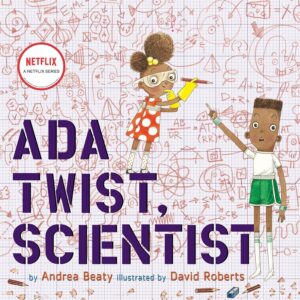
This book is a vibrant, rhythmic celebration of the question “Why?” It follows a young girl with an endlessly curious mind and a habit of conducting very messy science experiments.
Ada’s parents are initially overwhelmed by her chaotic learning process. However, they soon realize that her boundless curiosity is a profound gift that needs to be nurtured, not silenced.
What kids notice: Children immediately notice the hilarious, colorful messes Ada makes while trying to figure out how the world works.
Story snapshot: Ada is a little girl who does not speak until she is three, but when she does, she unleashes a torrent of questions. She conducts elaborate experiments to discover the source of a terrible smell, leading her family to embrace her scientific spirit.
Why this book helps: This book helps because it validates the relentless questioning phase of childhood. Furthermore, it teaches children that asking “why” and “how” is the very foundation of intelligence.
Most importantly, it shows parents and kids alike that learning is often a loud, messy, and non-linear process.
Consequently, it removes the pressure to simply know the answer, replacing it with the joy of discovering the answer through trial, error, and joyful investigation.
Therefore, it builds a rock-solid foundation for lifelong learning by making curiosity feel like a superpower.
The Word Collector by Peter H. Reynolds
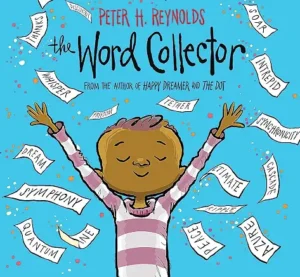
This story is a gentle, enchanting look at the power of language and the beauty of paying attention. It centers on a boy named Jerome who doesn’t collect stamps or coins, but words.
Jerome collects short words, multi-syllable words, and words that sound like what they mean. Consequently, his collection grows, showing how learning a new word opens up a completely new way to see the world.
What kids notice: Kids notice the beautiful, floating scraps of paper and the delightful sounds of the unique words Jerome writes down.
Story snapshot: Jerome enthusiastically collects words he reads, hears, and sees, organizing them into scrapbooks. When his collection accidentally spills and mixes together, he discovers the magic of stringing words into poetry and songs, eventually sharing his collection with the world.
Why this book helps: This book helps because it transforms the act of building a vocabulary into a magical treasure hunt.
Furthermore, it demonstrates that learning is an active, daily pursuit rather than something that only happens inside a classroom.
Most importantly, it empowers children to take ownership of their own education by actively seeking out new information that delights them.
For instance, it shows how gathering small pieces of knowledge over time leads to a massive, beautiful ability to express oneself. Ultimately, it frames lifelong learning as a joyous act of gathering the world’s hidden treasures.
The Book of Mistakes by Corinna Luyken
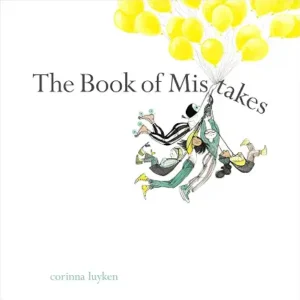
This beautifully illustrated book completely flips the script on what it means to mess up. It is a visual journey showing how an artist turns accidental ink splatters and weird lines into a masterpiece.
It is calm, reassuring, and deeply creative. Furthermore, it gently reminds the reader that what looks like a ruinous error is often just the beginning of a brand-new idea.
What kids notice: Children love watching the initial “mistake” literally transform into something cool, like a bush or a quirky character, on the very next page.
Story snapshot: An artist starts a drawing and immediately makes a mistake with one eye being bigger than the other. Instead of throwing the paper away, the artist incorporates every single smudge and drip into an ever-expanding, gorgeous landscape.
Why this book helps: This book helps because it directly attacks the perfectionism that often kills a child’s desire to learn.
Furthermore, it teaches the crucial concept of cognitive flexibility, showing that a detour is not a dead end.
Most importantly, it proves that the process of learning is fluid and requires the courage to make mistakes.
Consequently, when children stop fearing failure, they open themselves up to lifelong discovery. Therefore, this story is a vital tool for helping kids embrace the messy, imperfect, and beautiful journey of acquiring new skills.
What Do You Do With an Idea? by Kobi Yamada
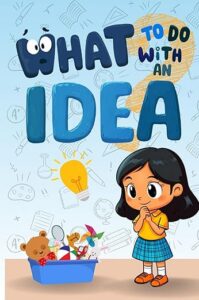
This book explores the vulnerability of having an original thought and the bravery required to let it grow. The “idea” is depicted as a physical, golden egg with legs that follows a young boy around.
At first, the boy is embarrassed by his idea and tries to hide it. However, as he begins to feed it with his attention, the idea grows, bringing vibrant color to his entire world.
What kids notice: Kids are deeply drawn to the visual transition from black-and-white sketches to brilliant, explosive color as the boy embraces his idea.
Story snapshot: A young boy gets a strange new idea and initially tries to ignore it out of fear of what others might think. As he gains confidence, he nurtures the idea, and it eventually grows so large and beautiful that it changes the world around him.
Why this book helps: This book helps because it tackles the insecurity that comes with independent thinking.
Furthermore, it shows children that learning and innovating require patience and protection.
Most importantly, it validates the quiet, internal process of developing a new thought before sharing it with others.
For instance, it teaches kids that their unique perspective is valuable and worth exploring, even if it feels awkward at first. Consequently, it fuels the intrinsic motivation needed for lifelong learning, proving that following your curiosity can lead to magnificent things.
The Most Magnificent Thing by Ashley Spires
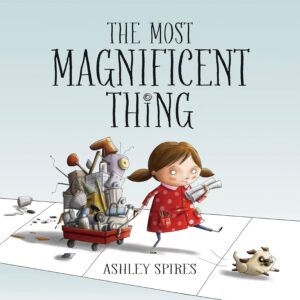
This is a raw, relatable story about the intense frustration of trying to invent something and failing repeatedly. It features a determined little girl and her supportive canine assistant.
The girl knows exactly what she wants to build, but her hands just cannot get it right. Consequently, she has a massive, very realistic meltdown before learning how to reset and try again.
What kids notice: Children deeply relate to the girl’s explosive frustration when her hard work simply will not cooperate with her vision.
Story snapshot: A girl sets out to build a magnificent invention, but attempt after attempt fails miserably, leading her to smash her tools in anger. After her dog convinces her to take a walk to cool down, she returns with fresh eyes and finally pieces together the perfect creation.
Why this book helps: This book helps because it normalizes the extreme frustration that often accompanies deep learning.
Furthermore, it provides a practical roadmap for emotional regulation by showing the power of simply walking away to take a breath.
Most importantly, it emphasizes that perseverance is a muscle that must be worked out through repeated failure.
For instance, the girl realizes that every “failed” attempt actually contained a small piece of the right answer. Therefore, it teaches children that lifelong learning requires grit, patience, and the ability to manage big emotions.
A Squiggly Story by Andrew Larsen
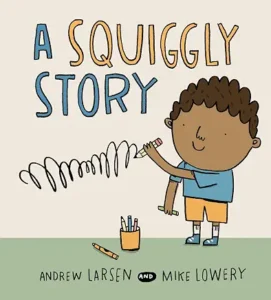
This story is a brilliant celebration of early literacy and the courage to start before you are perfectly ready. A young boy wants to write a story like his older sister, but he only knows a few letters.
His sister encourages him to start exactly where he is, using squiggles, single letters, and simple drawings. However, his simple marks soon turn into a sprawling, imaginative narrative.
What kids notice: Kids love seeing the boy’s actual squiggles and messy letters on the page, realizing that their own drawings are a valid form of writing.
Story snapshot: A little boy feels left out because he cannot write real words yet. With his sister’s gentle guidance, he begins writing a story using shapes, lines, and the few letters he knows, proudly sharing his epic vampire-ninja tale with his class.
Why this book helps: This book helps because it breaks down the overwhelming wall of academic expectations.
Furthermore, it proves that learning is an incremental journey, not an overnight transformation.
Most importantly, it validates the child’s current ability level while gently encouraging them to take the very next step.
Consequently, it removes the intimidation factor from learning a complex new skill like reading or writing. Therefore, it builds massive confidence, showing kids that lifelong learning starts with a single, brave squiggle.
How to Catch a Star by Oliver Jeffers
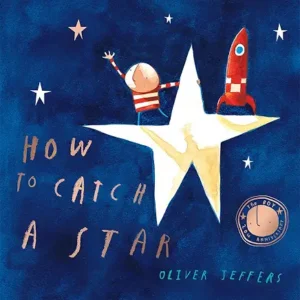
This charming book is a quiet meditation on goal-setting, problem-solving, and managing expectations. A young boy loves stars so much that he decides he simply must catch one.
He tries everything he can think of, from climbing the tallest tree to trying to use a life preserver. Furthermore, when his initial plans fail, he has to learn how to adapt his vision.
What kids notice: Children are captivated by the boy’s creative, sometimes silly attempts to reach into the night sky to grab a star.
Story snapshot: A boy spends his entire day plotting different ways to catch a star, waiting until the sun goes down to try his methods. After realizing the stars are too high, he finds a beautiful starfish washed up on the beach, realizing he has caught a star after all.
Why this book helps: This book helps because it beautifully illustrates the process of hypothesis, trial, and adaptation. Furthermore, it teaches children that the learning process often yields unexpected, but deeply rewarding, results.
Most importantly, it highlights the virtue of patience and the necessity of shifting your perspective when a problem seems unsolvable.
For instance, the boy does not give up his goal; he simply redefines what success looks like. Consequently, it fosters the flexible, open-minded thinking that is absolutely critical for a lifelong learner.
The Boy Who Harnessed the Wind (Picture Book Edition) by William Kamkwamba
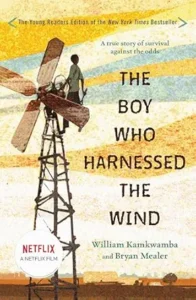
This powerful, true story showcases the ultimate triumph of self-directed learning and resilience. It follows a young William in Malawi who faces a terrible drought that threatens his village.
Unable to attend school due to lack of funds, William does not stop learning. He turns to the library, figuring out how to build a windmill from scrap metal to bring water to his community.
What kids notice: Kids are completely amazed that a real boy, not much older than them, built a giant machine out of junkyard trash to save his family.
Story snapshot: When a drought hits his village, William goes to the local library to read about science and electricity. Using old bicycle parts and scrap yard materials, he successfully builds a working windmill that generates power and pumps life-saving water to the crops.
Why this book helps: This book helps because it shows the profound, real-world impact of education and determination.
Furthermore, it proves that true learning does not require a fancy classroom; it only requires curiosity and grit. Most importantly, it inspires children by showing them that knowledge is an active tool that can be used to solve massive problems.
Consequently, it instills a deep sense of agency and purpose. Therefore, it is the perfect story to cement the virtue of lifelong learning, proving that an educated, curious mind can literally change the world.
Put Your Child in the Heart of the Story
Does your child struggle with perfectionism when trying to learn a new skill? At Scrively, we believe that the most impactful stories are the ones where your child is the hero.
Our platform allows you to create 100% custom kid’s books tailored specifically to your child’s emotional journey.
You can create a story where your child is the brave inventor making beautiful mistakes, or the curious scientist asking endless questions.
By placing them directly in the narrative, you give them the confidence to embrace the joy of lifelong learning. Point and click simple, create a customized book in minutes and watch their love for learning grow.
Keep the Pages Turning
Raising a lifelong learner is not about drilling flashcards or pushing for perfect grades. Rather, it is about protecting that initial, fragile spark of wonder.
It is about celebrating the messy process of discovery and answering their endless questions with patience.
When you fill their shelves with stories of brave thinkers and resilient creators, you show them that the world is a beautiful puzzle waiting to be solved.
So, take a deep breath, embrace the messy experiments, and enjoy the wonderful journey of learning right alongside them.