Screens Off, Stories On: Cultivating the Radical Virtue of Presence
You know the glow. You hear the tiny pings. It is the hum of the digital world, and it lives in our homes.
Our kids feel the pull. They are drawn to the fast videos. They love the loud games. The digital world is built to keep them clicking. But what happens when the screen goes dark? Real life can suddenly feel too slow. It can feel boring.
This is where we introduce the quiet power of presence. Presence is simply being exactly where your feet are. It is noticing the shape of a cloud. It is hearing a bird sing. It is the building block for deep focus, empathy, and joy.
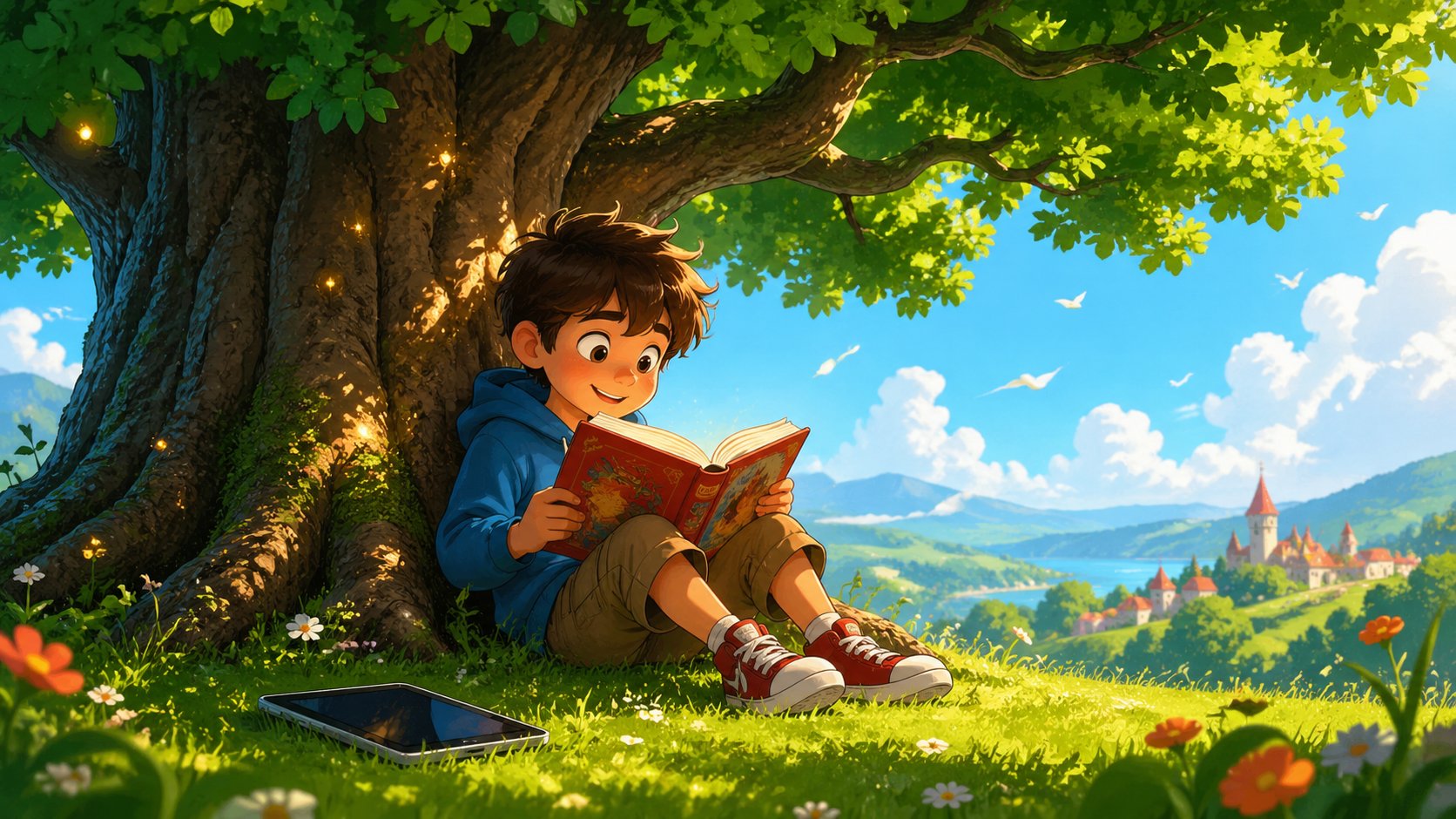
Books are the perfect bridge. They do not buzz or flash. A book asks your child to slow down. It invites them to sit with you, turn a physical page, and really look. Let’s explore the best stories to help your child find the magic in the right now.
The Curated Collection for Digital Detox and Deep Presence
The Couch Potato by Jory John and Pete Oswald

This is a hilarious look at a life lived entirely on the sofa. It is bright, funny, and never feels preachy. Your child will laugh at the potato’s ridiculous setup.
What kids notice: They love the crazy gadgets in the potato’s living room. They also notice how much brighter the art gets when the potato finally steps outside.
Story snapshot: A tech-loving potato has everything he needs within arm’s reach. He never has to move. But when the power goes out, he is forced to step outdoors. He feels the sun, hears the birds, and realizes the real world is pretty amazing.
Why this book helps: It validates that screens are fun, but shows that real life is a total sensory upgrade. It makes stepping outside look like a reward, not a punishment.
Hello Lighthouse by Sophie Blackall
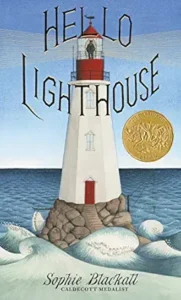
This beautiful book feels like a deep breath. It shows a life lived before screens. It is steady, calm, and full of quiet purpose.
What kids notice: They are drawn to the tiny details inside the circular lighthouse. They watch the weather change outside the glass over time.
Story snapshot: We follow a lighthouse keeper through his daily chores. He boils water. He trims the wick. He writes in his logbook. We watch him live fully in the moment through storms, sickness, and joy.
Why this book helps: It teaches the beauty of slow, physical tasks. It shows children that there is dignity and wonder in doing simple things well. It is the ultimate antidote to instant gratification.
Unplugged by Steve Antony
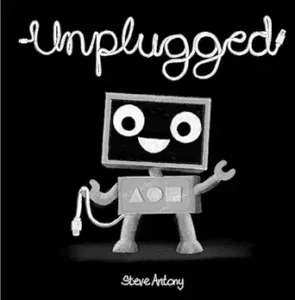
Meet Blip. Blip is a robot plugged right into the wall. This is a very literal, very clever look at what happens when we disconnect.
What kids notice: They see that Blip is stuck on a wire. They notice her world is gray until she rolls outside into a world exploding with bright color.
Story snapshot: Blip loves her computer. She learns and plays on her screen all day. One day, she trips, unplugs, and rolls down a hill. Outside, she finds real friends and real fun. She decides the real world is her new favorite place to play.
Why this book helps: It gives kids a clear visual of being “plugged in.” It gently nudges them to see that the best games and truest friends are waiting outside the device.
The Last Stop on Market Street by Matt de la Peña and Christian Robinson
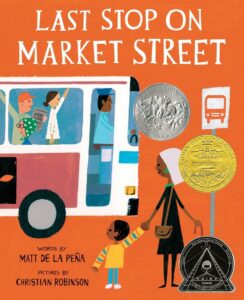
Presence means seeing the beauty right in front of you. Even when you are grumpy. Even when it is raining.
What kids notice: They relate to CJ’s whining. He wants a car. He wants a phone. They also notice how his Nana always points out something magical in return.
Story snapshot: CJ and his Nana ride the bus across the city. CJ complains the whole way. Nana patiently points out the beauty around them. She shows him the music in the air and the magic in the puddles. They end up at a soup kitchen, exactly where they belong.
Why this book helps: It shows that presence is a choice. We can choose to be bored, or we can choose to look closer. Nana models how to find joy in the present moment, no matter where you are.
Windows by Julia Denos and EB Goodale
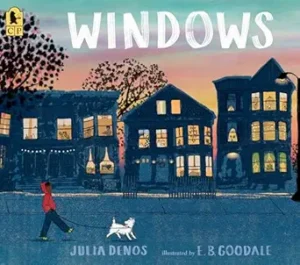
This is a quiet, rhythmic stroll through a neighborhood at dusk. It celebrates the simple act of taking a walk and looking around.
What kids notice: They love looking into the glowing windows. They spot cats, dancers, and people eating dinner. They feel the cozy shift from day to night.
Story snapshot: A boy walks his dog as the sun goes down. He looks at the houses he passes. He imagines the lives happening inside. He turns back and sees his own window glowing, welcoming him home.
Why this book helps: It brings back the lost art of the neighborhood walk. It teaches kids to be observant. It shows that real life is full of tiny, beautiful stories if we just look up.
Drawn Together by Minh Lê and Dan Santat
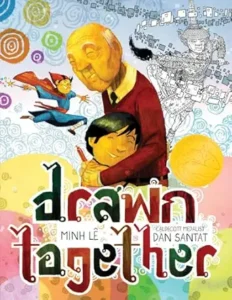
Sometimes we use screens to hide when we feel awkward. This book shows how shared hobbies can bring us back to the present with the people we love.
What kids notice: They feel the awkward silence at the dinner table. Then, they are blown away by the epic, colorful art battle that fills the pages.
Story snapshot: A boy visits his grandfather. They do not speak the same language. The boy feels bored and lonely. Then, they both pull out art supplies. They draw together, creating a magical world and a deep connection without saying a word.
Why this book helps: It proves that doing things together is the best way to be present. It shows kids how to build a bridge to someone else using creativity instead of a screen.
Finding Wild by Megan Wagner Lloyd and Abigail Halpin
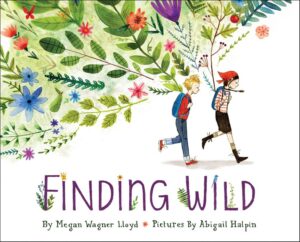
This book asks kids to wake up their senses. It is a treasure hunt for nature, even in the middle of a busy city.
What kids notice: They see the contrast between the gray city streets and the wild, messy woods. They can almost smell the dirt and feel the cold water described on the page.
Story snapshot: Two kids leave their paved street to go find “the wild.” They use their eyes, ears, and noses to find it in the forest. When they return home, they realize the wild is still there, hiding in the cracks of the sidewalk.
Why this book helps: It trains kids to be sensory detectives. It proves that you do not need a screen to be entertained. You just need to step outside and pay close attention.
A Stone for Sascha by Aaron Becker

This is a wordless book. It requires your child to be fully present to read it. They have to do the work to find the story.
What kids notice: Because there is no text, they notice the sweeping landscapes. They follow the glowing yellow stone as it travels through thousands of years of history.
Story snapshot: A girl is sad about losing her dog. She finds a special stone on the beach. The book then shows us the epic, wordless history of that stone. It falls from space, gets carved into a statue, and eventually washes up for the girl to find.
Why this book helps: Reading without words builds incredible focus. It shifts a child’s perspective from quick fixes to deep time. It is a grounding, calming experience.
Put Your Child in the Heart of the Story
These books are amazing tools. But there is one story that will capture your child’s focus better than anything else.
A story about them.
At Scrively, you can create a custom book that puts your child right in the action. When kids see themselves on the page, they lean in.
They ask questions. They stay engaged. It is a powerful, physical keepsake that competes with any tablet.
Start building your custom story today, and watch your child fall in love with reading.
Turning off the screens is hard. But picking up a book makes it easier. You are giving your child the gift of your time. You are showing them how to be fully alive right here, right now. Keep the stories on, and watch their presence grow.