
Raising an Observer: 9 Beautiful Children’s Books About Attentiveness
You are trying to get home before dinner, but your child has stopped again. There is a beetle beside the gate. A leaf shaped like a mitten.
A neighbor whose wave seems smaller than usual. What looks like another delay to you may be a whole discovery to them.
Perhaps you love this watchfulness and sometimes feel exhausted by it. You want to honor the questions without spending twenty minutes beside every puddle. You may also wonder how to help your child notice another person’s feelings as readily as they notice a glittering stone.
Attentiveness begins with making room to observe. These children’s books about attentiveness offer gentle invitations to look closer, listen longer, and stay curious. You can read them with a child who notices everything or one who is just beginning to discover the pleasure of slowing down.
Children’s Books About Attentiveness: Nine Invitations to Notice
These picture books explore different kinds of attention, from neighborhood sounds to another creature’s experience.
Start with whichever subject draws your child in. Let them linger over an illustration, skip a question, or return to a favorite page. Shared reading can leave space for their discoveries as well as your words.
Sidewalk Flowers by JonArno Lawson
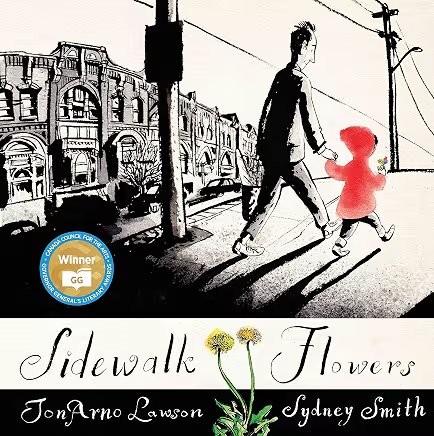
If your child regularly finds treasures in places you hurry past, this wordless story offers a lovely moment of recognition.
Sydney Smith’s illustrations carry the narrative, giving your child room to tell you what is happening before you offer your interpretation.
What kids notice: The little girl keeps spotting flowers during an ordinary walk. Invite your child to follow her gaze and hands: what catches her interest, and what does she choose to do with it?
Story snapshot: A girl walking with her distracted father collects wildflowers and gives them away. Her small gifts connect her with the people and animals she encounters, whether or not each recipient acknowledges her gesture.
Why this book helps: It links noticing with care. After reading, wonder together about something nearby that deserves gentle attention. Keep the invitation open; your child might notice a tired family member, a thirsty plant, or simply something beautiful they want to share.
The Listening Walk by Paul Showers
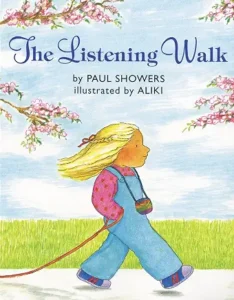
Some days, the nicest thing you can offer is a walk with no conversation to manage. Illustrated by Aliki, this book makes an everyday outing feel full of discoveries while keeping the idea wonderfully easy to try.
What kids notice: Familiar places contain sounds they might usually pass over. Your child may want to imitate a noise, point toward its source, or interrupt the reading to announce something they can hear right now.
Story snapshot: A girl takes a quiet walk with her father and their dog, paying attention to the sounds around them. Along the way, she discovers how many neighborhood sounds become clear when she grows quiet and listens.
Why this book helps: You can borrow its premise without preparing an activity. Pause together on the doorstep and listen for one nearby sound and one farther away. Let pointing, describing, or simply enjoying the moment count as participation.
Tiny, Perfect Things by M.H. Clark
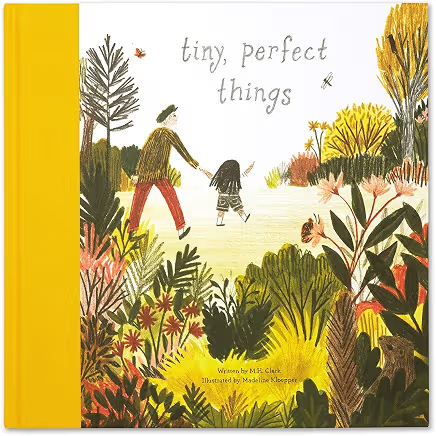
You do not need an extraordinary destination to share an extraordinary moment. With illustrations by Madeline Kloepper, this book celebrates the pleasure of exploring familiar surroundings beside someone who has time to look with you.
What kids notice: Little discoveries accumulate. A leaf, an insect, or a delicate web can become the most interesting part of a walk when someone else pauses to appreciate it too.
Story snapshot: A child and grandfather walk through their neighborhood, finding small wonders along the way. The discoveries include a spiderweb, a fallen leaf, and a ladybug on a stem.
Why this book helps: It gives you a companionable way to encourage observation. Take turns choosing one thing to show each other. Resist upgrading your child’s discovery into a lesson immediately; sometimes “I’m glad you showed me” is enough to keep the moment alive.
The Sound of Silence by Katrina Goldsaito
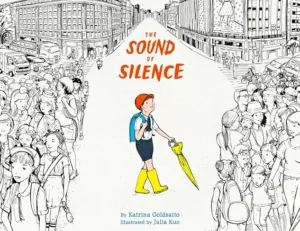
If your family lives amid traffic, conversations, and constant activity, this story brings attentive listening into familiar territory. Julia Kuo illustrates Yoshio’s Tokyo, where a child’s question opens a new way of experiencing a busy place.
What kids notice: Yoshio takes an unexpected answer seriously. When a musician names silence as a favorite sound, he becomes curious enough to search for something he does not yet understand.
Story snapshot: Surrounded by the sounds of Tokyo, Yoshio goes looking for silence. The story follows his listening through a city filled with movement, voices, and everyday noise.
Why this book helps: It makes room for sustained curiosity. You might ask, “What sound would you miss if it disappeared?” Then pause together between everyday sounds. There is no need to produce perfect silence or arrive at a polished answer.
Windows by Julia Denos
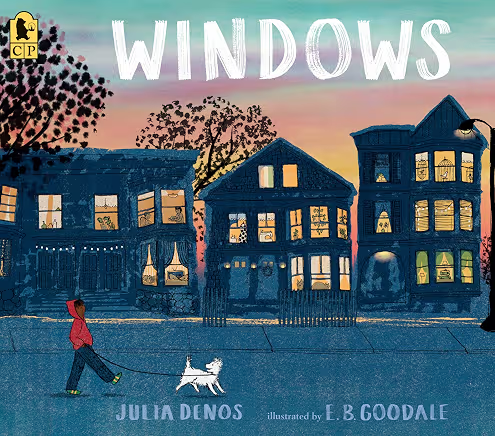
There is a particular tenderness to a neighborhood as evening settles in. Illustrated by E. B. Goodale, this book invites you and your child to notice the ordinary signs that other people are making homes and living lives nearby.
What kids notice: The changing light gives familiar streets a different feeling. As windows brighten, your child can look for details that suggest people gathering, resting, or preparing for the evening.
Story snapshot: A boy walks his dog at dusk, catching glimpses of neighborhood life through illuminated windows before returning home. The walk connects curiosity about others with the comfort of belonging.
Why this book helps: It offers a starting point for remembering that everyone has a story. On your own evening walk, notice shared surroundings and welcoming gestures while respecting people’s privacy. Ask what makes your child feel at home in your neighborhood.
On a Magical Do-Nothing Day by Beatrice Alemagna
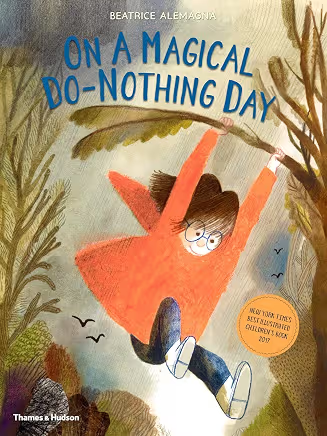
A rainy afternoon can feel disappointingly empty when your child has already decided there is nothing worth doing. Alemagna, who also illustrates the book, gives that familiar mood a wonderfully sensory turn. Jill Davis translated the US edition.
What kids notice: The child begins reluctantly. Interest arrives through encounters with the outdoors, leaving space for readers who do not feel immediately enthusiastic when someone suggests going outside.
Story snapshot: After a handheld game falls into a pond, a child encounters snails, mushrooms, and other details of a wet outdoor world. What first feels like a ruined day becomes an awakening to nature’s sensory possibilities.
Why this book helps: It gives you a way to explore shifting attention without turning reading into a lecture about screens. Later, try examining one patch of ground together. What changes when you crouch down instead of walking past?
Something Beautiful by Sharon Dennis Wyeth
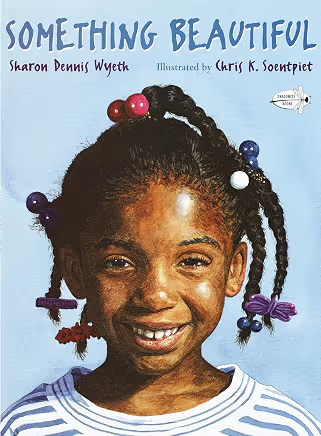
When your child notices something upsetting, you may want to point quickly toward something cheerful.
This story, illustrated by Chris K. Soentpiet, lets a girl acknowledge difficult surroundings while becoming curious about the beauty her neighbors find.
What kids notice: People cherish different things. Something modest can hold great meaning, and listening to someone explain their choice reveals more than simply deciding whether you like it yourself.
Story snapshot: After encountering the word “beautiful” at school, a girl looks for beauty in her neighborhood. Her search includes neighbors’ treasured experiences and objects, such as food, fruit, and a smooth stone.
Why this book helps: It pairs observation with listening to other people. Invite each family member to name something beautiful from the day and explain why it mattered. Let difficult observations remain welcome, too; appreciating beauty need not erase what needs care.
A Stone Sat Still by Brendan Wenzel
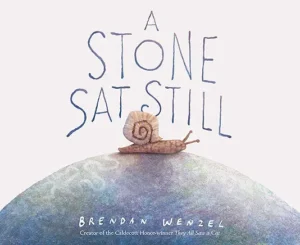
A stone might seem like an unlikely center for a whole picture book. That is part of the pleasure. Wenzel’s writing and illustrations invite your child to stay with one ordinary thing long enough to discover its many meanings.
What kids notice: Different animals experience the same stone differently. Size, purpose, and perspective shift as your child considers who is approaching it and what that creature needs.
Story snapshot: A seemingly ordinary rock becomes a resting place, a feeding place, and shelter for animals. The book explores changing perspectives alongside time and the surrounding environment.
Why this book helps: It encourages a second look. Choose a familiar outdoor object and wonder what it might mean to an ant or a bird. You are practicing the habit of asking what another living thing experiences before assuming you already know.
The Other Way to Listen by Byrd Baylor

For a child who enjoys wondering about big ideas, this poetic story offers a slower kind of attention.
Peter Parnall’s illustrations accompany a relationship built around listening to the natural world and allowing understanding to take time.
What kids notice: The child wants to learn something that cannot be hurried.
An older listener’s example encourages patience, and the natural world becomes a place for questions rather than quick answers.
Story snapshot: A child hopes to learn an old man’s special way of listening to nature. Images of murmuring rocks and singing hills give the story a poetic, imaginative quality.
Why this book helps: You can talk about what it means to attend closely even when the language is figurative. Revisit the same tree or garden corner on different days. Let your child describe what seems different without requiring a discovery every time.
Make Room for One Small Discovery
You can honor attentiveness while still getting dinner on the table. Try saying, “Show me one thing before we go.” On another day, leave a few extra minutes for your child to choose where you pause. A small, dependable invitation is easier to sustain than promising unlimited time.
When your child notices someone’s expression, keep curiosity in the conversation: “They seem quiet. We could ask how they are.” An observation is a beginning, and another person gets to explain their own feelings. Your child can care without being responsible for solving every sadness they encounter.
Put Your Child in the Heart of the Story
A personalized Scrively story offers another way to make attentiveness feel close to home: your child can be the person whose observations matter. Imagine a story centered on a familiar interest, with an overlooked detail opening the door to an adventure.
Perhaps the imagined hero spots a small footprint or notices that a usually cheerful friend has gone quiet. These are possibilities to inspire your story idea. As you read together, invite your child to wonder what they would notice next and what kind response they might choose.
Let Their Noticing Matter
You will sometimes miss the beetle. You will sometimes need to keep walking. There can still be room, across ordinary days, to turn toward your child and say, “Tell me what you saw.”
These children’s books about attentiveness give you places to begin. Share a page, follow a question, or look again at something familiar. When you welcome your child’s discoveries, you show them that their attention can bring wonder and care into the world you share.