

Beyond “I Promise”: Kid’s Books That Make Integrity Real
Your child says they will feed the dog, return the borrowed marker, or tell you if something goes wrong. In the moment, the promise may be completely sincere. Then the moment changes. Nobody is watching. Keeping their word becomes inconvenient, and a small inner argument begins.
That is where integrity grows—not in flawless behavior, but in the pause between what is easy and what is right. Children need time to discover that a promise is more than a sentence. It is a way of making themselves trustworthy, one choice at a time.
You cannot follow your child into every room, friendship, or decision. Nor should you have to. These stories help move the guiding voice from outside to inside. Through gardens, empty pots, red pandas, and one remarkably faithful elephant, they show what it means to keep going when applause, prizes, and reminders disappear.
9 Children’s Books That Make Integrity Feel Real
The books below approach integrity from different angles. Some characters keep a promise over years; others admit that they took a shortcut or broke their word. As you read, resist turning every ending into a quiz. Wonder aloud instead: “What do you think the character heard inside themselves?” That question invites reflection without making honesty feel like an interrogation.
The Promise by Nicola Davies, illustrated by Laura Carlin
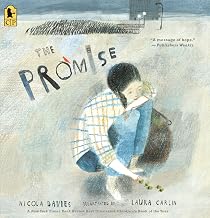
A young thief in a hard, gray city tries to steal an old woman’s bag. The woman refuses to release it until the girl promises to plant everything inside. Expecting treasure, the girl discovers acorns—and realizes that her impulsive words have handed her a demanding task.
What kids notice: Keeping the promise does not produce instant results. Tiny shoots emerge slowly, and the girl must act before she can see how much her work will matter.
Story snapshot: One bag of acorns becomes a widening trail of trees, birds, color, and human connection. The person who once took from others learns to leave something generous behind.
Why this book helps: It shows integrity as action repeated over time. Ask your child what helped the girl continue when the old woman was no longer there. The answer may help them recognize that a promise can become part of who they are.
The Empty Pot by Demi
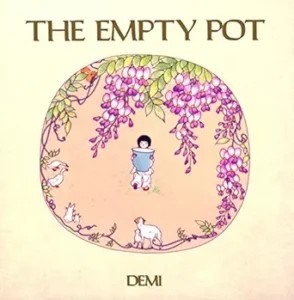
Ping can make almost anything bloom. When the emperor distributes seeds and announces that the child who grows the finest flower will become his successor, Ping works with patience and care. Yet nothing appears—not one stem, not one leaf.
What kids notice: Ping is embarrassed even though he has done nothing wrong. Integrity does not always feel brave from the inside; sometimes it feels like walking into a crowd with nothing to show.
Story snapshot: While others secretly replace their useless seeds, Ping keeps tending his and finally presents the honest result. The emperor chooses the one child who did not pretend.
Why this book helps: Children often equate a good outcome with being good. This story separates the two. You can praise honest effort even when the pot is empty, reinforcing that truth matters more than appearances.
A Promise Is a Promise by Robert Munsch and Michael Arvaarluk Kusugak, illustrated by Vladyana Krykorka
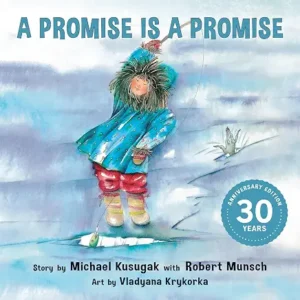
Allashua has been warned not to fish on the sea ice, where the Qallupilluit live beneath the water. She disobeys, encounters the frightening beings, and promises to bring her brothers and sisters back if they let her go.
What kids notice: Adults do not simply tell Allashua to obey her promise or ignore it. The whole family thinks, plans, and works together to protect the children.
Story snapshot: Drawing on an Inuit cautionary being associated with dangerous sea ice, the story blends suspense, humor, and family ingenuity as Allashua confronts the consequence of her words.
Why this book helps: Integrity is not blind compliance. This book opens an essential conversation about promises made through fear, pressure, or unsafe secrecy. Teach your child that they can always bring such a promise to a trusted adult.
Miss Rumphius by Barbara Cooney
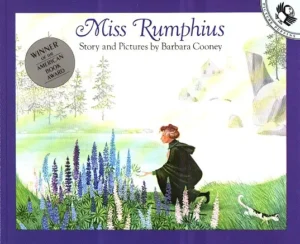
As a girl, Alice tells her grandfather that she will travel to faraway places and someday live beside the sea. He asks one thing more: she must also do something to make the world more beautiful. Alice promises, though she does not yet know how.
What kids notice: A promise can wait without being forgotten. Alice grows old before she understands exactly what her words will ask of her.
Story snapshot: Miss Rumphius walks the countryside spreading lupine seeds. Seasons later, roads and hills blaze with flowers, and she passes the same invitation to a younger generation.
Why this book helps: Integrity can guide a life, not just a chore chart. It gives you a way to discuss long promises: caring for a place, practicing a value, or contributing something good even when no deadline is posted.
The Pandas Who Promised by Rachel Bright, illustrated by Jim Field
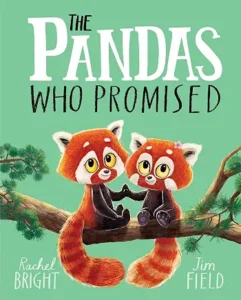
Red panda sisters Popo and Ketu promise their mother they will stay close to their mountaintop home. Careful Popo is comfortable with the familiar trees. Adventurous Ketu longs to discover what lies beyond them and slips away.
What kids notice: Popo’s dilemma has no perfectly tidy option. Staying would preserve one part of the promise, while helping Ketu protects the person the promise was meant to keep safe.
Story snapshot: Across steep, misty terrain, the sisters learn about caution, courage, and the deeper purpose behind their mother’s words.
Why this book helps: It moves the conversation beyond rule-following. Ask, “What was the promise trying to protect?” Your child begins to see integrity as thoughtful faithfulness, not a rigid refusal to notice changing circumstances.
Queen Moremi Makes a Promise by Ayo Oyeku, illustrated by Tiolu Yoloye and Isabelle Irabor
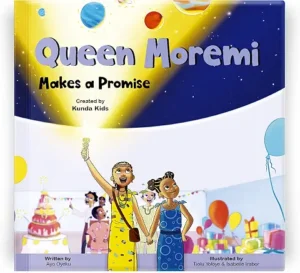
In this playful story inspired by the legendary Yoruba queen, Moremi is celebrating her birthday when a mysterious gift complicates a promise she has made. Excitement and temptation press against her commitment.
What kids notice: Moremi’s title does not make the decision automatic. A queen still has to choose whether her actions match what she said.
Story snapshot: A birthday celebration becomes a test of sharing, responsibility, and staying true to a promise when keeping it is difficult.
Why this book helps: The story places an African heroine at the center of a virtue conversation while keeping the conflict accessible to young children. It can help you discuss how wants become louder after a promise—and how to pause before acting.
The “I” in Integrity by Julia Cook, illustrated by Kyle Merriman
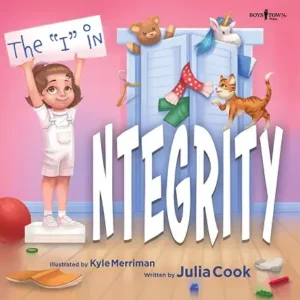
Cora June treats integrity as if it might be an object hidden under her bed. Meanwhile, she stuffs her mess into a closet, cheats on a spelling test, and breaks a promise to a friend. Each shortcut solves an immediate problem while creating a larger one.
The humor keeps the lesson approachable, especially for children who understand a value in theory but struggle to recognize it inside ordinary decisions.
What kids notice: The choices are small and familiar. Cora June is not a villain; she is a child trying to escape effort, embarrassment, and consequences.
Story snapshot: After discovering that integrity cannot be found like a missing possession, Cora June learns to take responsibility and begin repairing trust.
Why this book helps: It names the topic directly and makes “when nobody is looking” concrete. After reading, choose one neutral scenario—such as finding an answer sheet—and let your child imagine what their own inner voice might say.
Stand Tall! A Book About Integrity by Cheri J. Meiners, illustrated by Elizabeth Allen
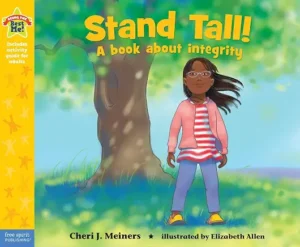
Rather than following one dramatic plot, this supportive picture book walks children through everyday ways to align choices with values. It connects integrity with honesty, reliability, positive decisions, keeping promises, and remaining true to yourself.
Its calm, direct approach makes it useful after a story-driven read, when your child is ready to translate a big idea into home, school, and friendship situations.
What kids notice: Integrity is made of many manageable choices. Telling the truth, doing your part, and keeping your word all belong to the same sturdy pattern.
Story snapshot: Diverse children encounter recognizable moments that call for right action, while the text offers language for choosing well and standing by that choice.
Why this book helps: It gives families a shared vocabulary without requiring shame. Try saying, “This is a stand-tall moment,” when a choice appears. The phrase can become a gentle reminder of identity rather than a threat of punishment.
Horton Hatches the Egg by Dr. Seuss
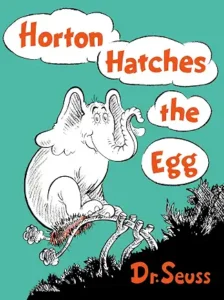
Mayzie persuades Horton to sit on her egg for a short rest, then leaves him there. Rain falls. Winter comes. Hunters capture him, and he is carried away with the tree. At every turn, abandoning the nest would be understandable—and much easier.
Horton remains because he meant what he said. His exaggerated ordeal gives children a funny, memorable picture of faithfulness when the person who benefits is nowhere nearby.
What kids notice: Other characters laugh at Horton. Keeping his word costs him comfort and approval long before it brings any reward.
Story snapshot: An elephant sits through weather, ridicule, capture, and a circus journey to protect the egg entrusted to him.
Why this book helps: Horton makes steadfastness vivid, but he also invites nuance. Ask your child when perseverance is admirable and when a promise should be reconsidered. Integrity includes seeking help when a commitment becomes unsafe or unfair.
Put Your Child in the Heart of the Story
Integrity can sound abstract until your child sees it inside a choice that feels like their own.
A personalized Scrively story can place them in that quiet space: the game is inviting, the promised task is unfinished, and no grown-up is there to remind them.
The most meaningful ending is not a lecture or a trophy. It is your child noticing the tug inside, deciding what kind of person they want to be, and taking one doable step.
Perhaps they return the lost object, tell the whole story, or care for something they agreed to protect. The adventure can show that trustworthy choices are within reach—even after a mistake.
The Promise Becomes Part of Them
Your child will break promises sometimes. Integrity does not require you to label them dishonest or demand perfection. It asks you to help them look clearly: What did you say you would do? Who was counting on you? What repair is possible now?
Notice the choices that receive no applause. “You put it back even though I wasn’t there.” “You told me before I asked.” Specific words help your child see the invisible strength they are building.
Someday, your reminders will be far away. What remains will be the practiced knowledge that their words matter, that repair is possible, and that doing right can feel quietly right all by itself. That is integrity taking root.