When Your Child is the Last One Picked: Books That Help
Being the last one picked can look like a small playground moment. To your child, it may feel enormous.
They watch the teams fill, hear other names called, and wonder whether everyone else can see something wrong with them. Even after the game begins, that question can linger.
You may want to sweep the hurt away with reassurance: “It doesn’t matter,” or “You’ll be picked next time.”
But first, your child needs to know that you understand why it did matter.
Belonging is not a prize children should have to earn by being fastest, loudest, or easiest to understand.
Inclusion is more than letting someone stand nearby. It means noticing who is waiting, changing the game when the rules shut someone out, and making room for each person to contribute.
The children’s books below help your family explore exclusion from both sides—and discover how one invitation can change the whole field.
Kids Books That Help Every Child Belong
Some of these stories take place on literal playing fields. Others unfold in classrooms, clubs, and friendships where children are quietly sorted into “in” and “out.”
Read them without turning every page into a lecture. Wonder together about the child at the edge, the child doing the choosing, and the bystander who could take one brave step closer.
Get a Hit, Mo! by David A. Adler, illustrated by Sam Ricks
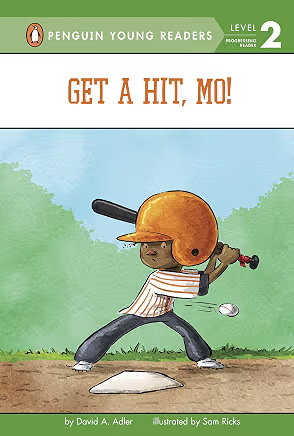
Mo loves baseball, yet he always bats last and is sent to right field, where the ball never seems to travel. His place in the lineup could make him feel unimportant. Instead, Mo stays alert, hopeful, and ready for the moment his team needs him.
What kids notice: Mo is not treated like the star, but his enthusiasm never disappears. Children who know the ache of being underestimated will recognize the patience it takes to keep participating when chances feel scarce.
Story snapshot: Mo waits through another game on the margins of the action. When an opportunity finally comes his way, he has the chance to show that the player who bats last can still make a meaningful contribution.
Why this book helps: The story separates a child’s position from their value. It invites you to ask whether every teammate receives real opportunities—not merely a uniform, a spot on the bench, or permission to watch.
The Field by Baptiste Paul, illustrated by Jacqueline Alcántara
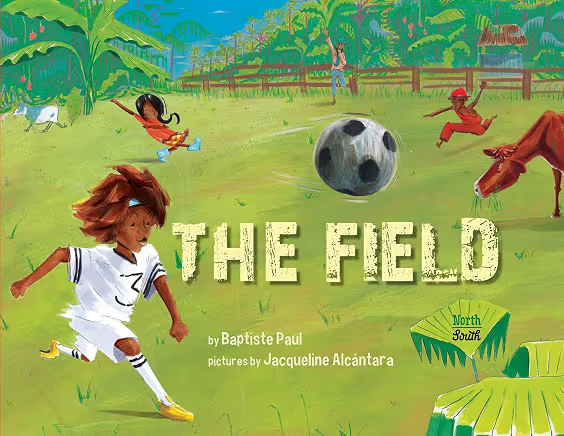
A girl calls her younger brother, friends, relatives, and neighbors to a pickup soccer game in Saint Lucia. Players clear cows from the field, gather what they need, and make teams from whoever comes running. The game belongs to the community.
What kids notice: No polished stadium or perfect equipment is required. Different ages join, spectators gather, Creole words bounce through the action, and even tropical rain cannot drain the joy from the match.
Story snapshot: The neighborhood assembles for “friends versus friends” soccer. After preparing the field together, everyone plunges into energetic play and adapts when the weather changes their plans.
Why this book helps: This is inclusion shown as abundance rather than obligation. There is room because the players create room. Your child can see that a good game grows livelier when participation matters more than selecting only the strongest team.
Can I Play Too? by Mo Willems
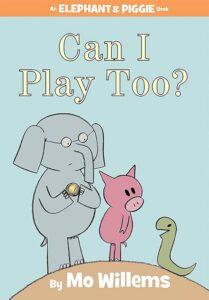
Gerald and Piggie are ready to play catch when Snake asks to join. There is an obvious complication: Snake has no arms. Instead of treating that difference as the end of the conversation, the friends keep experimenting.
What kids notice: Their early attempts go comically wrong, with balls bouncing off Snake rather than landing in nonexistent hands. Snake’s desire to play remains as real as anyone else’s, even when the usual rules do not fit him.
Story snapshot: Gerald, Piggie, and Snake try several unsuccessful versions of catch. Eventually they rethink the game itself and find a playful approach that lets all three friends take part.
Why this book helps: Inclusion sometimes asks children to do more than issue an invitation. It asks them to be flexible. This story gives you simple language for wondering, “How could we change the activity so everyone can genuinely enjoy it?”
A Friend for Henry by Jenn Bailey, illustrated by Mika Song
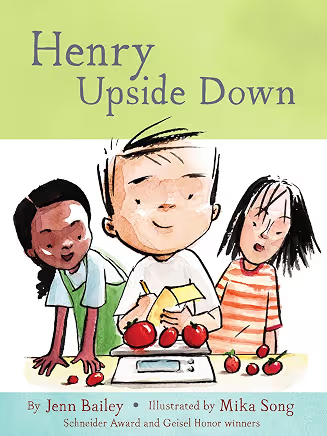
Henry studies the children in Classroom Six, hoping to find a friend who feels right. Social moments can be confusing, and his sincere attempts do not always unfold as he expects. Still, he keeps looking for connection.
What kids notice: Henry pays close attention to details, rules, and sensations. His classmates may experience the same room differently, and misunderstandings can happen without anyone setting out to be cruel.
Story snapshot: After difficult moments involving art and reading time, Henry connects with Katie near the classroom fishbowl. They do not need to like every same thing; they find enough shared ground to begin playing together.
Why this book helps: The story encourages patient, curious friendship with children who communicate or play differently. It reminds your child not to mistake an unfamiliar social style for a lack of interest, warmth, or something valuable to offer.
Wings by Christopher Myers
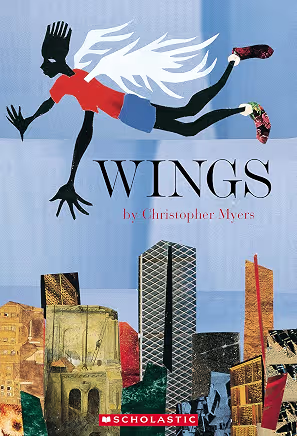
Ikarus Jackson arrives in a new neighborhood with magnificent wings. Instead of celebrating them, people stare, classmates laugh, and adults treat his difference as a disruption. A quiet girl watches, understanding more than she initially says.
What kids notice: The very quality that makes Ikarus extraordinary becomes the excuse others use to isolate him. They will also notice the narrator’s uncomfortable silence as teasing pushes him farther away.
Story snapshot: Ikarus endures ridicule for flying and begins to retreat. Inspired by his courage, the shy narrator finds her own voice, searches for him, and speaks in defense of the gift others refused to see.
Why this book helps: Inclusion needs witnesses who become allies. This story lets you discuss the space between noticing unfairness and interrupting it—and how one child’s clear, affirming voice can help another feel seen.
Strictly No Elephants by Lisa Mantchev, illustrated by Taeeun Yoo
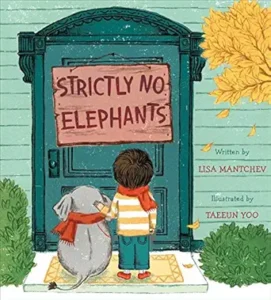
A boy and his tiny elephant arrive for Pet Club Day only to find a rule designed to keep them out. Walking home in the rain, they meet another excluded pair and realize the problem is larger than one closed door.
What kids notice: The elephant is unusual, but he is also gentle, loyal, and loved. As more children appear with unexpected pets, the category of who “belongs” begins to look much wider and more joyful.
Story snapshot: Rather than squeezing into a club that rejects them, the children and their remarkable pets create a welcoming gathering of their own. Their new space is built around friendship instead of restrictions.
Why this book helps: It makes exclusion visible without making the excluded child powerless. Talk about the difference between being allowed in reluctantly and being welcomed wholeheartedly. Your child can also imagine what an inclusive rule would sound like.
The Invisible Boy by Trudy Ludwig, illustrated by Patrice Barton
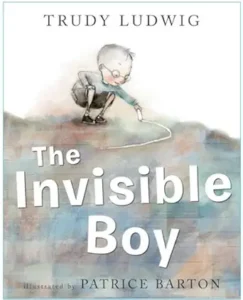
Brian is present in his classroom, yet he is overlooked when children choose teams, form groups, and send party invitations. His quietness seems to make him fade. Then a new student named Justin arrives.
What kids notice: The illustrations reflect Brian’s isolation and his gradual return to color as connection grows. Children see that being ignored can hurt even when no one says an openly mean word.
Story snapshot: Brian welcomes Justin with a kind note after classmates tease the newcomer’s food. Justin later makes sure Brian is included in a class project, where Brian’s creativity finally has space to shine.
Why this book helps: Small gestures move in both directions: the overlooked child offers kindness, and someone responds by opening the circle. It teaches your child to notice quieter forms of exclusion and use names, invitations, and shared work to counter them.
The Recess Queen by Alexis O’Neill, illustrated by Laura Huliska-Beith
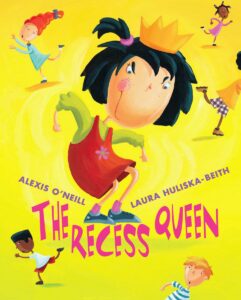
Mean Jean controls the playground. Other children wait for her to swing, kick, and bounce first because nobody wants to challenge her. Then Katie Sue arrives, unaware—or simply unimpressed by—the established pecking order.
What kids notice: Katie Sue does not defeat Jean by excluding her in return. Her surprising invitation to jump rope breaks the playground’s fearful pattern and gives Jean a different role to try.
Story snapshot: The new girl plays freely despite Jean’s bluster. When Katie Sue asks Jean to join her, the feared Recess Queen becomes a participant, and the playground shifts from territory to shared space.
Why this book helps: Children who dominate a game may also be trapped inside the role they created. The story shows that firm confidence and an invitation can coexist, while offering a hopeful way to discuss power without excusing bullying.
The Smallest Girl in the Smallest Grade by Justin Roberts, illustrated by Christian Robinson
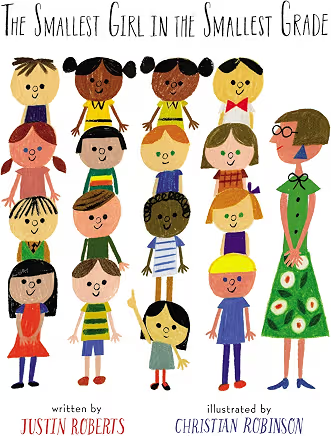
Sally McCabe is easy to overlook, but she notices nearly everything. Most importantly, she sees the shoving, teasing, and exclusion that other people pass by. Eventually, staying silent feels harder than speaking.
What kids notice: Sally does not need to be physically big, popular, or officially in charge to influence her school. Her careful attention gives her a kind of strength the loudest children do not possess.
Story snapshot: After watching repeated unkindness on the playground, Sally raises her voice and asks everyone to change. Her courage awakens the wider community to what it has been ignoring.
Why this book helps: Inclusion is everyone’s responsibility, including the bystander’s. This book can help your child rehearse a safe response: invite someone over, name what is happening, stand beside them, or seek help from an adult.
Put Your Child in the Heart of the Story
A child who has been left out may struggle to picture a different ending. In a personalized Scrively story, your child can step into a familiar-feeling scene and experience belonging from the inside: hearing their name called, sharing an idea, or discovering the special contribution only they can make.
You can also place your child in the role of the includer. Let them notice someone hovering at the edge and choose a believable next step. A warm hello, a shifted rule, or “We need you on our team” can become the turning point. The goal is not to make your child the hero of someone else’s difference, but to let mutual friendship grow.
Make the Circle Wider
When your child is left out, begin with presence: “That hurt. I’m glad you told me.” Later, you can help them separate one painful selection from their whole worth and consider what support they want next. Sometimes they need words to join. Sometimes an adult needs to change a repeated, unfair pattern.
When your child holds the choosing power, offer a gentle challenge: “Who has not had a turn yet?” Inclusion is built in these ordinary pauses. A name is called. A rule bends. The circle shifts. And the last one waiting discovers they were never the least important person there.