The Skin I’m In: Nurturing the Quiet Virtue of Radical Self-Love
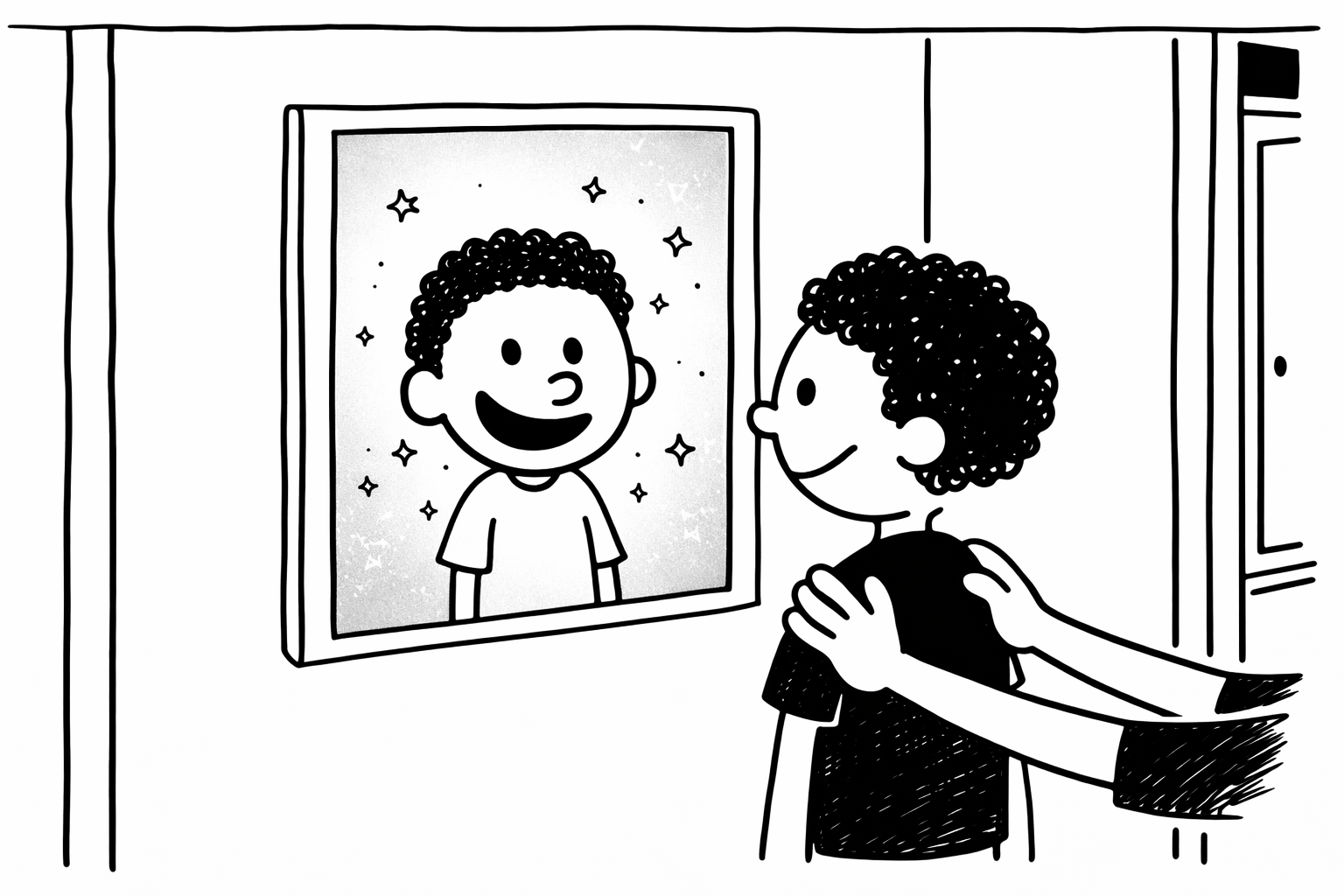
You remember the first time you caught them staring. It wasn’t at a vibrant toy or a flickering screen, but at the reflection in the hallway mirror.
In that quiet moment, a tectonic shift happens. Your child suddenly realizes that the “me” they feel inside lives within the “this” they see outside. You likely felt a catch in your throat then.
Perhaps you offered a silent prayer that they would always love the person looking back at them.
You want them to see what you see—a masterpiece of heritage, a marvel of biological coincidence, and a soul that is inherently, unshakeably enough.
However, the world is often very loud. The messages it sends about beauty and worth are frequently narrow and exclusionary.
As a parent, you are the primary architect of your child’s internal monologue. You provide the vocabulary they will use to describe their own hearts and bodies for decades to come.
Consequently, this isn’t just about simple confidence. It is about self-love. This virtue acts as a psychological anchor in a stormy world.
When we talk about “The Skin I’m In,” we move beyond mere vanity. We are teaching our children that their physical selves are a sacred home for their kindness, curiosity, and unique light.
Reading together provides the softest, safest space to explore these big ideas. Within the curve of a page, your child can see reflections of themselves that the broader culture might omit.
They can learn to admire “eyes that kiss in the corners” or the “cocoa-brown” depth of their own limbs.
Through these stories, you are building a fortress of belonging inside their minds.
Furthermore, you are giving them the permission they need to be exactly who they are. You are teaching them to live without apology and with a deep, resonant joy.
The journey toward radical self-love is rarely a straight line. Nevertheless, it is a path you can walk together, hand in hand, through the library and the bookstore.
You can show them that diversity is the world’s greatest strength. By curating a bookshelf that honors their skin, hair, and history, you tell them they are seen and loved.
Let us begin this journey with a few stories that turn the mirror into a window of wonder.
The Curated Shelf: Books That Celebrate the Miracle of You
I Am Enough by Grace Byers
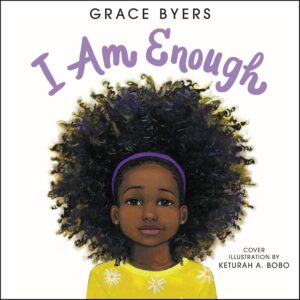
This book is a rhythmic, poetic anthem that feels like a warm embrace.
It moves with the grace of a dance, reminding every child that they are not here to be like anyone else. Instead, they are here to be the best version of themselves.
The illustrations are truly luminous. They capture a sense of peace that is often missing from our hurried lives.
It is the kind of book you find yourself whispering long after the lights are turned out—a mantra for the modern child.
What kids notice: Children are immediately drawn to the diverse array of girls in the artwork.
Each character radiates a quiet, confident power. They also notice the way the characters move through the world, which makes the abstract concept of “enoughness” feel very real.
Story snapshot: Rather than a traditional plot, this book offers a series of lyrical affirmations. It compares a child’s purpose to elements of the natural world.
For example, the sun is here to shine, and the child is here to simply exist and thrive. It also touches on kindness and the importance of supporting others.
Why this book helps: This book serves as a vital corrective to “not enough” culture. By framing self-love as a fundamental purpose of existence, it removes the pressure children often feel to perform.
The virtue of self-love is presented as a birthright. When you read this together, you reinforce the idea that their value is immutable. It helps them understand that while they may not be the fastest or loudest, their presence is essential.
This fosters a deep-seated confidence that does not depend on external achievement.
Sulwe by Lupita Nyong’o
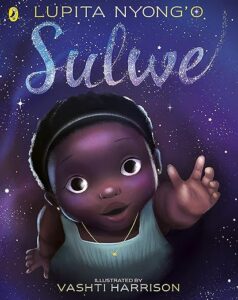
Sulwe is a breathtakingly beautiful exploration of colorism. It feels like a myth passed down through generations, yet it speaks directly to the contemporary heart.
The story uses magic realism to elevate the struggle of a young girl who feels “midnight” in a world that prizes the “dawn.”
It is a heavy topic, but it is handled with ethereal beauty. As a result, the book feels more like an invitation to wonder than a heavy-handed lesson.
What kids notice: The shift from the bright, everyday world to the celestial, starry night captures a child’s imagination instantly.
They notice the deep, rich colors of Sulwe’s skin. Many children also notice how the artist uses light to make “midnight” tones look like a galaxy of their own.
Story snapshot: Sulwe has skin the color of midnight. She is darker than everyone in her family and school.
Consequently, she tries to “fix” her skin until a shooting star takes her on a magical journey. She learns the story of the sisters, Night and Day, and realizes that both are essential for the world’s beauty.
Why this book helps: Self-love is often most difficult when our traits are not celebrated by society.
This book specifically addresses colorism, but its message of finding beauty in difference is universal. It helps children understand that “dark” is not a synonym for “bad.”
Instead, it is a source of strength and elegance. By personifying Night and Day, the story shifts the perspective from social hierarchy to natural balance.
It empowers children to see their physical attributes as part of a necessary cosmic design. For a parent, it offers a way to discuss difficult feelings while pointing toward inner radiance.
The Skin You Live In by Michael Tyler

This book is a bouncy, rhyming celebration of all the things skin does. It’s lighthearted and joyful.
Because of its rhythm, the conversation about race feels like a festive party. The language is delicious, using descriptions like “cocoa brown” and “pumpkin orange.”
It is a foundational text for any nursery, setting a tone of curiosity and delight regarding the human family.
What kids notice: They love the playful, stylized illustrations and the food-based metaphors for color.
They also notice the action in the book. Seeing kids swimming, eating, and playing together shows that skin is a wonderful “home” that allows us to engage with the world.
Story snapshot: The book describes skin as the “wonderful wrap” that you live in. It explores various shades and activities, emphasizing that skin protects us and lets us experience life.
The refrain reminds the reader that while the “wrapper” is beautiful, the “you” on the inside matters most.
Why this book helps: It builds a positive, descriptive vocabulary for self-love. Instead of using socially loaded terms, it uses sensory, appetizing language. This helps a child view their skin with genuine affection.
The virtue of self-love here is rooted in the physical joy of being alive. It helps strip away judgment by focusing on play and function.
When you read this, you teach your child to be comfortable in their own skin. This fosters the body positivity that is crucial for healthy emotional development.
Eyes That Kiss in the Corners by Joanna Ho
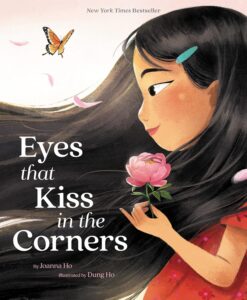
This lyrical masterpiece focuses on the specific beauty of Asian eyes.
It turns a feature that has often been targeted by bullies into a symbol of strength. The prose is sweeping and emotional.
It connects a young girl’s features to the powerful women in her family. Therefore, it is a story about heritage as much as it is about self-love.
What kids notice: The swirling, golden illustrations of dragons and lotus flowers capture their gaze immediately.
They notice the warmth between the girl and her grandmother. They also see the beauty in the specific shape of the eyes, which are depicted with a regal, glowing quality.
Story snapshot: A young girl notices that her eyes look different from her peers. She reflects on how her eyes “kiss in the corners and glow like warm tea.”
She then traces this trait through her family, seeing her eyes in her mother and grandmother. Ultimately, she realizes her eyes are a gateway to her history.
Why this book helps: This story provides a powerful model for transforming insecurity into pride.
It teaches children that self-love is deeply intertwined with honoring their roots. By framing a physical trait as a “kiss,” the author replaces “otherness” with affection.
This book helps children who may not fit Western beauty standards to see themselves as the hero of a beautiful story.
It reinforces the virtue of self-love by grounding it in belonging. It tells the child they are a masterpiece because they are a continuation of the people who loved them first.
Crown: An Ode to the Fresh Cut by Derrick Barnes
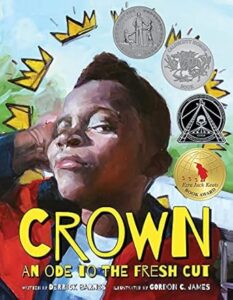
There is a specific magic that happens in a barber’s chair. This book captures that “regal” feeling with infectious energy.
It is a vibrant celebration of Black boyhood and self-care.
The voice is cool and confident, making the reader feel the boost of a fresh haircut. It shows that self-love can be stylish, swagger-filled, and communal.
What kids notice: The colors are bold and the energy is high.
They notice the way the boys look at themselves in the mirror after their haircuts—shoulders back, heads held high. They see the barbershop as a place of community where everyone is treated like royalty.
Story snapshot: A young boy goes to the barbershop for a “fresh cut.” As the barber works, the boy imagines the person he becomes—a prince, a scholar, or a champion.
The book celebrates the meticulous care of the barber and the massive confidence the boy feels when he walks back out onto the street.
Why this book helps: It redefines self-love as an act of self-respect. It shows that taking pride in one’s appearance is a way of honoring oneself.
For young Black boys especially, it provides a mirror of excellence. The virtue of self-love here is active and aspirational.
It teaches children that they deserve to be cared for. It’s a powerful lesson in how external rituals can reinforce internal confidence, helping children feel “crowned” by their own identity.
Beautiful Girl by Christiane Northrup
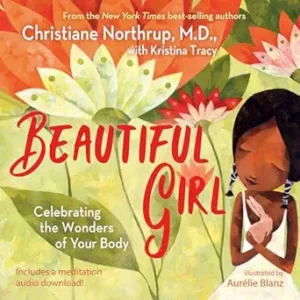
This book is a gentle introduction to the wonders of being a girl. It focuses on the body as a miraculous gift.
The tone is deeply respectful and nurturing. Its goal is to protect girls against body shame before it even starts.
It feels like a whispered secret between a mother and daughter—a foundation of appreciation designed to last a lifetime.
What kids notice: They notice the soft watercolor illustrations that feel very peaceful.
They see girls of all shapes being called “beautiful,” which helps broaden their definition of the word. They also notice the focus on what their bodies can *do*, like breathe and dance.
Story snapshot: The book walks through the parts of a girl’s body and soul.
It explains that she was born with everything she needs to be happy. It emphasizes that her body is a “magnificent temple.” Furthermore, it encourages her to trust her inner voice and her feelings.
Why this book helps: It establishes a body-positive baseline early. By teaching children to view their bodies as purposeful, it builds a defense against negative societal messages.
The virtue of self-love here is about trust—trusting one’s own body and intuition.
It helps children develop a sense of “body-ownership,” which is key for self-esteem. When you read this, you validate the child’s existence as something sacred and worthy of protection.
Brontorina by James Howe
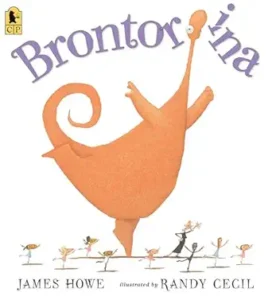
Self-love often requires the courage to pursue a dream that others think doesn’t “fit” you.
Brontorina is a dinosaur who wants to be a ballerina. Despite the hurdles, she never loses her desire to dance.
It’s a humorous story that tackles the “space” we take up in the world. It is a wonderful way to talk about body size and inclusion without feeling like a lecture.
What kids notice: They find the image of a giant dinosaur in a dance studio hilarious.
They also notice how hard Brontorina tries despite the skepticism of others. They see the kindness of the teacher who realizes that the studio—not the dancer—needs to change.
Story snapshot: Brontorina has the soul of a dancer but the body of a dinosaur.
She joins a dance academy, but she is too big for the building. After several mishaps, the teacher realizes the problem is simply that the ceiling is too low. Consequently, the academy moves outdoors so everyone can dance together.
Why this book helps: This story teaches children not to let the world define their limits based on appearance.
It fosters self-love by encouraging kids to follow their passions. It also teaches a vital lesson in advocacy.
If you don’t fit the structure, perhaps the structure is broken. For children who feel “too much,” Brontorina is a hero. It helps them understand that their physical self is never an obstacle to their dreams.
Dear Girl by Amy Krouse Rosenthal
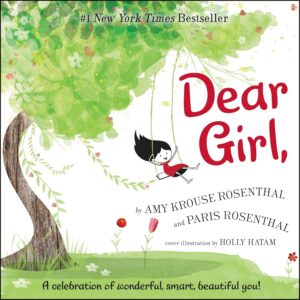
This book is a love letter to the “you” that is still becoming. It’s a collection of encouragement that feels like a conversation with a wise friend.
It covers everything from saying “no” to jumping in puddles. Throughout it all, the theme remains: you are extraordinary just as you are. The whimsical layout makes it a book children want to explore repeatedly.
What kids notice: They love the hand-drawn feel of the illustrations. They also notice the variety of activities.
Some girls are being messy, while others are being quiet or brave. This shows them there is no one “right” way to be themselves.
Story snapshot: This book is a series of letters addressed to a young girl. It encourages her to trust her gut and find her own “light.” It serves as a guide to navigating the world with wonder and a firm belief in one’s own worth.
Why this book helps: It reinforces the idea that self-love is an ongoing practice.
It gives children permission to be multi-faceted. The virtue of self-love here is about authenticity. By telling the child “you are enough,” it builds an internal reservoir of confidence.
It turns the parental voice of encouragement into a permanent part of their inner landscape. This helps them navigate life with a compass that always points true.
Put Your Child in the Heart of the Story
While these books are transformative, one story matters most: the one where your child is the hero.
At Scrively, we believe self-love takes root when a child sees themselves in the narrative.
Our personalized books allow you to place your child at the center of a grand adventure. Imagine their face when they see a protagonist with their skin tone, their hair, or their unique features.
By making them the star, you aren’t just telling them they are special; you are proving it. You are showing them they are worthy of being the hero. This creates a keepsake of self-love they will cherish for years.
Your Love is the Mirror
As you tuck the covers around your child tonight, remember that you are the most important book they will ever read.
The way you look at them and the way you celebrate their traits are the chapters of their self-love story.
These books are wonderful tools, but they work best when paired with your unwavering affirmation.
So, keep building that library. Keep reading the poems of “enoughness.”
Most importantly, keep reminding them that the skin they are in is the most beautiful place to live. You are raising a child who will one day look in the mirror and see a friend they truly love.