The Magic of the Second-Hand: Books to Teach Kids the Joy of Hand-Me-Downs
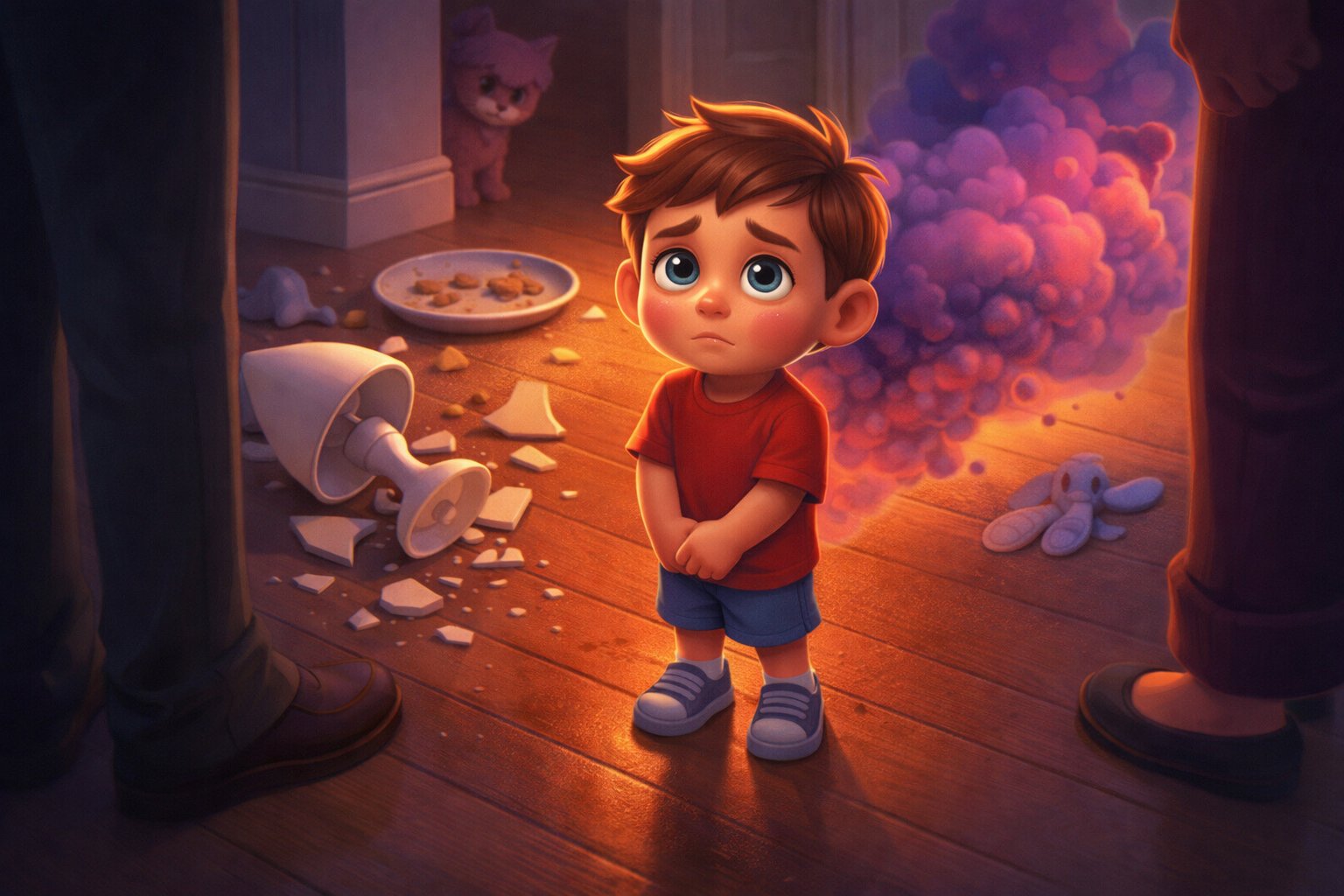
You probably know that quiet, heavy sigh.
It happens when a younger sibling gets a “new” winter coat.
But then they realize it is actually just an old coat pulled from the attic. You see their shoulders drop in sudden disappointment.
Maybe a friend proudly shows off a brand-new, shiny bicycle.
Meanwhile, your child is riding a hand-me-down bike with a chipped frame. In those moments, kids desperately want something shiny, untouched, and exclusively theirs.
That desire is incredibly powerful for a young mind.
As a parent, your first instinct is often to apologize. You might feel a sudden urge to rush to the toy store.
You just want to see their eyes light up over something completely new. We all love giving our kids fresh, untouched things.
Our modern culture constantly celebrates the brand new. Children hear the message that newer is always better.
They start to believe that a used item is just a sad leftover. But shifting this narrative is a massive gift to your child.
We must teach kids that a used item is not a punishment. Instead, it is an invitation to practice a lifelong superpower.
That superpower is the beautiful, quiet virtue of resourcefulness. True resourcefulness changes how a child sees the entire world.
Resourcefulness is about appreciating what we have right now. It means embracing thriftiness and understanding environmental sustainability.
When a child learns this, they stop viewing the world through a lens of scarcity. A hand-me-down becomes a canvas for their wild imagination.
Teaching this shift requires more than a boring lecture. It requires beautiful storytelling. Books provide the perfect space to rebrand the hand-me-down. Let us explore the books that teach the true magic of the second-hand.
Something from Nothing by Phoebe Gilman
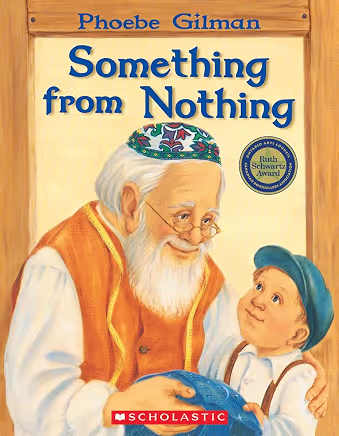
This book is a timeless, rhythmic masterpiece based on a classic folktale.
The illustrations are incredibly detailed and deeply inviting. They invite you to linger on the page and explore the cozy village.
The story perfectly captures a child’s deep attachment to a beloved item. It also captures the heartbreak that happens when that item begins to wear out.
But it quickly pivots to a brilliant celebration of creative reuse.
What kids notice: Children are completely captivated by the family of mice at the bottom of the pages. They notice the mice cleverly using the grandfather’s discarded fabric scraps for their tiny home.
Story snapshot: A resourceful grandfather makes his grandson a beautiful blue blanket. As the boy grows, the blanket becomes frayed and worn. Instead of throwing it away, the grandfather snips and sews. He turns the blanket into a jacket, a vest, a tie, and eventually a tiny button.
Why this book helps: This story completely changes how a child views a damaged item.
It proves that “worn out” does not have to mean “trash.” It teaches your child the core virtue of resourcefulness. They see that a little imagination gives an old item a vibrant new life.
This builds their capacity for appreciating what we have. Ultimately, it encourages them to look at their own fading possessions in a new way. They will start asking what else their old things could possibly become.
I Had a Favorite Dress by Boni Ashburn
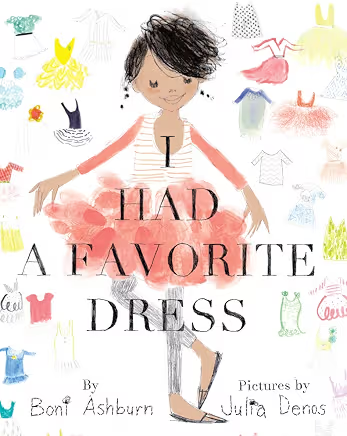
This story is a modern, stylish take on the classic tale of reinvention.
The energy is upbeat, sassy, and wonderfully rhythmic. The main character is a creative, confident young girl.
She is absolutely obsessed with her favorite piece of clothing.
It speaks directly to the real tragedy of outgrowing something you love. Instead of a sad tone, the book treats alteration like an exciting fashion challenge.
What kids notice: Kids love tracking the days of the week as they quickly pass. They are fascinated by the clever, fashionable ways the mother manages to salvage the shrinking fabric.
Story snapshot: A young girl has a favorite dress that she wears every Tuesday.
She grows taller, and the dress becomes far too short. Her clever mother breaks out the sewing machine. She turns the dress into a shirt, a skirt, a scarf, and finally a beautiful hair bow.
Why this book helps: Children often feel a deep loss when they outgrow their favorite clothes. This book helps by shifting their focus from loss to creation.
It models an incredibly positive attitude toward hand-me-ups and alterations. It embraces thriftiness in a joyful, highly accessible way.
It teaches your child that outgrowing clothes is perfectly normal. A resourceful mindset can magically extend the life of the things they hold dearest. It empowers them to embrace change with a creative heart.
Joseph Had a Little Overcoat by Simms Taback
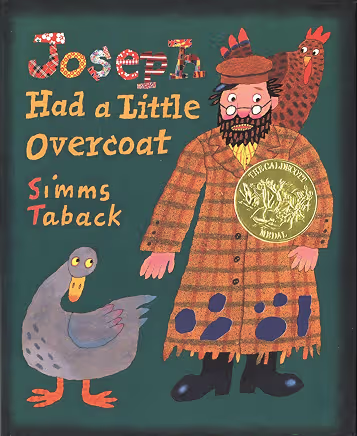
Simms Taback brings a wild, musical energy to the theme of thriftiness.
This book is an absolute feast for the eyes. It is filled with vibrant watercolor illustrations layered with fun collage.
The text is based on an old Yiddish folk song.
This gives the entire reading experience a bouncy, toe-tapping rhythm. It utilizes perfectly placed die-cut holes to turn resourcefulness into a brilliant guessing game.
What kids notice: Children are obsessed with the clever die-cut holes. They love peeking through the page to guess what the patched overcoat will become next.
Story snapshot: Joseph has a little overcoat that is full of holes. Because he is incredibly resourceful, he makes it into a smaller jacket.
Through clever page cut-outs, the reader watches the fabric shrink down. It becomes a vest, a scarf, a necktie, a handkerchief, and a button.
Why this book helps: This book makes resourcefulness feel like a highly entertaining magic trick. It removes the stigma of wearing patched or repaired clothing.
Instead, it presents mending as a clear mark of cleverness. It helps kids appreciate what they have by showing how far one item can stretch.
Furthermore, it teaches children that true resourcefulness extends beyond physical objects. When Joseph loses his button, he makes a story out of nothing. This shows kids they can always use creativity to make something beautiful.
The Keeping Quilt by Patricia Polacco
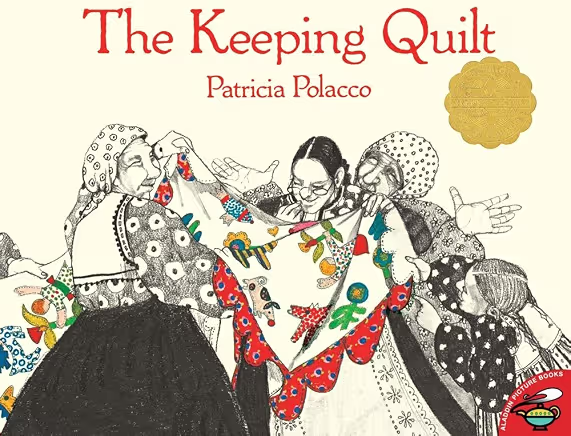
This is a deeply moving, sentimental masterpiece. It elevates the concept of used clothing to a place of profound honor.
Patricia Polacco tells the true story of her own family’s history.
The atmosphere is warm, rich, and anchored in deep family tradition. The visual storytelling is absolutely stunning. The quilt is painted in bright colors, drawing the eye to the repurposed fabric.
What kids notice: Kids immediately notice that the colorful quilt is the only bright object. They are captivated by watching babies grow into grandmothers while the quilt stays exactly the same.
Story snapshot: Great-Gramma Anna outgrows her favorite dress when she comes to America. Her mother gathers that dress and old shirts to sew a beautiful quilt. For generations, this resourceful blanket is lovingly used. It serves as a Sabbath tablecloth, a wedding canopy, and a welcoming blanket for new babies.
Why this book helps: A hand-me-down can sometimes feel disconnected and unwanted.
This book helps by proving that a passed-down item is a bridge to our family history. It teaches your child that reusing an object honors the people who loved it first.
It builds a beautiful perspective on thriftiness and resourcefulness. It shows that an old shirt can be transformed into a treasured family heirloom. This changes the narrative from “second-hand” to “deeply loved.”
Coat of Many Colors by Dolly Parton
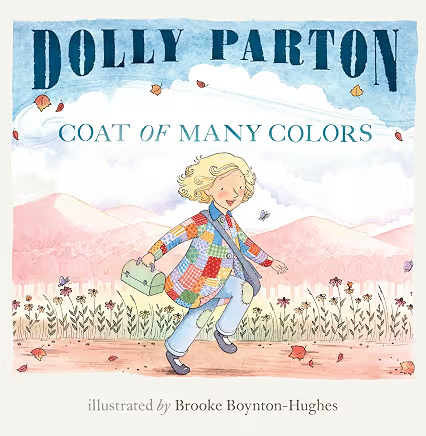
Dolly Parton’s picture book is a profoundly emotional look at poverty and bullying. It also highlights the incredible wealth of a mother’s love. The setting is rural, humble, and deeply authentic.
It does not shy away from the cruelty children can inflict. The narrative is a fierce defense of the homemade and the second-hand. It is a necessary read for any self-conscious child.
What kids notice: Children deeply empathize with the young girl’s pure excitement. They also sharply notice the hurtful faces of the classmates who laugh at the finished coat.
Story snapshot: A young girl’s family cannot afford a winter coat. A neighbor generously donates a box of colorful rags.
The girl’s mother resourcefully sews the scraps together. The girl wears her new coat to school with immense pride, but is mocked by the other children. She bravely stands her ground.
Why this book helps: This is the ultimate story for tackling the social stigma of hand-me-downs. It validates the pain of being teased by peers. But it completely refuses to let the bullies define the item’s worth.
It teaches your child that true value comes from intention, effort, and love. It empowers them to be fiercely proud of their thrifted items. It proves that appreciating what we have makes us truly wealthy. A resourceful, grateful heart is the greatest advantage of all.
Not a Box by Antoinette Portis
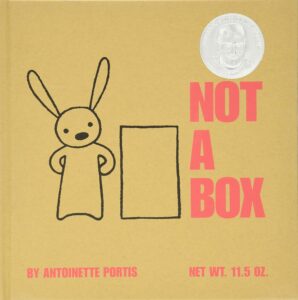
This book explores the absolute pinnacle of childhood resourcefulness. It celebrates the power of pure, unadulterated imagination. The artwork is stark, minimalist, and incredibly effective.
It strips away all the noise of expensive toys and complicated gadgets. It proves that the best plaything is often the packaging. The pacing is snappy and perfect for an energetic read-aloud.
What kids notice: Kids love the visual transformation on every single page. They notice how the boring brown box instantly turns into a burning building or a rocket ship.
Story snapshot: An unseen narrator asks a small bunny why they are sitting in a cardboard box. The bunny repeatedly and passionately insists that it is not a box. Through the bunny’s incredible imagination, the discarded cardboard becomes a racecar, a mountain, and a pirate ship.
Why this book helps: Resourcefulness is not just about altering old clothes.
It is about looking at a discarded object and seeing a world of possibility. This book actively encourages your child to embrace free, unstructured play with upcycled materials.
It teaches them about environmental sustainability in a fun way.
They learn they do not need a brand-new toy to have an incredible adventure. It celebrates the brilliant mind that can turn a piece of recycling into an absolute masterpiece.
Magic Trash: A Story of Tyree Guyton and His Art by J.H. Shapiro
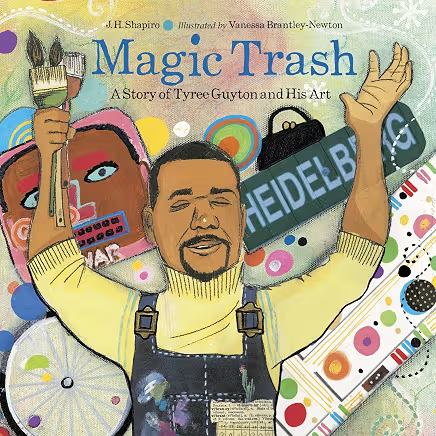
This is a vibrant, inspiring true story. It connects resourcefulness directly to community activism and sustainability. It tells the biography of an artist who saw a massive canvas in a forgotten neighborhood.
The illustrations are wild, colorful, and highly eclectic. It completely redefines what we consider to be “garbage.” It is a massive rallying cry for environmental resourcefulness.
What kids notice: Children are fascinated by the sheer volume of junk attached to the houses. They love spotting everyday objects painted in bright, shocking colors.
Story snapshot: Tyree Guyton loved to paint his Detroit neighborhood. As he got older, his beloved street filled with abandoned houses and garbage. Tyree gathered the trash, painted it in brilliant colors, and attached it to the homes. His bold art transformed his street into a famous community space.
Why this book helps: Teaching kids about environmental sustainability can often feel depressing. This book makes sustainability look incredibly joyful and defiant.
It teaches your child that resourcefulness can actually heal an entire community. It proves that throwing things away is a lost opportunity. Upcycling our “magic trash” brings brilliant beauty into the world. It inspires kids to look at broken toys as art supplies instead of garbage.
Anywhere Farm by Phyllis Root
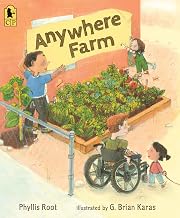
This incredibly upbeat book brings resourcefulness straight into the dirt. It is a joyful, practical guide to urban gardening. It entirely dismisses the need for expensive pots or a massive backyard.
The tone is encouraging, earthy, and highly accessible. It teaches children that life will happily grow anywhere. It is the perfect story to read before starting a messy weekend project.
What kids notice: Kids laugh at the completely ridiculous containers the characters use. They love the old boots, the rusted pickup truck, and the broken wagon filled with dirt.
Story snapshot: A bouncy narrator explains that you absolutely do not need a traditional farm. All you need is a seed, dirt, water, and a container. The story proves you can plant a farm in a coffee can, an old shoe, or a discarded box.
Why this book helps: Children often think they need brand-new equipment to start a hobby.
This book helps by completely shattering that illusion. It teaches the incredible environmental resourcefulness of using whatever you already have on hand. It empowers your child to look around the recycling bin.
They will realize they already possess everything they need to create a thriving project. It makes embracing thriftiness feel like a grand, green adventure.
Put Your Child in the Heart of the Story
Books are truly magnificent teachers for growing minds. But reading a beautiful book with your own name in it is pure magic. Scrively helps you create custom children’s books easily.
You can build a vibrant story where your child is the resourceful protagonist. They can practice reinventing old toys right on the printed page. This allows them to rehearse the virtue of resourcefulness before facing peer pressure.
Navigating the cultural pressure for brand-new things is hard. You will face moments when a hand-me-down gets a pout instead of a smile. But every single moment is a profound chance to learn.
By reading these stories, you give your child the right visual anchors. You teach them that true joy is creatively crafted from things we already have. Finally, they will navigate the world with a thrifty, imaginative heart.