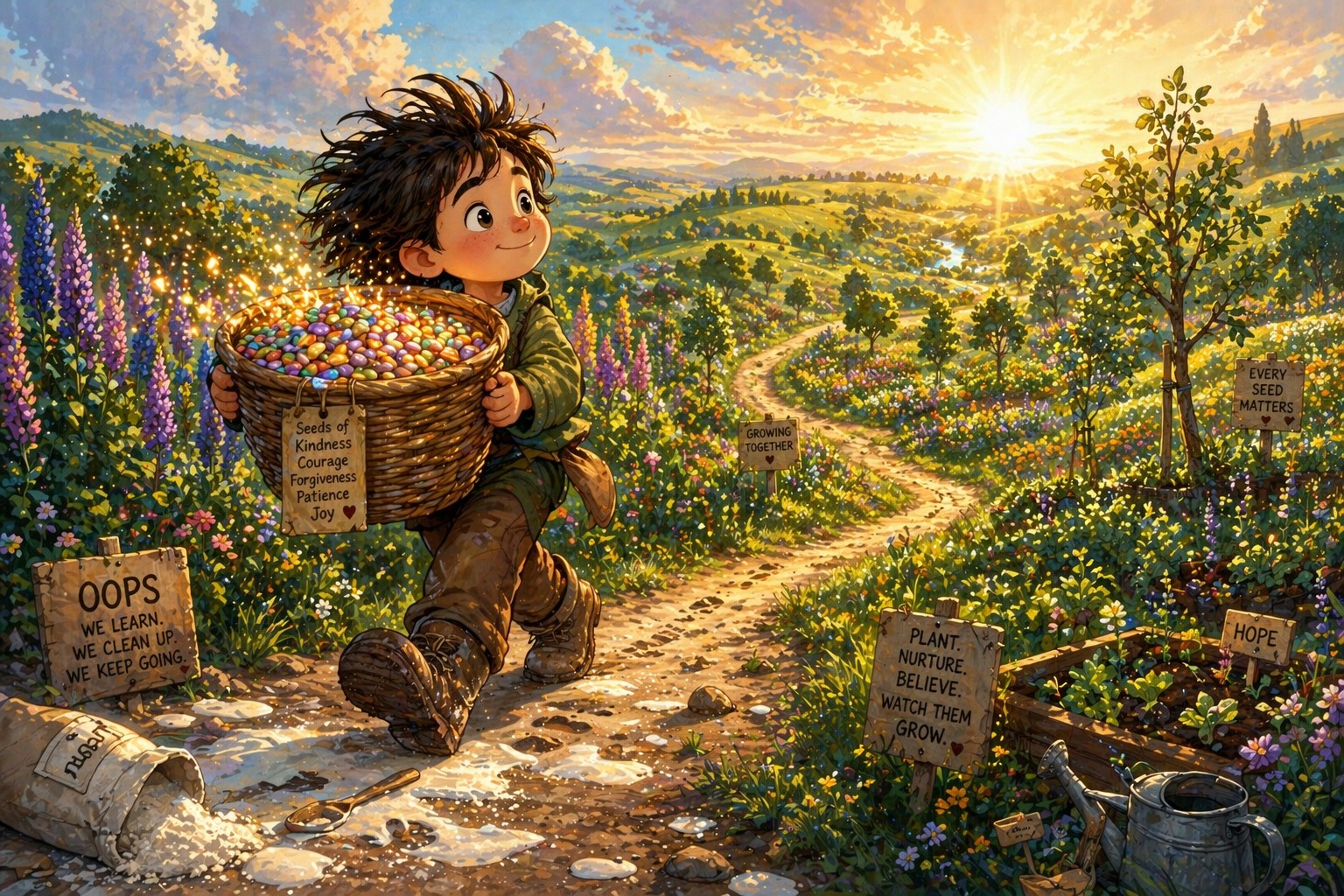
Raising the “I Can” Child: How You Can Turn Messes into Milestones
You know that silence, don’t you?
The one that has a heavy texture to it. You walk into the kitchen to find a trail of flour—a snowy path leading to a small person with white eyelashes and a very large “oops” written across their face.
In that moment, you aren’t just looking at a twenty-minute scrub job. You are standing at a threshold.
This is the intersection of a child’s impulse and their dawning realization that they are the author of their own actions.
This is the beginning of responsibility—the sturdy virtue that transforms your child from a passenger in their life into a confident pilot.
Responsibility is a Gift, Not a Burden
We often dress responsibility up in the drab clothes of checklists. But to your child, it is actually something glittering: the gift of being trusted.
When they hold the leash or stir the batter, you are whispering that they matter.
You are showing them that their contribution is the glue holding the family together.
Responsibility is the scaffolding of self-esteem. But how do we teach the weight of a promise without it feeling like a lecture?
We use the “back door” of the imagination. Through stories, children see the consequences of a mistake without the sting of a real-world scolding.
A Curated Library of Accountability
Here are eight books to help you navigate this landscape, turning “must-dos” into “I’m the one who can.”
1. Strega Nona by Tomie dePaola
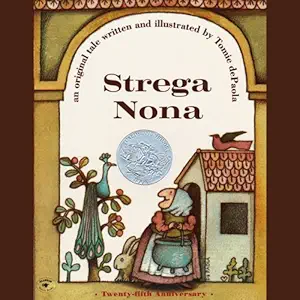
The Gist: Big Anthony ignores Strega Nona’s one rule and uses her magic pasta pot, leading to a starch-filled disaster.
What your child will notice: The absurdity of the pasta flooding the town and Big Anthony’s wide-eyed panic.
The Lesson: This is the ultimate primer on natural consequences. Strega Nona doesn’t shout; she simply insists that the mess Anthony made is the mess Anthony must fix. It teaches that while we all make mistakes, we are the ones who must put things right.
2. The Paperboy by Dav Pilkey
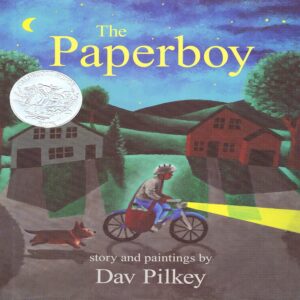
The Gist: A young boy and his dog wake up in the freezing dark to deliver newspapers while the world sleeps.
What your child will notice: The quiet dignity of the boy’s “big kid” status and the fact that he is the master of his own small universe without supervision.
The Lesson: Responsibility is a source of internal peace and autonomy. It reframes chores as things they get to do for themselves. It highlights the “marathon” of duty—showing up even when it’s cold, dark, or lonely.
3. The Empty Pot by Demi
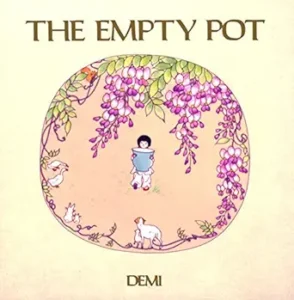
The Gist: Ping works harder than anyone to grow a seed for the Emperor, but nothing sprouts. He is the only child honest enough to present an empty pot.
What your child will notice: Ping’s shame as he stands next to other children with towering blossoms.
The Lesson: This expands responsibility to include integrity. It is easy to be responsible for a success; it is incredibly difficult to be responsible for a perceived failure.
It teaches that being responsible means owning the truth, even when it’s uncomfortable.
4. A Chair for My Mother by Vera B. Williams
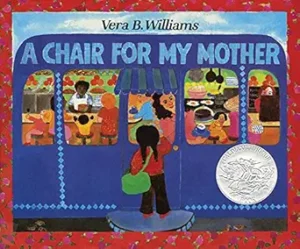
The Gist: After a fire destroys their home, a young girl and her family save every penny in a jar to buy a comfortable chair for her hardworking mother.
What your child will notice: The slow, disciplined clink of coins into the jar and the girl’s active role in her family’s recovery.
The Lesson: This introduces communal responsibility. It shows that when a family has a goal, every member—even the smallest—has a vital role. It moves the virtue from a cold “should” to a warm “want” driven by love.
5. What If Everybody Did That? by Ellen Javernick
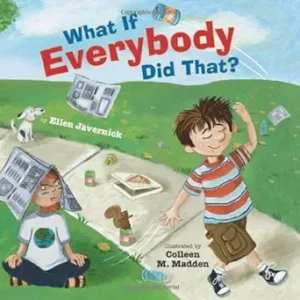
The Gist: A boy makes “small” irresponsible choices (like littering one wrapper), and the book visualizes the chaos if every single person did the same.
What your child will notice: The hilarious, messy disaster of a world buried in orange peels or swimming pools full of people.
The Lesson: This is the perfect tool for civic responsibility. It helps your child see the big picture, shifting their focus from “Am I in trouble?” to “I am a guardian of my community.”
6. Brave Irene by William Steig
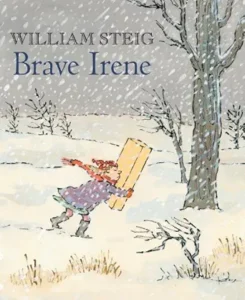
The Gist: When her mother falls ill, Irene braves a literal blizzard to deliver a gown to the duchess.
What your child will notice: Irene’s smallness against the vast snow and her refusal to quit when the wind “tells” her to go home.
The Lesson: Responsibility is heroic persistence (grit). Irene shows that doing what we said we would do is often hard and uncomfortable, but our contributions are vital.
7. Miss Rumphius by Barbara Cooney
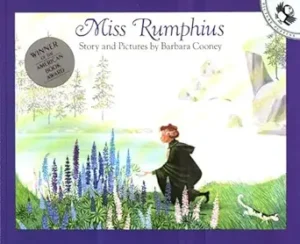
The Gist: Alice Rumphius travels the world but keeps one promise: to make the world more beautiful by planting lupines.
What your child will notice: The sweeping fields of blue and purple flowers that grow because of one woman’s lifelong mission.
The Lesson: This is visionary responsibility. It teaches that we are responsible for the legacy we leave behind. It encourages your child to think about what “seeds” they are planting in their own lives.
8. Lilly’s Purple Plastic Purse by Kevin Henkes
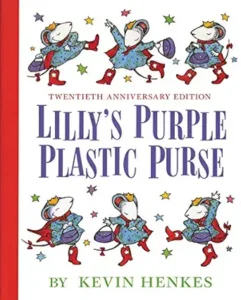
The Gist: Impulsive Lilly gets in trouble with her teacher and reacts with anger, only to be overcome with guilt.
What your child will notice: Lilly’s shifting moods—from excitement to “mean” drawings to the “heavy heart” of remorse.
The Lesson: This focuses on emotional responsibility. When we hurt someone’s feelings, we are the ones responsible for the repair. It models the perfect apology: admitting the mistake, saying sorry, and making amends.
Put Your Child in the Heart of the Story
While these books are wonderful windows, there is no story quite as powerful as the one where your child is the hero.
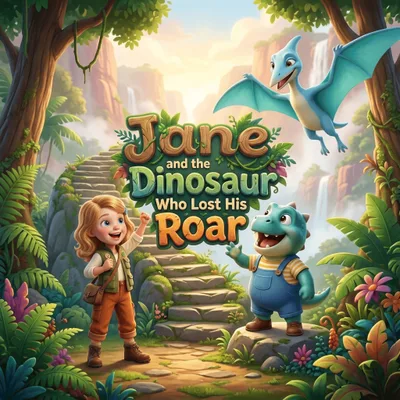
At Scrively, we believe that when a child sees themselves—their name, their face, their world—navigating these challenges, the lesson moves from their head to their heart.
Imagine a custom book where your little one is the one who remembers the secret ingredient or helps a neighbor find a lost pet.
By personalizing the narrative, we turn “becoming responsible” into a grand adventure they are already equipped to win.
Growing Into Capability
Teaching responsibility is ultimately about teaching your child that they are powerful. It is the slow process of moving them from the “done for” stage of life to the “can do” stage.
As you tuck them in tonight, remember: every small task they take on is a brick in the foundation of their character. You aren’t just raising a child who can clean their room; you are raising an adult who can carry the world.
Keep reading, keep trusting, and keep celebrating those capable little hands.