Learning to Work Together: The Best Books for Kids Ages 4–7
Cooperation sounds so wholesome until you’re standing in a living room watching two kids try to build “one” tower with “the good blocks.”
Suddenly, the air is thick with rules that weren’t agreed on, plans that weren’t shared, and a very intense belief that “my way” is the only way.
And if your kid is the one who wants control, or the one who disappears when the group gets loud, or the one who can cooperate beautifully right up until the moment someone changes the game—none of that means they’re behind.
It means they’re human. It means they’re four, five, six, seven… and learning how to be a person with other people.
Because cooperation isn’t compliance. It’s not “be nice” or “do what the group wants.” It’s shared problem-solving. It’s noticing someone else has a plan, too. It’s learning that you can stay yourself while still staying connected.
Sometimes cooperation looks like taking turns. Sometimes it looks like negotiating.
Sometimes it looks like trying again after you stomp away for a minute. And sometimes it’s just realizing: if we want the same thing, we might need each other.
Stories help because they let your child practice collaboration without being “the one who needs to learn.”
A book gives them characters to watch, feelings to recognize, and a safe little space to imagine, “Oh. That’s what it’s like when you figure it out together.”
8 cooperation picture books that feel like real life (but gentler)
These eight books hold the messy middle of teamwork: the misunderstandings, the bargaining, the moments where everyone wants to lead, and the quiet wins when something finally works because people kept trying together.
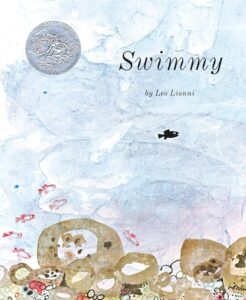
Swimmy — Leo Lionni
What kids notice in this story:
Your child notices what it feels like to be the one who’s different—and then what it feels like when that difference becomes useful.
They see a group that’s scared to try, and a small character who doesn’t force anyone… but helps everyone move together.
Story Snapshot:
Swimmy, a tiny black fish, finds himself alone and later discovers another school of little red fish hiding from danger.
He comes up with a creative way for them to swim together so they can face the big world with more confidence.
Why this book helps kids learn cooperation:
This story makes collaboration feel like a slow unfolding: first fear, then curiosity, then a shared plan.
It shows that cooperation can be a way to stay safe and brave at the same time—and that you don’t have to erase yourself to belong.
For kids who struggle in group play because they feel overwhelmed, Swimmy quietly suggests: you can be part of the “we” while still being you.
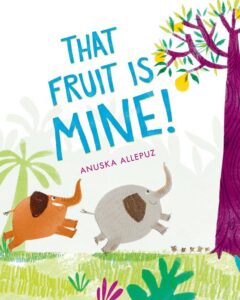
That Fruit Is Mine! — Anuska Allepuz
What kids notice in this story:
Kids notice the pattern fast: one-by-one efforts that don’t work, big feelings about fairness, and the surprising moment when smaller characters solve a problem by doing it together.
They also notice how “mine” thinking can get loud… and lonely.
Story Snapshot:
A group of elephants discovers delicious fruit high in a tree and each tries to claim it alone. When their solo plans fail, a group of mice shows what happens when you cooperate with creativity and shared effort.
Why this book helps kids learn cooperation:
This one is especially helpful for kids who prefer independence—or who get stuck in power struggles during shared activities.
The story makes room for desire (“I want it!”) without turning that desire into a character flaw. It shows collaboration as a practical, relationship-preserving choice: not because you’re “supposed to share,” but because working together actually changes what’s possible.
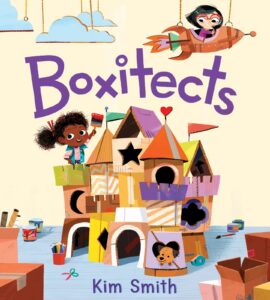
Boxitects — Kim Smith
What kids notice in this story:
Your child notices the joy of building—and the sting of someone else touching your idea. They see what it’s like when two creative kids want to lead, and how collaboration can feel like losing… until it starts feeling like making something bigger.
Story Snapshot:
Meg loves creating elaborate structures from boxes, and she’s proud of doing it her way. When she goes to Maker School, she meets Simone, another talented builder, and the two have to figure out how to create together.
Why this book helps kids learn cooperation:
This story honors strong-willed, idea-rich kids—the ones who have a “vision” and do not want it edited.
It shows disagreement without drama and teamwork without forced harmony.
Cooperation here is a series of small repairs: listening, adjusting, trying again, finding roles, and discovering that shared goals don’t cancel individuality—they can actually protect it by making space for more than one good idea.
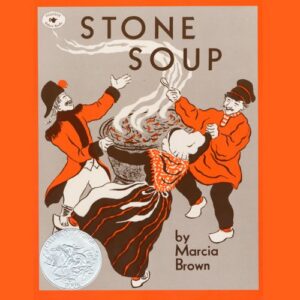
Stone Soup — Marcia Brown
What kids notice in this story:
Kids notice the mood of a community that doesn’t trust easily. They notice the tiny contributions—one carrot, one potato, one pinch of salt—and how those small offerings add up to something warm and shared. They also notice how people soften when they feel included instead of pressured.
Story Snapshot:
Hungry travelers arrive in a village where everyone is reluctant to share. They begin making “stone soup,” and little by little the villagers contribute ingredients until the whole town is part of the meal.
Why this book helps kids learn cooperation:
Stone Soup is a gentle lesson in group collaboration without the “you must” energy.
It shows shared effort as an invitation—something you join because it feels meaningful, not because someone scolded you into it.
If your child struggles with cooperation because group dynamics feel risky, this story quietly models trust-building through repeated, low-stakes participation.

Click, Clack, Moo: Cows That Type — Doreen Cronin
What kids notice in this story:
Your kid notices the funny part—animals typing letters—but they also notice something deeper: a group asking for what they need, a standoff, and a negotiation that doesn’t destroy the relationship.
They see how cooperation sometimes starts after conflict, not before it.
Story Snapshot:
Farmer Brown’s cows find a typewriter and begin making requests for better living conditions. When he refuses, they go on strike, and a duck becomes the messenger in a surprisingly organized barnyard negotiation.
Why this book helps kids learn cooperation:
For kids who interpret cooperation as “I always lose,” this story is a relief: it shows a group advocating, a leader responding, and an agreement forming.
It also shows that disagreement doesn’t have to mean disconnection.
Cooperation can include boundaries, fairness, and creative problem-solving—especially useful for children who struggle with group play because they feel steamrolled or unheard.
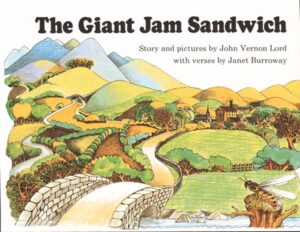
The Giant Jam Sandwich — John Vernon Lord & Janet Burroway
What kids notice in this story:
Kids notice the scale of the problem (so many wasps!) and the delight of a town doing something big together. They see lots of different roles, lots of activity, and the way a shared mission can pull everyone into the same story.
Story Snapshot:
The people of Itching Down are overwhelmed by an invasion of wasps. After some worry and debate, the townsfolk come up with a wild plan: build a gigantic jam sandwich to trap the wasps—and they all pitch in to make it happen.
Why this book helps kids learn cooperation:
This is cooperation as a community rhythm: not perfect agreement, but forward motion together.
Kids see that big goals require many hands, and that helping doesn’t always look the same—some mix, some bake, some haul, some plan.
If your child has trouble joining group play, this book offers a comforting idea: you can belong to the mission even if your role is small or specific.
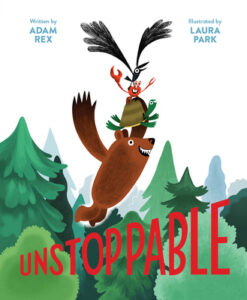
Unstoppable — Adam Rex
What kids notice in this story:
Your child notices the silliness of unlikely animals forming an even unlikelier “team.”
They notice how strengths stack up when you combine them—and how chaos can turn into a plan when everyone stays in the circle long enough to figure it out.
Story Snapshot:
A group of animals realizes they’re stronger together and sets out to protect their home. They create a wildly mixed-up, mashed-together team and learn that working together can be both messy and effective.
Why this book helps kids learn cooperation:
Unstoppable makes teamwork feel energetic instead of solemn. It validates that group efforts can be weird, noisy, and imperfect—and still succeed.
That’s a huge comfort for kids who freeze in collaborative moments because they think they must “do it right.” The book models sticking with the group through confusion, finding shared purpose, and letting different strengths take turns leading.

A Chair for My Mother — Vera B. Williams
What kids notice in this story:
Kids notice the jar of coins—how it fills slowly, how everyone contributes, how hope can be built one small clink at a time. They also notice the togetherness: family members working toward something that matters, even when life has been hard.
Story Snapshot:
After a family loses their belongings in a fire, they begin saving coins in a jar to buy a comfortable chair for Mama. Day by day, the savings grow, supported by steady effort and community care.
Why this book helps kids learn cooperation:
This book shows cooperation as shared endurance: not a quick “teamwork moment,” but a long, tender togetherness.
It helps kids feel how collaboration can be quiet and loyal—people contributing without fanfare, staying connected through a shared goal.
If your child struggles with group dynamics, this story offers a different entry point: cooperation doesn’t have to be loud play. It can be shared intention, repeated effort, and trust built over time.
How to use these books in real-life cooperation moments
The secret is that you don’t have to “teach” anything while you read. You can simply let the story do what stories do: give your child a felt sense of what teamwork looks like when it’s hard, when it’s funny, and when it finally clicks.
If you’re already building your child’s social confidence through gentle stories, you might also like these friendship books for ages 4–7—especially if cooperation is getting tangled up with worries about being included.
And when cooperation struggles are really “this is mine” struggles in disguise (which happens a lot at these ages), it can help to pair teamwork reads with stories about sharing for 4-year-olds that keep the tone soft and relationship-centered.
Conclusion
Cooperation grows the way most important things grow: slowly, unevenly, and with a lot of do-overs.
Some days your child will surprise you with flexibility. Other days they’ll melt down because someone moved the pretend “kitchen” two inches to the left.
What helps most isn’t perfect behavior. It’s modeling, repetition, and the steady message that connection can survive frustration. You don’t have to correct your child into cooperation—you can keep offering chances to practice it safely.
Rereading is part of the magic.
The second (and sixth) time through a story, your child starts noticing different details: the moment someone pauses, the moment someone tries again, the moment a group becomes a team.
And those moments slip into real life in small, ordinary ways.
If your kid would light up by starring in a teamwork story of their own, Scrively is a sweet place to create personalized stories about shared goals—building, helping, solving, trying again—so cooperation feels familiar long before the next group-play moment shows up in your living room.