If Your Child Gets Stuck Easily, These Books Help Them Figure Things Out
You’ve probably seen the moment before.
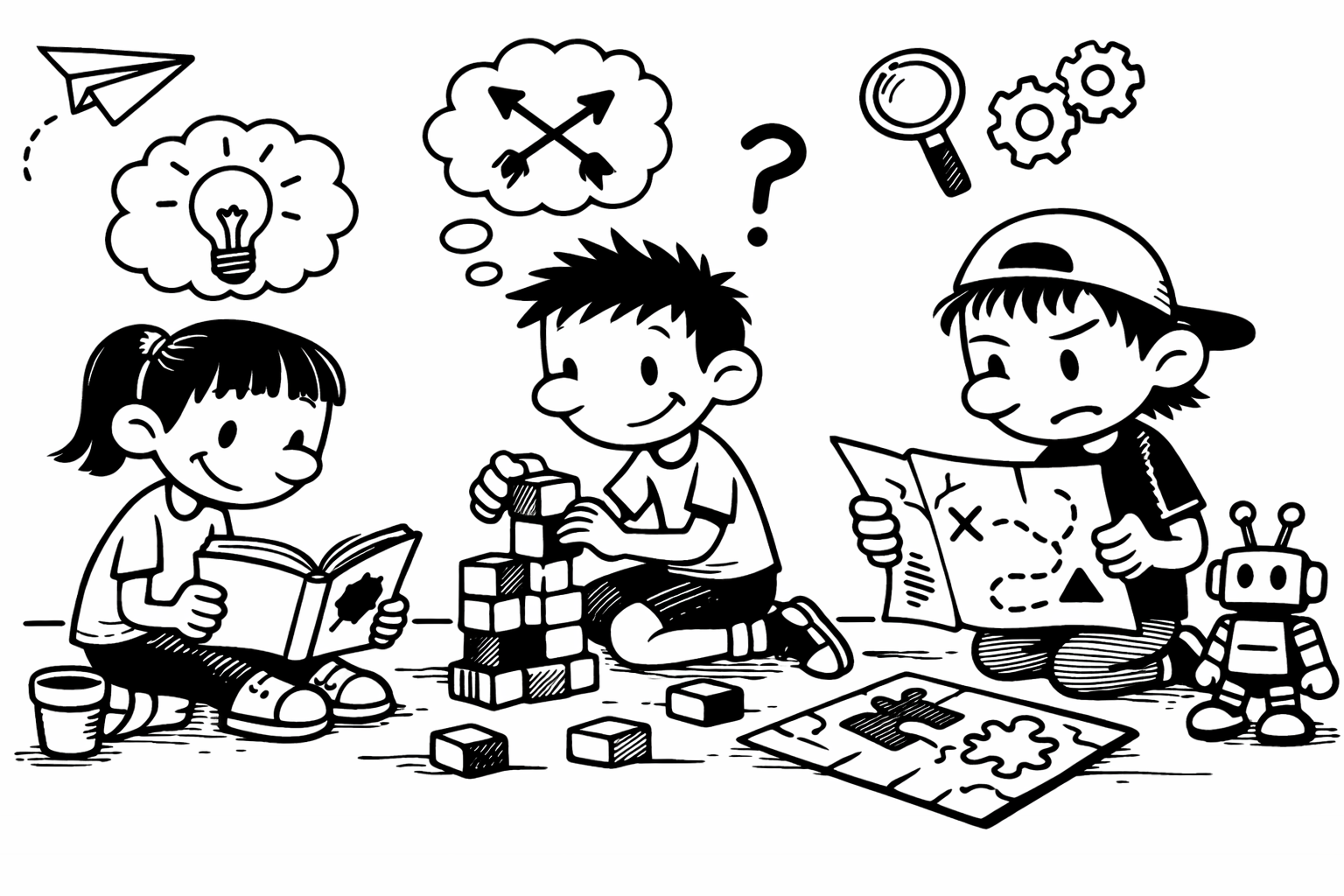
A puzzle piece won’t fit. A Lego tower keeps collapsing. Two friends both want the same toy. A drawing didn’t turn out the way your child imagined.
For children, these small moments can feel like very big problems.
Often the first instinct is to look toward you — waiting for the answer, the fix, the explanation that makes everything work again.
And honestly, that makes sense. When something feels confusing or frustrating, asking an adult for help is a natural step.
But learning to solve problems is a skill that grows slowly over time. It develops through curiosity, experimentation, and the quiet realization that trying something new might actually work.
Books create a safe place for this kind of learning.
Inside stories, children watch characters run into challenges that feel familiar: things break, ideas fail, plans don’t work the first time. Yet those same characters keep thinking, adjusting, trying again.
And somewhere along the way, the solution begins to appear.
The books below invite children into that process — showing that solving problems isn’t about having the right answer immediately. It’s about wondering, exploring, and discovering what might work next.
Maybe Something Beautiful by F. Isabel Campoy & Theresa Howell
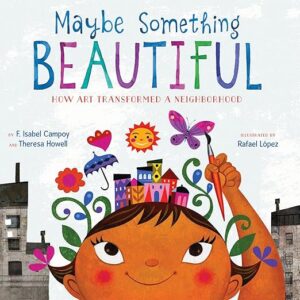
In a neighborhood filled with gray walls and quiet streets, a young girl named Mira begins hanging colorful artwork around her community.
At first, her drawings seem like small gestures. But when an artist arrives and starts painting murals with the community, Mira’s small idea turns into something much larger.
The story gently shows how creativity can become a solution to problems that feel too big to fix alone.
What kids notice in this story
Children notice how a simple idea grows when people build on it together. They see creativity as a way to respond to challenges. They also recognize that solutions can begin with something small.
The Curious Garden by Peter Brown
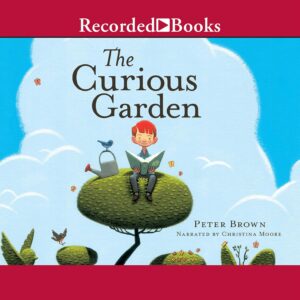
This quiet and imaginative story begins in a gray city where almost nothing grows. One day, a curious boy named Liam discovers a struggling patch of plants on an abandoned railway.
Instead of walking away, Liam begins experimenting with how to care for the plants. Some attempts work. Others don’t. But little by little, he learns what the garden needs.
As Liam keeps trying, the garden slowly spreads throughout the city. What started as a small discovery turns into a transformation fueled by patience, observation, and creativity.
What kids notice in this story
Children notice how Liam keeps trying different ways to help the garden grow. They see that small ideas can grow into big solutions. Most of all, they watch curiosity turn into change.
Boxitects by Kim Smith
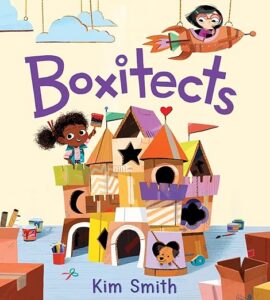
Meg loves building things from cardboard boxes. Castles, robots, bridges — if it can be imagined, she wants to construct it.
When a new student named Simone joins her class, the two girls initially clash over how things should be built. Each believes their way is the best approach.
But when they eventually combine their ideas, something unexpected happens: their collaboration leads to a design that neither of them could have built alone.
What kids notice in this story
Children notice how different ideas can lead to better solutions. They see that disagreement doesn’t always mean failure. Sometimes it opens the door to new possibilities.
The Smart Cookie by Jory John

In a cheerful bakery filled with talented cookies, one cookie quietly wonders why she doesn’t feel as “smart” as the others.
She tries solving puzzles and answering questions but keeps feeling like she doesn’t quite measure up.
Over time, the cookie begins to notice that intelligence isn’t only about quick answers. It can also mean persistence, curiosity, and asking thoughtful questions.
What kids notice in this story
Children see that problem-solving isn’t always about being the fastest thinker. They notice that curiosity and persistence matter too. The story gently expands what “being smart” can mean.
The Curious Why by Angela DiTerlizzi
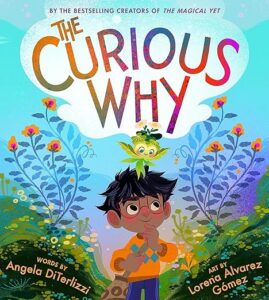
In this playful and thoughtful book, a young girl asks question after question about the world around her.
Some questions lead to experiments. Others spark conversations or new discoveries.
The story celebrates curiosity as the starting point for learning — showing that every big solution begins with someone asking “why?”
What kids notice in this story
Children notice that questions are powerful tools. They see curiosity as something worth exploring. The story invites them to keep wondering about the world.
Fix That Clock by Kurt Cyrus
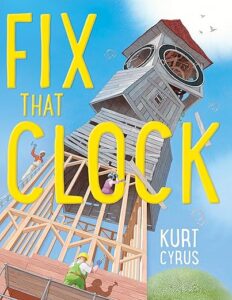
When a town clock stops working, the problem quickly becomes the center of everyone’s attention.
People gather with ideas about how to repair it. Some suggestions work. Others clearly don’t.
Through trial, discussion, and experimentation, the community gradually works its way toward a solution.
What kids notice in this story
Children see how solving problems sometimes requires trying several different ideas. They notice that teamwork can lead to better answers. The process itself becomes part of the story.
How to Solve a Problem by Ashima Shiraishi

This inspiring picture book tells the story of rock climber Ashima Shiraishi, who approaches climbing routes as puzzles to solve.
Each climb presents new obstacles — tricky grips, unexpected moves, or difficult sequences.
Instead of giving up, Ashima studies the wall, experiments with different approaches, and slowly discovers the path forward.
What kids notice in this story
Children notice how patience and observation help Ashima find solutions. They see that solving problems often means trying many possibilities. Each attempt becomes part of the discovery.
The Girl Who Thought in Pictures by Julia Finley Mosca
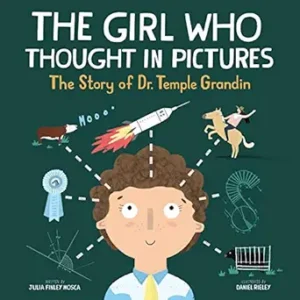
This biography introduces children to Temple Grandin, a scientist who saw the world differently.
As a child, Temple faced challenges understanding social situations and communicating with others. But her ability to think visually eventually helped her design better systems for caring for animals.
The story shows how unique ways of thinking can lead to powerful solutions.
What kids notice in this story
Children see that different perspectives can lead to creative breakthroughs. They notice how thinking differently can become a strength. The story encourages them to value their own ideas.
What If… by Samantha Berger
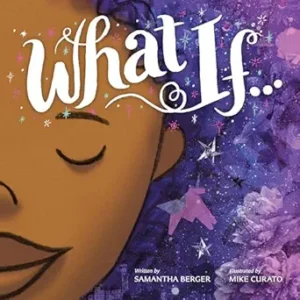
A young girl loves creating art. But one by one, her art supplies disappear — no paint, no markers, no brushes.
Instead of stopping, she keeps adapting. She finds new ways to create using whatever materials are available.
Each obstacle becomes an invitation to invent something new.
What kids notice in this story
Children notice how creativity grows when plans change. They see that solutions can come from unexpected places. The story celebrates imagination as a problem-solving tool.
The Inventor’s Secret by Suzanne Slade
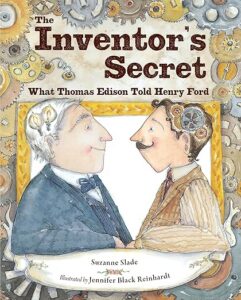
This engaging nonfiction story explores how inventors throughout history have approached problems.
From early experiments to breakthrough discoveries, inventors often faced setbacks and failed attempts along the way.
The book shows that invention is rarely a straight path — it’s a process of testing ideas, learning from mistakes, and continuing to explore.
What kids notice in this story
Children see that even great inventors try many ideas before finding solutions. They notice that mistakes often lead to new insights. The story makes experimentation feel exciting.
Last Stop on Market Street by Matt de la Peña
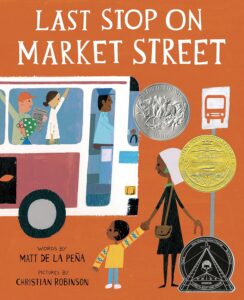
On a bus ride through the city, a young boy named CJ begins asking questions about the world around him.
Why don’t they have a car? Why do some people seem to have less than others?
Through thoughtful conversations with his grandmother, CJ gradually begins seeing beauty, generosity, and connection in places he hadn’t noticed before.
What kids notice in this story
Children notice how perspective can change how a problem feels. They see that asking questions can lead to deeper understanding. The story shows that solutions sometimes begin with seeing things differently.
Learning to Solve Problems Takes Time
Problem-solving rarely appears all at once.
It grows through small experiences — building something that falls apart, trying a new approach, asking questions, noticing what worked and what didn’t.
For children, these experiences can feel messy and uncertain at first. But each attempt quietly strengthens their confidence.
Stories help reinforce that process.
When children watch characters face challenges and experiment with solutions, they begin to recognize those same possibilities in their own lives.
A Story Where Your Child Becomes the Problem Solver
If your child enjoys stories about curiosity and creative thinking, personalized storytelling can make those lessons even more powerful.
Scrively creates personalized children’s books where your child becomes the main character — exploring challenges, experimenting with ideas, and discovering solutions along the way.
Seeing themselves inside a story can make the experience feel personal and empowering.
Instead of watching another character solve the problem, your child becomes the one exploring, trying, and discovering what works.
And sometimes that small shift makes curiosity feel even more exciting.
Because the truth about problem-solving is simple: every child learns it at their own pace.
But with time, encouragement, and stories that celebrate curiosity, children begin to realize something powerful.
They can figure things out.