Best Books Featuring Kids With Medical Conditions
Children notice difference early.
Sometimes that difference shows up as a cast, an inhaler, a scar, a hearing aid, a feeding tube, or a body that moves or reacts in ways others don’t expect.
For kids with medical conditions, seeing themselves reflected in stories can be quietly life-changing. It tells them: You belong here. Your story matters. You are not alone.
Representation in children’s books isn’t about centering diagnoses or turning stories into lessons.
At its best, it simply makes space. It allows kids to exist as full, complex people — curious, stubborn, funny, anxious, brave — who also happen to navigate medical realities as part of everyday life.
These stories don’t reduce children to what their bodies do or don’t do; instead, they widen the picture of what childhood looks like.
For many families, medical differences are woven quietly into daily life.
There are extra steps before leaving the house, backup plans tucked into backpacks, and moments when a child has to pause while others keep going.
These experiences don’t always look dramatic from the outside, but they shape how children move through the world — how they understand their bodies, their friendships, and their sense of belonging.
That’s where stories can be such a steady friend. A book can say what’s hard to explain out loud.
It can normalize things that might feel isolating — being the only kid who needs a certain device, the only one who has to sit out sometimes, or the only one who gets questions that feel too personal. Just as importantly, it can show joy and ordinary childhood alongside the extra layers.
For children without medical conditions, these books quietly build empathy. They normalize difference without spotlighting it.
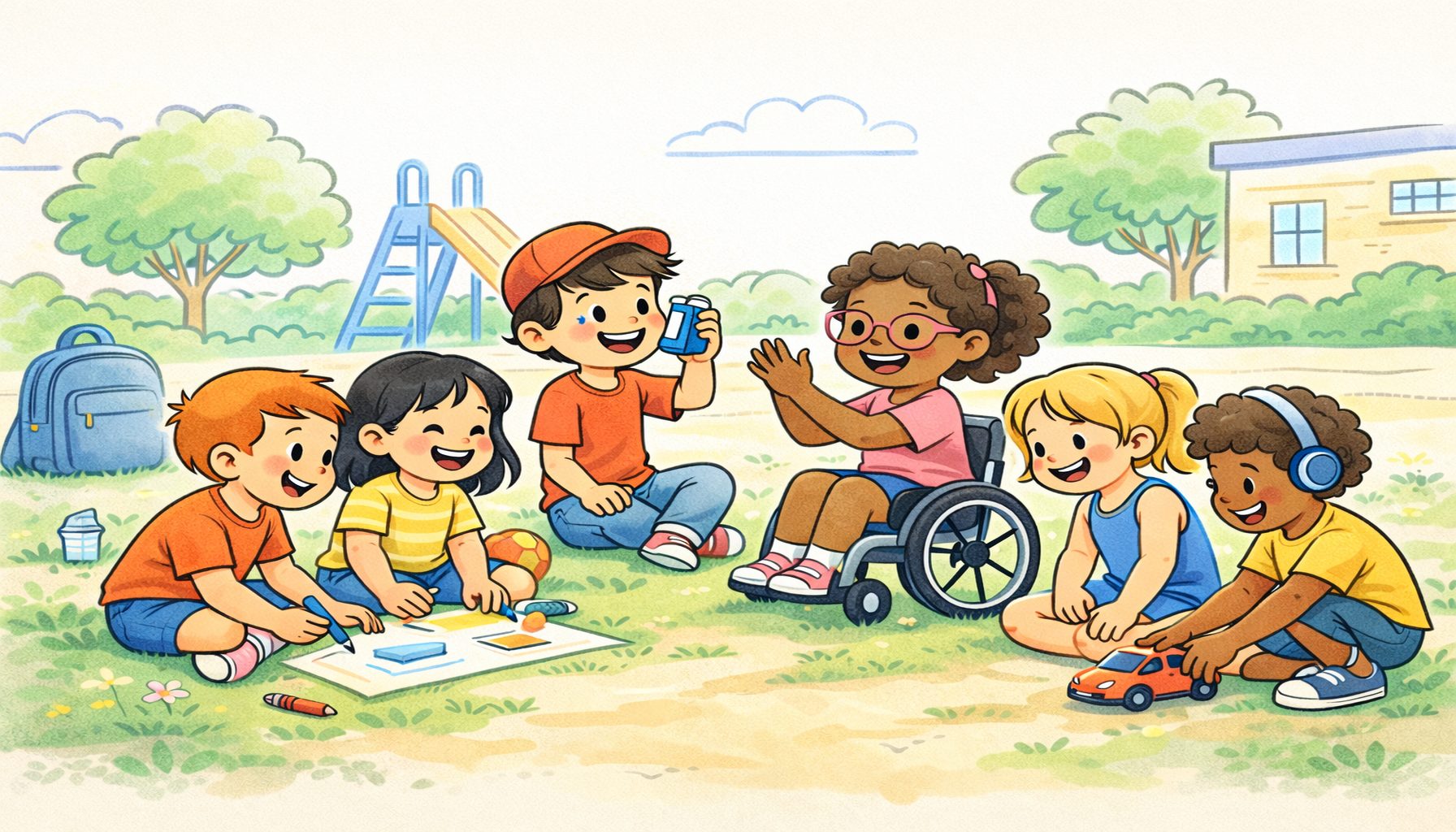
They invite readers into friendships, playground moments, classroom scenes, and family rhythms where accommodations are part of the landscape — not something strange or uncomfortable.
Over time, that kind of exposure can shape the way kids welcome others: with less awkwardness, more curiosity, and a lot more kindness.
These stories can also give adults language.
A shared book creates a softer entry point for conversations about boundaries, inclusion, and listening well. Instead of putting a child on the spot, the characters do some of the talking — and that often makes room for questions, reassurance, and connection.
The books below were chosen with care.
They are age-appropriate, emotionally grounded, and focused on lived experience rather than explanation.
Some stories address visible conditions, others invisible ones. All of them honor kids as whole people first — not problems to solve, but lives to understand.
Whether you’re reading alongside a child who wants to feel seen, or sharing these stories to help a classroom or family grow in understanding, these books offer something steady and affirming: a reminder that childhood is not defined by limitations, but by imagination, connection, and becoming.
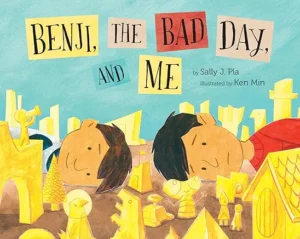
Benji, the Bad Day, and Me — Sally J. Pla
Core Themes:
- Invisible disabilities
- Empathy and understanding
- Friendship through hard moments
Story Snapshot:
Sam and Benji are best friends, but when Benji has a particularly hard day, Sam struggles to understand his behavior. Through patience and reflection, Sam begins to see what friendship really asks of him.
How this book supports kids with medical conditions (and builds empathy for others):
This story gently validates invisible conditions without labeling or explaining them away.
It shows kids that needing extra understanding doesn’t make someone “difficult” — it makes them human, and worthy of care.
At the same time, it helps peers recognize that compassion can look like slowing down, staying kind, and not assuming the worst.
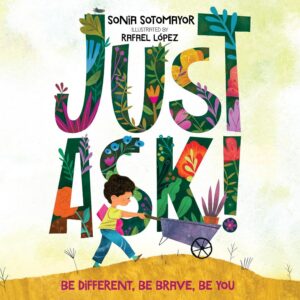
Just Ask! Be Different, Be Brave, Be You — Sonia Sotomayor
Core Themes:
- Medical and learning differences
- Curiosity over fear
- Self-advocacy
Story Snapshot:
A group of children tend a community garden while sharing the many ways they experience the world differently. Each child brings their own perspective, strengths, and needs.
How this book supports kids with medical conditions (and builds empathy for others):
Rather than singling anyone out, this book weaves difference into community life.
It encourages asking questions kindly and normalizes accommodations as part of shared spaces. It also reinforces that “different” is not a problem — it’s a normal part of any community where people belong to one another.
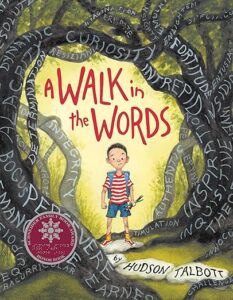
A Walk in the Words — Hudson Talbott
Core Themes:
- Dyslexia and learning differences
- Persistence
- Finding your own pace
Story Snapshot:
Jerome loves stories but struggles to read. With support and time, he discovers that his path into words doesn’t have to look like anyone else’s.
How this book supports kids with medical conditions (and builds empathy for others):
This story reframes struggle as part of learning, not a failure.
It offers reassurance to kids whose bodies or brains work differently, emphasizing patience and self-trust.
Additionally, it helps peers understand that effort and intelligence don’t always look the same — and that encouragement matters.
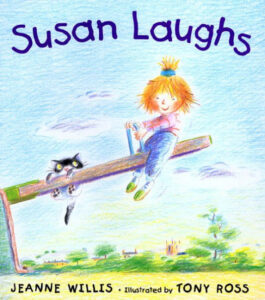
Susan Laughs — Jeanne Willis
Core Themes:
- Physical disability
- Joy and normalcy
- Perspective shifts
Story Snapshot:
Susan swims, rides horses, and laughs — just like any other child. Only at the end do readers learn she uses a wheelchair.
How this book supports kids with medical conditions (and builds empathy for others):
By delaying the reveal, the story centers Susan’s life rather than her mobility. It powerfully reminds readers that disability is one part of a much bigger story. Kids come away remembering what Susan loves — not what she uses to get around — which is exactly the point.
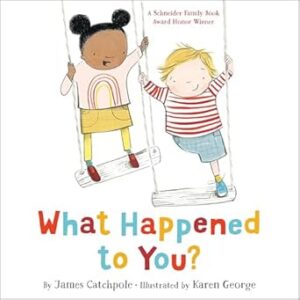
What Happened to You? — James Catchpole
Core Themes:
- Visible difference
- Boundaries and self-definition
- Social curiosity
Story Snapshot:
Joe is tired of being asked about his missing leg — until he decides to answer questions on his own terms.
How this book supports kids with medical conditions (and builds empathy for others):
This book empowers kids to set boundaries around their stories.
It also gently teaches others when curiosity crosses into intrusion.
Most of all, it gives children permission to be more than an explanation — to choose when to share, how to share, and when to simply be a kid.
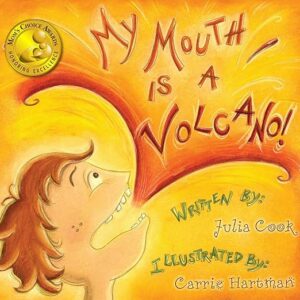
My Mouth Is a Volcano! — Julia Cook
Core Themes:
- Impulse control
- Emotional regulation
- Self-awareness
Story Snapshot:
Louis struggles to keep his thoughts inside, often interrupting others. Over time, he learns strategies to manage his impulses.
How this book supports kids with medical conditions (and builds empathy for others):
While not diagnostic, the story resonates with kids navigating neurological or behavioral challenges, offering validation without labels.
It emphasizes growth without shame — and it helps classmates see that self-control can be genuinely hard work, not a character flaw.

Can I Tell You About Asthma? — Jacqui Bailey
Core Themes:
- Chronic conditions
- Confidence
- Peer understanding
Story Snapshot:
A young child explains what living with asthma is like in everyday situations.
How this book supports kids with medical conditions (and builds empathy for others):
The tone stays friendly and child-centered, helping kids feel confident explaining their needs while encouraging others to listen with care.
It also reassures children that needing support during play or school doesn’t make them “less” — it simply means they’re learning what helps their body do its best.
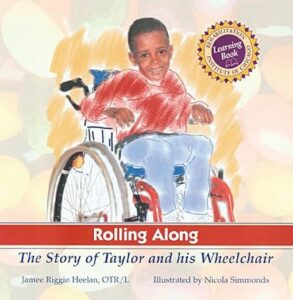
Rolling Along: The Story of Taylor and His Wheelchair — Jason Stone
Core Themes:
- Mobility aids
- Independence
- Everyday adventures
Story Snapshot:
Taylor shows readers how his wheelchair helps him move through the world, play, and explore.
How this book supports kids with medical conditions (and builds empathy for others):
The wheelchair is presented as a tool, not a limitation. The story centers freedom, agency, and normal childhood curiosity.
It also helps peers see mobility aids as ordinary — part of how someone participates — rather than something that needs to be stared at or tiptoed around.
Children are more than any single part of their story. Medical conditions may shape daily routines, but they do not define a child’s worth, imagination, or future.
The best books honor that truth quietly — by letting kids be kids, fully and unapologetically.
Stories like these remind children that strength takes many forms: asking for help, setting boundaries, adapting, laughing, trying again.
And because they focus on friendship and belonging, they also teach an important lesson to every reader: inclusion isn’t about special treatment — it’s about shared humanity, thoughtful choices, and showing up for one another.
If your child is inspired to tell their own story — whether it reflects medical realities, big feelings, or everyday moments — Scrively is a space where kids can create their own books, including stories that reflect their real lives and experiences.
When children get to author their own narratives, they practice something powerful: owning their voice, celebrating their whole identity, and reminding themselves that they are more than any single chapter.