When a Friend Copies Everything: Kids Books About Originality
Your child comes home with a familiar complaint: “She copies everything I do.” The same drawing. The same game. Even the same answer when someone asks about a favorite animal. What looks small from the outside can feel very personal to a child who is still figuring out what belongs to them.
It can be tempting to answer, “That just means they like you.” Sometimes admiration is part of the story. Still, your child may need you to hear the frustration before helping them understand the other person. They can enjoy a friendship and want a little room for their own ideas.
These children’s books about originality give you several ways into that conversation. Some show the child who copies. Others follow the child who feels crowded. One explores the more serious problem of taking credit for somebody else’s work. Together, they make space for kindness, boundaries, and the pleasure of trying something your own way.
You do not need to settle every playground disagreement during story time. Start with the character your child notices. Ask what feels familiar, then listen. A story can give both of you a little distance from a situation that felt overwhelming an hour earlier.
Children’s Books About Originality and Friendship
Originality can look wonderfully ordinary: choosing a different game, adding a new detail to a drawing, or saying what you actually prefer. These stories also remind us that learning from other people is part of growing up. The useful question is often how everyone feels about what is happening.
Ruby the Copycat by Peggy Rathmann
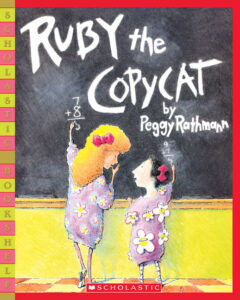
Ruby is new at school, and she takes her cues from a classmate. Before long, following another child’s lead has become a habit that gets in the way of showing who Ruby is herself. Peggy Rathmann both writes and illustrates this story about wanting to fit in.
For a child who has been copied, Ruby offers a chance to look at the other side of the experience. For a child who keeps copying, she offers company without a scolding.
What kids notice: Ruby wants to belong. Your child may recognize how easy it is to treat another person’s choices as a guide when a place or friendship feels unfamiliar.
Story snapshot: Ruby repeatedly copies her classmate until she begins to discover the pleasure of being herself. The school setting keeps the problem close to everyday childhood.
Why this book helps: You can ask, “What might help Ruby feel welcome without doing everything the same way?” Then invite your child to name something they would choose for themselves. Keep the answer small and concrete: a favorite color, a game, or a silly dance.
Copy Cat by Ali Pye
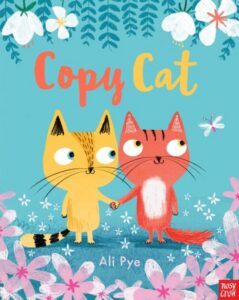
Bella admires Anna so much that she follows everything Anna does. Their friendship becomes tangled when Anna has had enough. Ali Pye’s colorful kittens bring a familiar playground problem into a lively, approachable story.
The book is especially useful for thinking about how copying changes with the situation. Following somebody’s lead can feel different when it is welcomed rather than demanded.
What kids notice: Bella enjoys being near Anna, but Anna has feelings about their games too. Both children in a real friendship need room to contribute.
Story snapshot: After a disagreement, Bella finds something to enjoy herself. New friendships and shared play create possibilities beyond always following one person.
Why this book helps: Ask, “When does copying make a game more fun?” You might contrast learning a new jump-rope move with being followed after asking for space. Your child can practice inviting a friend to join in while also finding words for wanting a turn to lead.
I Am Not a Copycat! by Ann Bonwill
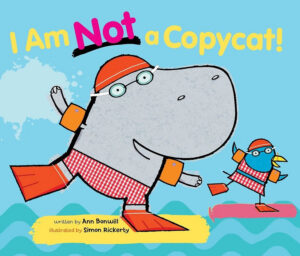
Hugo the hippo is proud of being unique. Bella the bird wants to be unique too, preferably in exactly the same way as Hugo. Illustrated by Simon Rickerty, this friendship story lets the humor of that contradiction do some of the work.
Hugo’s growing irritation will feel familiar to many children. Bella’s enthusiasm offers another recognizable feeling: loving what a friend does so much that you want to join in immediately.
What kids notice: Hugo and Bella can enjoy each other while disagreeing about what counts as copying. Their friendship has room for more than one reaction.
Story snapshot: Bella imitates Hugo as he prepares for water ballet. What Hugo sees as an interruption becomes an admired synchronized performance, opening a new possibility for the pair.
Why this book helps: Talk about the difference between a solo and a duet. Ask, “How could they decide together which one they are doing?” That gives you practical language for consent in play: sometimes a child wants a partner, and sometimes they want to finish their own idea first.
Copydog by Zachariah OHora
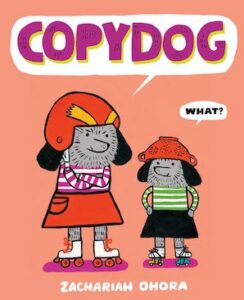
Elise and her younger sister, Rosemont, usually get along. But Rosemont’s habit of copying her older sister can make that closeness exhausting. Zachariah OHora writes and illustrates this sibling story, which brings the problem home from the playground.
If your child has a younger sibling, you may recognize the mixture of affection and irritation. Being someone’s favorite person does not always feel flattering in the middle of a busy afternoon.
What kids notice: A sibling can be dearly loved and deeply annoying, sometimes within the same game. Your child does not have to pick only one feeling to talk about.
Story snapshot: Rosemont keeps copying Elise, creating a familiar sisterly conflict. The story explores the closeness behind the frustration and includes instructions for making a rainstick.
Why this book helps: Ask your child what they enjoy doing together and what they would like to do independently. You could plan a shared craft with separate choices of colors or materials. Each child gets to participate without producing an identical result or competing for the most original idea.
The Copy Crocs by David Bedford
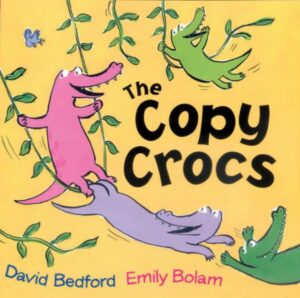
Crocodile has plenty of ideas for enjoying his day. Unfortunately, the other crocodiles keep following him. Whether he finds mud, sunshine, or a comfortable log, company soon arrives. Emily Bolam illustrates his increasingly crowded adventures.
This story makes a good starting point when your child wants both friendship and breathing room. Those wishes can sit beside each other, even when it takes time to explain them.
What kids notice: Crocodile’s ideas attract the other crocs, but being followed everywhere wears on him. Wanting company does not mean wanting company every moment.
Story snapshot: Crocodile searches for somewhere the others will not copy him. When he finally gets away, he discovers that being alone is less enjoyable than he expected.
Why this book helps: Ask, “What kind of company would Crocodile enjoy?” Resist turning the ending into a rule that your child must always share their space. Instead, imagine a compromise together: a little time alone, a shared game afterward, or a turn for someone else to suggest the activity.
Copycat by Stephanie Sim
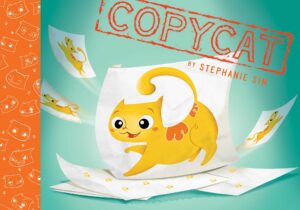
This wordless picture book gives you a different way to read together. Its main character is a paper cat who wants to play with real cats. When copying them does not bring the connection he hopes for, he has to find another way forward.
Because Stephanie Sim tells the story through pictures, your child can help supply the words. You can pause, look again, and compare interpretations without needing to find one perfect answer.
What kids notice: Wanting to join a group can make someone watch very closely and imitate what they see. Your child may spot that desire before they can explain it.
Story snapshot: A printed paper cat tries to connect with real cats. His search for friendship leads him toward making his own way rather than simply copying others.
Why this book helps: Invite your child to imagine a thought bubble for the cat. Then ask what they would say to welcome him. This keeps originality connected to belonging: a group can make space for somebody’s differences instead of expecting every newcomer to behave exactly alike.
Toot & Puddle: The One and Only by Holly Hobbie
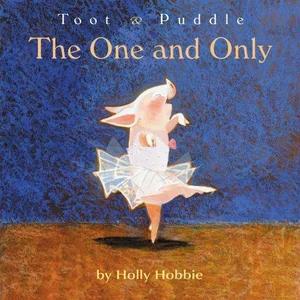
Opal is unsettled by a new girl at school who keeps imitating her. Toot and Puddle offer support as she works through the experience. Holly Hobbie’s illustrations accompany a story that takes a child’s frustration seriously while leaving room for compassion.
The book can help when your child worries that being copied somehow makes them less special. Matching clothes or interests do not capture everything that makes a person themselves.
What kids notice: Opal needs somebody to listen to what is bothering her. Having familiar, caring figures nearby gives her somewhere to take those feelings.
Story snapshot: Opal struggles with Bubbles’s copying. With support from Toot and Puddle, she comes to recognize the kindness and care that belong to her own character.
Why this book helps: Ask your child what they appreciate about a friend beyond the things that friend owns or likes. You can do the same for them. Naming their patience, humor, or thoughtfulness offers a fuller picture of individuality than trying to protect every favorite thing from being shared.
Mildred and the Copycat by Jono Ganz
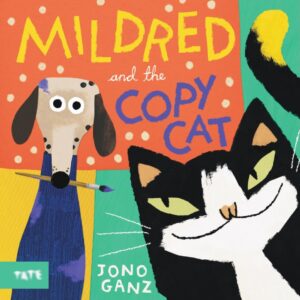
Mildred looks like an ordinary gallery cat, but she is secretly responsible for the artwork. When another artist claims her work, she is determined to set things right. Jono Ganz writes and illustrates this art-filled adventure.
This selection brings an important distinction into the conversation. Enjoying the same hobby as a friend is different from claiming that you made something they created.
What kids notice: Mildred cares about her work and wants the right person to receive credit. Your child may understand that feeling from a picture, a construction, or an idea for a game.
Story snapshot: A new artist takes credit for Mildred’s ambitious artwork. She sets out to expose the deception and make her contribution known.
Why this book helps: Practice a few simple sentences together: “I made this part,” or “That idea came from my friend.” You can also model giving credit yourself. If a disagreement becomes hurtful or keeps happening, help your child ask a trusted adult for support rather than expecting them to solve it alone.
Put Your Child in the Heart of the Story
After reading these children’s books about originality, invite your child to invent a character with one idea they especially love. Perhaps their hero builds a flying house, makes up a rainy-day game, or learns how to tell a friend they need space. Let the details come from your child, even when the story takes an unexpected turn.
You can explore personalized stories with Scrively and make those ideas part of a story you create together. Ask what the character wants, what gets difficult, and what they might try next. Leave room for a solution you would not have chosen yourself.
When the book closes, your child may still dislike being copied. You can stay curious about that feeling. Listen first, help them find respectful words, and notice the ideas they bring to everyday life. Originality has room to grow when children feel that their choices matter and that friendship leaves space for them to be themselves.