Returning What Isn’t Yours: 8 Children’s Books About Honesty
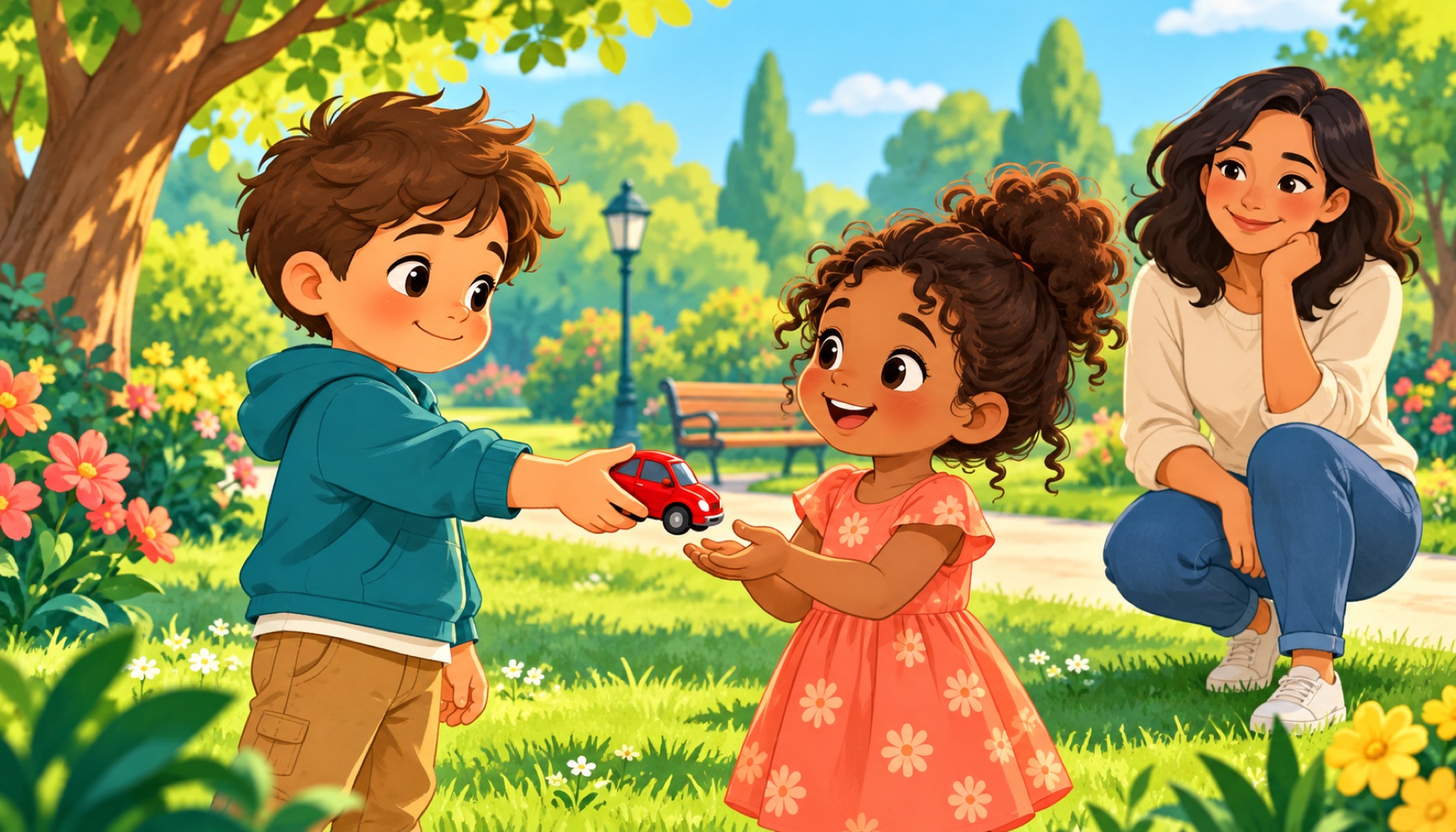
Your child opens a hand, and there it is: a tiny car from the playground, a glittery pencil from school, a toy that slipped into the wrong coat pocket. They are delighted. You recognize the pause that comes next. Someone else may be looking for it.
Returning what isn’t yours can ask a lot of a small person. First comes the excitement of finding something. Then comes the wish to keep it. Honesty begins in that uncomfortable space, when your child can tell you what happened and you can help them choose a next step without turning the moment into a verdict on who they are.
A story gives you somewhere gentler to start. You can wonder about a bear’s discovery or a missing teddy before talking about the treasure in your child’s pocket. Try asking, “Who might be missing this?” Then make the practical part manageable: hand it to a teacher, ask the playground staff, or return a borrowed toy together.
These eight books approach finding, losing, and giving back in different ways. Some show a direct choice about returning something. Others help your child imagine the person waiting for it, or question an easy assumption. You don’t need to squeeze a lesson out of every page. Make room for the story, and let the conversation follow.
Eight Stories for Learning to Give Things Back
Found — Salina Yoon
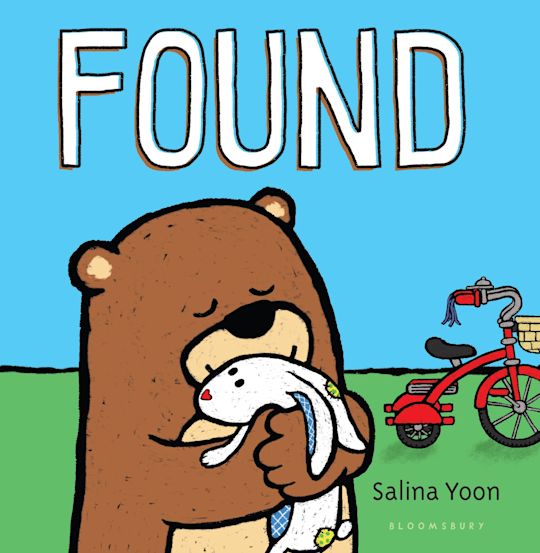 A found toy can become special surprisingly quickly. This book, written and illustrated by Salina Yoon, meets that feeling with tenderness rather than suspicion. It makes a lovely starting point when your child wants to help and wants to keep the discovery, all at once.
What kids notice: Bear’s concern for the little stuffed bunny makes the search feel personal. Your child can imagine a favorite comfort toy waiting somewhere unfamiliar, and someone at home missing it.
Story snapshot: Bear discovers a lost toy bunny in the forest and searches for its owner. As he looks, he grows attached to the bunny himself. The possibility of an owner coming forward brings his new affection into the story’s central question.
Why this book helps: Caring for a found object and claiming it are different choices. You can acknowledge your child’s affection while keeping the return possible: “You’ve taken good care of it. Now let’s help it get home.” Wanting something doesn’t have to prevent an honest action.
Found — Jeff Newman, illustrated by Larry Day
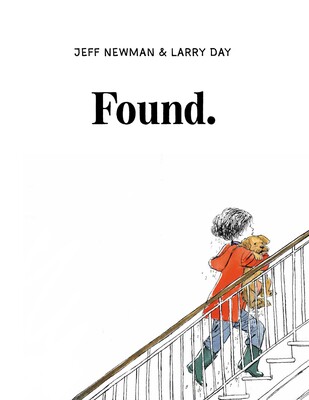 This second book called Found tells a different story. Its wordless pages give you and your child time to notice a difficult decision without racing ahead. You can pause wherever a face or a gesture seems to say more than words could.
What kids notice: A dog can be deeply loved by more than one person. That makes Jenn’s feelings understandable even when returning him becomes the right thing to consider. A living companion also needs care, not simply a place on a shelf.
Story snapshot: Jenn misses her own lost dog. When she takes in another dog, a bond grows between them. Then a missing-dog poster reveals that he is Roscoe, someone else’s beloved companion, and Jenn faces the prospect of giving him back.
Why this book helps: The choice has an emotional cost. Invite your child to imagine both homes: “What might Jenn feel? What might Roscoe’s family feel?” You can discuss doing something fair while still feeling sad, and why an adult should help with any unfamiliar animal.
Finders Keepers — Keiko Kasza
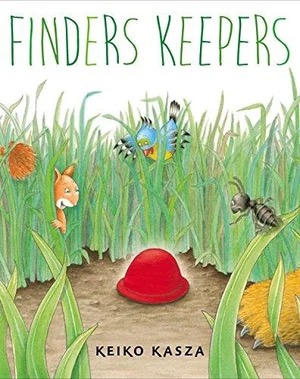 If your child announces “Finders, keepers!” with absolute confidence, this playful story offers an opening. Written and illustrated by Keiko Kasza, it sends one red hat through a series of surprising uses. Enjoy the silliness before asking what the familiar phrase leaves out.
What kids notice: Each creature sees something different in the same hat. An object that looks useful or abandoned to one finder may already have a purpose that the finder knows nothing about.
Story snapshot: A squirrel leaves a red hat to mark a buried acorn. The wind carries it away, and woodland creatures discover uses for it, including a bird’s nest and an ant’s boat. The hat’s wandering route eventually brings the circular story back around.
Why this book helps: This is a comic chain of discoveries, rather than a model of carefully returning property. Use that difference as your invitation: “Would finding it tell us whether somebody owns it?” Your child can enjoy the inventions and still practice checking before deciding that something is theirs.
Finders Keepers? A True Story in India — Robert Arnett, illustrated by Smita Turakhia
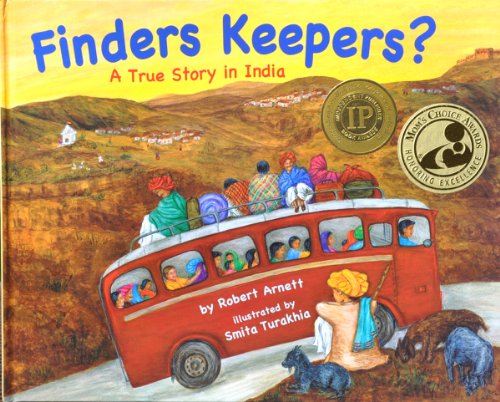 The question mark matters in this very different Finders Keepers? A real encounter during Robert Arnett’s travels becomes a story about honesty. Smita Turakhia’s illustrations accompany a setting that may also prompt your child’s curiosity about everyday life in India.
What kids notice: Someone can make a helpful choice without first asking what they will receive. Returning a wallet means recognizing its connection to another person, even when keeping it might seem possible.
Story snapshot: A boy finds Arnett’s lost wallet and returns it. When Arnett offers a reward, the boy does not understand why doing the right thing should require one. The encounter sits within the book’s exploration of India and its cultural and spiritual context.
Why this book helps: It offers a concrete example of giving something back because it belongs to someone else. Ask, “What would the person who lost it be worrying about?” Keep the conversation about this boy’s choice, rather than making broad claims about a whole country or treating honesty as a competition for prizes.
The Lost Property Office — Emily Rand
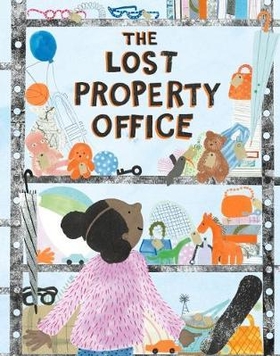 You may know the particular sadness of losing the one teddy that will do. Emily Rand’s story, which she also illustrates, approaches lost belongings from the other side. It helps your child see why handing something in can matter so much to someone they never meet.
What kids notice: A replacement isn’t always a comfort. A familiar toy holds memories and routines that another teddy cannot immediately supply. The crowded collection of lost things invites plenty of looking and wondering.
Story snapshot: A little girl leaves her teddy on a train while travelling with her mother to visit Grandpa. Another teddy doesn’t feel the same. Grandpa takes her to the lost property office, where she discovers her own teddy among the belongings waiting to be reclaimed.
Why this book helps: Returning something can begin by putting it in safe hands. Talk about the lost-and-found place at your child’s school or a trusted staff member at the pool. You don’t have to locate the owner yourselves; you can help make a reunion possible.
Mine! — Susie Lee Jin
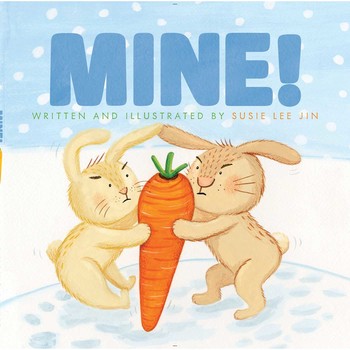 Sometimes the loudest claim is the least informative one. Susie Lee Jin, who writes and illustrates this playful book, turns a carrot into the center of a very busy dispute. Its few words leave plenty of room for your child to explain what the pictures suggest.
What kids notice: Saying “mine” doesn’t settle the question of ownership. Each bunny wants the carrot, and their competing claims make the excitement grow. Your child can watch what happens when wanting something takes over the conversation.
Story snapshot: Several bunnies compete for a single carrot. Their chase becomes increasingly chaotic, with a snowman also involved. The story moves toward the possibility of sharing rather than continuing the battle over who gets to claim it.
Why this book helps: Use this sharing story to make one distinction clear: agreeing to share something and deciding who owns it are different questions. Before a found item becomes a group treasure, you still need to check whether somebody is missing it. “What do we know?” can slow down an excited claim.
Lost and Found Cat — Doug Kuntz and Amy Shrodes, illustrated by Sue Cornelison
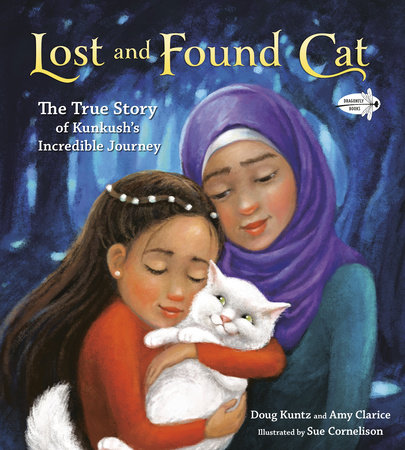 A lost animal’s family may be much farther away than anyone expects. This true story follows Kunkush and the people who work to reunite him with his family. Read it together with room for questions about the family’s frightening journey and separation.
What kids notice: Helping can take patience and cooperation. People who find Kunkush care for him while looking beyond their immediate surroundings for the family who loves him. Their effort continues even when the answer is difficult to find.
Story snapshot: An Iraqi family carries their cat with them when they flee their home. Kunkush becomes separated from them in Greece. Aid workers find him, and a wider community helps search for his family until a reunion becomes possible.
Why this book helps: It broadens the idea of giving back into compassionate care. A cat is a living being with needs and relationships. For your child, the practical connection is simple: involve a trusted adult, keep an animal safe, and remember that someone may be missing them terribly.
The Scarecrow’s Hat — Ken Brown
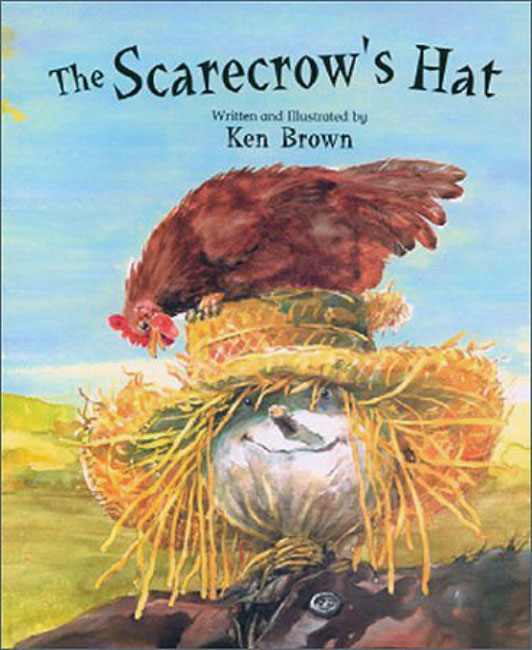 What can you do when you want something that already belongs to someone else? Ken Brown’s story, which he also illustrates, gives your child an alternative to quietly taking it. A determined chicken pursues a hat by working with its owner and her farm friends.
What kids notice: Scarecrow gets a say in what happens to his hat. Chicken’s wish is important to her, but it doesn’t erase his needs. The exchanges give your child a pattern to anticipate as the story unfolds.
Story snapshot: Chicken admires Scarecrow’s hat. He is willing to exchange it for a walking stick, which would support his tired arms. Chicken doesn’t have one, so she turns to other farm friends and begins a chain of trades.
Why this book helps: The hat has an owner, and Chicken respects the terms of an exchange. Connect that to a borrowed toy: “Did they say you could keep it, or only use it?” Permission can be specific. Asking clearly, accepting the answer, and returning something when agreed are everyday ways to practice honesty.
Put Your Child in the Heart of the Story
After reading, you might invent a little adventure with your child as the finder. Perhaps they discover a toy beside a climbing frame. Give the character a real wish to keep it, a moment to wonder about its owner, and an adult who helps them take it to the right place.
Let your child choose the words: “I found this,” or “I brought this home, but it wasn’t mine.” Those small sentences are worth rehearsing when nobody is in trouble. If they have already kept something, you can help them return it without demanding a perfect speech. An honest explanation and a manageable action are enough to begin.
For another way to make storytime feel personal, explore Scrively’s personalized children’s stories. Seeing themselves at the center of a story can give your child another inviting starting point for imagining choices, feelings, and the people affected by them.
A Small Return, a Growing Trust
You won’t always get the honest answer immediately. Stay close to the next useful step: “Thank you for telling me. Let’s work out how to give it back.” Your child can feel disappointed about losing a treasure and relieved about making things right at the same time.
Every return is a little practice in seeing beyond their own pocket. There is someone else’s worry, someone else’s favorite thing, someone else’s happy discovery. With your help, honesty becomes something your child can do, one small, brave action at a time.