How to Build Hope: The Best Books About Optimism For Kids
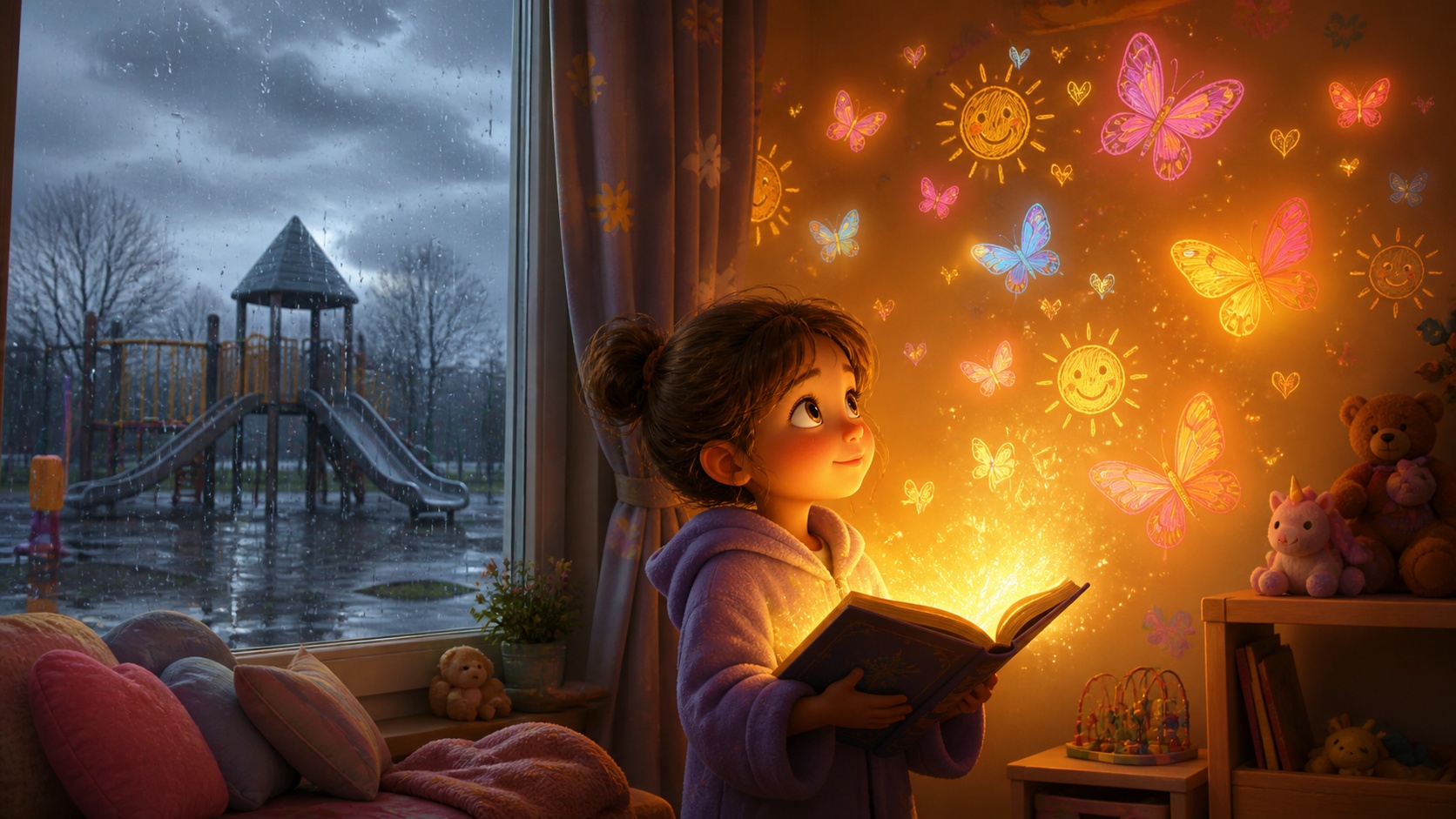
You see it happen on a gloomy, rainy Saturday morning. Your child looks out the living room window.
Their highly anticipated playground trip is completely ruined by the weather. The tears start falling immediately. Their little shoulders slump down in total defeat. They declare loudly that the entire weekend is ruined forever.
It hurts to watch this sudden emotional crash. Because of this, it is incredibly easy to want to fix it right away.
For instance, you want to offer them a new toy or a sweet treat. You wish you could just make the sun come out instantly. You want to tell them to just be happy. However, you stay quiet and take a deep breath.
Why do you wait? Ultimately, you know the absolute truth about childhood emotional development. True optimism is not about forcing a fake smile. It is definitely not about ignoring genuine disappointment. Realistic optimism is a mental muscle. It is the profound ability to acknowledge the hard stuff while still looking for the light.
Teaching realistic optimism takes time and daily practice. For a young child, a minor setback feels like a massive tragedy. Books are the safest practice ground for building this specific kind of hope. Through stories, children can watch characters face ruined plans and big mistakes. Consequently, they experience the triumph of finding a silver lining. These eight powerful books about optimism for kids will help your child find the good in difficult days.
1. After the Fall by Dan Santat
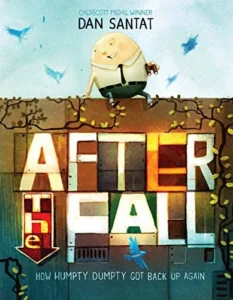
Everyone knows the classic nursery rhyme about Humpty Dumpty. We all know about his famous, devastating fall from the high wall. However, almost no one knows what happened next.
This brilliant, emotional book explores life after a major disaster. It shows exactly how to rebuild your life when everything shatters.
What kids notice: Kids immediately recognize the famous egg character. Furthermore, they notice his deep, lingering fear of heights.
They see him missing out on his favorite cereals because they are on the top shelf at the grocery store.
Story snapshot: Humpty Dumpty survives his great fall. The king’s men put him back together physically. However, he is now terrified of heights.
He deeply misses watching the birds from his favorite high wall. Eventually, he decides to build a beautiful paper bird. To fly it, he must bravely face his trauma and climb the wall again.
Why this book helps: This story teaches incredibly realistic optimism. It does not ignore the deep trauma of the terrible fall. Instead, it shows that you can acknowledge the hard stuff and still look for the light.
Therefore, it helps kids understand that bad experiences do not have to define their entire future. It teaches them to hope for a better tomorrow.
2. Pete the Cat and His Four Groovy Buttons by Eric Litwin
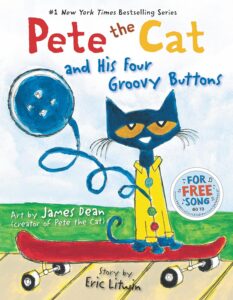
Sometimes, things just go wrong for absolutely no reason at all. We lose our favorite items.
We break our favorite toys.
This incredibly catchy, musical book tackles the frustrating reality of minor daily losses. It uses a famously relaxed feline character to model a perfectly optimistic attitude.
What kids notice: Children absolutely love the repetitive, musical nature of this story.
They notice the loud “POP!” sound every time a button flies off. Moreover, they notice that Pete never cries or gets angry when he loses something special.
Story snapshot: Pete the Cat is wearing his favorite shirt. It features four large, colorful, round, groovy buttons. Suddenly, one of the buttons pops off and rolls away. Pete does not cry about it.
He simply keeps singing his song about his remaining buttons. This pattern continues until he has zero buttons left. Then, he happily looks down at his own belly button.
Why this book helps: This book is an absolute masterclass in cheerful resilience. It teaches your child a deeply important rule about material possessions.
Stuff will come and go, but we can choose our reaction. It shows them how to respond to minor frustrations with a relaxed, positive mindset. Consequently, it builds a wonderful foundation for daily optimism.
3. The Book of Mistakes by Corinna Luyken
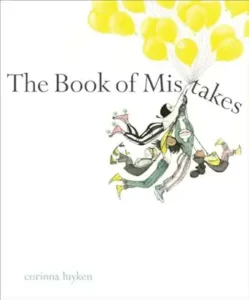
Perfectionism is the absolute enemy of optimism.
When a child expects everything to be flawless, every small error feels like a massive failure.
This stunning, visually creative book changes the entire narrative around making a mess. It shows how an artist can transform a simple error into a gorgeous masterpiece.
What kids notice: Kids are mesmerized by the evolving, flowing illustrations. They notice how a weird, blotchy ink spill slowly turns into a beautiful bush. They see how a strangely drawn eye becomes the starting point for a magical pair of glasses.
Story snapshot: The book begins with a simple artist’s mistake. One eye is drawn much larger than the other. Instead of throwing the paper away, the artist incorporates the mistake. Every subsequent error on the page is creatively transformed into something new. A long neck becomes a ruffled collar.
An ink smudge becomes a leafy tree. Ultimately, the mistakes create a vibrant, complex world.
Why this book helps: Following a strict plan often leads to deep disappointment.
This story gently corrects that painful, rigid mindset. It helps your child develop the flexibility to appreciate unexpected outcomes. It shifts their mental focus beautifully. It moves them from “I ruined my drawing” to “I wonder what this mistake will turn into next.”
4. Alexander and the Terrible, Horrible, No Good, Very Bad Day by Judith Viorst

Sometimes, looking for the light simply means surviving the dark. Not every day can be turned around with a positive attitude. This classic, hilarious book tackles the reality that some days are just plain awful. It provides a highly accessible, comforting lesson about shared human frustration.
What kids notice: Children absolutely love the relatable nature of Alexander’s struggles. They notice how everything goes wrong, from waking up with gum in his hair to getting lima beans for dinner. They see his intense desire to escape to Australia.
Story snapshot: Alexander wakes up to a series of unfortunate events. He trips on his skateboard. He drops his sweater in the sink. At school, his teacher dislikes his drawing.
At the dentist, he has a cavity. Nothing goes his way at all. He spends the entire day complaining and threatening to move across the world. Finally, his mother gently assures him that bad days happen to everyone.
Why this book helps: Realistic optimism requires acknowledging genuine pain. We want to find the good, but we cannot force happiness when things are truly difficult. This story validates those terrible, horrible feelings. It helps your child understand that experiencing a bad day does not mean they have a bad life. It promises them that tomorrow is always a fresh start.
5. What Do You Do With a Problem? by Kobi Yamada
Worry and anxiety completely block our ability to be optimistic. When a problem arrives, it is easy to let it grow into a terrifying monster. This beautifully illustrated, philosophical book addresses the heavy weight of avoidance. It encourages children to face their challenges directly to discover hidden opportunities.
What kids notice: Kids are drawn to the visual representation of the problem. They notice how the dark, swirling cloud follows the boy everywhere. They watch the problem grow larger and scarier the more the boy tries to hide from it.
Story snapshot: A young boy discovers he has a problem. He does not know how it got there or what it wants.
He tries to ignore it, hide from it, and run away from it. However, the problem simply grows bigger and darker. Finally, he gathers his courage and tackles the problem directly. When he looks closely, he discovers that the problem actually contains a beautiful, bright opportunity.
Why this book helps: This is a profound exploration of shifting your perspective. It shows children that running from difficulties is exhausting and counterproductive. It encourages them to stop viewing challenges as total disasters. Instead, it invites them to bravely look for the hidden lessons. This builds a robust, resilient form of optimism.
6. Beautiful Oops! by Barney Saltzberg
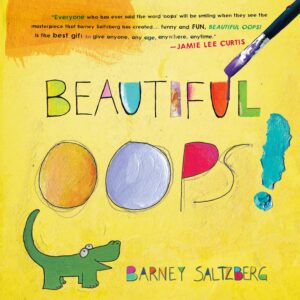
Making a sudden mistake often triggers immediate tears for young children. It is a heavy emotional burden to feel like you ruined something special.
This interactive, tactile book uses standard paper tears and spills to explore a wonderful journey. It tracks the joyful transition from feeling like a failure to realizing you are a creator.
What kids notice: Kids love the physical interactivity of this thick board book. They easily read the transformation of the torn paper. They watch a ripped page lift up to reveal a smiling crocodile mouth. They see a crumpled piece of paper turn into a cute sheep.
Story snapshot: The book is filled with literal tears, holes, stains, and smudges.
Every single page features a physical “mistake” on the paper. However, each mistake is paired with a clever, artistic solution. A bent page becomes the head of a penguin. A paint spill becomes a group of friendly pigs. It constantly proves that an oops is just an opportunity.
Why this book helps: This is a fantastic, hands-on exploration of finding your creative voice. It shows children that trying to be completely perfect is impossible.
It encourages them to stop crying over spilled milk or ripped paper. Instead, it invites them to embrace the unexpected. It teaches them to approach daily errors with an optimistic, problem-solving attitude.
7. Rain! by Linda Ashman
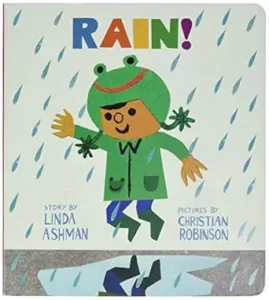
Our attitudes are incredibly contagious. The way we choose to view the world heavily impacts the people around us.
This delightful, dual-narrative book addresses the powerful contrast between pessimism and optimism. It highlights how a single positive perspective can change an entire neighborhood.
What kids notice: Children quickly spot the difference between the two main characters.
They notice the grumpy older man complaining about the wet puddles. Simultaneously, they see the joyful little boy splashing happily in his green frog hat.
Story snapshot: A grumpy man wakes up and angrily groans about the rainy weather.
He puts on his dull clothes and frowns all the way to the cafe. At the same time, an energetic little boy wakes up thrilled about the rain.
He puts on his bright green frog outfit and splashes cheerfully. When their paths finally cross at the cafe, the little boy’s overwhelming joy slowly melts the old man’s bad mood.
Why this book helps: This emotional story gets right to the heart of chosen perspectives. It shows how easily our internal attitude paints our external reality.
It gives you a beautiful, safe opening to talk with your child about their daily outlook. It teaches them that they have the power to find joy in less-than-ideal situations. Furthermore, it shows them that their positive energy can help lift others out of the dark.
8. The Magical Yet by Angela DiTerlizzi
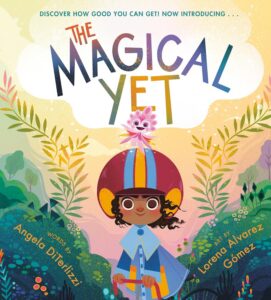
Learning new skills is incredibly frustrating. The gap between wanting to do something and actually doing it is filled with self-doubt.
This rhyming, deeply encouraging book addresses the extreme fragility of self-esteem during the learning process. It introduces a powerful word that instantly transforms failure into future success.
What kids notice: Children love the glowing, magical companion that follows the main character.
They notice how the child struggles to ride a bike and wants to give up. They see the magical creature encouraging them to keep trying.
Story snapshot: A young child becomes extremely frustrated while learning to ride a bicycle.
They fall down, scrape their knees, and declare they cannot do it. Suddenly, a glowing, pink creature appears. This is the Magical Yet.
The creature reminds the child of all the things they could not do as a baby, like walking or talking. It promises the child that while they cannot ride a bike right now, they will be able to do it eventually.
Why this book helps: This empowering story gets right to the heart of the growth mindset.
It shows how easily negative self-talk can ruin our motivation. It gives you a highly effective vocabulary word to use at home.
When your child says, “I cannot do this,” you can simply add the word “yet.” It teaches them that the learning process takes time, cultivating a deep, patient optimism for their own future.
Put Your Child in the Heart of the Story
Reading about brave, optimistic characters is a wonderful starting point.
But imagine the massive impact of your child reading a story where they are the actual hero. With Scrively, you can easily create a custom children’s book in just minutes.
You choose the moral lessons. You shape the exciting adventure. Most importantly, you put your child right in the center of the narrative. It is completely point-and-click simple to use.
This amazing tool allows you to build a massive library of personalized stories. These stories reinforce the exact virtues your child is working on right now. Let them see themselves making brave, positive choices right on the printed page.
Helping your child find the light in a noisy world takes deep patience. It is a slow, beautiful process of watering their hope day by day. Every single time you read one of these books about optimism, you are planting a seed.
You are showing them that it is okay to feel sad when things go wrong. Keep reading together, and keep encouraging their positive perspective. Soon, you will watch them slowly discover the incredible power of realistic optimism.