The Open Hand: Books to Help Children Discover the True Joy of Generosity
You have likely felt the sudden, hot flush of embarrassment in the middle of a busy playground.
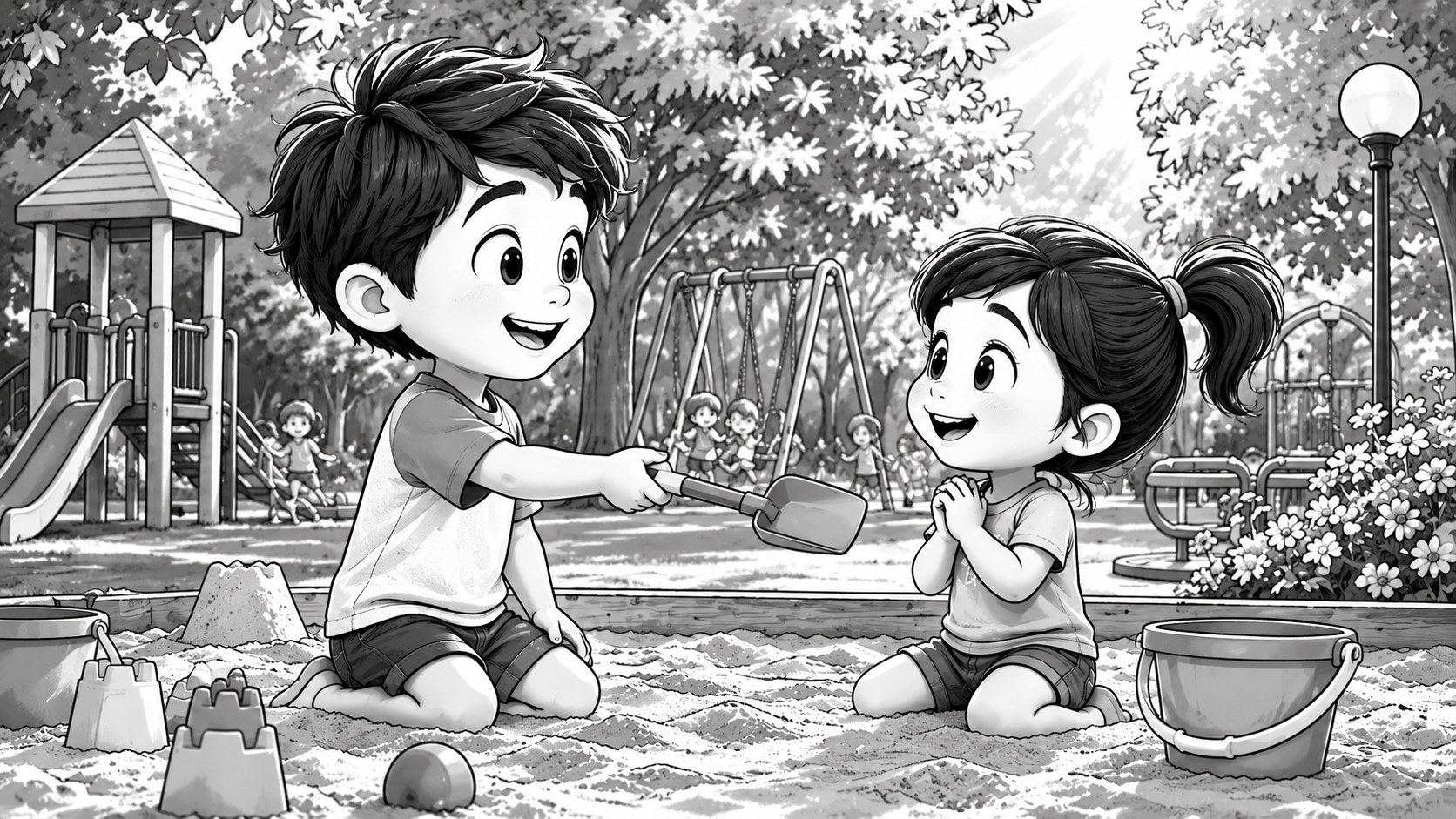
Another child politely asks to borrow a plastic shovel. Instantly, your child pulls the toy tight against their chest, their knuckles turning white, and loudly declares that it is theirs.
The toy was completely forgotten just moments ago, but now, it is suddenly the most precious object in the world. As a parent, you instinctively want to pry their fingers open.
You want to enforce sharing immediately, worried that other parents are judging your child’s fierce grip.
It is incredibly tempting to force the issue, to mandate that they hand over the shovel to keep the peace. However, forced sharing rarely teaches the actual virtue of generosity.
When we demand that a child give something up, we often reinforce a mindset of scarcity.
We accidentally teach them that their possessions are constantly at risk of being taken away by adults.
True generosity cannot be forced through playground mandates. Instead, it must be gently grown from the inside out. We have to help children shift from a closed fist to an open hand.
The open hand is about much more than simply lending a plastic toy. It is a profound, beautiful posture toward the world.
Generosity is the quiet realization that there is enough joy to go around. It is the understanding that giving something away—whether it is a toy, a piece of a snack, or just a few minutes of our time—does not diminish our own happiness. In fact, it actually multiplies it.
Developing this mindset requires massive emotional maturity. It asks a child to bravely push past their natural instinct to hoard and protect what they love.
Fortunately, you do not have to teach this massive, abstract concept all on your own. Books offer the perfect, comforting space to explore the beauty of the open hand.
Through deeply relatable stories, you can show your child what true generosity looks like in action.
You can give them visual proof that giving does not leave you empty.
Ultimately, they will see that living with an open hand actually fills your life with connection, warmth, and a community of friends. Let us dive into the stories that help cultivate a truly generous heart.
Those Shoes by Maribeth Boelts
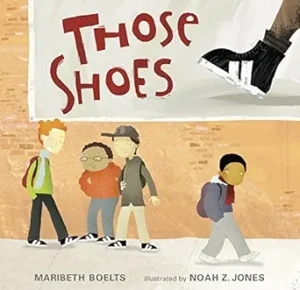
This book is a profound, beautifully written exploration of what it actually costs to be generous.
It takes place in a bustling city and deals with the very real, very heavy feelings of wanting to fit in.
Jeremy desperately wants the trendy black high-top sneakers that all the other kids are wearing. However, his grandmother explains they can only afford winter boots.
When Jeremy finally finds the coveted shoes at a thrift store, they are too small. He buys them anyway, painfully squeezing his feet into them.
It perfectly captures the stubborn determination of childhood desire. Yet, the story quietly pivots toward something much more meaningful than footwear.
What kids notice: Children immediately notice how much Jeremy’s feet hurt when he wears the too-small shoes, and they deeply feel his internal struggle when he looks at his friend’s broken sneakers.
Story snapshot: Jeremy wants the popular shoes but cannot afford them. He buys a too-small pair from a thrift shop, refusing to admit they hurt. Eventually, he notices a classmate whose shoes are falling apart. After a massive internal struggle, Jeremy bravely leaves the trendy shoes on his friend’s desk.
Why this book helps: This story is an absolute masterclass in the virtue of true generosity.
It does not pretend that giving is easy or painless. In fact, it validates how incredibly hard it is to give away something you desperately want for yourself.
When your child struggles to share, this book helps them understand that the hesitation is normal.
Furthermore, it shows the immense, quiet pride that comes from making a hard sacrifice for someone else. It teaches your child that the open hand sometimes requires bravery, but the resulting feeling of helping a friend is far more satisfying than any material object.
Thank You, Omu! by Oge Mora
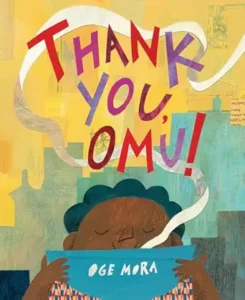
This stunningly illustrated book is a vibrant, joyful celebration of community and the sharing of resources.
Omu is making a thick, delicious red stew for her dinner. The scent drifts out of her window and down the street, drawing people to her door one by one.
The artwork uses rich, textured paper collage that makes the neighborhood feel incredibly alive and welcoming.
The pacing of the story is wonderfully rhythmic and repetitive, making it a joy to read aloud. It builds a beautiful sense of anticipation as the pot of stew slowly dwindles.
It is a brilliant, heartwarming look at what happens when you share everything you have.
What kids notice: Kids are mesmerized by the beautiful, sweeping visual representation of the delicious smell drifting through the city, and they eagerly count along as the pot of stew gets smaller and smaller.
Story snapshot: Omu cooks a wonderful stew for her dinner, but throughout the day, various neighbors knock on her door, drawn by the smell.
She generously gives a portion to a police officer, a hot dog vendor, and a little boy. Eventually, her pot is completely empty, and she has no dinner left for herself.
Suddenly, all the neighbors return, bringing a massive feast to share with her in return.
Why this book helps: Sometimes children operate from a place of intense scarcity. They fear that if they share their crayons or their snacks, they will be left with absolutely nothing.
This gorgeous book completely dismantles that fear. It helps by providing a stunning visual metaphor for abundance.
Omu gives until her pot is empty, but her open hand creates a massive ripple effect of love in her community.
It teaches your child that generosity is not a one-way street where you simply lose your things. Instead, it proves that when you live with an open hand, the world generously opens its hands right back to you.
A Sick Day for Amos McGee by Philip C. Stead
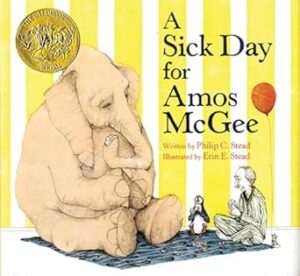
Generosity is not always about giving away physical objects.
Sometimes, the most generous thing we can offer is our time and our quiet presence. This gentle, beautifully illustrated book explores the profound generosity of friendship.
Amos is a zookeeper who takes the time to sit quietly with an elephant, run races with a tortoise, and read to an owl.
The artwork is soft, muted, and incredibly soothing.
It completely strips away the frantic, loud energy of a typical zoo, replacing it with a slow, deliberate tenderness. It is the perfect calming story to read after a highly emotional or overwhelming day.
What kids notice: Children love the sweet, expressive faces of the animals, and they pay close attention to the small, specific routines Amos shares with each of his unique friends.
Story snapshot: Amos the zookeeper never rushes. He spends deliberate, quality time with his animal friends every single day.
One morning, Amos wakes up with the sniffles and stays in bed. Because he was so generous with his time, the animals decide to leave the zoo and take the bus to his house, returning the favor by caring for him while he is sick.
Why this book helps: This book brilliantly expands a child’s understanding of what it means to be generous.
During a playdate, true generosity might simply mean slowing down to let a friend pick the game.
It might mean patiently waiting while a sibling ties their shoes.
This story helps your child see that their time and attention are incredibly valuable gifts.
It teaches them that an open hand can simply mean holding space for someone else. Ultimately, it proves that the gentle, generous investments we make in our relationships are always returned when we need them most.
Sam and the Lucky Money by Karen Chinn
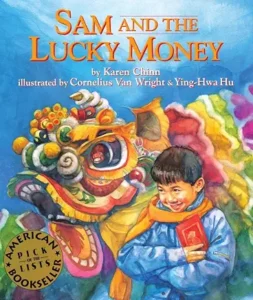
This book explores the specific, intoxicating feeling of having your very own money to spend.
It is set against the bustling, vibrant backdrop of Chinatown during the New Year celebration.
Sam has received the traditional red envelopes filled with lucky money, and he is determined to spend it on something entirely for himself.
The narrative captures the overwhelming sensory experience of walking through a busy marketplace with money burning a hole in your pocket.
It perfectly mirrors the intense, possessive focus children have when they are finally allowed to choose a prize at the toy store.
What kids notice: Kids notice the vibrant reds and golds of the festival, and they relate deeply to Sam’s frustration when he realizes his lucky money is not enough to buy the massive toys he actually wants.
Story snapshot: Sam excitedly walks through Chinatown, trying to decide how to spend his lucky money.
Everything he wants is slightly too expensive, leaving him feeling disappointed and frustrated.
Then, he notices an older man sitting on the street without any shoes. Moved by sudden empathy, Sam makes the active, beautiful choice to give all his lucky money to the man instead of buying a cheap toy for himself.
Why this book helps: This story is incredibly powerful because it tackles the conflict between consumerism and compassion.
It is completely natural for a child to want to spend their resources on themselves. This book helps by validating that desire, but then offering a much more fulfilling alternative.
When your child is clutching a handful of birthday money, this story provides a gentle, alternate script.
It teaches them that the joy of a new toy is fleeting, but the deep, warming satisfaction of helping someone in need lasts forever. It models how to pivot from a self-centered mindset to a deeply generous one.
The Spiffiest Giant in Town by Julia Donaldson
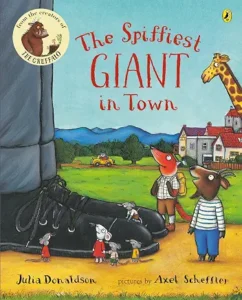
Julia Donaldson is a master of rhythm, rhyme, and creating characters that kids instantly adore. George the giant is tired of being scruffy.
He buys a brand new outfit and feels absolutely wonderful about himself. However, as he walks home, he encounters various animals in desperate need of help.
The tone of the book is upbeat, funny, and wonderfully buoyant. It never feels heavy or preachy.
Instead, it frames generosity as a joyful, spontaneous adventure. It shows that giving away your things can actually be a tremendous amount of fun.
What kids notice: Children laugh out loud at the ridiculous ways George repurposes his clothing, like using his brand new tie as a scarf for a freezing giraffe, or his shiny shoe as a house for a mouse.
Story snapshot: George buys a smart new outfit, but immediately starts giving pieces of it away to help animals in trouble. He gives his shirt to a goat for a boat sail, and his belt to a dog to help him cross a bog. Eventually, he is wearing his old, scruffy gown again, but the animals present him with a crown, declaring him the kindest giant in town.
Why this book helps: This book tackles the concept of detachment from material possessions.
Children often tie their happiness directly to their newest, shiniest toy. This book helps by showing that the things we own are simply tools we can use to make the world better.
Furthermore, it demonstrates that generosity does not have to be a serious, somber act.
It can be a creative, silly, and joyful process. It teaches your child that keeping an open hand allows them to respond creatively to the needs around them, proving that kindness is far more stylish than a brand new shirt.
A Hat for Mrs. Goldman by Erica Silverman
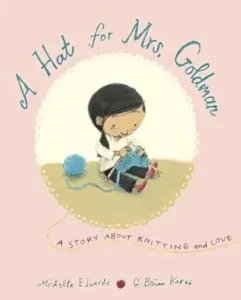
This is a deeply touching, cozy story about the generosity of effort.
Sophia loves Mrs. Goldman, who knits beautiful hats for everyone in the neighborhood.
Sophia helps by making the pom-poms, but she does not know how to knit. As winter approaches, Sophia realizes that Mrs. Goldman has given away so many hats that she does not have one for herself.
The illustrations are warm and inviting, perfectly capturing the feeling of a chilly winter day spent indoors with a good friend. It focuses heavily on the beauty of acts of service, highlighting how a handmade gift carries a piece of your heart.
What kids notice: Kids notice Sophia’s intense frustration when she tries to learn how to knit. They heavily empathize with her messy, imperfect stitches and her deep desire to make it work anyway.
Story snapshot: Mrs. Goldman generously knits hats for the entire community.
Sophia notices her friend’s head is cold. Even though knitting is incredibly hard for her, Sophia stubbornly works in secret to knit a hat.
The resulting hat is full of holes and mistakes, but Sophia cleverly covers it entirely in her signature red pom-poms to make it beautiful.
Why this book helps: True generosity often requires us to do things that are difficult or uncomfortable.
This book helps by celebrating the incredible value of trying hard for someone else. When your child wants to give a gift, they might get frustrated if they cannot make it look perfectly store-bought.
This story teaches them that the perfection of the gift does not matter at all. What matters is the generous time, the intense effort, and the open-hearted love poured into the creation. It empowers them to be generous with their talents, however messy those talents might be.
Last Stop on Market Street by Matt de la Peña
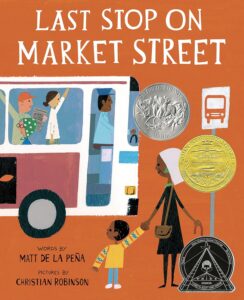
This award-winning book is a magnificent exploration of finding beauty in service.
CJ and his grandmother take the bus across town every Sunday. CJ is full of complaints. He wants to know why they do not have a car, why it is raining, and why they have to go to this specific, gritty part of town.
His grandmother is a master of perspective. With every complaint CJ voices, she gently redirects his attention to the magic, the music, and the beauty right in front of them. The prose is rhythmic and soulful, reading like a beautiful piece of poetry.
What kids notice: Children notice the busy, vibrant scenes on the city bus. They also notice the stark contrast between CJ’s initial grumpy mood and his grandmother’s unshakeable, expansive joy.
Story snapshot: After church, CJ and his Nana take a long bus ride across the city. CJ grumbles about their lack of material wealth compared to his friends. Nana gently helps him see the richness of their community.
Their final destination is a soup kitchen, where they generously spend their afternoon serving food to the hungry.
Why this book helps: This book directly combats the entitlement that often blocks generosity. It is easy for children to focus entirely on what they do not have.
This story helps by radically shifting their perspective. It shows that generosity is not just for the wealthy.
True generosity is an open-hearted willingness to serve your community, regardless of your own resources.
It teaches your child that giving their time and energy to help others is a profound privilege. It models how to walk through the world with open eyes, an open heart, and an incredibly open hand.
Boxes for Katje by Candace Fleming
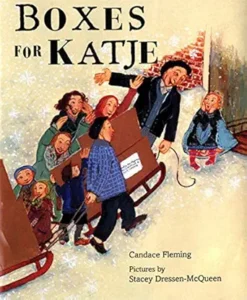
Based on a true story, this book beautifully illustrates the massive ripple effect of a single generous act.
It takes place after World War II in a depleted, struggling Dutch town.
A young American girl named Rosie sends a small relief box containing soap, socks, and chocolate to a girl named Katje in Holland.
The story captures the incredible excitement of receiving a package in the mail. However, it quickly moves beyond the initial gift to show how one small box inspires an entire community to join in the effort of giving.
What kids notice: Kids are fascinated by the historical setting and the idea that something as simple as a bar of soap or a piece of chocolate was once considered a massive, life-changing luxury.
Story snapshot: Rosie sends a small care package to Katje in post-war Holland. Katje writes back with deep gratitude.
Rosie’s friends and community hear about Katje’s struggles and begin sending larger and larger boxes. Eventually, Katje’s town receives massive shipments of food and clothing, all sparked by one child’s initial generosity.
Why this book helps: Children often feel very small in a very big world. They might wonder if sharing their one small toy actually matters.
This book helps by proving that small acts of generosity have limitless power. It shows that an open hand can literally cross oceans and change entire communities.
When your child sees how Rosie’s single box snowballed into a massive movement of kindness, they learn that their own choices matter deeply. It inspires them to be the spark of generosity in their own playroom, knowing that kindness always spreads.
Put Your Child in the Heart of the Story
Books are truly incredible teachers for growing minds.
However, reading a beautiful book with your own name printed on the pages is pure, undeniable magic. Therefore, Scrively helps you create 100% custom children’s books easily and beautifully.
You can build a vibrant, engaging story where your child is the brave, generous protagonist.
For instance, they can practice sharing their favorite toys, offering a helping hand, and opening their circle right on the printed page.
Ultimately, this places them at the very heart of their own emotional growth, allowing them to rehearse the virtue of generosity before they even step onto the playground.
Navigating early childhood sharing is rarely smooth.
In fact, playdates will almost always feature some tense moments over a coveted toy. However, every awkward, possessive moment is a profound chance to learn.
By reading these powerful stories, you give your child the right words and the right visual anchors.
Most importantly, you teach them that living with a closed fist keeps the joy out, while living with an open hand lets the love pour in.
Finally, they will learn to navigate their friendships with a deeply generous spirit.