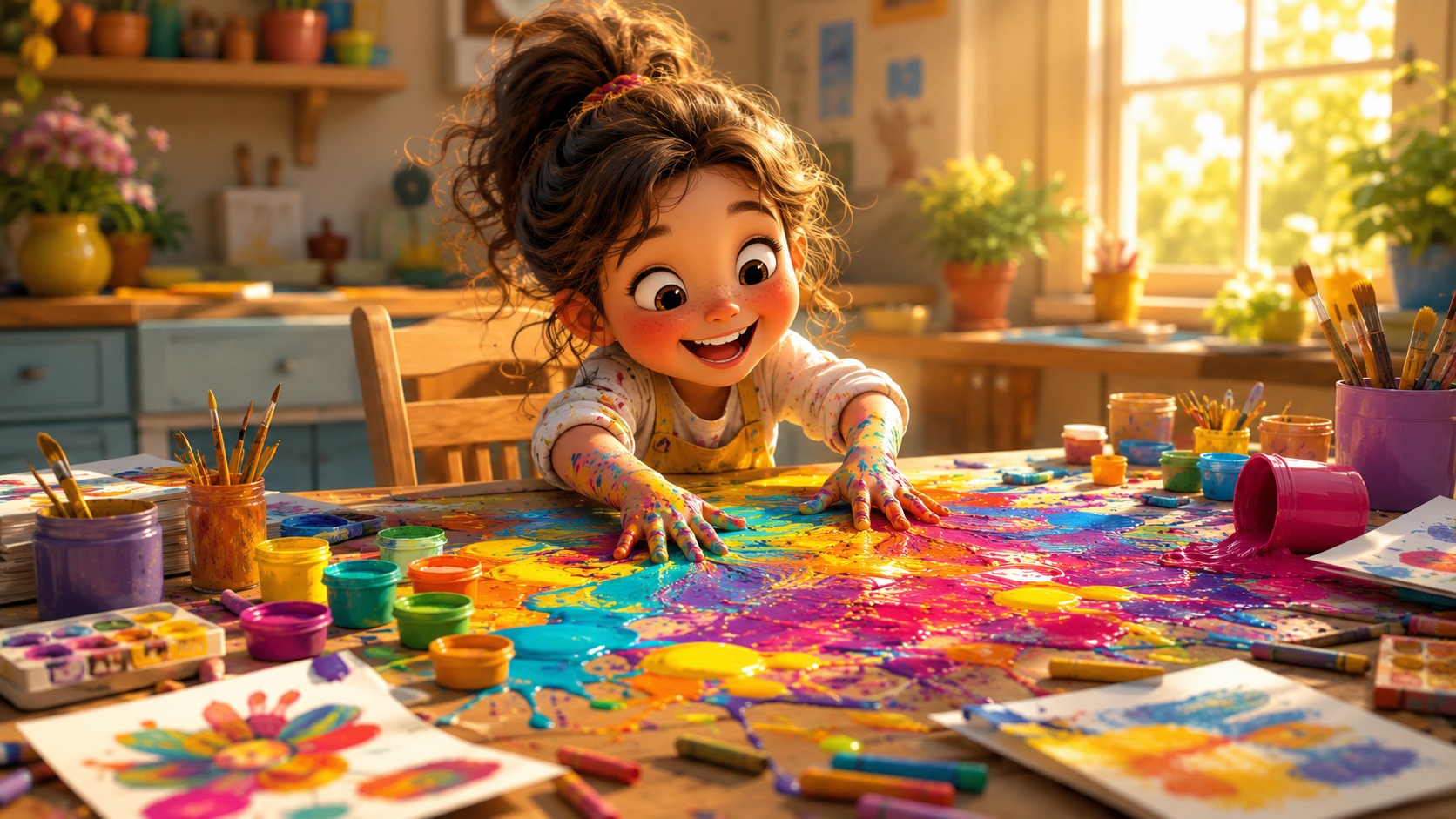
Helping Your Child Embrace Beautiful Messes: Books That Spark True Creativity
You have probably seen this exact moment unfold at your own kitchen table.
Your child sits down with bright eyes, holding a fresh crayon and a very big idea.
However, that pure joy suddenly vanishes the second a line goes crooked or a color spills.
Consequently, you watch them crumple the paper into a tight ball in tears.
It absolutely breaks your heart to watch them battle this heavy, sudden frustration.
Furthermore, you know that this creeping perfectionism is actively stealing their creative joy.
Fighting back against childhood perfectionism means showing them a totally new way to look at their work.
Most importantly, we need to teach them that creating something new is never about being flawless.
Instead, it is about embracing the messy, unpredictable process of making art or inventing.
Therefore, we can use beautiful stories to show them that mistakes are actually magical stepping stones.
As a result, your child will slowly learn to see the deep value in their own beautiful messes.
Above all, these specific books will give them the courage to pick up that dropped crayon and try again.
The Dot by Peter H. Reynolds
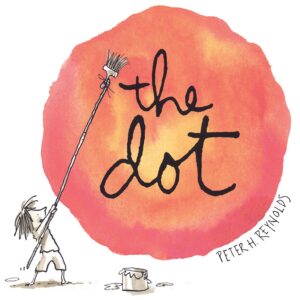
This classic, beloved story fundamentally changes the way children see their own artistic abilities.
Furthermore, it gives hesitant kids the gentle permission they need to simply start making a mark.
What kids notice: They immediately relate to the main character’s stubborn anger as she stares at a totally blank piece of paper.
Story snapshot: A frustrated young girl angrily stabs a single dot onto her paper, and her wise teacher decides to frame it. Consequently, the girl feels inspired to create bigger, better, and more colorful dots.
Why this book helps: It beautifully shows that simply trying is the only real requirement for being an artist.
Furthermore, it proves that creativity does not need to be planned or perfect to be worthy of celebration.
Most importantly, it helps children see that a tiny, messy start can grow into a massive, beautiful journey.
Therefore, it takes away the scary pressure of the empty page.
As a result, your child will learn to trust their own hands and simply let the colors flow.
Beautiful Oops! by Barney Saltzberg
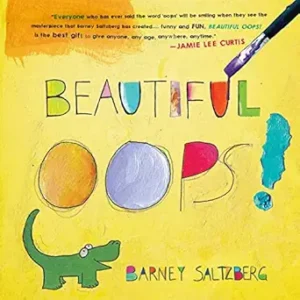
This interactive book is a vibrant, physical celebration of turning accidents into absolute masterpieces.
Similarly, it invites children to touch and feel the exact mistakes they usually try to hide.
What kids notice: They absolutely love the physical flaps, the torn paper elements, and the surprising smudges on every single page.
Story snapshot: Every page features a common art mistake, such as a spill, a tear, or a stain. However, each mistake is cleverly transformed into something amazing, like a friendly monster or a flying bird.
Why this book helps: It completely flips the narrative on what a mistake actually means.
Consequently, children stop seeing torn paper as a ruined project.
Instead, they start viewing everyday accidents as exciting invitations to change their original plan.
Furthermore, it teaches them cognitive flexibility in the exact moment they feel the most frustrated.
Ultimately, it proves that a beautiful mess is often better than a perfect plan.
Ish by Peter H. Reynolds
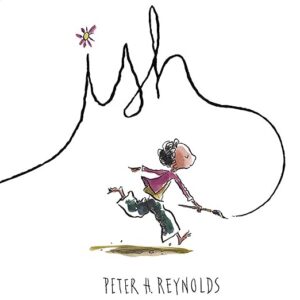
This gentle story is the perfect remedy for the child who desperately wants their drawing to look exactly like the real thing.
Moreover, it introduces a brand-new vocabulary word that takes all the pressure off their tiny shoulders.
What kids notice: They deeply feel Ramon’s sadness when his older brother laughs at his hard work.
Story snapshot: Ramon loves to draw until a careless comment makes him doubt his skills. Fortunately, his little sister helps him see that drawing something “vase-ish” is far better than drawing a perfect vase.
Why this book helps: It tackles the harsh inner critic that tells children their art is not good enough.
Furthermore, it gives them a highly practical tool by adding the suffix “ish” to their vocabulary.
Consequently, a drawing does not have to be a perfect dog; it just has to be dog-ish.
Most importantly, this simple shift instantly lowers their anxiety and brings the joy back to the table.
As a result, they learn to value their unique expression over rigid exactness.
The Most Magnificent Thing by Ashley Spires
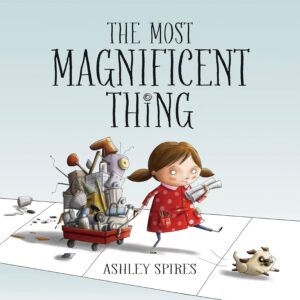
This story dives deep into the deeply frustrating reality of inventing and building something from scratch.
Additionally, it normalizes the intense anger that comes when our hands cannot match our vision.
What kids notice: They connect with the little girl’s growing anger and the very funny reactions of her loyal dog.
Story snapshot: A little girl has a brilliant idea to build the most magnificent thing, but every attempt fails completely. She gets so mad that she quits, but a short walk helps her see the good parts in her early, messy prototypes.
Why this book helps: It is a masterclass in emotional regulation during the creative process.
Furthermore, it shows that even the best inventors experience total meltdowns.
Consequently, it teaches children the immense value of stepping away and taking a deep breath.
Most importantly, it highlights that the messy, broken attempts contain the necessary pieces for eventual success.
Therefore, it builds genuine grit alongside their growing creativity.
The Book of Mistakes by Corinna Luyken
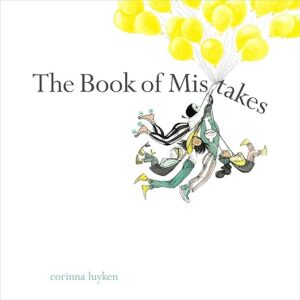
This stunningly illustrated book shows how a single, clumsy mistake can dictate the entire direction of a massive artwork.
Similarly, it shows the quiet, peaceful side of leaning into the unpredictable nature of painting.
What kids notice: They are mesmerized by the way a weirdly drawn eye turns into a pair of glasses.
Story snapshot: An artist starts a drawing but makes an error with an eye, and then an error with the neck. However, she keeps drawing, incorporating every single mistake into a sweeping, complex, and beautiful landscape.
Why this book helps: It visually proves that a mistake is never the end of the story.
Furthermore, it encourages children to zoom out and look at the bigger picture.
Consequently, they learn that one weird smudge cannot ruin an entire afternoon of hard work.
Most importantly, it celebrates the wild, untamed nature of a truly open mind.
As a result, they learn to stop fighting their errors and start playing with them.
Rosie Revere, Engineer by Andrea Beaty
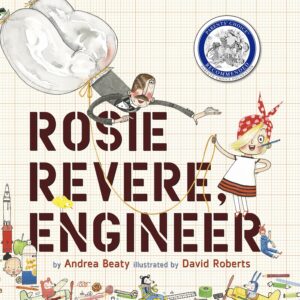
This vibrant, rhyming book connects creativity directly with the courage to fail boldly and loudly.
Moreover, it celebrates the wacky, unconventional ideas that adults sometimes fail to understand.
What kids notice: They love Rosie’s wild inventions, like the helium pants and the hot dog dispenser.
Story snapshot: Rosie hides her amazing inventions because a family member once laughed at them. However, her great-great-aunt helps her see that a spectacular failure is actually a massive victory in disguise.
Why this book helps: It actively dismantles the deep fear of looking silly in front of other people.
Furthermore, it provides a powerful mantra for young creators: the only true failure is quitting.
Consequently, it teaches children to celebrate their flops just as much as their finished projects.
Most importantly, it empowers them to keep tinkering, even when the results are totally absurd.
Therefore, it links the virtue of creativity directly to the virtue of bravery.
The Girl Who Never Made Mistakes by Mark Pett and Gary Rubinstein
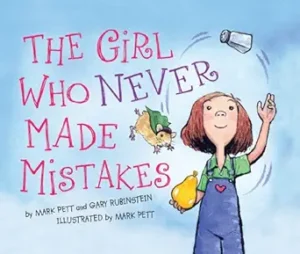
This narrative directly confronts the exhausting burden of being the “perfect” child who never steps out of line.
Additionally, it shows the immense relief that comes from finally messing up in a spectacular way.
What kids notice: They are fascinated by Beatrice’s perfectly ordered life and the incredible tension leading up to her big talent show drop.
Story snapshot: Beatrice is famous in her town for never, ever making a mistake. However, during the school talent show, she makes a massive error and discovers that laughing at herself feels much better than being perfect.
Why this book helps: It tackles the paralyzing anxiety that perfectionist children carry every single day.
Furthermore, it shows that the world absolutely does not end when you drop the ball.
Consequently, it gives children permission to take risks and get a little messy.
Most importantly, it highlights that a life without mistakes is actually incredibly boring.
As a result, your child will learn to exhale, relax, and enjoy the clumsy moments.
A Squiggly Story by Andrew Larsen
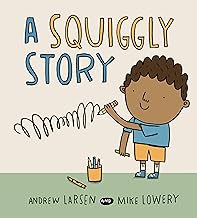
This clever book bridges the gap between early creativity and the frustrating rules of learning to write.
Similarly, it empowers children who have big ideas but lack the technical skills to execute them perfectly.
What kids notice: They relate to the little boy who wants to write a real story but only knows how to draw basic shapes and letters.
Story snapshot: A young boy wants to write a book like his older sister, but he doesn’t know many words yet. Fortunately, his sister encourages him to just use the squiggles and letters he knows, and a wonderful story naturally emerges.
Why this book helps: It validates the early, messy stages of literacy and creative expression.
Furthermore, it proves that you do not need to be an expert to share your unique voice.
Consequently, it prevents the frustration that happens when a child’s imagination outpaces their physical abilities.
Most importantly, it teaches them to use whatever tools they currently have.
Therefore, it keeps the creative spark alive during the most challenging learning years.
Put Your Child in the Heart of the Story
Sometimes, the very best way to help a child overcome perfectionism is to show them their own creative journey.
Scrively allows parents to create 100% custom kid’s books to help their child navigate specific emotional challenges.
Furthermore, you can design a beautiful story where your very own child learns to embrace their messy art projects.
Consequently, they get to see themselves as the brave, messy, and wonderfully creative hero of their own life.
Most importantly, this personalized approach makes the lesson stick deeply in their little hearts.
Keep Celebrating the Smudges
Helping your child let go of perfectionism is a slow, beautiful process that takes immense patience.
Furthermore, every time you praise their messy efforts instead of their perfect results, you are building their creative confidence.
Consequently, keep providing the blank paper, keep wiping up the spilled paint, and keep cheering for the wobbly lines.
Most importantly, remember that the most beautiful things in life rarely start out perfectly.