When a Joke Stops Being Funny: 8 Children’s Books About Teasing
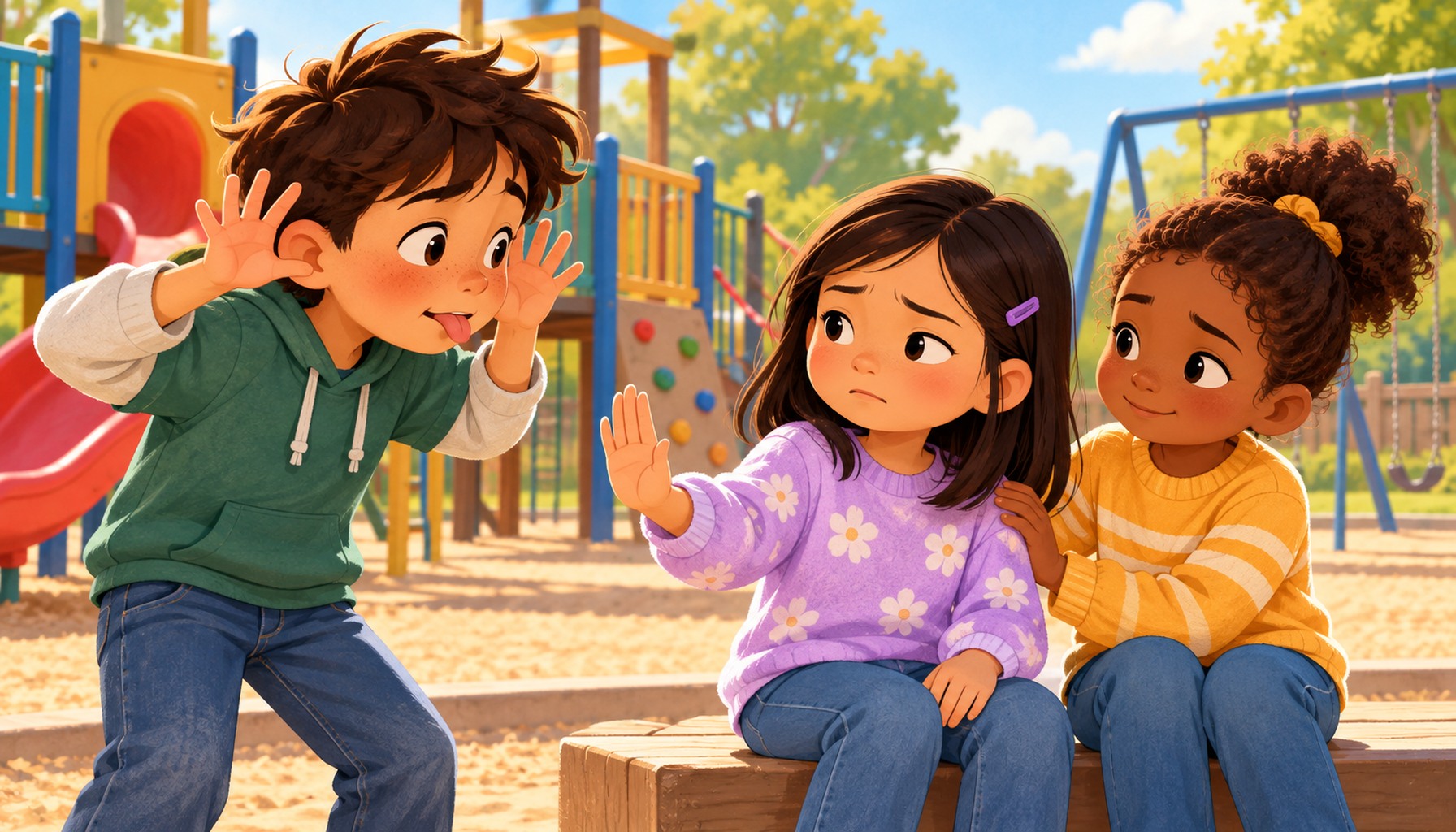
The room is full of laughter, and then you notice one small face has gone still. Perhaps your child made the joke. Perhaps your child was the joke. Either way, the words that follow can leave you searching for a calm response: “But I was only kidding.”
You want your child to enjoy being funny. You also want them to notice the person beside them. That takes practice, especially when an audience is laughing and stopping feels like giving up a little bit of the spotlight.
Consideration begins with a pause. Is everyone enjoying this? Did somebody turn away? Has a friend already asked us to stop? A child does not have to prove that a joke was cruel before they are allowed to dislike it. And a child who causes hurt can learn to listen, stop, and make a different choice.
These children’s books about teasing give you somewhere gentle to begin. Reading together lets you talk about a character’s experience before asking your child to revisit their own. You can stay curious, leave room for laughter, and still make one thing clear: another person’s discomfort matters.
8 Children’s Books About Teasing and Consideration
The collection moves from direct school stories to playful animal tales. The younger picture books suit shared reading around ages four to eight; the more explicit discussions in Just Kidding, Tease Monster, and Don’t Laugh at Me are especially useful with school-age children. Choose the story that fits your child today, rather than working through every book at once.
Just Kidding by Trudy Ludwig
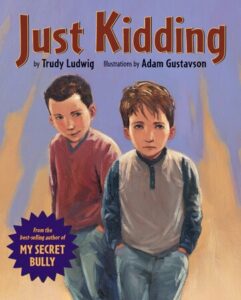 Sometimes the hardest part of being teased is wondering whether you are allowed to object. Illustrated by Adam Gustavson, this school story takes that uncertainty seriously. It gives you an opening when your child worries that speaking up will make them seem unable to take a joke.
What kids notice: D.J. feels hurt even when Vince describes his remarks as kidding. Your child can see the gap between the speaker’s explanation and the listener’s experience. Ask whose feelings are getting heard, and whose are being pushed aside.
Story snapshot: Vince repeatedly teases D.J., then tries to brush the behavior away. With support from his father, brother, and teacher, D.J. learns ways to respond and begins taking action instead of feeling trapped.
Why this book helps: You can rehearse a short response together: “I don’t like that. Please stop.” If your child recognizes Vince’s behavior in themselves, practice the other half too: stop the joke, acknowledge the hurt, and listen without arguing about what you meant.
Tease Monster by Julia Cook
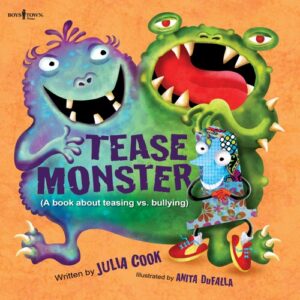 School-age children often want a firm rule for a confusing social moment. With Anita DuFalla’s colorful illustrations, this book offers concrete situations you can unpack together. It is particularly useful when your child asks why one person enjoys a comment that another finds upsetting.
What kids notice: One-of-a-Kind encounters different kinds of teasing and comes home feeling miserable. The examples give your child something specific to discuss. You can ask how the same words might feel different depending on the relationship and the moment.
Story snapshot: After classmates comment on One’s differences, mistakes, and abilities, One talks with Mom. Together they work through the encounters and consider the difference between friendly teasing and mean behavior.
Why this book helps: Use the book’s distinctions as a conversation starter, then add a dependable family rule: anyone can ask for teasing to stop. Good intentions do not require another child to keep participating. You can enjoy playful humor while respecting a changed mind or an uncomfortable expression.
Chrysanthemum by Kevin Henkes
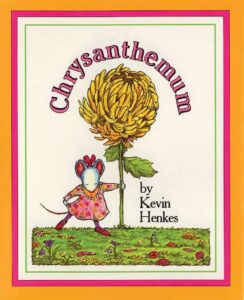 A name can feel like home until someone turns it into a punch line. Written and illustrated by Kevin Henkes, this picture book helps you explore how repeated comments can change a child’s feelings about something they once loved.
What kids notice: Chrysanthemum begins school proud of her name, then shrinks under her classmates’ attention. Look together at her expressions. Your child may recognize the effort it takes to get through the day when something personal keeps becoming entertainment.
Story snapshot: Other mice criticize Chrysanthemum’s long, flower-inspired name. Her family comforts her, but school remains difficult. A beloved music teacher with her own flower name changes the way the class sees things.
Why this book helps: Ask whether the name needed a teacher’s approval to deserve respect. It did not. That question keeps the lesson close to consideration: you can stop making fun of someone before a popular person tells you to. Your child can practice saying a friend’s name with care.
Hooway for Wodney Wat by Helen Lester
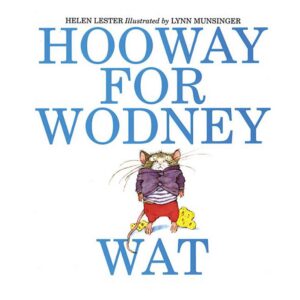 When children imitate how someone speaks, they may notice the laughter before they notice the embarrassment. Helen Lester’s story, illustrated by Lynn Munsinger, makes that embarrassment visible. Read it with care, leaving space for your child’s response to the teasing.
What kids notice: Rodney Rat struggles to pronounce certain sounds, and his classmates mock him. His wish to hide offers a clear emotional clue. You can pause there and ask what a considerate classmate could do before the story turns around.
Story snapshot: Rodney’s classmates call him Wodney Wat. When an intimidating new student, Camilla Capybara, arrives, a game of Simon Says gives Rodney an unexpected way to change the situation and his place in the group.
Why this book helps: The comic reversal invites a thoughtful follow-up: Rodney deserved kindness before he became useful to his classmates. Your child does not need to earn protection by being clever or entertaining. Discuss how to support someone whose voice has become the focus of unwanted attention.
Bully by Laura Vaccaro Seeger
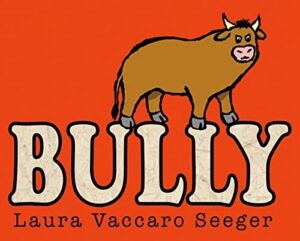 Very few words can carry a great deal of feeling. Written and illustrated by Laura Vaccaro Seeger, this bold animal story is accessible to younger listeners while giving older children plenty to notice about the way hurt travels.
What kids notice: The little bull uses animal names and insults to push others away. The words may look simple, but the pictures show their weight. Ask how a familiar word changes when somebody uses it to make another creature feel small.
Story snapshot: After being rejected by a bigger bull, the young bull turns on other animals who approach him. His behavior grows until another animal confronts it, giving him a chance to recognize what he has been doing.
Why this book helps: You can understand why a child lashed out while still stopping the behavior. If your child has been hurt and then passed that hurt along, offer both support and a boundary. Feeling upset deserves care; calling someone names needs to end. There is room to begin again.
Don’t Laugh at Me by Steve Seskin and Allen Shamblin
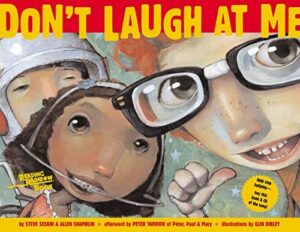 For school-age children who respond to rhythm, this illustrated song offers another doorway into the conversation. Glin Dibley’s pictures accompany a plea for dignity across differences. It includes religious language, which you can discuss in the context of your family’s beliefs.
What kids notice: The book gives attention to people who are mocked or left out because of appearance, ability, or circumstance. Encourage your child to notice the person receiving the laughter, even when the surrounding group seems to be having fun.
Story snapshot: This is a sequence of voices and situations rather than one character’s adventure. The repeated appeal connects different experiences of ridicule and asks listeners to consider the pain behind someone else’s public embarrassment.
Why this book helps: Talk about how joining the laughter can add to somebody’s hurt, even if you did not start the joke. Your child can choose a small response: stop laughing, stand beside the person, or seek an adult’s help. They do not need a perfect speech to show consideration.
Lion vs. Rabbit by Alex Latimer
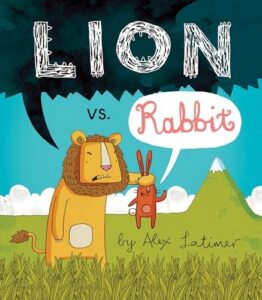 Some children enter a serious conversation more easily through an outrageous story. Written and illustrated by Alex Latimer, this animal tale offers visual humor alongside an unmistakable problem: one character has made everyone else’s life unpleasant.
What kids notice: Lion’s behavior affects the whole group. The other animals have had enough, and the smallest challenger is not necessarily the weakest. Your child can watch how the balance changes when the animals stop facing the problem alone.
Story snapshot: The animals advertise for someone to stop Lion’s bullying. Several challengers fail before Rabbit arrives. A series of contests leads to a surprising explanation for Rabbit’s success and a lesson for Lion.
Why this book helps: Enjoy the fictional tricks, then bring the conversation back to everyday support. Real children do not have to outsmart someone who mistreats them. They can ask trusted adults and friends for help. Consideration also means noticing when someone nearby is carrying a problem alone.
Rude Cakes by Rowboat Watkins
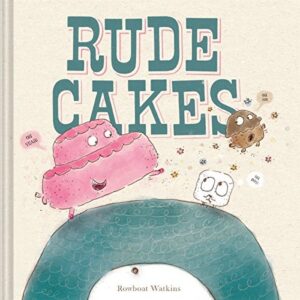 A cake with terrible manners may sound like pure silliness. That silliness is part of the invitation. Written and illustrated by Rowboat Watkins, this picture book lets you laugh together while looking at what happens when someone ignores everybody else’s wishes.
What kids notice: The cake takes up space, refuses to listen, and behaves as though other people’s needs can wait. Set against that behavior, the giant cyclops’s politeness becomes wonderfully unexpected. Your child can notice who pays attention and who keeps pushing ahead.
Story snapshot: A rude cake encounters a giant cyclops who treats the cake as a hat. The strange experience turns familiar questions about listening, manners, and consideration upside down, leaving room for the cake to change.
Why this book helps: It offers a lighthearted route into stopping unwanted play. Ask what you should do when a friend no longer enjoys a game, a nickname, or a silly routine. You can change the fun without abandoning the friendship. Being funny and being considerate can grow together.
Put Your Child in the Heart of the Story
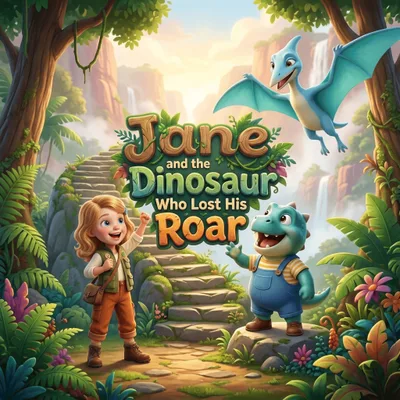
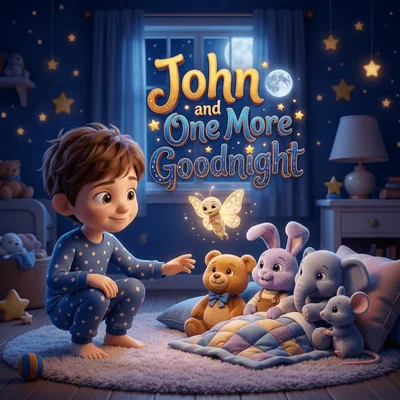
After talking about all these characters, your child may enjoy imagining themselves as the person who notices. In a personalized Scrively story, seeing their own name inside an adventure can make the reading experience feel especially personal. You can connect that feeling with the considerate choices you are practicing together.
Pause to imagine a moment when the hero’s friend stops smiling. What could the hero say? Let your child try a response aloud, change it, and try again. The aim is a comfortable rehearsal, with you beside them. A story gives you space to explore a choice without making your child defend a difficult moment from their day.
Make Room for a Kinder Kind of Funny
You will not catch every joke before it goes too far. Your child will not either. What matters is building a way back: notice, stop, listen, and choose what happens next. You can model that yourself when a family joke lands badly.
Keep the conversation small enough to use. “Are we both having fun?” is a question your child can carry into a game, a classroom, or a sibling squabble. Over time, those little pauses can become part of how your family laughs together, with enough room for everyone to feel safe and included.