Best Books for Kids Learning Teamwork and Collaboration
Teamwork sounds simple when you say it out loud.
Work together. Share the goal. Be part of the group.
But when you watch children in real time — at the art table, on the playground, during a group science project — you see something much more layered.
One child wants control. One hangs back. One talks over everyone. Another quietly carries most of the load.
Collaboration isn’t automatic. It’s developmental.
For kids ages 4–8, teamwork means learning how to stay connected when ideas clash. It means figuring out how to contribute without disappearing. It means managing frustration when things don’t go as planned.
Stories give children a safe rehearsal space for all of that. In a book, they can watch characters navigate shared goals, uneven effort, messy moments, and the pride of finishing something together.
They begin to see that teamwork isn’t perfect harmony — it’s shared effort over time.
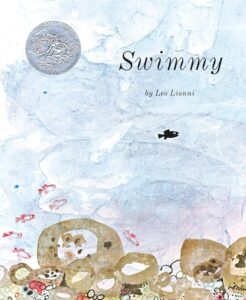
Swimmy — Leo Lionni
What kids notice in this story:
You notice how one small fish finds a way to help the whole group move safely together. You see that everyone has a role — even if it looks different from the others — and that courage can serve the group instead of standing apart from it.
Story Snapshot:
After escaping a predator, Swimmy finds a school of red fish hiding in fear.
He teaches them to swim together in the shape of one large fish so they can move safely through the sea.
Why this book helps kids learn teamwork and collaboration:
This story shows how shared goals sometimes require creative thinking and coordinated effort.
The group succeeds because each fish participates. You see how collaboration can transform fear into collective strength.

The Enormous Turnip — Cristiana Cerretti
What kids notice in this story:
You notice how one person alone cannot solve the problem. You see each new character join the effort, adding strength and persistence until the task finally shifts.
Story Snapshot:
A farmer grows a gigantic turnip but cannot pull it from the ground.
One by one, family members and animals join in, each holding onto the next, until together they succeed.
Why this book helps kids learn teamwork and collaboration:
This classic tale makes collective effort visible. Even the smallest participant matters.
You see that success often depends on everyone staying engaged, even when the job feels stubborn or slow.
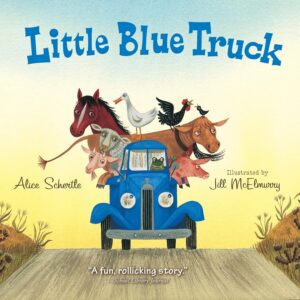
Little Blue Truck — Alice Schertle
What kids notice in this story:
You notice kindness traveling back to help someone in need. You see how earlier moments of connection make collaboration possible later on.
Story Snapshot:
When a dump truck gets stuck in the mud, the small blue truck gathers animal friends to push together and free him.
Why this book helps kids learn teamwork and collaboration:
Teamwork grows from relationships. You see that helping others builds a community that responds when effort is required. Shared action becomes natural because connection already exists.
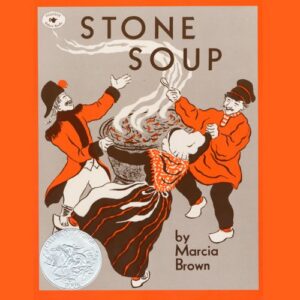
Stone Soup — Marcia Brown
What kids notice in this story:
You notice hesitation turning into contribution. You see how small offerings combine into something meaningful when everyone participates.
Story Snapshot:
Travelers convince wary villagers to help make soup from a stone. One by one, each villager adds an ingredient, transforming suspicion into shared celebration.
Why this book helps kids learn teamwork and collaboration:
This story gently demonstrates that shared outcomes grow when everyone adds what they can. Collaboration doesn’t begin with abundance. It begins with willingness.
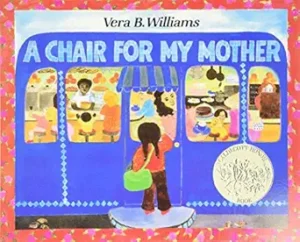
A Chair for My Mother — Vera B. Williams
What kids notice in this story:
You notice patience. You see family members contributing steadily toward something they cannot have right away. You feel the rhythm of saving and waiting together.
Story Snapshot:
After losing their belongings in a fire, a family saves coins in a jar to buy a comfortable chair for their home.
Why this book helps kids learn teamwork and collaboration:
This story expands teamwork beyond classrooms and playgrounds. You see how shared goals can unfold over time. Collective effort becomes quiet, consistent, and deeply meaningful.
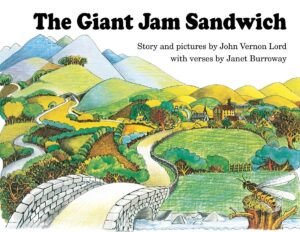
The Giant Jam Sandwich — John Vernon Lord
What kids notice in this story:
You notice planning, coordination, and a town working toward one enormous goal. Every character has a job, and the outcome depends on shared action.
Story Snapshot:
When wasps invade a town, the villagers devise an ambitious plan: bake a giant jam sandwich to trap them. The entire community works together to carry it out.
Why this book helps kids learn teamwork and collaboration:
This lively story highlights the logistics of group work — assigning roles, organizing steps, and trusting that each person’s part matters. Success feels communal, not individual.
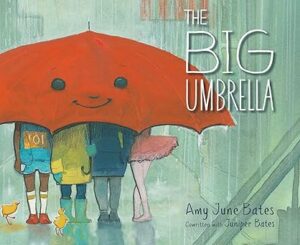
The Big Umbrella — Amy June Bates
What kids notice in this story:
You notice space being made for others. You see inclusion happening quietly, without debate or fanfare.
Story Snapshot:
A red umbrella stretches to cover anyone who needs shelter, no matter who they are or what they bring with them.
Why this book helps kids learn teamwork and collaboration:
Collaboration includes making room. You see that shared spaces work best when everyone is welcomed. Teamwork isn’t only about task completion — it’s about belonging inside the effort.
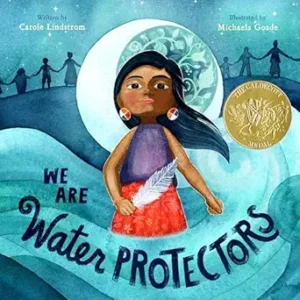
We Are Water Protectors — Carole Lindstrom
What kids notice in this story:
You notice collective voice and shared purpose. You see individuals standing together to protect something important.
Story Snapshot:
Inspired by Indigenous-led environmental movements, a young girl rallies her community to defend their water from harm.
Why this book helps kids learn teamwork and collaboration:
This story broadens collaboration beyond everyday tasks. You see how shared values and shared action can create strength. Working together becomes rooted in care.
When Teams Feel Messy
In real life, collaboration rarely unfolds in neat scenes. Someone forgets their role. Someone dominates. Someone disengages.
That doesn’t mean teamwork is failing. It means children are learning.
If you’re also exploring books about working alongside peers in structured settings, you might find support in stories about learning cooperation in school. And if your child is still building comfort in social spaces, books that nurture social skills naturally can complement teamwork beautifully.
Collaboration grows from many smaller skills: listening, patience, repair, flexibility, shared pride.
Teamwork Is Repetition
You don’t learn to collaborate once.
You practice it over and over — through group art projects, soccer drills, block towers, science fairs, and community events. Each attempt layers new understanding onto the last.
Conflict is not a detour from teamwork. It’s part of it. So is imbalance. So is trying again.
When you reread stories about shared effort, you give children a low-pressure rehearsal space. They see that working together can feel awkward, frustrating, meaningful, and rewarding — often all at once.
If you’re looking for ways to extend that rehearsal into something creative and personal, Scrively offers children the chance to create their own team-based stories.
When kids build narratives where characters collaborate, solve problems, and share success, they begin imagining themselves as part of something collective too.
Teamwork isn’t about perfect harmony. It’s about staying engaged long enough to build something together.