8 Children’s Books About Resourcefulness: When Mistakes Spark Ideas
Your child has worked hard on something. Then the tower tips, the drawing tears, or the homemade machine refuses to move. You can almost see the conclusion forming: “I ruined it.” Before you offer a solution, you may need to sit beside the disappointment. Something mattered to your child, and it did not turn out as planned.
Resourcefulness begins when there is room for another question. What is still useful here? Could this part do a different job? Who might have an idea? Sometimes a pause comes first. Eventually, a mistake can become information instead of a verdict.
These children’s books about resourcefulness give you different ways into that conversation. Some explore accidental discoveries. Others follow inventors through unsuccessful attempts or show familiar materials becoming something unexpected. Together, they make room for a hopeful possibility: the first plan can fail while your child’s capacity to create remains intact.
As you read, resist the urge to explain the message before your child finds it. Let the funny sheep, stubborn flying machines, and surprising spring do their work. You might ask, “What would you try next?” The goal is to make experimenting feel possible, even when the outcome is uncertain.
Stories That Help Your Child Find Another Way
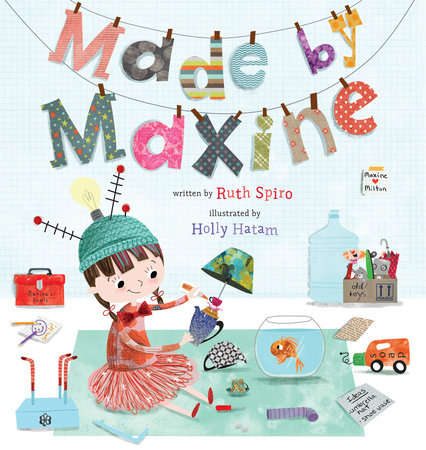
Made by Maxine by Ruth Spiro
For a child who saves boxes, collects interesting scraps, or imagines elaborate contraptions, Maxine may feel like familiar company. She loves making new things from old things. Holly Hatam’s illustrations accompany a story in which affection gives invention a purpose.
Maxine wants her goldfish, Milton, to join the school pet parade. That wish creates an unusual design problem. She cannot simply copy what works for an animal that walks.
What kids notice: Maxine’s materials do not have to begin as something impressive. Ordinary odds and ends become worth considering when she looks at them through the needs of her particular project.
Story snapshot: Ruth Spiro follows Maxine through repeated attempts to find a way for Milton to participate. Eventually, she combines recycled materials into a working solution that brings her fish into the parade.
Why this book helps: It gives you a useful question for the next stalled project: “What do we already have that might help?” Your child can practice identifying a need, trying a combination, and adjusting it. The reason for inventing stays personal and concrete.
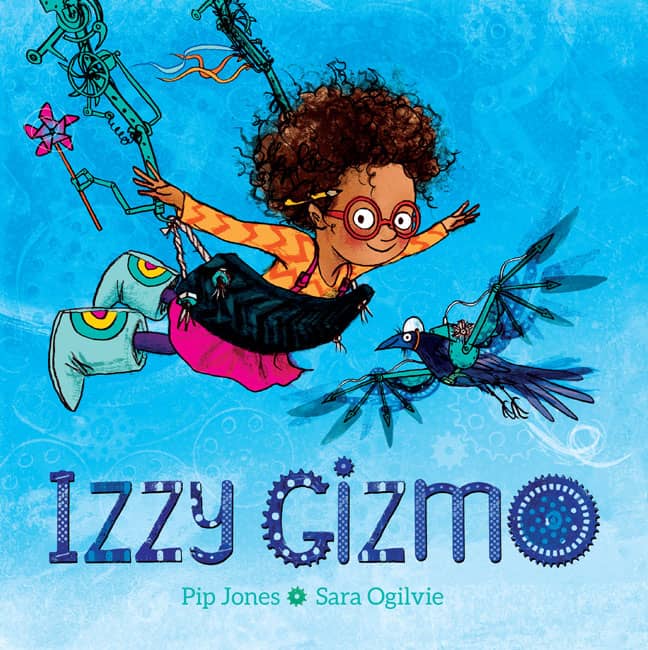
Izzy Gizmo by Pip Jones
Izzy loves inventing, but loving something does not make every attempt successful. Her gadgets malfunction, and her frustration is understandable. Pip Jones and illustrator Sara Ogilvie bring energy and humor to the gap between an exciting idea and a working invention.
Then Izzy encounters an injured crow. A problem that matters to someone else gives her a reason to return to the work, even when the next attempt is uncertain.
What kids notice: Izzy can feel fed up and still care deeply about helping. Her grandfather’s encouragement also makes support part of the inventor’s world. She does not need to manufacture confidence entirely by herself.
Story snapshot: Izzy tries to build new wings for a crow with a broken wing. Her efforts do not immediately work, so the story follows repeated attempts alongside friendship and encouragement.
Why this book helps: The fictional rescue makes a good conversation about designing for a specific need. Ask, “What is Izzy trying to help the crow do?” That question directs attention toward the problem, rather than toward whether the inventor is good or bad at inventing.
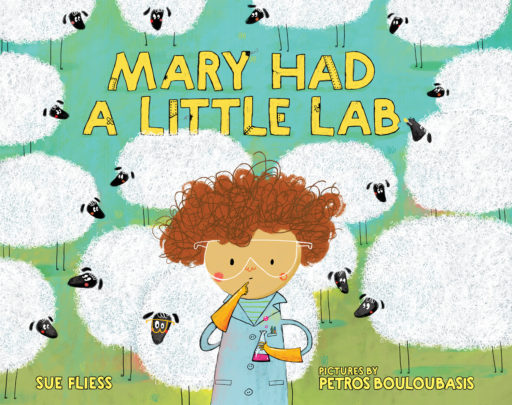
Mary Had a Little Lab by Sue Fliess
Sometimes the problem is not that an invention does nothing. Sometimes it does rather more than anyone was prepared for. Sue Fliess gives the familiar nursery rhyme a lively scientific twist, with illustrations by Petros Bouloubasis.
Mary’s wish for companionship leads her to make a sheep. The silliness makes room to discuss consequences without making the conversation heavy.
What kids notice: A successful idea can create unexpected complications. More of something good does not automatically make everything easier. Children can enjoy the sheep-filled chaos while noticing that the situation now needs a different response.
Story snapshot: Mary is a young inventor who makes herself a sheep when she wants a pet. Her creation brings popularity and new friends, but producing sheep for those friends leads to chaos.
Why this book helps: You can ask, “What changed after her first idea worked?” Resourcefulness includes responding to new information. That is useful when your child’s plan succeeds in one way but causes trouble in another, and the next step requires more thought.
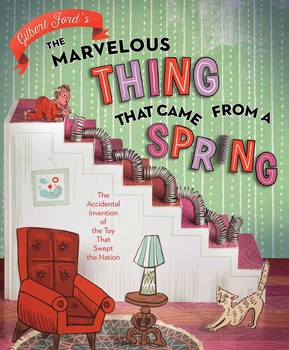
The Marvelous Thing That Came from a Spring by Gilbert Ford
An ordinary object falls, and someone pays attention. That small moment begins this picture-book account of the Slinky’s invention. Gilbert Ford’s photographed dioramic illustrations make the history visually inviting.
The full subtitle is The Accidental Invention of the Toy That Swept the Nation. This is the collection’s clearest example of an unexpected event becoming the starting point for something useful and joyful.
What kids notice: The spring’s movement matters because Richard James notices it. The discovery also needs further work. Betty James helps turn an intriguing observation into a plaything, giving children more than a lone-inventor picture.
Story snapshot: A spring falls from engineer Richard James’s desk, and its unusual movement sparks his imagination. With Betty’s help, he develops the ordinary spring into the toy known as the Slinky.
Why this book helps: You can invite your child to describe what actually happened during a failed experiment. Did something bend, roll, bounce, or move unexpectedly? Careful noticing gives them something specific to investigate, even when the original plan has gone off course.
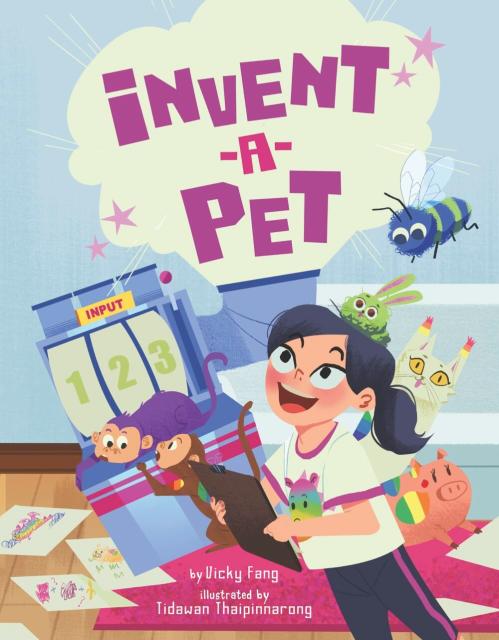
Invent-a-Pet by Vicky Fang
A result can be delightful and still fail to match what your child intended. Katie encounters that puzzle when a mysterious machine gives her a way to create an extraordinary pet. Vicky Fang’s story, illustrated by Tidawan Thaipinnarong, turns experimenting into a colorful adventure.
Your child can enjoy the surprising animals while wondering how Katie’s choices influence what appears next. Trying again becomes a chance to understand the machine.
What kids notice: Katie gets interesting results before she gets the right result. That distinction can be reassuring when your child has made something unexpected but has not yet solved the problem they started with.
Story snapshot: A gift from Katie’s mother produces different animals when Katie feeds it different items. Through trial and error, Katie works out a formula for the surprising pet she wants.
Why this book helps: Ask, “What could she change next?” Your child can practice thinking about a specific adjustment. At home, that might mean testing a different wheel or moving a ramp, then noticing what the change does.
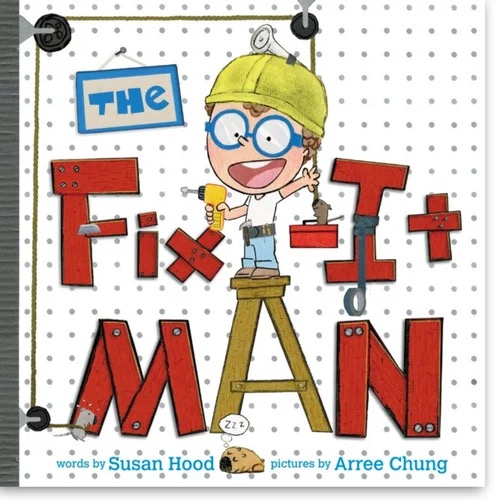
The Fix-It Man by Susan Hood
If your child enjoys machines with far too many moving parts, Joshua James offers entertaining company. He likes repairing and inventing things. Susan Hood’s playful story, illustrated by Arree Chung, gives his practical enthusiasm a wonderfully ridiculous challenge.
The problem is his little sister Sophie’s smelly diapers. Joshua’s response is an elaborate contraption. You can laugh together while looking at how one part is supposed to lead to the next.
What kids notice: A clever machine still needs adjusting, and the person building it can make mistakes. Inventing happens alongside family relationships, so caring about the people affected by a plan matters too.
Story snapshot: Joshua creates a complicated mechanism to move Sophie’s diapers out of the house. The imaginative machinery, tweaks, and mishaps make his attempt to solve an everyday problem into a comic adventure.
Why this book helps: It invites your child to explain a design in steps: “What happens first? What should happen next?” Following the sequence can help them locate a problem and change one part instead of giving up on everything.
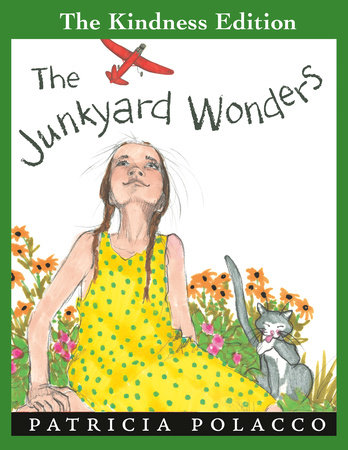
The Junkyard Wonders by Patricia Polacco
Not everything valuable looks promising at first glance. In this story based on Patricia Polacco’s childhood, a teacher helps children see possibility in discarded materials and recognize strengths in themselves. Polacco also illustrates the book.
This is a longer, emotionally weightier choice. It includes cruel treatment of children with disabilities and the death of a classmate, so make room for questions and feelings as you read together.
What kids notice: Different children bring different abilities to a shared project. Their creativity deserves respect before anyone sees the finished result. The story also offers a conversation about how hurtful labels can hide what people have to contribute.
Story snapshot: Trisha joins a class that other children dismiss as the junkyard. With Mrs. Peterson’s encouragement, the students explore new possibilities; a model airplane made from salvaged materials becomes a meaningful group project.
Why this book helps: It broadens resourcefulness beyond gadgets: people, encouragement, and collaboration are resources too. Ask your child what each person contributes. You can also look together at an unused object and imagine a different purpose for it.
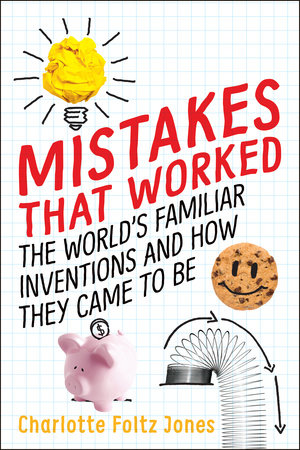
Mistakes That Worked by Charlotte Foltz Jones
For an older child who wants more than one invention story, this nonfiction collection offers a different reading experience. Charlotte Foltz Jones explores the unexpected beginnings of everyday products, with illustrations by John O’Brien.
The publisher recommends it for ages eight to twelve. You can choose a short section together rather than treating it as a picture book to finish in one sitting.
What kids notice: Familiar things have histories. Someone had to notice, investigate, or reconsider what happened before an unexpected result could become useful. The collection encourages curiosity about objects that usually pass without a second thought.
Story snapshot: Instead of following one character, the book gathers accounts of unusual origins across foods, clothing, toys, and devices. Its format lets interested readers explore several examples of discoveries arriving by unexpected routes.
Why this book helps: It extends the conversation beyond the craft table. Ask your child which object they would like to investigate next. Their question can become a small research project, helping them connect inventive thinking with the habit of looking for more information.
Put Your Child in the Heart of the Story
There is something inviting about imagining yourself as the child who discovers another way. In a personalized Scrively story, your child can picture themselves inside an adventure connected to resourcefulness. You can carry that imaginative connection into your reading together: What might a character with their name notice, try, or ask?
Keep the conversation close to your child’s actual world. Perhaps they love making things for a sibling, building tiny homes for toy animals, or figuring out how to carry a treasured collection. You can imagine a story problem around those interests without requiring a spectacular invention. A small, thoughtful solution can feel meaningful.
Afterward, offer space for an idea of their own. Set aside a few safe materials and let your child decide what to make. If they ask you to join, you can be a fellow experimenter. If they want time alone, you can remain nearby without taking control of the ending.
Leave Room for the Next Idea
You cannot promise that every mistake will lead to an invention. Some attempts need to be abandoned. Some materials cannot be rescued. Your child can learn to stop, rest, and choose again without losing the larger possibility that they are someone who can think creatively.
When the next project goes wrong, start with the feeling. “You really wanted that to work.” Then, when your child is ready, offer a little room around the problem. “What have we learned?” or “Is there another way?” You do not need the answer before asking.
Resourcefulness often looks modest at first: saving a useful piece, accepting a suggestion, changing one part, or noticing an unexpected movement. Those moments deserve your attention. The invention may be small. The experience of having another idea can be enormous.