Raising Grateful Kids: The Best Books for Learning Appreciation
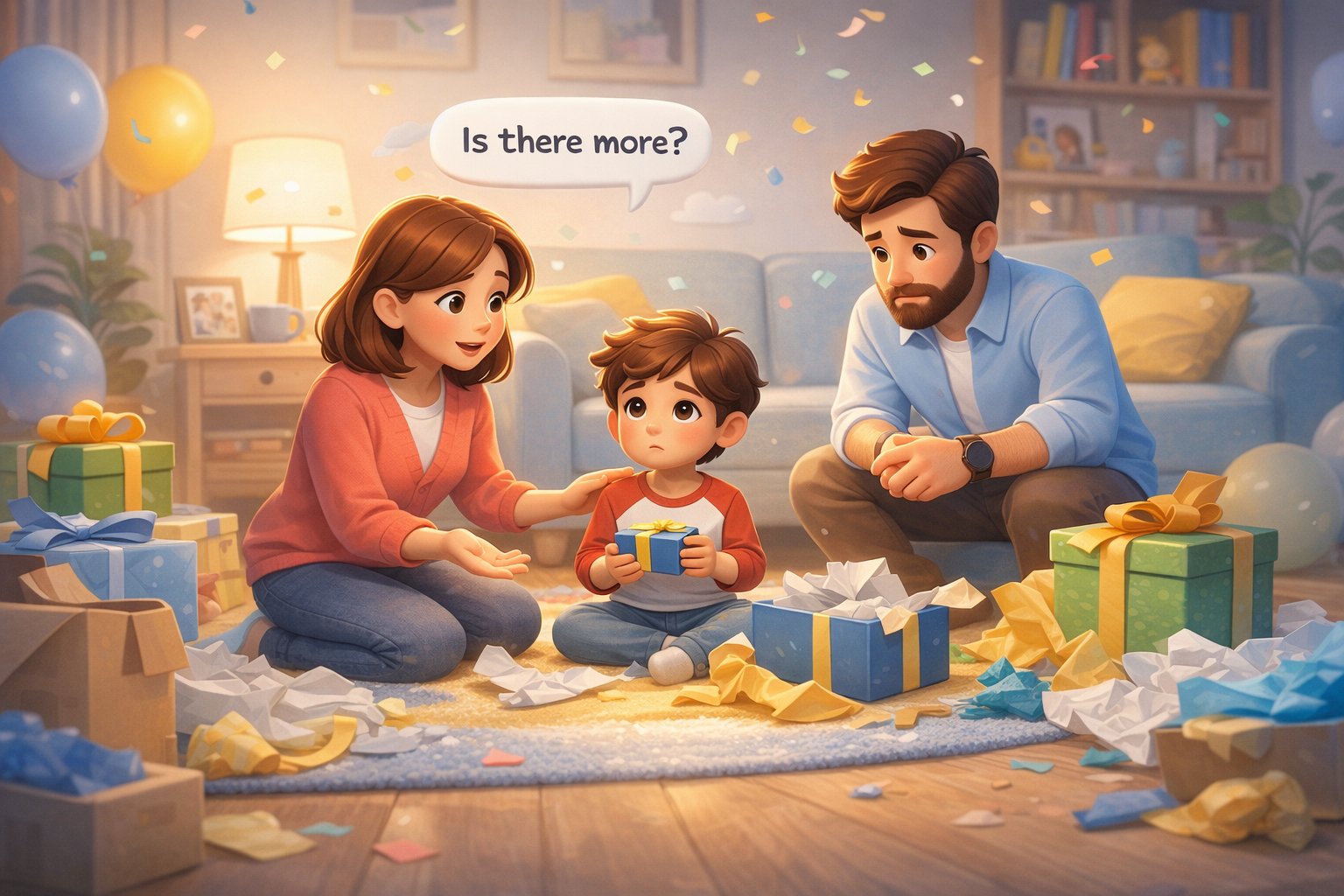
It happens right after the wrapping paper settles.
Your child looks at a thoughtful gift, blinks, and asks the question that makes your heart sink: “Is there more?”
It’s a gut-punch moment. You worry you’re raising a tiny ingrate.
You wonder if you somehow skipped the “gratitude” chapter in the parenting manual. You might even feel a flicker of shame. (Don’t. You’re doing fine.)
Here’s the thing: gratitude isn’t a factory setting. It’s a sophisticated emotional skill that takes time to boot up.
For young children, the world is essentially a giant vending machine designed for their needs. They aren’t being rude; they are just new here.
Expecting a five-year-old to naturally grasp the effort behind a home-cooked meal is like expecting them to calculate mortgage interest. It’s not in their hardware yet.
Gratitude is a muscle, and like any muscle, it requires a very specific kind of exercise to grow strong.
Real appreciation is more than a polite “thank you” prompted by an adult.
It’s about developing “the eyes to see”—the ability to notice small wonders, quiet efforts, and the silver linings that make life rich. It’s a shift from “what am I getting?” to “what am I experiencing?”
Books are the ultimate rehearsal space for this.
Stories allow kids to step out of their own needs and witness the warmth of a community or the joy of a simple moment. When we read together, we aren’t lecturing.
We are sharing a perspective and showing them that the world is full of magic if they know where to look.
The Thank You Book — Mo Willems
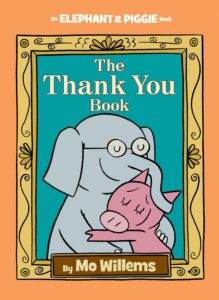
Piggie is on a “Thank-o-Rama” mission to thank every single person she knows.
Meanwhile, Gerald is a nervous wreck, worried she’ll forget someone vital. It is loud, it is fast, and it is incredibly funny.
This story turns appreciation into a high-energy celebration.
By stripping away the “politeness pressure,” Willems makes saying thank you feel like a boisterous, joyful choice rather than a social chore. It’s a perfect entry point for kids who find formal manners a bit stiff.
What kids notice in this story:
They’ll love Piggie’s frantic energy and the mounting suspense of who she might be forgetting. They notice that thanking people actually feels like a party.
Story snapshot:
Piggie decides to thank every character from her series. Gerald tries to keep her focused, leading to a heartwarming realization about the most important person in the book: the reader.
Why this book helps:
It frames gratitude as an active, exciting way to connect with friends rather than a quiet obligation.
Thank You, Omu! — Oge Mora
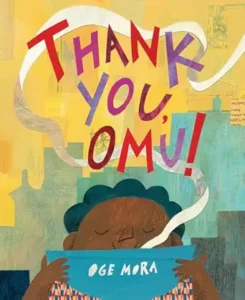
Omu makes a thick red stew that smells so good the whole neighborhood knocks on her door.
She shares until her pot is empty, but she finds that her generosity has created something even better than dinner. The tactile collage art makes the story feel as warm as the kitchen it depicts.
This is a beautiful look at how one person’s spirit can knit a community together.
It shows kids that when we appreciate others enough to share what we have, that goodness has a way of finding its way back to us in unexpected, delicious ways.
What kids notice in this story:
The delicious-looking stew and the diverse crowd of neighbors.
They notice Omu’s kindness and the relief of the surprise ending when the community takes care of her in return.
Story snapshot:
A woman shares her dinner with everyone who asks until she has nothing left, only for the neighbors to bring a feast back to her doorstep to say thank you.
Why this book helps:
It illustrates that gratitude is a reciprocal energy. When we appreciate others, they feel seen and move to appreciate us too.
Last Stop on Market Street — Matt de la Peña
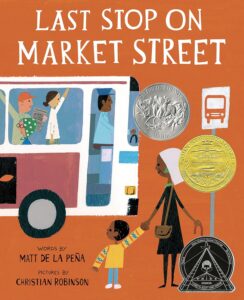
CJ is full of “how come” questions. Why doesn’t he have a car? Why doesn’t he have an iPod?
His Nana is a master of the reframe.
She points out the music of the bus and the beauty in their “dusty” part of town, gently guiding him away from what he lacks.
This book is a masterclass in urban perspective. It doesn’t deny CJ’s feelings, but it offers him a better pair of glasses to view his world.
It’s essential for kids who find themselves stuck in the “comparison trap,” wanting what others have.
What kids notice in this story:
CJ’s relatable grumbling. They notice how Nana’s attitude changes the atmosphere of the bus ride from a boring chore into a vibrant adventure.
Story snapshot:
A boy and his grandmother take a bus trip through the city, learning to see the wealth and beauty in their community despite having very little “stuff.”
Why this book helps:
It helps kids find the extraordinary in the mundane, teaching them that “rich” is a matter of how you choose to see your surroundings.
Those Shoes — Maribeth Boelts
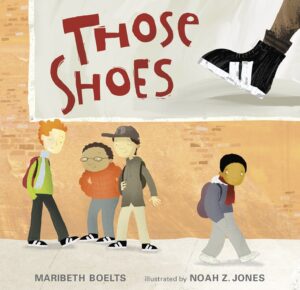
Jeremy desperately wants the trendy sneakers everyone else has. His grandmother, however, insists on “needs” over “wants.”
When he finally finds a pair at a thrift store that is way too small, he eventually gives them to a friend who needs them more.
This story is poignant because it validates the sting of not fitting in.
It doesn’t give Jeremy a “magic” pair of shoes at the end; instead, it gives him the quiet dignity of choosing empathy over ownership. It’s a powerful lesson in finding enoughness.
What kids notice in this story:
The physical discomfort of Jeremy trying to wear shoes that don’t fit. They feel his struggle and the bravery of his eventual choice to help a friend.
Story snapshot:
A boy struggles with the desire for expensive shoes and finds that being a good friend feels more rewarding than having the “cool” thing.
Why this book helps:
It shifts the focus from material lack to the abundance of character and the warmth of friendship.
Apple Cake: A Gratitude — Dawn Casey
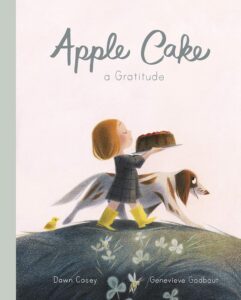
This rhythmic story follows a child as they thank the hedge, the cow, and the tree for the ingredients needed to make a cake.
It is simple, sensory, and incredibly grounding. It’s a wonderful choice for younger readers who are just beginning to understand where things come from.
By tracing a snack back to its source, the book turns a daily routine into a moment of mindfulness.
It shows that nothing “just appears”—everything is a gift from the earth and the hard work of others.
What kids notice in this story:
The repetitive “Thank you” refrain and the cozy illustrations. They love following the journey of the ingredients and seeing the final, golden cake.
Story snapshot:
A young child gathers ingredients for a cake, offering thanks to every part of nature that contributed to the family feast.
Why this book helps:
It fosters a deep appreciation for the environment and helps kids understand the interconnectedness of their world.
The Table Where Rich People Sit — Byrd Baylor

A girl demands her family get better jobs so they can be “rich.”
Her parents respond by “calculating” the monetary value of seeing a desert sunset or hearing a cactus wren. It is a philosophical, earthy look at what truly constitutes wealth.
The beauty here is the honesty.
The girl’s frustration is real, and the parents don’t dismiss it; they just offer a different ledger for her to use. It encourages kids to value experiences and family time over things that come in boxes.
What kids notice in this story:
The girl’s relatable frustration. They gravitate toward the idea that you can “earn” a living just by being present and observant in nature.
Story snapshot:
A family holds a meeting to discuss their finances, eventually deciding that their outdoor life is worth millions more than a traditional salary.
Why this book helps:
It challenges consumerist success and helps children recognize the massive value in simple, free experiences.
Thankful — Eileen Spinelli
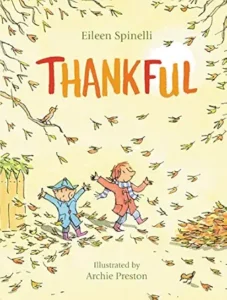
This book explores how different people—from a gardener to a poet—find joy in their daily lives.
The gentle rhyming text makes it an ideal bedtime read, helping children wind down by reflecting on the small wins of their own day.
It provides a simple, accessible vocabulary for gratitude. By showing that a person can be thankful for a comfortable chair or a new box of crayons, it makes the habit of appreciation feel achievable for even the youngest readers.
What kids notice in this story:
The whimsical illustrations and the relatable things the characters appreciate. They often start naming their own small favorites as you read.
Story snapshot:
A charming exploration of the everyday things that various people in a community value, ending with a warm focus on the safety of home.
Why this book helps:
It shows that nothing is too small to be worth noticing, helping kids build a daily habit of looking for the good.
We Are Grateful: Otsaliheliga — Traci Sorell
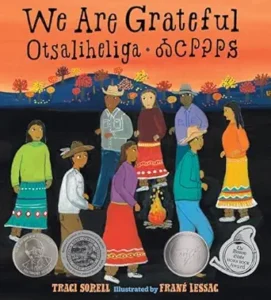
This story follows a Cherokee community through the seasons, practicing “Otsaliheliga” (gratitude) for both struggles and triumphs.
It is a profound look at gratitude as a consistent way of life rather than a fleeting feeling tied to a gift.
It expands the child’s world by introducing Cherokee culture and language.
It teaches that we can be grateful for our ancestors, our environment, and even our challenges because they help us grow. It’s a sturdy, resilient kind of appreciation.
What kids notice in this story:
The Cherokee words and the vibrant seasonal celebrations. They notice that the community expresses gratitude even during times of remembrance or change.
Story snapshot:
A look at modern Cherokee life and the tradition of expressing gratitude for the world and the community throughout the year.
Why this book helps:
It moves gratitude beyond “getting things” and links it to heritage, community resilience, and the natural cycle of the seasons.
When Your Child Stars in the Story
Reading about gratitude is a great spark, but seeing themselves practice it is where the change happens.
With Scrively, you can create personalized stories where your child is the hero.
Imagine a book where your child learns to notice the small wonders in their own backyard or navigates the feelings of wanting something a friend has.
When kids “star” in these scenarios, the lesson shifts from abstract to lived experience.
They get to practice being the person who notices the good. Check out how we help kids build these essential life skills at Scrively.
Building a culture of gratitude isn’t about forced manners or lectures. it’s about slow-growing awareness.
By choosing stories that celebrate “enoughness,” we give our children the tools to find happiness in the life they already have.
You aren’t just teaching them to say thank you; you are teaching them how to be content. And that is a gift that never goes out of style.