Best Books for Kids Learning Honesty and Truthfulness
You’re in the kitchen when you hear that unmistakable sound. It’s a thwack, followed by the crystalline chime of shattering glass.
By the time you reach the living room, the evidence is scattered across the rug.
Your child is standing there, wide-eyed, with their hands tucked firmly behind their back. “I didn’t do it,” they say breathlessly. “The cat did it.”
The catch? You do not own a cat.
In that moment, it’s easy to feel a surge of parental panic.
We worry that a tall tale about a nonexistent feline is the first step toward a lifetime of deception. We want to lecture.
We want to explain the deep philosophical importance of integrity. But for a young child, a lie usually isn’t a character flaw.
It’s a clumsy attempt at problem-solving or a way to test the boundaries between their imagination and reality.
The truth is, being honest is a sophisticated skill. It requires a child to manage their fear of consequences and find the courage to own a mistake.
It’s a lot to ask of a small person who is still figuring out how the world works. That’s where stories come in. They serve as a gentle, low-stakes rehearsal space for these big, complicated feelings.
Books allow us to step outside the heat of the broken-lamp moment and look at honesty from a safe distance.
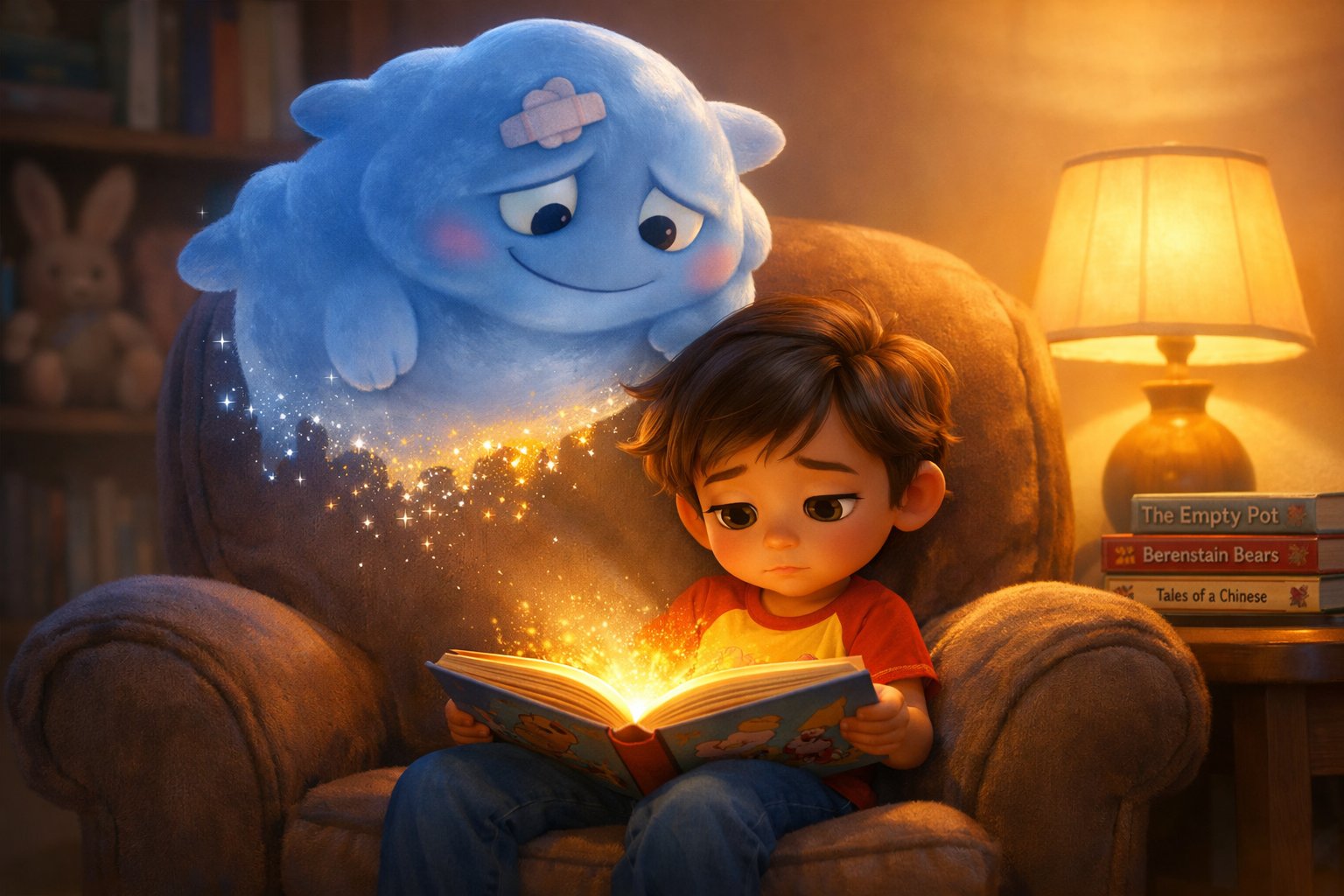
They let kids see characters grapple with the “heavy” feeling in their chest when they hide the truth. More importantly, they show the incredible lightness that follows when a character finally comes clean.
By reading together, we normalize the fact that everyone—even grown-ups—sometimes finds the truth a little bit scary.
We move the conversation away from “Why did you lie?” and toward “How does it feel to tell the truth?” It turns a potential confrontation into an opportunity for connection and growth.
The Empty Pot — Demi
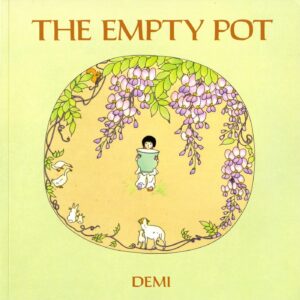
In ancient China, the Emperor holds a contest to choose his successor. He gives a seed to every child in the kingdom, claiming that whoever grows the most beautiful flower will inherit the throne.
Young Ping, a gifted gardener, tends to his seed with all his heart. He waters it. He moves it into better soil. He speaks to it. But despite his best efforts, the seed never sprouts.
When the day comes to show the Emperor their work, every other child carries a vibrant, blooming plant. Ping is the only one with nothing but a pot of dirt.
The story captures that agonizing feeling of being the “only one” who failed. It is a visually stunning journey that celebrates the quiet power of showing up exactly as you are.
The resolution of this book is a masterclass in redefined success. It turns the concept of “winning” on its head. Instead of rewarding the best flower, the Emperor rewards the child with the most courage.
It’s a story that sticks with children because it validates their fear while showing them that the truth is the most beautiful thing they can grow.
What kids notice in this story:
They notice the contrast between Ping’s plain, brown soil and the colorful flowers held by the other kids. They feel the weight of Ping’s embarrassment as he stands in line with his empty pot.
Story snapshot:
A boy enters a contest where the seeds are secretly cooked so they won’t grow. He is the only child honest enough to present an empty pot, proving he has the integrity to lead a kingdom.
Why this book helps:
It teaches that honesty is a form of bravery, especially when everyone else seems to be succeeding through shortcuts or deception.
Ruthie and the (Not So) Teeny Tiny Lie — Laura Rankin
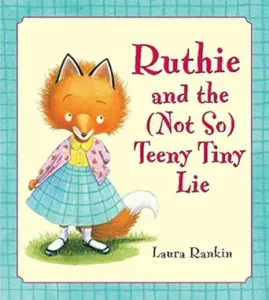
Ruthie is a little fox who loves tiny things. When she finds a small toy on the playground, she desperately wants it to be hers.
So, when another student claims it, Ruthie tells a lie. She says it was a birthday gift. At first, she feels a tiny bit of thrill. But as the day goes on, that lie starts to take up all the space in her head.
This book is wonderful because it focuses on the physical sensation of a secret. Ruthie’s favorite things—like her grandmother’s cookies—suddenly taste like “old sponges.”
She can’t enjoy her dinner or her bedtime story because her stomach feels funny. The author treats Ruthie with immense empathy, showing that she isn’t a “bad” fox; she’s just a fox who made a quick, impulsive choice.
The path back to honesty involves a supportive teacher and an understanding parent.
It shows kids that the adults in their lives are there to help them fix their mistakes. The relief Ruthie feels when she finally tells the truth is palpable, making the reader feel lighter right along with her.
What kids notice in this story:
Kids focus on the tiny toy that Ruthie wants so badly. They also notice how her face changes throughout the book, going from excited to very, very worried as the lie grows.
Story snapshot:
A fox named Ruthie claims a found toy as her own. The guilt of the lie ruins her day until she realizes that telling the truth is the only way to feel like herself again.
Why this book helps:
It illustrates how a lie can take the joy out of everything else, making the truth the most logical way to get back to a happy state.
A Big Fat Enormous Lie — Marjorie Weinman Sharmat
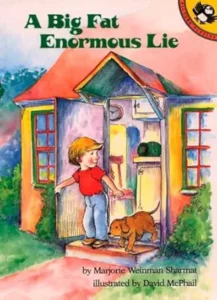
What if a lie was a physical creature that followed you around? That is the premise of this clever book. A young boy tells a lie, and a small, sticky-looking monster appears. At first, the boy tries to ignore it. But as he continues to hide the truth, the monster grows bigger and heavier. It starts taking up his chair and sitting on his head.
This is a brilliant visual metaphor for the psychological burden of dishonesty. It gives children a vocabulary to talk about what’s happening in their own minds.
Because the lie is its own character, children can separate the “bad feeling” from themselves. They can see that the problem isn’t the boy—it’s the growing creature he’s trying to carry.
The only way to make the monster disappear is to say the words that represent the truth. The book provides a very clear “how-to” for resolving the situation. It’s a funny, slightly absurd look at a very common experience that takes the sting out of confession.
What kids notice in this story:
They find the “Lie” creature funny but also a bit annoying. They notice how it gets in the boy’s way and makes his life more difficult at every turn.
Story snapshot:
A boy tells a lie, and a monster appears to represent it. The more he hides the truth, the bigger the monster grows, until he realizes the only way to shrink it is to be honest.
Why this book helps:
It provides a vivid mental image for kids to understand that keeping a lie is a lot more work than just telling the truth.
A Day’s Work — Eve Bunting
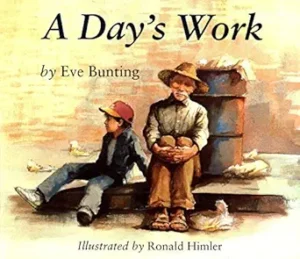
Francisco is a young boy trying to help his grandfather, who doesn’t speak English, find work as a day laborer.
Eager to help his family, Francisco tells a lie to a contractor. He says his grandfather is an expert gardener.
They are hired for the day, but they accidentally pull up expensive flowers instead of weeds because the grandfather has never done this work before.
The story is moving because it explains the why behind the lie. Francisco wasn’t trying to be mean; he was trying to be helpful and survive.
When the mistake is discovered, the grandfather insists on making it right. He doesn’t get angry, but he is firm about the importance of their word. It’s a profound look at dignity and accountability.
The resolution shows that while a lie might get you the job, the truth is what helps you keep your self-respect. It’s a quiet, dignified story that feels very real to children who often feel a lot of pressure to succeed or help out.
What kids notice in this story:
They notice the bond between Francisco and his grandfather. They also see the moment of realization when the contractor looks at the destroyed garden and how heavy that silence feels.
Story snapshot:
A boy lies about his grandfather’s skills to get a job. When they mess up the work, the grandfather teaches him that honesty is more important than a day’s pay.
Why this book helps:
It demonstrates that while a lie might seem like a shortcut to a good outcome, honesty is what actually builds lasting trust and character.
The Berenstain Bears and the Truth — Stan and Jan Berenstain
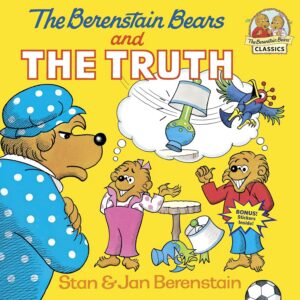
While this series is a classic, this specific title remains one of the most practical guides for teaching children about the “tangled web” of lying.
Brother and Sister Bear break a lamp while playing soccer in the house. When Mama asks what happened, they tell a series of increasingly ridiculous lies to cover it up. They even blame a bird that supposedly flew in through an open window.
The book uses humor to show how one small lie usually requires ten more to support it.
It moves the focus from the broken object to the value of trust. Mama and Papa Bear explain that while the lamp can be glued back together, a broken word is much harder to mend.
It’s a very relatable scenario for any household where “it wasn’t me” is a common refrain.
The story ends with the cubs realizing that telling the truth is much simpler than trying to remember all their tall tales. It’s a grounded, everyday look at why honesty is the best policy for a happy family life.
What kids notice in this story:
They usually laugh at the “bird” that the cubs claim broke the lamp. They recognize how silly the lies sound when they are piled on top of each other.
Story snapshot:
Brother and Sister Bear accidentally break a lamp and tell a tall tale about how it happened. They eventually learn that “truth is better than any lie.”
Why this book helps:
It illustrates the “snowball effect” of lying in a way that is funny and easy for kids to follow, making the alternative look much more appealing.
The Honest-to-Goodness Truth — Patricia McKissack
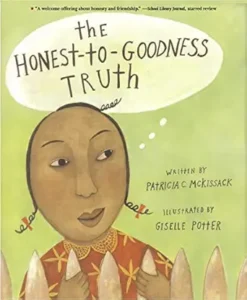
Libby gets caught in a lie and decides that from now on, she will tell only the “honest-to-goodness truth.”
However, she quickly learns that being honest doesn’t mean you have to be mean.
She starts pointing out everyone’s flaws and secrets, thinking she is being “good.” Her friends are hurt, and Libby is confused because she thought she was doing the right thing.
This book is a fantastic choice for older children who are ready to talk about the nuance of truth.
It explores the difference between being truthful and being hurtful. It teaches that honesty should always be tempered with kindness and that some “truths” don’t need to be shared if they are only meant to sting.
Libby’s journey is one of learning empathy.
She eventually understands that the truth is a tool for building relationships, not a weapon for tearing them down. It’s a sophisticated and necessary lesson for kids navigating the social complexities of elementary school.
What kids notice in this story:
They notice how Libby’s friends start avoiding her when she becomes “too honest.” They see the hurt feelings on her friends’ faces and realize that truth alone isn’t enough.
Story snapshot:
After being caught in a lie, Libby vows to tell only the truth—but she does it in a way that hurts her friends. She eventually learns that the truth should always be wrapped in kindness.
Why this book helps:
It introduces the concept of “social honesty” and helps children understand that how we tell the truth is just as important as the truth itself.
Liar, Liar, Pants on Fire — Diane deGroat
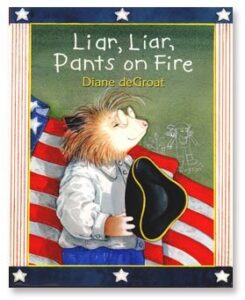
Gilbert the Opossum is a very relatable protagonist. In this story, he finds himself in a lie during a school play.
This book focuses heavily on the feeling of being “found out” and the embarrassment that follows. It deals with the fear of what others will think of you once a lie is uncovered in a public setting.
The story is helpful because it doesn’t end with Gilbert being an outcast. Instead, it shows the process of apology and moving forward.
It emphasizes that a lie doesn’t have to define you forever if you are willing to own it and do better next time. It’s a hopeful take on a stressful social situation.
Gilbert’s anxiety throughout the play is something every child can relate to.
By showing him navigating the fallout with his classmates, the book provides a roadmap for how to repair trust after a mistake has been made. It’s a story about resilience and recovery.
What kids notice in this story:
They notice the stomach-flipping feeling Gilbert has while on stage. They relate to the pressure of wanting to look “perfect” in front of the whole class.
Story snapshot:
Gilbert tells a lie to cover up a mistake during a school production. He has to navigate the fallout with his classmates and find the courage to admit what really happened.
Why this book helps:
It shows that everyone makes mistakes, and while lying makes those mistakes worse, honesty is the first step toward fixing your friendships.
Practice Integrity with Scrively
Helping kids choose the truth is about building their confidence—the confidence to know that they are loved even when they mess up.
At Scrively, we believe the best way to practice these big life skills is by letting your child be the hero of the story.
In our personalized books, your child can face these exact dilemmas, see the “heavy” feelings of a secret, and experience the incredible relief of being honest.
It turns a lecture into a lived experience, helping them build the muscle of integrity one page at a time.
Explore how your child can star in their own journey of growth at Scrively.
Teaching honesty isn’t about catching your child in a lie; it’s about creating a home where the truth feels safe to say.
When we read these stories together, we’re telling our kids: “I know it’s hard. I know it’s scary. But I’m here, and we can fix anything together as long as we’re honest.” That’s the kind of foundation that lasts much longer than any broken lamp ever could.