Children’s Books About Jealousy, Friendship, and Reassurance
Friendship can feel wonderfully simple to a child right up until it suddenly does not.
A best friend starts playing with someone new.
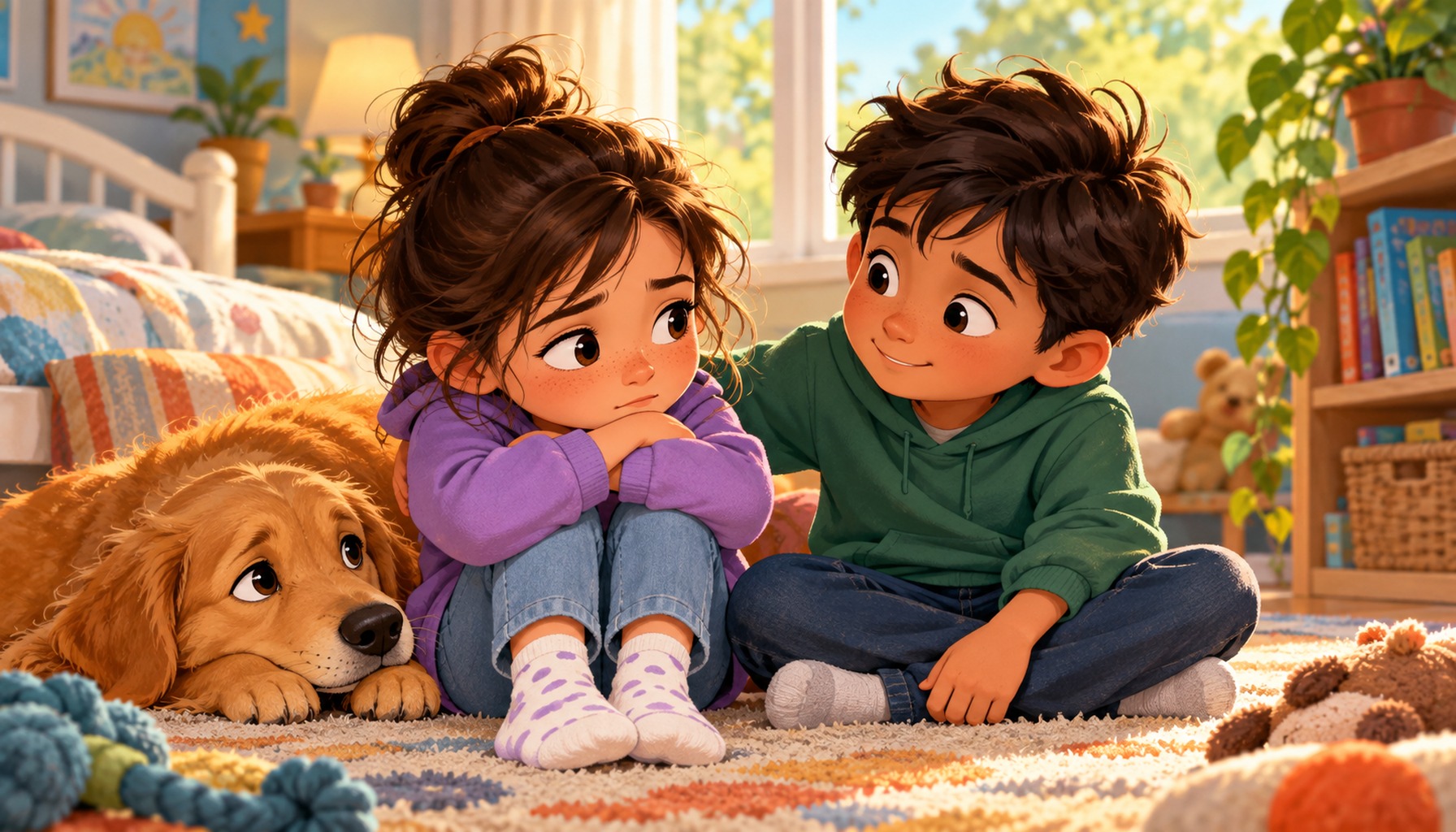
Another child gets the part, prize, invitation, or attention they wanted. A familiar friendship stretches, and your child may not yet have the words for the fear underneath the jealousy: What if I am not important anymore?
That fear can come out sideways.
A child may become bossy, quiet, angry, clingy, or dismissive. They may insist they do not care while watching every move their friend makes.
Jealousy is uncomfortable, but it is also deeply human. Your child does not need to be shamed out of it. They need help understanding what the feeling is trying to protect.
Reassurance does not mean promising that friendships will never change. It means helping your child discover that another friendship, achievement, or moment of attention does not automatically erase their place in someone’s life.
They can miss a friend, ask for connection, name hurt feelings, and still make room for other people.
These children’s books about jealousy and friendship give you stories for those tender moments.
Some focus directly on a best friend making a new friend. Others explore envy, comparison, or the fear of being replaced. Together, they show children that jealous feelings can be noticed, spoken about, and moved through without turning someone else into the enemy.
Children’s Books About Jealousy, Reassurance, and Changing Friendships
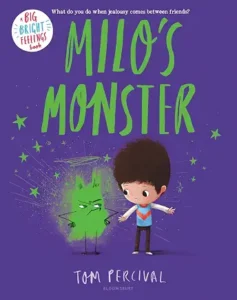
If you want a book that names the exact feeling at the heart of this topic, Milo’s Monster is an especially strong place to begin. Written and illustrated by Tom Percival, the story turns jealousy into a green-eyed creature that grows beside Milo when his best friend, Jay, begins spending time with a new neighbor.
The visual metaphor gives children some distance from the feeling. Jealousy is something Milo experiences; it is not who Milo is. That distinction can be enormously reassuring for a child who feels embarrassed by the intensity of their own reaction.
What kids notice: The more Milo listens to the jealous monster, the more certain he becomes that he is being replaced. Children can see how a feeling can start changing the story we tell ourselves about what other people are doing.
Story snapshot: Milo and Jay have always been close, but when Suzi moves nearby, Milo feels left out as Jay and Suzi spend time together. His jealousy grows into a literal green-eyed monster until conversation helps him understand what is really happening and begin repairing the friendship.
Why this book helps: It gives you language for separating feeling from fact. You might ask, “What was the monster telling Milo? What did Milo actually know?” That gentle distinction helps your child notice jealous thoughts without treating every worried thought as proof.
My Best Friend’s Bangles by Thushanthi Ponweera
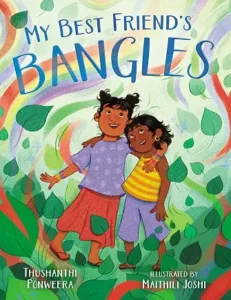
Jealousy is not always about wanting a toy. Sometimes the object represents something much larger. Written by Thushanthi Ponweera and illustrated by Maithili Joshi, My Best Friend’s Bangles explores envy between two close friends whose mothers work far from home.
When one friend receives beautiful bangles from her mother, the jealousy that follows is tied to longing, absence, and fear. That emotional layering makes this a meaningful story for helping children recognize that envy often has another feeling hiding beneath it.
What kids notice: Selvi is not simply jealous of jewelry. The bangles remind her that Divya’s mother is home while hers is not. Children can begin to see that the thing we envy may point toward something we miss.
Story snapshot: Selvi and Divya are best friends who understand one another partly because both of their mothers work overseas. When Divya’s mother comes home early and brings her rainbow bangles, Selvi worries that the friendship they relied on may no longer matter in the same way.
Why this book helps: It invites a softer question than “Why are you jealous?” Try, “What do you wish you had more of right now?” Reassurance becomes easier when you understand the longing underneath the reaction.
The New Friend by Charlotte Zolotow
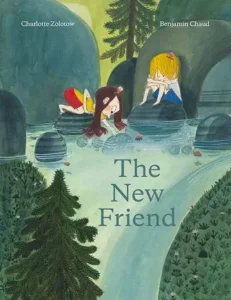
Sometimes a friendship really does change, and reassurance cannot mean pretending otherwise. Charlotte Zolotow’s The New Friend, illustrated by Benjamin Chaud, takes the sadness of being left behind seriously. A child remembers the closeness once shared with a best friend who has now chosen someone new.
The story is tender because it does not hurry toward an easy fix. It allows grief, anger, memory, and eventually the possibility of beginning again.
What kids notice: Losing the special place you once had with someone can hurt even when nobody has done something obviously cruel. The child’s memories make the old friendship feel real and important.
Story snapshot: A child reflects on the games, routines, and happy moments once shared with a dear friend. After that friend forms a new friendship, the narrator feels abandoned but gradually gathers the courage to look outward and seek a new connection.
Why this book helps: It gives you permission to reassure without making promises you cannot keep. You can say, “That friendship mattered. It makes sense that you miss it. And this is not the end of your ability to be loved or find connection.”
Big Friends by Linda Sarah
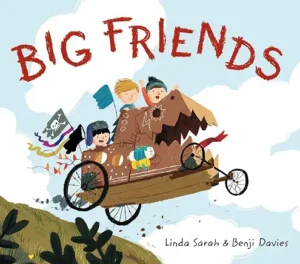
For many children, the most threatening number in friendship is three. Linda Sarah’s Big Friends, illustrated by Benji Davies, begins with two best friends whose imaginative world feels complete. Then a third child arrives with his own cardboard box and wants to join.
The question is beautifully simple: Can something special stay special when it gets bigger?
What kids notice: A new person can feel like an interruption before they feel like a friend. Children may recognize the instinct to protect a friendship by keeping someone else outside it.
Story snapshot: Birt and Etho are inseparable friends who build worlds out of cardboard boxes. When Shu wants to play too, the old rhythm changes. The boys must discover whether their friendship has room to expand rather than break apart.
Why this book helps: It gives you a concrete way to talk about friendship as something that can stretch. Ask, “What changed when Shu came? What stayed the same?” Your child may begin to see that sharing a friend does not always mean losing one.
Amy Is Famous by Barbara Bottner
Jealousy can also appear when a friend or classmate gets the attention your child wanted. In Amy Is Famous, written by Barbara Bottner and illustrated by Yuyi Chen, Amy loves feeling like the star. Then a new girl arrives and suddenly becomes the person everyone notices.
The story uses humor to explore the uncomfortable shift from “I want what she has” toward “Maybe I can actually know her.”
What kids notice: Attention can feel limited, as if someone else receiving it means there is less left for you. Amy’s jealousy makes it difficult for her to see the new girl as a whole person at first.
Story snapshot: Amy enjoys imagining herself as famous until Cecile comes to school and attracts everyone’s interest. Amy resists the newcomer, but spending time together helps the girls discover that ordinary friendship is more satisfying than competing for the spotlight.
Why this book helps: It opens a conversation about comparison. You might ask, “Did Cecile actually take something away from Amy, or did Amy feel as if she had?” Reassurance can include the truth that another person’s moment does not erase your child’s worth.
Millie Magnus Is NOT Jealous by Brittany Mazique
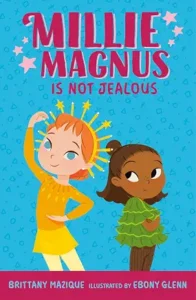
Older early readers may appreciate a longer story that lets jealousy unfold over time. In Brittany Mazique’s Millie Magnus Is NOT Jealous, illustrated by Ebony Glenn, Millie expects to shine in a stage production. Instead, her best friend Poppy Anne receives the starring role while Millie ends up in the background.
That situation captures a particularly tricky emotional mix: loving your friend and resenting what happened to them at the same time.
What kids notice: Millie does not stop caring about Poppy Anne just because she feels jealous. Two feelings can exist together, even when they seem to contradict one another.
Story snapshot: Millie auditions for a local show expecting a major part, but the role she wants goes to her best friend. With guidance from Grandma Sookie, Millie has to decide whether jealousy will damage the friendship or whether she can find another way to understand what she is feeling.
Why this book helps: It helps normalize emotional complexity. You can tell your child, “You can be disappointed for yourself and still love your friend.” That sentence alone can release some of the shame children feel when jealousy shows up.
My Best Friend’s New Friend: Feeling Left Out by Connie Colwell Miller
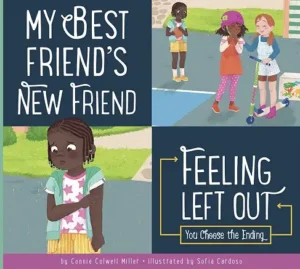
Some children understand feelings best when they can explore choices. Connie Colwell Miller’s My Best Friend’s New Friend: Feeling Left Out, illustrated by Sofia Cardoso, uses a choose-your-own-ending format to let readers see how different reactions can change a friendship situation.
That interactive structure makes the book useful when your child is stuck between several impulses: worry, anger, withdrawal, or asking to join in.
What kids notice: Feeling left out is only the beginning of the story. What Tife does next matters. Children can compare possible responses without having to defend something they themselves already did.
Story snapshot: Tife and Phoebe have been best friends for a long time, but Caitlin has begun joining their games and asking Phoebe to play. Readers choose how Tife responds and follow different paths toward different outcomes.
Why this book helps: It turns reassurance into action. After naming the feeling, ask, “What could you do next that protects the friendship and also tells the truth?” Children often feel calmer when they can imagine one small, respectful next move.
Tea for Two by Melody Mews
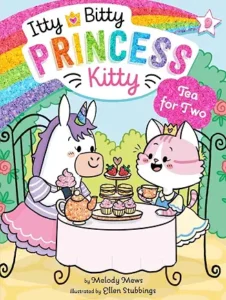
For children moving into early chapter books, Tea for Two by Melody Mews, illustrated by Ellen Stubbings, offers the jealousy story from another useful angle: the friend who is doing the leaving out does not always realize what is happening.
That matters because children who feel jealous may assume exclusion is intentional. Sometimes a friend simply becomes absorbed in something new and needs help noticing the impact.
What kids notice: Luna’s hurt grows while Itty is busy enjoying new companions. The friendship problem is real even though Itty did not set out to hurt her.
Story snapshot: Itty and Luna are best friends, but after Itty meets a group of pegasuses, she returns to spend time with them again and again. Luna begins feeling left out, and Itty eventually has to notice the distance and find a way to reconnect.
Why this book helps: It gives your child another interpretation besides “My friend likes them better than me.” You can wonder together whether the friend knows what your child is feeling and how they might communicate it without accusation.
Put Your Child in the Heart of the Story
Jealousy often becomes easier to talk about when your child is not being questioned directly. A story gives them a little room. They can watch a character feel replaced, make a mistake, ask for reassurance, or discover that a friendship can change without disappearing.
A personalized Scrively story can bring that emotional rehearsal even closer. Your child might become the main character whose best friend starts playing with someone new at recess. They might feel the knot in their stomach, imagine the worst, and then choose whether to hide, lash out, or say, “I miss playing with you. Can I join?” The story does not need to make them perfectly calm. It only needs to let them practice a more honest next step.
You can also build reassurance directly into the imagined ending. Perhaps the friend explains that liking someone new does not cancel the friendship they already have.
Perhaps your child discovers another person they enjoy too. Perhaps the ending is simply a warm conversation that makes the situation less mysterious.
The point is not to guarantee that every friendship stays exactly the same. It is to help your child picture themselves staying worthy, connected, and capable even when relationships shift.
Reassurance Makes Room for the Feeling Without Letting It Run the Friendship
When your child is jealous, the fastest response is often to correct the behavior: “Don’t be jealous.” “You should be happy for your friend.” “There is room for everyone.” Those ideas may be true, but they can arrive before your child feels understood.
Try beginning closer to the feeling. “You wanted that time with her.” “It looks like you are worried he likes someone else more.” “You were hoping you would get the part.” Reassurance begins when your child realizes they do not have to hide what is happening inside them.
Then you can help them move from fear toward relationship. Jealousy does not have to become cruelty, control, or exclusion.
Your child can learn to name what they need, tolerate another person being special too, and trust that their worth is not measured by whether they are the only friend, the favorite, or the one receiving applause.
That is a skill they will use far beyond the playground. And for now, one good story beside you is a gentle place to begin.