The Day the Plan Fell Apart: 8 Children’s Books About Adaptability
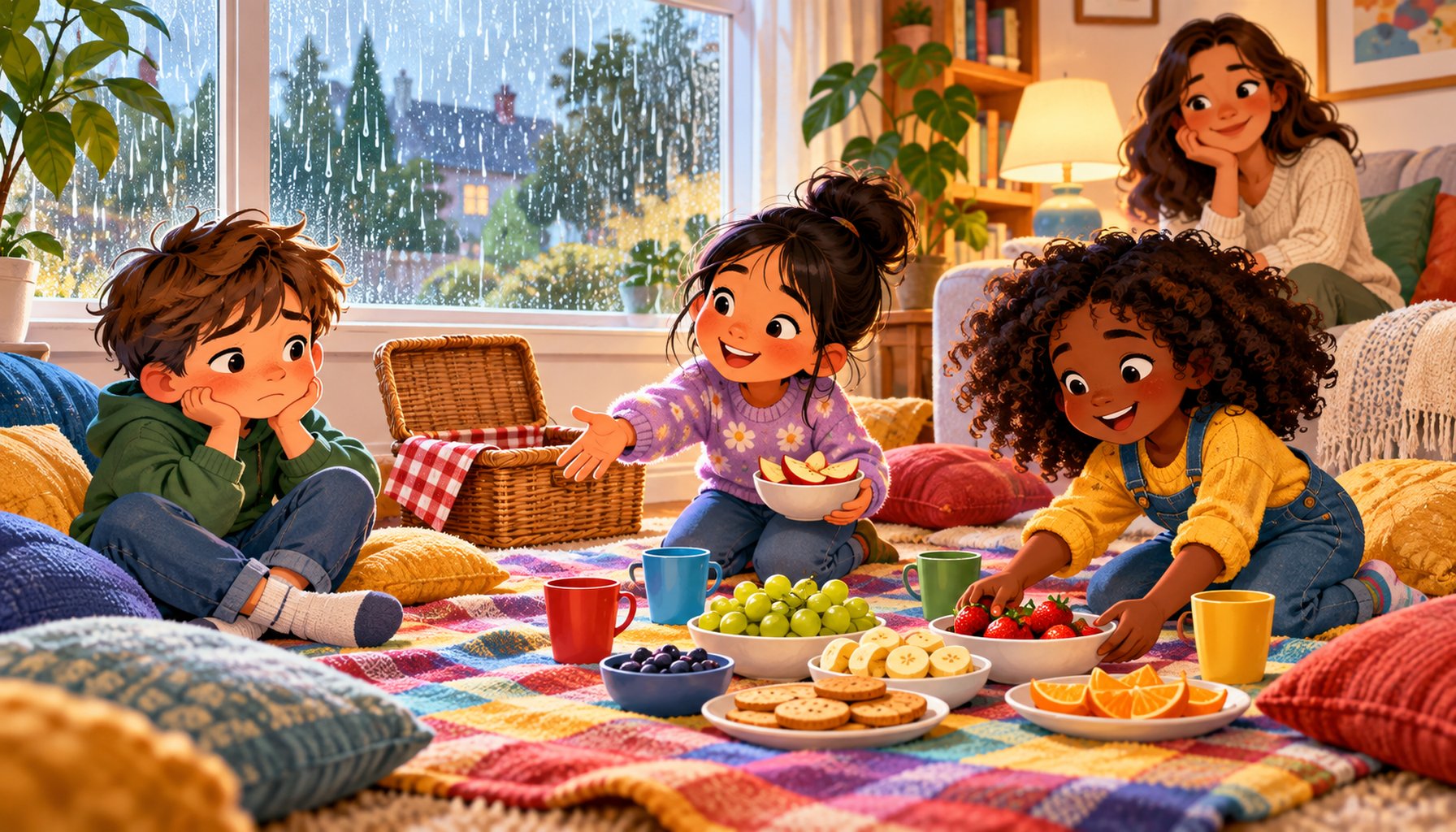
You packed the snacks. Your child picked the perfect spot. Then the rain came down just as everyone was putting on their shoes.
To you, it may be a small change in the day. To your child, it can feel as if the whole day has vanished.
Children often hold a plan with their whole hearts. They picture the birthday party, the visit with a friend, or the tower they are certain will stand. When reality takes a different turn, disappointment makes sense. They need room to feel it before they can imagine what comes next.
Adaptability grows in that space between “This isn’t what I wanted” and “What could we try now?” It does not require a cheerful reaction on command. Your child can be sad about the canceled outing and still help make a living-room picnic. Both things can be true.
These children’s books about adaptability give you ways to explore that space together. Some characters find a new plan. Others need someone to listen first.
Children’s Books About Adaptability When Plans Change
Saturday by Oge Mora
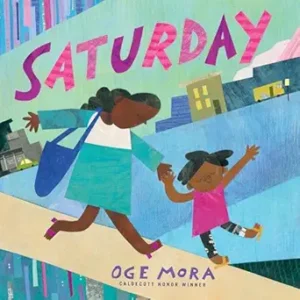
Ava and her mother treasure their Saturdays together. They have places to go and things to do, and the anticipation is part of the pleasure. Then one part of their special day after another goes wrong.
Oge Mora lets the disappointments pile up. When Ava’s mother reaches her limit, the story turns toward something tender: the day matters because they share it. Read it after an outing falls through, especially when you are disappointed, too.
What kids notice: Storytime, the salon, the picnic, and the puppet show do not unfold as Ava and her mother hoped. Children may recognize that awful feeling of hearing “not today” more than once.
Story snapshot: A mother and daughter set out for their much-loved Saturday routine. Setback after setback changes their plans, until Ava reminds her mother what is still possible between them.
Why this book helps: It shows that changing the plan does not erase the disappointment. Try asking, “Which part would you have been most sad to miss?” before brainstorming an alternative with your child.
The Rabbit Listened by Cori Doerrfeld

Taylor builds something wonderful with blocks, and then it comes crashing down. A parade of animals arrives with ideas about what Taylor ought to do next. Their suggestions do not seem to be what Taylor needs.
Finally, a rabbit stays close and listens. Before a child can begin again, they may need someone to witness the loss. Hold off on the clever solution for a page or two, and maybe at home as well.
What kids notice: The tower is gone. The other animals are eager to help, yet the quiet rabbit feels different. Ask your child which visitor they would want beside them.
Story snapshot: Taylor’s block creation is destroyed, and several animals offer different responses. The rabbit listens while Taylor makes room for all the feelings that come with the loss.
Why this book helps: It offers a model for the first step in adapting: presence. When a playdate gets canceled, you might start with “You really wanted today to happen” and let your child answer before proposing tomorrow.
The Camping Trip by Jennifer K. Mann
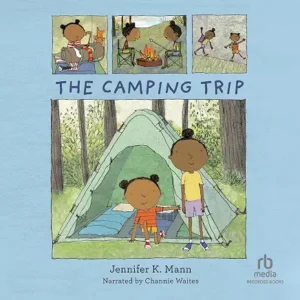
Ernestine is thrilled to go camping for the first time. She can picture the adventure, but the real outdoors has its own way of doing things. Being excited about something new does not mean every part of it will feel easy once you arrive.
Jennifer K. Mann gives Ernestine room to encounter the unfamiliar. This is a lovely choice before a trip or sleepover. It invites a child to ask for what they need while staying curious.
What kids notice: Ernestine’s excitement and her discomfort can coexist. Children who have loved the idea of a new experience and then missed home may see themselves here.
Story snapshot: Ernestine, a city child, heads out on her first camping trip. The wilderness feels different from what she imagined, and she works through the surprises of being away from familiar routines.
Why this book helps: It opens a conversation about flexible expectations. Before a first trip, ask, “What are you hoping for? What might feel strange? What could help if it does?”
The Koala Who Could by Rachel Bright, illustrated by Jim Field

Kevin the koala likes his tree and the familiar shape of his days. Other animals call to him from below, but staying where he is feels safer. Then change arrives whether Kevin has invited it or not.
This rhyming story makes a big feeling easy to see: sometimes a child clings to the old plan because the new one is still a mystery. Kevin is worth talking about with a child facing a new classroom, a different schedule, or a change they did not choose.
What kids notice: Kevin is comfortable in his tree even while the world below looks lively. They may notice his worry before they notice his eventual willingness to explore.
Story snapshot: Kevin keeps to his familiar perch until an unexpected change to the tree forces him into a wider world. He finds possibilities he could not see from where he had been holding on.
Why this book helps: It gives children a friendly character through whom to describe worry. Instead of telling them to embrace change, ask, “What would Kevin miss about his tree? What might he be curious about?”
A Perfectly Messed-Up Story by Patrick McDonnell
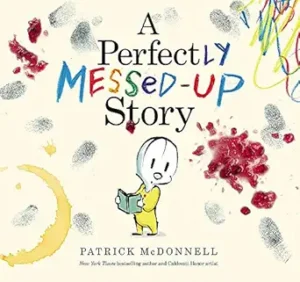
Little Louie expects his story to go beautifully. Then the pages become messy, and he is outraged that things are no longer going according to plan. His indignation is funny in the familiar way a child’s very serious frustration can be funny without being small.
Patrick McDonnell’s playful read-aloud lets you laugh together at a predicament that feels enormous to Louie. The story does not need its marks erased to be worth telling. This one works well when a child is convinced that one spill has ruined the whole project.
What kids notice: The page itself becomes part of the trouble. Louie notices every interruption, and children can enjoy seeing him react to it.
Story snapshot: Little Louie tries to tell a perfect story while unexpected messes keep interrupting it. After his frustration, he takes a breath and sees that the story still holds together.
Why this book helps: It makes room for humor after the initial upset. Later, when a drawing goes awry, ask whether the surprising mark could become part of the picture or whether your child would rather start again.
The Book of Mistakes by Corinna Luyken
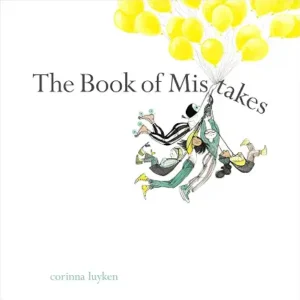
What happens when the line you drew was not the line you meant? In Corinna Luyken’s book, the artist does not simply hide every misstep. Accidental marks help change the picture, and the picture keeps growing.
Its sparse words invite you to linger over the illustrations. Look closely together and wonder what each new mark makes possible. A plan can change in the middle of making something, and the maker still chooses the next move.
What kids notice: A misplaced mark can become a new detail. The pages reward a second look as the artwork takes shape in unexpected ways.
Story snapshot: An artist folds accidental spots and awkward shapes into an evolving work of art. Each adjustment changes what the finished picture might be.
Why this book helps: It offers a gentle creative experiment. Draw an unplanned squiggle on a page of your own and ask, “What could this become?” Let your child decide whether to use it.
The Most Magnificent Thing by Ashley Spires

A girl has a clear idea for something magnificent, and she begins making it with her dog beside her. The work is harder than she expected. Attempts fail. Frustration builds. At last she is so angry that she quits.
The turn comes when her dog helps her take a walk. With some distance from the project, she can return and try again. This is a useful story for the child who feels that changing an approach means giving up on the idea. Sometimes the goal can stay while the method changes.
What kids notice: The girl has a picture in her head, but her materials do not cooperate. They may also notice that her break is part of the making, not the end of it.
Story snapshot: A young maker repeatedly struggles to build the thing she imagined. After stepping away with her dog, she returns to the project with a fresh perspective.
Why this book helps: It gives a concrete option for the stuck moment: pause. If a homework problem or building project has gone badly, you can ask, “Would a little walk help us see another way?”
When Things Aren’t Going Right, Go Left by Marc Colagiovanni, illustrated by Peter H. Reynolds
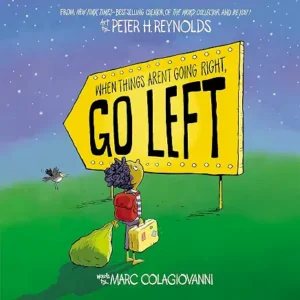
Some days feel as though every path leads to another snag. Marc Colagiovanni and Peter H. Reynolds play with that feeling through a child who chooses a different direction when things are not going right.
This is a more reflective read than a story about a canceled outing. Its simple image of turning offers a phrase your family can make its own. You need not tell your child that every problem has a happy detour. You can remind them that there may be another move available when they are ready to look for it.
What kids notice: The right-and-left wordplay makes the idea of changing course visible. Invite your child to point to the place where they would turn.
Story snapshot: When nothing seems to go right, a young narrator decides to go left. The book uses that change of direction to explore worry, perseverance, and personal choice.
Why this book helps: It turns an abstract skill into a shared prompt: “What might going left look like here?” A new route can mean a different activity, a smaller first step, or asking someone to help.
Put Your Child in the Heart of the Story
Books give your child a little distance from their own hard day.
They can worry about Kevin’s tree, laugh at Louie’s messy pages, or sit with Taylor’s fallen tower before they have words for their own disappointment. That distance often makes conversation feel easier.
A personalized Scrively story can bring the same idea closer. Imagine your child as the main character preparing a carefully planned backyard adventure. Rain changes everything. In the story, they are allowed to be upset; a friend listens; then they choose one small new possibility.
They see themselves moving through the change without needing to be cheerful from the start.
You can make that kind of story together in ordinary conversation, too. Ask your child to name the original plan, the feeling when it changed, and what the character might try next.
Let them choose whether the ending is funny, cozy, or still a little sad. The child remains the author of the next step.
When the Next Plan Changes
The next surprise may be another rainy afternoon, a friend who cannot come over, or a sandwich cut the wrong way. You do not have to turn every disappointment into a lesson. First, sit beside your child in what was lost. Then, when they are ready, ask what else the day could hold.
Adaptability is built in those ordinary moments. A child learns that the plan can fall apart, their feelings can be real, and the story can continue.