Children’s Books About Perseverance: The Long Way Around
Your child has tried to tie the same shoelace six times. The knot slips apart again.
Their shoulders rise, their face tightens, and the shoes suddenly become the worst shoes in the world. You can see how to fix it. You could reach over and finish in three seconds. But something bigger than a shoelace is happening here.
Children encounter a thousand little hills on the way to growing up: a word they cannot sound out, a friendship that needs repairing, a bicycle that refuses to stay upright.
Some hills are steep enough to bring tears. And when you love your child, watching them struggle can feel much harder than doing the thing yourself.
Perseverance is not about pushing through every difficulty or pretending frustration does not hurt. It is about learning that a difficult moment does not have to be the end of the story. Sometimes you try a different way. Sometimes you ask for help. Sometimes you rest, gather your courage, and return tomorrow.
These children’s books about perseverance give you gentle ways to talk about that long, winding process. Their characters make mistakes, change plans, practice, hesitate, and begin again. As you read together, your child may discover that taking the long way around can still take them somewhere wonderful.
8 Children’s Books About Perseverance, Practice, and Trying Again
No single story captures every kind of persistence. One child needs permission to make imperfect art; another needs to know that fear and determination can exist together. The following books show perseverance in different forms, making room for your child to recognize their own particular challenge.
The Most Magnificent Thing by Ashley Spires

When your child can picture exactly what they want to make but cannot get their hands to cooperate, this story will feel wonderfully familiar. Ashley Spires understands how quickly the excitement of a brilliant idea can become the fury of another failed attempt.
A girl and her dog set out to build something magnificent. The girl is certain it will be simple. Instead, she tinkers and adjusts until she is thoroughly fed up. A walk with her dog gives her the distance she needs to look at the project differently.
What kids notice: The girl gets really angry. That honest moment matters: your child does not have to feel cheerful about a challenge for perseverance to count.
Story snapshot: Repeatedly frustrated by her invention, a young maker takes a break, returns with fresh eyes, and finds a better path toward the thing she imagined.
Why this book helps: It opens a conversation about strategic pauses. After reading, ask which part of the girl’s process helped most: trying again, taking a walk, or seeing something useful in an earlier mistake.
Hana Hashimoto, Sixth Violin by Chieri Uegaki, illustrated by Qin Leng
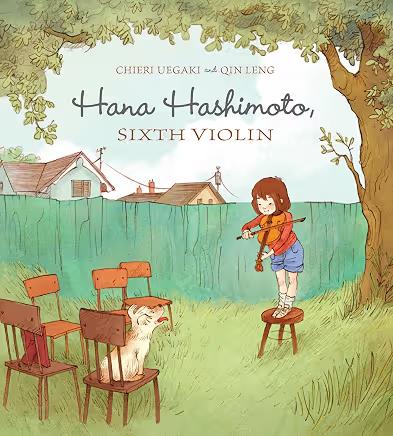
Some goals ask for more practice than your child has had time to give them. Hana signs up for a talent show after only three violin lessons, encouraged by memories of her grandfather’s beautiful playing. Her brothers think she is making a terrible mistake.
Rather than abandoning her plan, Hana practices each day. Her journey is as much about discovering what she can offer right now as it is about learning an instrument. The approaching performance makes her nervous, but it does not erase her determination.
What kids notice: Hana is a beginner in front of people who may expect expertise. Children who compare themselves with older siblings or more experienced friends may recognize that uncomfortable feeling.
Story snapshot: Inspired by her violin-playing grandfather in Japan, Hana prepares for a school talent show and finds an inventive way to share her music.
Why this book helps: It separates effort from perfection. Talk about how a child can be proud of showing up and sharing a developing skill without pretending they have already mastered it.
The Thing Lou Couldn’t Do by Ashley Spires
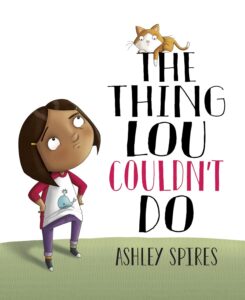
Lou loves adventures with her friends, right up until the adventure requires climbing a tree. Everyone else seems ready. Lou, who has never done it before, is suddenly full of excellent reasons to do something else.
Her imagination is lively, her excuses are funny, and her reluctance is deeply believable. This is a useful story for children whose first obstacle is not lack of ability but fear of discovering that something might be difficult.
What kids notice: Lou’s friends find the tree exciting while Lou finds it intimidating. The same challenge can feel very different to different children.
Story snapshot: When her friends turn a tree into a pretend pirate ship, Lou must decide whether to attempt a climb that scares her.
Why this book helps: Lou’s experience makes trying itself a meaningful step. Instead of asking your child to promise success, invite them to identify one small first move they might feel ready to make.
Jabari Jumps by Gaia Cornwall
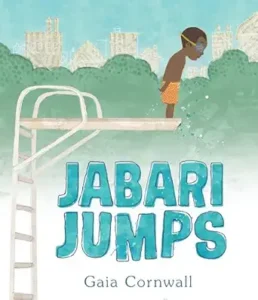
There is a particular kind of perseverance that happens before your feet even move. Jabari has finished his swimming lessons and is ready, at least in theory, for the high diving board. Yet he keeps finding reasons to wait a little longer.
His father does not shame him or rush him. He stays close, offering reassurance as Jabari works through the nervousness of trying something new. The pool becomes a small but powerful setting for learning to trust yourself.
What kids notice: Jabari can sound confident and still need to hold his dad’s hand. Children may recognize that bravery and fear can arrive together.
Story snapshot: At the swimming pool with his father and little sister, Jabari gathers the courage to attempt his first jump from the diving board.
Why this book helps: It models patient support rather than pressure. Ask your child what kind of encouragement helps when they face a big first: quiet company, a few deep breaths, or someone cheering nearby.
After the Fall: How Humpty Dumpty Got Back Up Again by Dan Santat

Everyone knows Humpty Dumpty fell. But what happens when the famous fall is over and the world still feels frightening? Dan Santat imagines the days afterward, when Humpty longs to return to the high wall where he watched birds but cannot bear the thought of climbing.
For children recovering from a disappointment, injury, or frightening experience, this story offers an especially tender version of perseverance. Getting back up does not necessarily mean going right back to the place that hurt you.
What kids notice: Humpty has been put back together, yet he is still afraid. Feeling better on the outside does not always make a difficult memory disappear.
Story snapshot: A bird-loving Humpty Dumpty gradually works toward facing the height that has kept him from something he loves.
Why this book helps: It leaves room for healing at a personal pace. You might ask what Humpty misses, what makes returning hard, and how he finds his way toward the things that matter to him.
A Splash of Red: The Life and Art of Horace Pippin by Jen Bryant, illustrated by Melissa Sweet
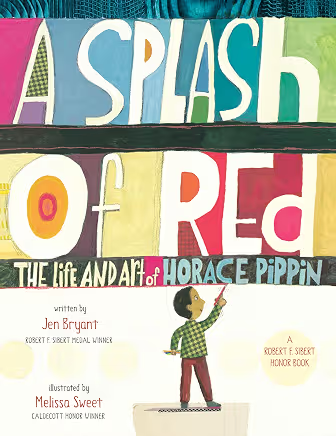
Perseverance becomes especially moving when children discover it in a real person’s life. Horace Pippin loved drawing from childhood, carrying that love with him even through the upheaval of World War I.
A wartime injury later made using his right arm difficult.
Jen Bryant and Melissa Sweet tell how Pippin patiently found his way back to creating art. His path was neither quick nor easy, and that makes his return to painting all the more meaningful.
What kids notice: Horace’s love of drawing persists even when his physical ability changes. Children see that a difficult interruption does not have to erase an important part of who someone is.
Story snapshot: This picture-book biography follows artist Horace Pippin from an early passion for drawing through wartime injury, painstaking practice, and renewed artistic work.
Why this book helps: It introduces persistence alongside adaptation. With older children, talk about how making progress may mean finding a new method instead of simply trying harder in exactly the same way.
The Dot by Peter H. Reynolds
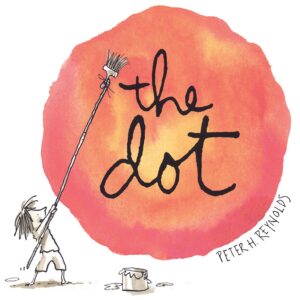
Sometimes the longest journey begins with a blank page. Vashti believes she cannot draw and sits stubbornly through art class. Her teacher invites her to start with the smallest possible mark, and that one dot opens a door Vashti did not know was there.
This short, generous story is particularly good for children who decide they are bad at something before they have had room to experiment. Its invitation is gentle: begin somewhere, and see what might happen next.
What kids notice: Vashti does not start with confidence or a masterpiece. She starts with a single imperfect mark, made in frustration.
Story snapshot: Encouraged by her teacher, a reluctant young artist makes one dot and discovers new possibilities for creativity and self-expression.
Why this book helps: It makes starting feel manageable. Hand your child a sheet of paper afterward and invite them to make one tiny mark, then another, without deciding in advance what the final picture needs to become.
The Curious Garden by Peter Brown
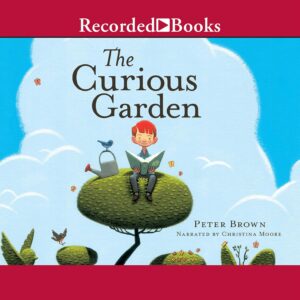
Not every hard thing can be solved in one afternoon. Some of the most important work happens little by little, while you keep showing up. Liam discovers a struggling garden in a gray city and begins caring for it without any guarantee that his effort will change much.
As the garden grows, so does the possibility of a greener city. Peter Brown’s changing illustrations allow children to see what steady attention can accomplish over time.
What kids notice: The transformation takes patience. The garden does not bloom everywhere the instant Liam decides to help it.
Story snapshot: A boy named Liam nurtures an overlooked patch of plants, and his care gradually helps green spaces spread through the surrounding city.
Why this book helps: It offers a quiet model of everyday perseverance. Plant a seed together, care for a houseplant, or revisit a small neighborhood project to show that steady effort may have results you cannot see yet.
Put Your Child in the Heart of the Story
It can be easier for your child to understand perseverance when they see a character struggle.
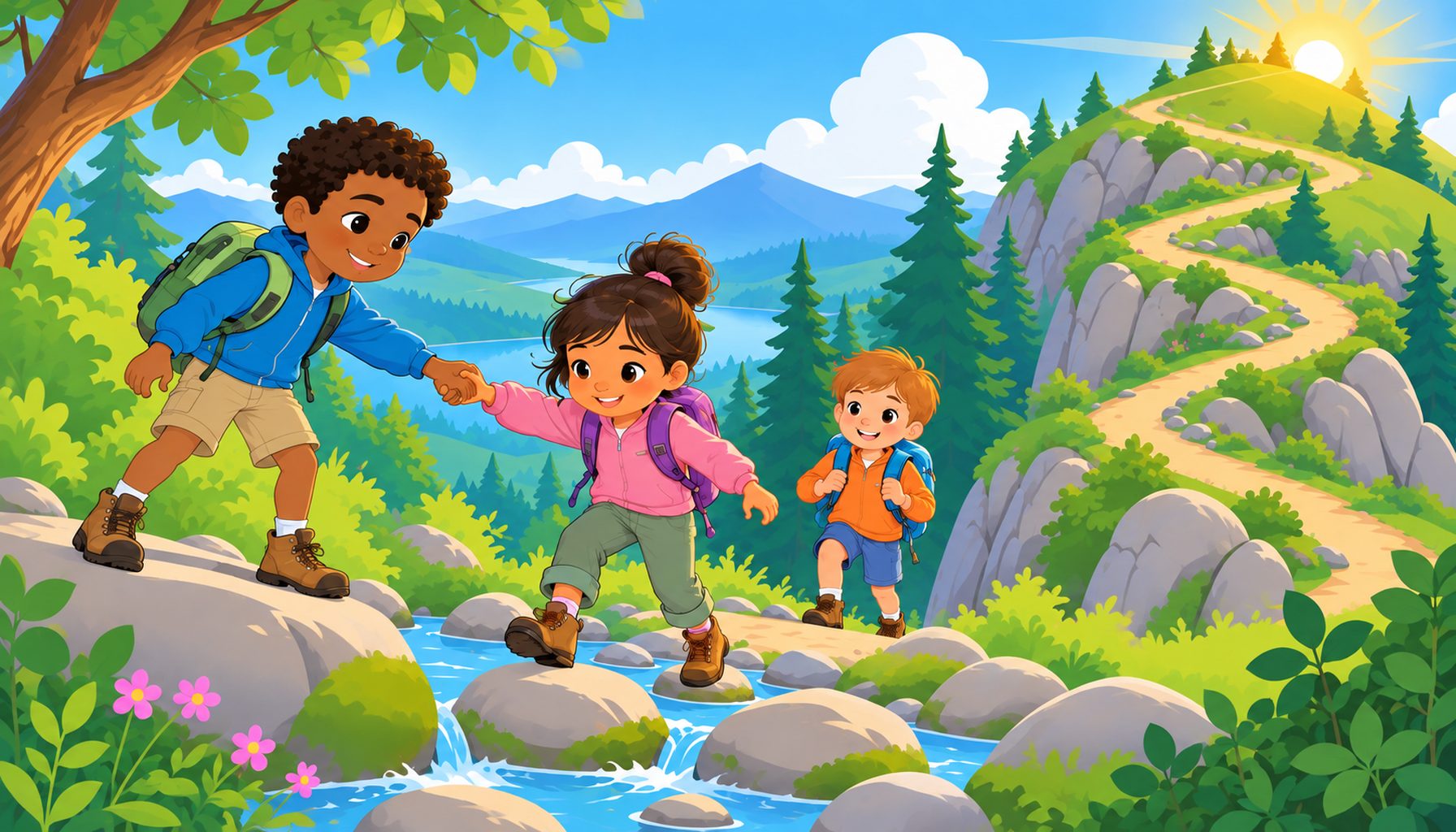
It can be even more personal when that character is them. Imagine a story in which your child sets off toward a mountain, finds the bridge washed away, and must decide what to do next.
Maybe they ask a friend for help. Maybe they discover another path. Maybe they take a rest beneath a tree before trying again.
A personalized Scrively story can place your child inside that kind of adventure, making room for their name, imagination, and the challenges they recognize from everyday life.
The goal is not to cast them as a hero who never stumbles. It is to let them picture themselves as someone who can meet an obstacle with patience, creativity, and support.
When you read together, pause at the difficult moment. Ask, “What would you try if you were there?” Their answer might surprise you. And the next time a real shoelace comes undone, you will have a shared story to return to.
The Long Way Is Still a Way Forward
As a parent, you cannot remove every steep hill from your child’s path. You can, however, make sure they do not have to climb alone. Celebrate the brave first attempt, offer a hand when needed, and help them recognize when a new strategy or a proper rest is the wisest next step.
One day, your child may tie that stubborn shoelace without thinking twice. They may barely remember how many tries it once required.
You will remember something more important: the moment they learned that struggling with a thing and being capable of doing it can belong to the very same story.