9 Children’s Books About Sportsmanship and Winning Gracefully
You know the moment. The game ends, one child celebrates, and another child’s whole body crumples. Maybe your child blames the referee, quits before the final whistle, or insists the rules were unfair. Perhaps they won—and the boasting that follows makes everyone else wish they had not played.
Wanting to win is not a character flaw. Competition can give children energy, focus, and the courage to stretch beyond what feels easy. The trouble begins when the result becomes the only part that matters. Then a missed goal can feel like a verdict, a teammate can become an obstacle, and an opponent can stop looking like a person.
Sportsmanship offers a wider definition of success. It asks children to compete wholeheartedly while playing fairly, noticing others, recovering from disappointment, and remembering why they came to the field in the first place. These children’s books about sportsmanship show that losing can teach, winning can be shared, and joy does not have to wait for first place.
As you read together, resist turning every story into a lecture. Let the humor, suspense, and frustration do their work. Your child may recognize themselves in a sore loser or a glory-hungry teammate before they are ready to say so aloud.
9 Children’s Books That Show Why Winning Isn’t Everything
This collection moves beyond a single message about shaking hands after a game. You will find stories about fair play, friendship, teamwork, honest effort, and the pleasure of participating. Ask what each character almost loses while trying to win. The answer may be trust, fun, integrity, or the chance to notice what another person contributes.
Bijan Always Wins by Adib Khorram, illustrated by Michelle Tran
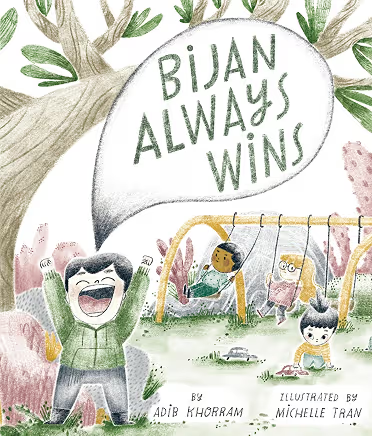
Bijan loves winning so much that almost anything can become a contest. Drawing, lunch, and even knowing the most about dinosaurs are opportunities to declare himself the champion. At first, his confidence is funny. Then his friends stop wanting to play.
What kids notice: Bijan can make himself the winner and still end up alone. His problem is not enthusiasm; it is treating every shared moment as proof that he is better than everyone else.
Story snapshot: After constant competitions push his friends away, Bijan must decide whether being first matters more than belonging. Reconnecting asks him to notice what play feels like for the people beside him.
Why this book helps: You can discuss bragging without shaming confidence. Ask, “How can you feel proud without making someone else feel small?” That distinction helps children celebrate effort while leaving room for another person’s joy.
Number One Sam by Greg Pizzoli
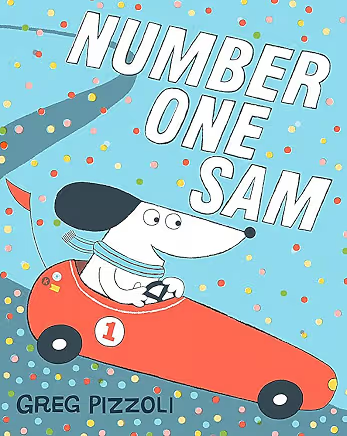
Sam is used to being the best race-car driver on the track. Winning is part of how he sees himself—until his talented best friend Maggie finishes ahead of him and second place suddenly feels enormous.
What kids notice: Sam’s disappointment creates a choice. He can protect his number-one identity, or he can act like the kind of friend and competitor he wants to be.
Story snapshot: Maggie’s success unsettles Sam during the big race. As the action unfolds, he finds an opportunity to place care above the finish order, redefining what a winning decision looks like.
Why this book helps: Young children often hear “I am a loser” inside “I lost this race.” Sam helps you separate identity from outcome: “The number tells where you finished today. It does not tell what kind of person you are.”
April & Mae and the Soccer Match by Megan Dowd Lambert, illustrated by Briana Dengoue
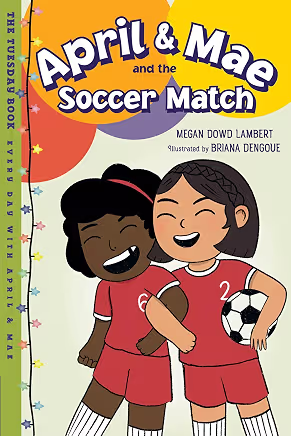
April likes playing soccer. Mae likes winning. When Mae slips in the mud and misses the goal that could have decided the match, her frustration follows her long after the game.
What kids notice: One missed goal grows into a larger belief for Mae: perhaps she is simply bad at soccer. April does not force cheerfulness. She stays close and helps her friend regain perspective.
Story snapshot: April reminds Mae that another game will come and that playing with friends can still be fun. Mud, laughter, and steady companionship slowly loosen the knot of disappointment.
Why this book helps: It models what to say when a child is hurting. Begin with connection: “You really wanted that goal.” Once the feeling is seen, your child may remember that one play does not define their ability.
Clack, Clack! Smack! A Cherokee Stickball Story by Traci Sorell, illustrated by Joseph Erb
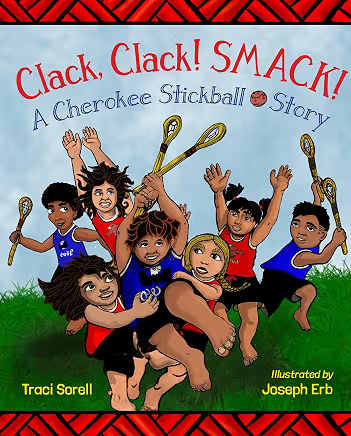
Vann loves playing stickball in the Cherokee Nation, but he is not the quickest player on his team. After missing an important shot, he worries that his size and speed make him less useful.
What kids notice: A player who is not the star can still change the game. The Cherokee value of gadugi—working together—shifts attention from individual glory to shared accomplishment.
Story snapshot: During a fast, noisy match, Vann stumbles and struggles to score. When he begins to read the game as a teammate rather than an isolated performer, he finds a meaningful way to help the Eagles.
Why this book helps: Children comparing themselves with faster peers need more than “try harder.” Ask, “What does your team need from you?” Contribution can look like passing, encouraging, defending, observing, or making space.
The Quickest Kid in Clarksville by Pat Zietlow Miller, illustrated by Frank Morrison
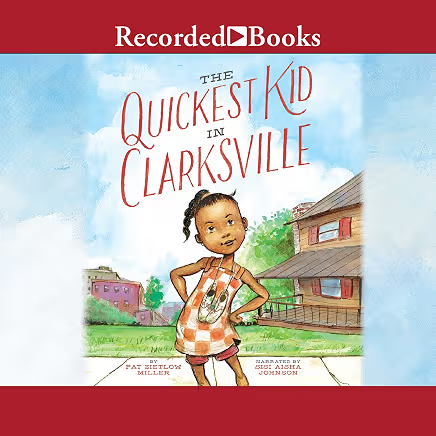
Alta is certain she is the fastest child in Clarksville. Then Charmaine arrives with shiny new shoes and confidence to match. Their rivalry unfolds as the town prepares to honor Olympic champion Wilma Rudolph.
What kids notice: Alta and Charmaine begin by measuring themselves against each other. Yet the most important race asks them to move in the same direction, carrying something neither could manage as well alone.
Story snapshot: The girls challenge each other before Wilma Rudolph’s homecoming parade. When the celebration needs their speed and determination, competition gives way to cooperation and shared purpose.
Why this book helps: Rivalry does not have to become hostility. Someone who stretches your child may also become a friend. Discuss the difference between wanting to beat a person and wanting both people to bring their best.
Do Not Eat the Game! by Matthew McElligott
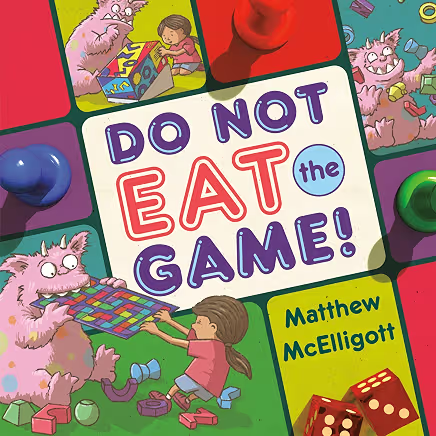
A board game sounds simple enough—until your fellow player is a monster. Turns become rowdy, the competition spills beyond the board, and even the game pieces may not be safe.
What kids notice: Fair play is made of small actions: waiting, following rules, respecting the other player, and staying engaged when the outcome is uncertain. The monster’s chaos makes every expectation visible.
Story snapshot: Players move through an increasingly wild game while learning how to compete with someone rather than against their dignity. Playing together becomes more memorable than the result.
Why this book helps: Humor is useful for family game-night meltdowns. Before playing, let your child name three “keep-it-fun” rules. When emotions rise, you can return to an agreement made while everyone was calm.
Soccerverse by Elizabeth Steinglass, illustrated by Edson Ikê
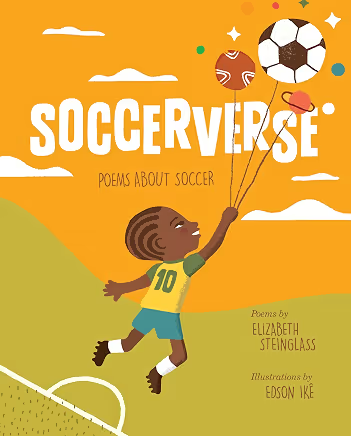
This playful collection of twenty-two poems looks at soccer from every angle: a coach’s encouragement, the ball’s movement, equipment, nerves, friendships, and dreams that continue after bedtime.
What kids notice: A sport contains far more than its score. There are sounds, rituals, mistakes, jokes, and small roles to enjoy whether children win, lose, start, or sit on the sideline.
Story snapshot: Rather than following one match, the poems move across many soccer experiences and perspectives. Together they capture competition, teamwork, loss, friendship, skill, and love of the game.
Why this book helps: Poetry redirects attention toward experience. After practice, replace “Did you win?” with “What moment do you keep replaying?” Your questions teach your child which parts of participation deserve to be remembered.
I Like Hoops by Juwanda G. Ford, illustrated by Jada Jeni Bennett
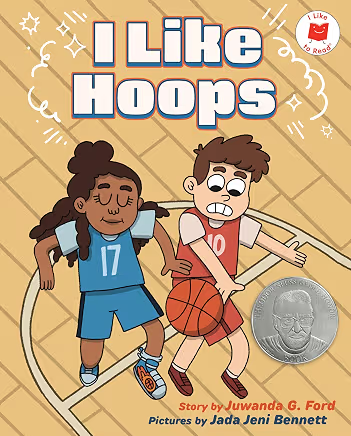
A diverse group of young players reaches the final moments of a close basketball game. The score is tied, the suspense is real, and every child must stay present through the last play.
What kids notice: Excitement and good sportsmanship can live together. The children care about the result, but effort and the shared rhythm of basketball remain visible throughout the game.
Story snapshot: Simple text carries beginning readers through a tense contest between first- and second-grade players. The game has a clear result while keeping the experience of playing at the center.
Why this book helps: Children do not need to pretend winning feels unimportant. They need to hold two truths: “I wanted to win” and “I can respect everyone who played.” This book offers a gentle place to practice both.
Out of Bounds by Fred Bowen
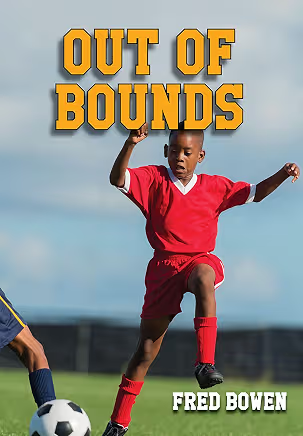
Eighth-grader Nate wants his soccer team to defeat its rivals. During a match, an opposing player is injured, and Nate must choose between pressing his advantage and sending the ball out of bounds.
What kids notice: Doing the sporting thing does not guarantee applause. Teammate Sergio is angry about the lost opportunity, leaving Nate to wonder whether fairness has hurt the team he tried to serve.
Story snapshot: Nate’s split-second choice becomes a larger test of peer pressure, loyalty, and winning the right way. Real examples from professional soccer connect his dilemma to the sport’s traditions.
Why this book helps: Older children can face the truth that integrity may cost something. Ask, “Would the win feel earned if Nate ignored the injury?” Sportsmanship becomes a value guiding action when the scoreboard tempts you otherwise.
Put Your Child in the Heart of the Story
A personalized Scrively story can let your child experience competition from the inside, where choices feel more complicated than a rule on the wall. Perhaps your child is a cloud-skater in a floating city, the captain of a backyard creature team, or a puzzle champion facing an impossible rival.
The turning point may happen before anyone reaches the finish. Your child might pause when a competitor falls, pass to a nervous teammate, admit that a point was unfair, or invent a way for everyone to play. The hero can still want to win. But the victory that lasts is choosing what kind of player—and person—they want to become.
Raise a Child Who Can Compete with Heart
Your child may not offer a graceful handshake five seconds after a painful loss. Regulation comes before reflection. Give them room to cool down, then name the full experience: “You worked hard, you wanted a different ending, and you are disappointed.” Understanding the feeling does not excuse blaming, taunting, or quitting on others. It makes better behavior possible.
Notice sportsmanship as specifically as you notice points. Praise the pass to an open teammate, the honest call, the encouraging word, and the choice to keep trying. Those are not consolation prizes. They shape how a child will handle classrooms, friendships, creative work, and every future moment when someone else shines.
Winning can be wonderful. Let it be wonderful—and let it be one part of a much larger story. When your child learns to play hard without hardening their heart, they leave every field with something worth keeping.