The Power of Welcome: 9 Children’s Books About Hospitality
You know the moment. Your child has settled into the best chair, claimed the last roll, or built a game that feels complete—and then someone new arrives. Making room sounds simple until it requires moving, sharing, waiting, or letting the shape of the moment change.
Hospitality is more than polished manners or a beautifully set table. For a child, it begins with noticing: Who is standing at the edge? Who does not know the rules yet? What could I move, explain, offer, or ask so this person feels they belong?
These stories let children experience welcome in kitchens, gardens, crowded cottages, and homes around the world. Some characters offer food. Others offer a chair, a tradition, or the courage to open a guarded heart. Together, they show your child that there is a difference between allowing someone to enter and helping them feel expected.
9 Children’s Books That Open the Door to Hospitality
As you read, notice the small details that make welcome real: a place cleared at the table, a favorite dish explained, a guest’s name learned, or a host willing to be changed by the visitor. You might ask, “When did this person begin to feel included?” The answer helps hospitality become something your child can recognize—and practice.
A Hundred Thousand Welcomes by Mary Lee Donovan, illustrated by Lian Cho
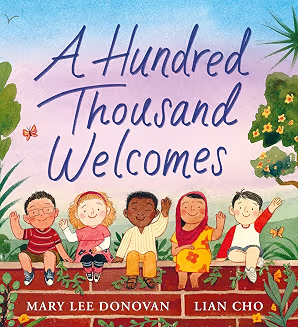
This joyful journey visits homes and gathering places around the world, weaving words for “welcome” from many languages into scenes of food, family, and friendship. The richly detailed pictures invite you and your child to linger over the many ways people say, “Come closer.”
What kids notice: Welcome does not look exactly the same everywhere. Shoes, clothing, rooms, food, and greetings vary, but open faces and generous gestures carry a message children can understand.
Story snapshot: A lyrical invitation moves across cultures and languages before families gather around one jubilant, page-filling banquet table. A pronunciation guide helps readers try the welcome words aloud.
Why this book helps: It makes hospitality feel both global and wonderfully doable. Let your child choose one new greeting, then talk about how tone, attention, and body language can make even a familiar word feel sincere.
The Welcome Chair by Rosemary Wells, illustrated by Jerry Pinkney
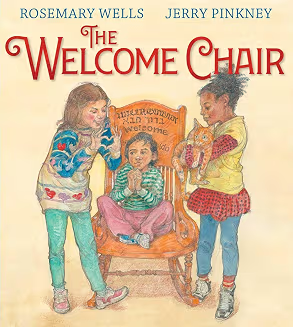
A wooden rocking chair travels through generations of immigrant families, carrying words of welcome carved in several languages. Inspired partly by a family journal, the story turns one sturdy object into a symbol of refuge, acceptance, and belonging.
What kids notice: Each family adds something to the chair without erasing what came before. Its history grows richer because many people have been held by it.
Story snapshot: Beginning with a young German Jewish woodworker in nineteenth-century America, the chair passes through families whose journeys involve hope, hardship, and new beginnings. Each leaves a language of welcome behind.
Why this book helps: It shows that making room can mean honoring a newcomer’s story, not asking them to discard it. Ask your child what object in your home could quietly communicate, “You are safe here.”
Always Room for One More by Sorche Nic Leodhas, illustrated by Nonny Hogrogian
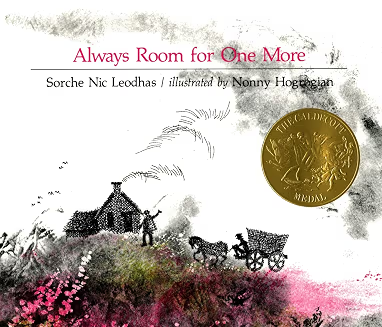
In a wee house in the Scottish heather, Lachie MacLachlan lives with his large family. Whenever a weary traveler passes on a stormy night, he offers the same generous answer: there is always room for one more.
What kids notice: The cottage grows comically crowded. Hospitality is not presented as effortless; elbows, instruments, dancing feet, and limited space are all part of the fun.
Story snapshot: Guest after guest squeezes inside until the lively gathering brings the house down—literally. The grateful travelers then help the family build a larger home.
Why this book helps: Its humor makes sacrifice approachable. You can ask, “What did Lachie give, and what did the guests give back?” Children see that healthy hospitality can become mutual care rather than one person doing everything.
Thank You, Omu! by Oge Mora

The scent of Omu’s thick red stew drifts through her neighborhood, and soon someone knocks. Then someone else. Omu offers each visitor a portion until her generous pot is empty just when she is ready to eat.
What kids notice: Every knock creates a choice. Omu does not know in advance that her kindness will return to her, and the growing parade of neighbors adds suspense.
Story snapshot: After sharing her entire meal, Omu hears one final knock. Her neighbors have returned with food of their own, turning her apartment into a grateful community feast.
Why this book helps: The story joins generosity with reciprocity. It gives you space to talk about receiving as well as giving: sometimes welcoming others means letting them contribute, say thank you, and care for you too.
Bilal Cooks Daal by Aisha Saeed, illustrated by Anoosha Syed
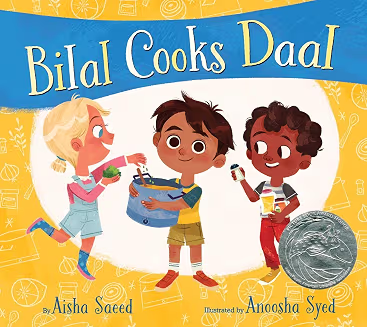
Six-year-old Bilal cannot wait to share his favorite South Asian lentil dish with friends who have never tasted it. Daal cooks slowly, so preparing the meal requires ingredients, teamwork, patience—and the vulnerable hope that his friends will like something he loves.
What kids notice: Bilal is proud and nervous at the same time. Offering a family food is not only sharing dinner; it is sharing a piece of yourself.
Story snapshot: Bilal helps his father prepare the pot as more children join the waiting. At last, everyone gathers to taste the warm, patiently simmered meal together.
Why this book helps: It frames curiosity as a form of hospitality. Encourage your child to ask respectful questions, try unfamiliar foods without making faces, and let a friend be the expert on their own tradition.
The Ugly Vegetables by Grace Lin
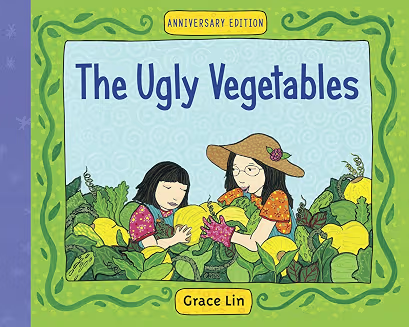
A young Chinese American girl envies her neighbors’ bright flower gardens. Her own garden grows dark vines, prickly stems, and vegetables she finds embarrassingly ugly—until her mother transforms the harvest into an aromatic soup.
What kids notice: The delicious smell crosses fences before anyone does. Soon neighbors arrive carrying flowers, curious about what is cooking.
Story snapshot: Mother and daughter welcome the neighborhood in to share Chinese vegetable soup. The next year, flowers and vegetables grow side by side across the backyards.
Why this book helps: Hospitality becomes an exchange of beauty rather than a performance of sameness. Your child can see that welcoming people often begins when someone proudly offers what their family does differently.
The Blue Table by Chris Raschka
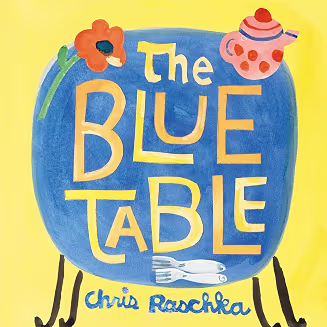
A blue table anchors an ordinary family day. Breakfast dishes, crayons, books, and household objects come and go. Then food is gathered, a leaf is added, and the table stretches in preparation for one more family.
What kids notice: The people are suggested through cups, plates, hands, and the traces of their activities. Children can become visual detectives, noticing how objects reveal care and connection.
Story snapshot: With spare words and overhead views, the table moves from daily routine to shared celebration as two families gather around an abundant meal in gratitude.
Why this book helps: It makes preparation part of the virtue. Before a guest arrives, invite your child to help add a chair, choose a cup, or clear a space. The physical act says, “We thought about you before you came.”
Stone Soup by Jon J Muth
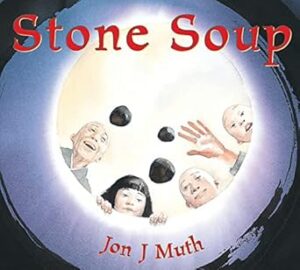
Three hungry travelers reach a war-weary village where fear has taught everyone to close doors and hide food. The visitors begin making soup from stones, gently awakening the villagers’ curiosity and willingness to contribute.
What kids notice: No household has to provide the whole feast. One person brings carrots, another something else, and small offerings become enough when combined.
Story snapshot: In this Chinese-set retelling of the traditional tale, a guarded village slowly opens. The shared pot grows into a banquet, and strangers become honored guests.
Why this book helps: It is especially useful for a child who worries they do not have enough to give. Hospitality may be one ingredient, one idea, one seat, or one friendly question. Belonging is built by participation.
Soul Food Sunday by Winsome Bingham, illustrated by C. G. Esperanza
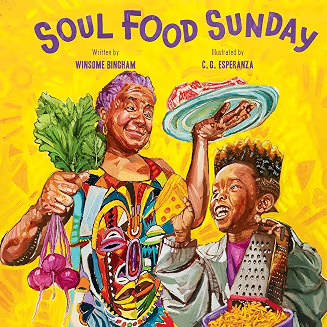
Every Sunday, family gathers at Granny’s for soul food. This time, her grandson is old enough to follow her into the kitchen and help prepare the feast, from cleaning greens to grating cheese and getting food ready for the grill.
What kids notice: The table does not fill itself. Love appears in noisy, sensory work—washing, chopping, seasoning, stirring, and learning from someone who has done it many times.
Story snapshot: Granny guides the boy through treasured dishes, and he adds a sweet contribution of his own before the extended family gathers to eat.
Why this book helps: It connects hospitality with competence and tradition. Give your child one real job before guests arrive. When their effort matters, they learn that welcome is something they can help create.
Put Your Child in the Heart of the Story
Hospitality becomes easier to understand when your child is not watching from the edge of someone else’s tale. In a personalized Scrively story, they can be the one who notices an unclaimed chair, hears the hesitant knock, or wonders whether a cherished family tradition will make sense to a newcomer.
The adventure might ask them to shift over, explain a game, prepare a favorite dish, or learn how a guest prefers to participate. The most powerful moment is small: your child sees another person relax because of something thoughtful they chose to do. That is how an abstract virtue begins to feel like a strength already living inside them.
A Bigger Table Begins with One Small Move
Your child does not need to become a perfect host. They will sometimes cling to their seat, forget to offer, or feel uneasy when a new person changes the group. Hospitality grows when you treat those moments as practice rather than proof of selfishness.
Name the welcoming actions you see. “You showed her where the cups were.” “You paused so he could join the game.” “You asked before serving.” Specific observations teach your child that welcome is built from attention, not grand gestures.
A table can be crowded and still feel lonely. It can also be simple, mismatched, and deeply warm. Each time your child moves over, grows curious, or makes it easier for someone to belong, the table becomes a little bigger. And so does their heart.