Is Your Child Losing a Bestie? 9 Kids Books About Growing Apart from a Friend
One day, your child’s friendship seems effortless.
The next, one friend has a new game, a new group, or a new way of being in the world. Your child may still be reaching for an old rhythm that no longer quite fits—and wondering what they did wrong.
Watching a friendship change can hurt you, too. You remember the child who once felt almost like part of your family.
You may want to repair the bond or promise everything will return to normal. Sometimes it does. Sometimes it does not.
Graceful change does not ask your child to pretend they are fine. It helps them honor what was real, name what is different, and loosen their grip without turning love into blame.
A friendship can matter deeply even if it changes shape. These books give you a gentle place to begin that conversation.
9 Children’s Books for When Friendship Changes
Some of these friends move away. Others discover that distance can happen without a moving truck. Together, the stories make room for missing someone, staying connected, and opening the door to somebody new. Follow your child’s questions; they may also be telling you about themselves.
Sourgrass by Hope Lim, illustrated by Shahrzad Maydani
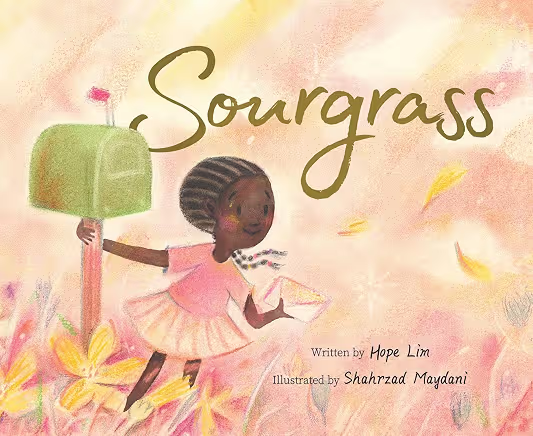
Sofia and May meet each day at the door in the fence between their yards. Their favorite discovery is a field of sourgrass, where ordinary afternoons become the kind of memories children believe will last forever. Then May moves away, and the easy closeness of neighboring yards disappears.
What kids notice: The sourgrass returns with the seasons, even after the field looks bare. Children can feel how a place, taste, or tiny object holds the memory of someone who is no longer part of every day.
Story snapshot: As spring comes back, Sofia finds comfort in the sourgrass and in what her friendship gave her. A note from May arrives, while the fence door also opens toward a possible new friend.
Why this book helps: The ending does not force Sofia to choose between remembering May and welcoming someone else. It shows your child that a new connection is not a betrayal. A heart can preserve one friendship while growing room for another.
Friends Beyond Measure by Lalena Fisher
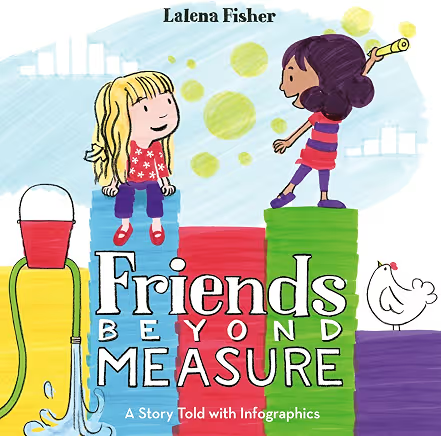
Ana and Harwin map their friendship with Venn diagrams, timelines, charts, and graphs. Their differences—including the ways ADHD and dyslexia shape their experiences—sit beside a joyful collection of everything they share. The visual language makes an invisible bond feel wonderfully measurable.
What kids notice: More than one feeling can be true. A child can want a friend to have a wonderful new life and still wish that life were not taking them somewhere else.
Story snapshot: The friends use infographics to look back on their adventures and imagine ways their relationship can continue across the distance. The same creativity that documented their closeness helps them face change.
Why this book helps: It gives analytical children an especially inviting route into emotion. You might draw a “feelings graph” together, letting sadness, anger, relief, jealousy, and hope appear without deciding which one your child is supposed to feel.
The Long Ride Home by Stephanie Graegin
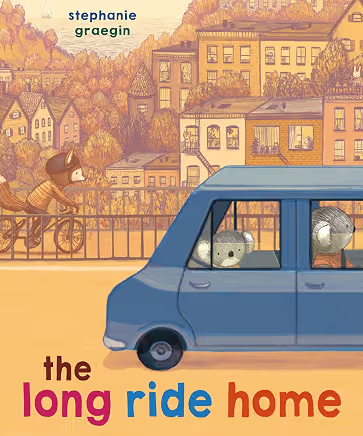
From the back seat of a car, Little Koala watches familiar places slide past the window. Each one carries a memory of her best friend: an ice-cream shop, a library, a bike ride, a day at the beach. The route home becomes a journey through what they shared.
What kids notice: Memories arrive through senses and places. A smell, a scar, or a street corner can make a faraway friend feel close for a moment.
Story snapshot: Koala’s ride gathers a friendship’s small history into a letter. By the end, she can miss her friend and trust that their closeness still has meaning.
Why this book helps: The story makes remembrance active rather than stuck. Invite your child to create a memory route of their own. They do not need to erase the past in order to keep moving through the present.
Evelyn Del Rey Is Moving Away by Meg Medina, illustrated by Sonia Sánchez
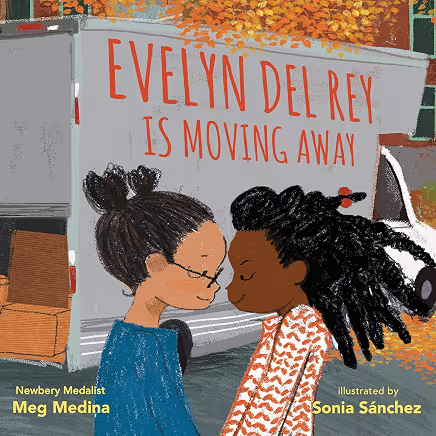
Daniela and Evelyn live in twin apartments across the street from each other. On moving day, while a truck swallows the furniture, the girls squeeze one last burst of play into rooms filled with boxes. Their neighborhood is still theirs, but only for a few more hours.
What kids notice: Play and grief can happen in the same room. The girls laugh, invent, and bounce while the evidence of change surrounds them.
Story snapshot: Daniela narrates the final day with her número uno friend, from their familiar games to the moment Evelyn must leave. A glimpse ahead shows that the bond remains part of Daniela’s life.
Why this book helps: Your child may need permission to enjoy a last day without feeling that joy cancels sadness. This story shows that a meaningful goodbye is not perfect wording; it is attention, honesty, and being fully there.
Paper Planes by Jim Helmore, illustrated by Richard Jones
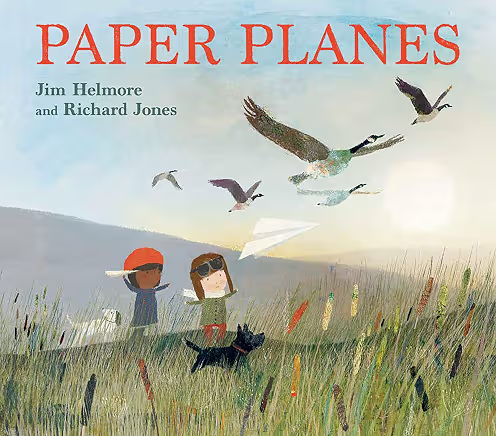
Neighbors Mia and Ben share a dream: to build a paper plane that can fly across their wide lake. When Ben moves away, the project that once joined them becomes tangled with Mia’s sense of abandonment.
Ben sends a model plane, but Mia’s hurt is bigger than her readiness to receive it. Slowly, imagination helps her see that collaboration does not have to look the way it did before.
What kids notice: Missing someone can come out as anger. A child may reject a message or gift not because the friendship meant too little, but because it mattered so much.
Story snapshot: Mia repairs and adapts the plane Ben sent. Across distance, the friends continue the shared creation they began beside the lake.
Why this book helps: It makes room for rupture before reconnection. You can tell your child, “You do not have to feel grateful right away.” Graceful change grows when feelings are allowed to move at an honest pace.
A Year with Marmalade by Alison Reynolds, illustrated by Heath McKenzie
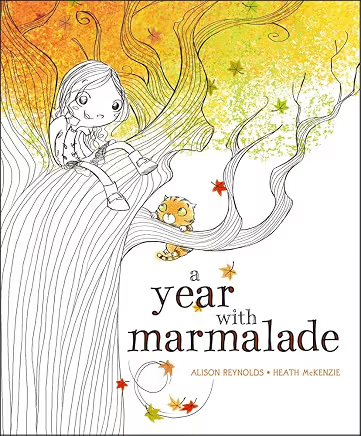
When Maddy moves away, she asks Ella to care for her cat, Marmalade. Ella tries apple picking, puddle stomping, and ice skating, but every pleasure seems dimmer without her best friend beside her.
Marmalade is grieving, too. Over the turning seasons, girl and cat stop mourning separately. Their companionship does not replace Maddy; it gives loneliness somewhere warm to rest.
What kids notice: Change takes time. Ella does not wake up cheerful the morning after the move, and nobody rushes her through a tidy lesson.
Story snapshot: A full year passes as Ella and Marmalade gradually draw closer. The seasons quietly mark how sorrow softens and a different kind of friendship begins.
Why this book helps: Children often worry that feeling better means they did not care enough. This story says otherwise. Healing can honor the person who left, and new affection can grow beside the old.
Say Goodbye… Say Hello by Cori Doerrfeld
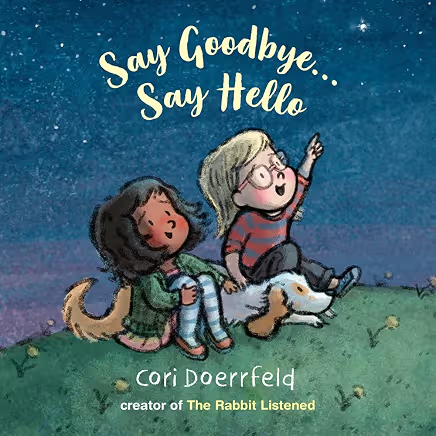
Life keeps asking children to cross small thresholds: goodbye to a parent at the bus, goodbye to a finished snowman, goodbye to a beloved pet, and eventually goodbye to a close friend who moves. Each ending carries its own weight.
The book pairs those losses with beginnings—not as instant replacements, but as doors that become visible after a goodbye.
What kids notice: Goodbyes come in many sizes. Practicing with ordinary endings can give children language for the larger ones.
Story snapshot: Two friends move through shared ups and downs until distance separates them. Even apart, their friendship matters, and life keeps offering fresh hellos.
Why this book helps: The repeated pattern offers reassurance without promising that every relationship stays unchanged. Ask your child what they are saying goodbye to—and what they may not be ready to say hello to yet.
Birdsong by Julie Flett
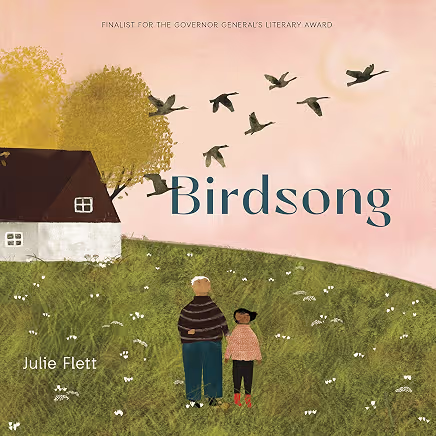
After Katherena moves to the country, she feels lonely until she befriends Agnes, an elderly artist next door. Across the seasons, they share art, nature, stories, and words from Katherena’s Cree language. Their difference in age does not diminish their closeness.
As Agnes grows ill, their friendship must change. Katherena cannot keep every shared ritual exactly as it was, but she can bring beauty and care into the new reality.
What kids notice: Friendship can belong to a season and still be whole. The natural world changes around Katherena and Agnes, reflecting growth, illness, and return.
Story snapshot: Katherena fills Agnes’s room with drawings when her neighbor can no longer meet her as before. What they love together becomes Katherena’s way of staying close.
Why this book helps: It broadens the idea of outgrowing. Sometimes nobody chooses the change, and love looks like adapting instead of insisting. Your child sees that care can mature when circumstances alter a relationship.
Lubna and Pebble by Wendy Meddour, illustrated by Daniel Egnéus
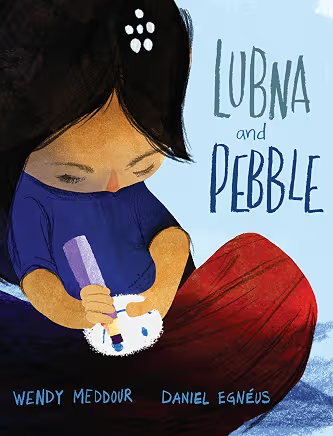
In a refugee camp called the World of Tents, Lubna finds comfort in a pebble she gives a smiling face. Then Amir arrives alone and frightened. Lubna offers him friendship, with Pebble always nearby.
When Lubna’s family learns they can leave, she faces a tender decision. Moving toward safety means saying goodbye to Amir, who must remain behind.
What kids notice: Lubna does not stop loving Pebble when she gives it to Amir. The gift carries her care into a place where she can no longer stay.
Story snapshot: Lubna passes her treasured source of comfort to the friend who needs it next. The goodbye is painful, generous, and grounded in the children’s resilience.
Why this book helps: This story places friendship change within displacement and uncertainty, so it deserves a thoughtful reading. It shows that leaving does not always mean choosing someone else. Sometimes love is expressed through what we entrust to the person who remains.
Put Your Child in the Heart of the Story
When a friendship changes, your child may tell the story as proof that they were not interesting, lovable, or loyal enough.
A personalized Scrively story can gently offer another frame. Your child can be the main character who notices the distance, feels the ache, and discovers that changing relationships do not reduce their worth.
The story does not need to reunite everyone forever. Perhaps your child saves a shared memory, speaks one honest sentence, or finds the courage to enter a new game. Personalization can make that next step feel emotionally reachable while respecting the real friendship rather than rewriting it.
Let the Friendship Be Real, Even If It Changes
You do not have to label the other child unkind or convince your child to “move on.” Begin closer to the truth: “You miss how it used to feel.”
If there is conflict, help them seek clarity. If the distance is mutual, help them release the friendship without ridicule, gossip, or a dramatic final verdict.
Some friends circle back. Some become an occasional wave in the hallway. Some remain bright in memory while new people step closer. Your child’s task is not to make every friendship last forever. It is to carry tenderness forward—to be grateful without clinging, sad without becoming cruel, and brave enough to say hello when the next door opens.