The Gentle Boundary: How to Teach Your Child the Power of Self-Advocacy
You have probably witnessed this exact moment. You are watching your child navigate the playground or a busy playdate.
Suddenly, another child grabs their favorite toy. Perhaps a friend stands just a little too close.
Your child freezes.
Their shoulders tense up. They look across the room at you with wide, unsure eyes. They are silently begging you to intervene and fix the uncomfortable situation.
It is incredibly tempting to swoop in and save them. We all want to protect our kids from discomfort.
However, constantly rescuing them prevents them from building a crucial emotional muscle. Ultimately, they need to learn how to stand up for themselves.
Self-advocacy is a massive skill for a small human. It requires a deep understanding of their own worth. Furthermore, it demands the courage to speak up when their boundaries are crossed.
Teaching a child to set a gentle boundary does not mean teaching them to be unkind. In fact, it is the exact opposite.
Clear boundaries are the foundation of healthy, respectful friendships. When children know how to express their limits, they feel safe.
Consequently, when they feel safe, they can play more freely and love more openly. Fortunately, you do not have to teach this massive concept with a boring lecture.
Books are the perfect, gentle teachers for this exact challenge. Beautiful stories can hand your child the exact words they need.
They provide safe, relatable scenarios where characters practice saying “no” with confidence.
Most importantly, these books show children that their voice matters. Let’s dive into some incredible, unique stories that will help your child find their voice and set their boundaries with grace.
Don’t Hug Doug (He Doesn’t Like It) by Carrie Finison
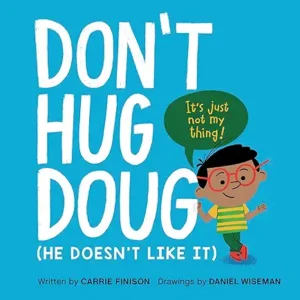
This book is an absolute masterpiece for teaching bodily autonomy.
Doug is a cheerful, fun-loving kid who loves a lot of things. He loves rock collecting, drawing, and high-fives. However, he absolutely does not like hugs. The story follows Doug as he navigates a world filled with well-meaning people who constantly want to squeeze him.
The tone is incredibly upbeat and hilarious.
It never makes Doug feel weird or broken for disliking physical affection. Instead, it normalizes his preferences completely. Furthermore, it empowers him to clearly state what he needs without apologizing for it.
What kids notice: Children immediately notice the funny, exaggerated reactions of the adults in the book. They laugh at the silly situations. Most importantly, they notice that Doug is never punished or scolded for simply saying “no.”
Story snapshot: Doug encounters various friends and family members who assume he wants a hug.
He calmly and confidently declines each one. Instead, he offers alternative greetings like a high-five or a fist bump. Ultimately, he teaches everyone around him how to respect his physical boundaries.
Why this book helps: This book is profoundly helpful because it removes the guilt from boundary-setting. Many children are taught to hug relatives out of politeness.
Consequently, they learn to ignore their own physical discomfort to please adults.
This story flips that narrative completely. It teaches your child that they are the sole boss of their own body.
Furthermore, it gives them practical, polite alternatives to physical affection. They learn that they can still be kind and loving while maintaining a firm physical boundary.
Say Something! by Peter H. Reynolds
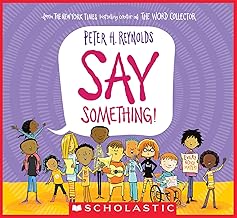
Peter H. Reynolds is a genius at breaking down massive emotional concepts into simple, beautiful art.
This book focuses on the broader concept of using your voice.
It explores how self-advocacy is not just about saying “no.” It is also about speaking up for your ideas, your art, and your beliefs.
The illustrations are sweeping and inspiring. The prose is poetic but incredibly accessible for young readers. It shows children that there are many different ways to make themselves heard in a loud world.
What kids notice: Kids are drawn to the diverse characters and the vibrant, expressive speech bubbles. They notice that speaking up does not always require a loud, booming voice. Sometimes, it just requires a brave heart.
Story snapshot: The narrative follows several different children as they find unique ways to express themselves. One child speaks up through planting a garden. Another speaks up through painting a canvas. Ultimately, they all learn that the world needs their specific, unique contribution.
Why this book helps: Self-advocacy can feel intimidating for quiet or introverted children. This book is a gentle, affirming hug for those exact kids. It expands the definition of advocacy.
Therefore, it helps children realize that they do not have to change their personality to be powerful. It teaches them that setting a boundary or sharing a thought can be done quietly, creatively, and uniquely. Ultimately, it builds the deep internal confidence required to stand firm in their own identity.
I Can Say No by Jenny Simmons
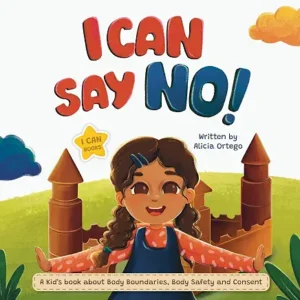
This book is a direct, empowering anthem for children learning to navigate peer pressure.
It tackles the everyday situations where kids feel obligated to go along with the crowd.
The text is rhythmic, punchy, and incredibly fun to read aloud.
It covers everything from silly preferences to serious safety boundaries.
The overarching message is clear, bright, and unapologetic. Saying “no” is a superpower, and every child has it.
What kids notice: Children love the bold, confident posture of the main character. They notice the specific, relatable scenarios, like being asked to share a toy they aren’t ready to part with. They appreciate the straightforward, practical language.
Story snapshot: A confident young girl walks the reader through various moments in her day where she has to set a boundary.
She says no to eating food she dislikes. She says no to playing a game that feels unfair. She even says no to keeping unsafe secrets. Through it all, she remains proud and self-assured.
Why this book helps: Children often equate saying “yes” with being a good friend. Consequently, they often compromise their own comfort to keep the peace. This book directly attacks that people-pleasing instinct.
It helps your child understand that a healthy “no” is actually a beautiful thing. It protects their energy, their safety, and their joy. By providing clear examples, it acts as a mental rehearsal space. When your child faces a similar situation in real life, they will already have the words ready to go.
Yes! No! A First Conversation About Consent by Megan Madison
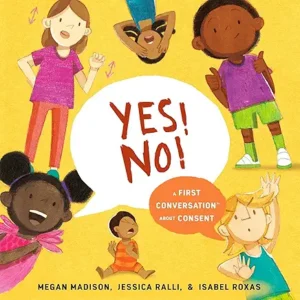
This is a groundbreaking, modern book that tackles the concept of consent with incredible clarity.
It is designed for early childhood, meaning it uses simple, non-threatening language.
It breaks down the complex idea of mutual agreement into bite-sized, understandable pieces.
The artwork is inclusive, warm, and inviting.
It creates a safe space for parents and children to discuss a topic that is often difficult to approach. It is an essential toolkit for modern parenting.
What kids notice: Kids notice the interactive questions posed directly to the reader. They enjoy the clear, distinct examples of checking in with a friend before touching them or joining their game.
Story snapshot: The book explores various everyday interactions, from tickling to playing with shared toys. It explains that our bodies belong to us. It clearly illustrates how to ask for permission. Furthermore, it shows what to do when someone else says “no” to us.
Why this book helps: Self-advocacy is a two-way street. A child must learn to set their own boundaries. However, they must also learn to respect the boundaries of others.
This book beautifully connects those two concepts. It helps your child develop a deep, ingrained respect for consent.
When they understand that they have the right to govern their own space, their self-advocacy flourishes. Most importantly, it gives you, the parent, a shared vocabulary to use during tricky playdate moments.
Personal Space Camp by Julia Cook
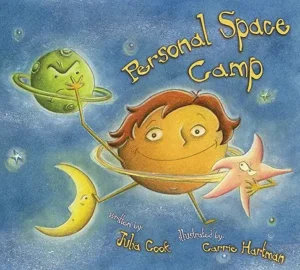
Julia Cook is famous for addressing specific behavioral challenges with humor and grace. This book tackles the classic problem of the “space invader.” We all know a child who loves to lean, bump, and crash into others. This story addresses that tendency with deep empathy.
It introduces the concept of the “personal space bubble.”
This visual metaphor is incredibly sticky for young minds. It transforms an abstract social rule into a concrete, easy-to-understand game.
What kids notice: Kids instantly latch onto the idea of an invisible bubble surrounding their body.
They find Louis, the main character, incredibly relatable and funny. They notice how his lack of boundaries accidentally frustrates his friends.
Story snapshot: Louis is a boy who loves outer space. However, he has no concept of personal space.
He constantly crowds his classmates and trips over their belongings. His teacher decides to send him to “Personal Space Camp.” There, he learns how to measure his bubble and respect the bubbles of his peers.
Why this book helps: For children who struggle with self-advocacy, dealing with a “space invader” is a nightmare. T
hey often feel overwhelmed but lack the words to stop the intrusion. This book gives them the perfect, neutral language. Instead of saying, “You are being annoying,” they can confidently say, “You are in my space bubble.”
It depersonalizes the conflict. Furthermore, it empowers them to clearly define their physical limits without escalating the situation into an argument.
Speak Up by Miranda Paul
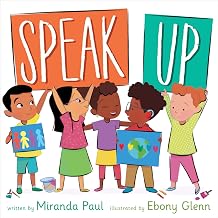
This book is a vibrant, energetic celebration of everyday activism.
It focuses on how small voices can make a massive difference in a community. It moves self-advocacy beyond just protecting oneself. It shows how speaking up can actually protect and uplift others.
The illustrations are bustling and full of life. The text is rhythmic and engaging. It perfectly captures the chaotic, beautiful energy of a diverse elementary school.
What kids notice: Children notice the wide variety of situations where kids use their voices. They see kids speaking up about a misspelled name, a broken rule, and a lonely classmate. They realize that self-advocacy happens everywhere.
Story snapshot: The narrative follows a diverse group of children throughout their school day. It shows them encountering small injustices and everyday problems. In each scenario, a child chooses to speak up.
Their small acts of bravery ripple outward, creating a kinder, fairer environment for everyone.
Why this book helps: Sometimes, self-advocacy feels selfish to a sensitive child. They might worry that standing up for their needs makes them “bossy.” This book beautifully dismantles that fear.
It proves that using your voice is an act of profound community care. It helps your child see that their voice is a tool for building a better world. When they learn to advocate for a fair turn on the swings, they are practicing the exact skills they need to become strong, empathetic leaders later in life.
Will Ladybug Hug? by Hilary Leung
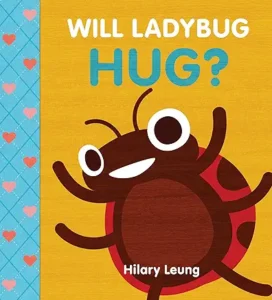
This is a brilliant, deceptively simple board book that packs a massive emotional punch.
It is perfect for toddlers and preschoolers who are just beginning to understand physical boundaries. The premise is incredibly straightforward, but the execution is flawless.
It uses adorable animal characters to model consent. The tone is light, cheerful, and entirely free of judgment. It is the perfect introduction to self-advocacy for the youngest readers.
What kids notice: Toddlers love the bold, colorful animal illustrations. They notice the clear facial expressions. They easily recognize which animals are excited for a hug and which ones are backing away.
Story snapshot: Ladybug is heading out on a trip. She wants to hug all of her friends goodbye. She asks each friend for a hug. Some friends enthusiastically say yes. However, one friend, Sheep, does not want a hug. Ladybug cheerfully accepts this boundary and offers a high-five instead.
Why this book helps: You cannot start teaching boundaries too early. This book normalizes the concept of asking before touching.
It shows children that a “no” is not a rejection of friendship. It is simply a physical preference in that specific moment.
By seeing Ladybug happily accept a boundary, your child learns that they do not need to feel guilty for declining physical touch. It builds a foundational layer of self-respect that will serve them well into their school years.
Stand Tall, Molly Lou Melon by Patty Lovell
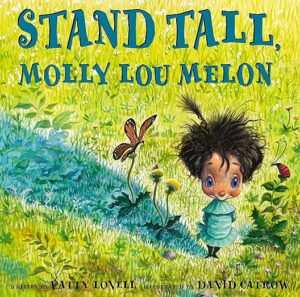
This is an absolute classic in the realm of self-confidence and advocacy.
Molly Lou Melon is a tiny girl with a big voice, buck teeth, and a profound sense of self-worth.
She is the ultimate role model for a child who feels a little bit different.
The story is deeply heartwarming and incredibly empowering. It focuses on the internal strength required to face a bully. It is a beautiful testament to the power of a supportive family.
What kids notice: Kids are instantly drawn to Molly Lou’s quirky appearance and unshakeable confidence. They notice how the school bully, Ronald Durkin, tries to tear her down. Most importantly, they notice that his insults simply bounce right off her.
Story snapshot: Molly Lou Melon’s grandmother taught her to walk proud, smile big, and sing loud.
When Molly Lou moves to a new town, she encounters a boy who makes fun of her differences. Instead of shrinking away, Molly Lou uses her grandmother’s advice. She advocates for her own worth by confidently embracing exactly who she is.
Why this book helps: Self-advocacy is impossible without self-love. If a child does not believe they are worthy of respect, they will never demand it from others.
This book is a masterclass in building unbreakable self-worth. It teaches your child that their unique traits are their greatest strengths.
When a child internalizes Molly Lou’s fierce confidence, they become immune to casual cruelty. They learn to stand tall, set their boundary, and walk away from anyone who refuses to treat them with kindness.
Put Your Child in the Heart of the Story
Books are truly incredible teachers. However, reading a book with your own name in it is pure magic. Therefore, Scrively helps you create custom children’s books easily.
You can build a story where your child is the brave protagonist. For instance, they can practice setting boundaries and speaking up right on the page. Ultimately, this places them at the very heart of their own emotional growth.
Navigating early childhood boundaries is rarely smooth. In fact, learning to self-advocate will always cause some initial friction. However, every awkward moment is a profound chance to learn.
By reading these stories, you give your child the right words. Most importantly, you teach them that true friendship means having the courage to speak their truth. Finally, they will learn to be beautiful, confident advocates for their own hearts.