The Gentle Wave: Navigating Friendship Mistakes and Accidents with Grace
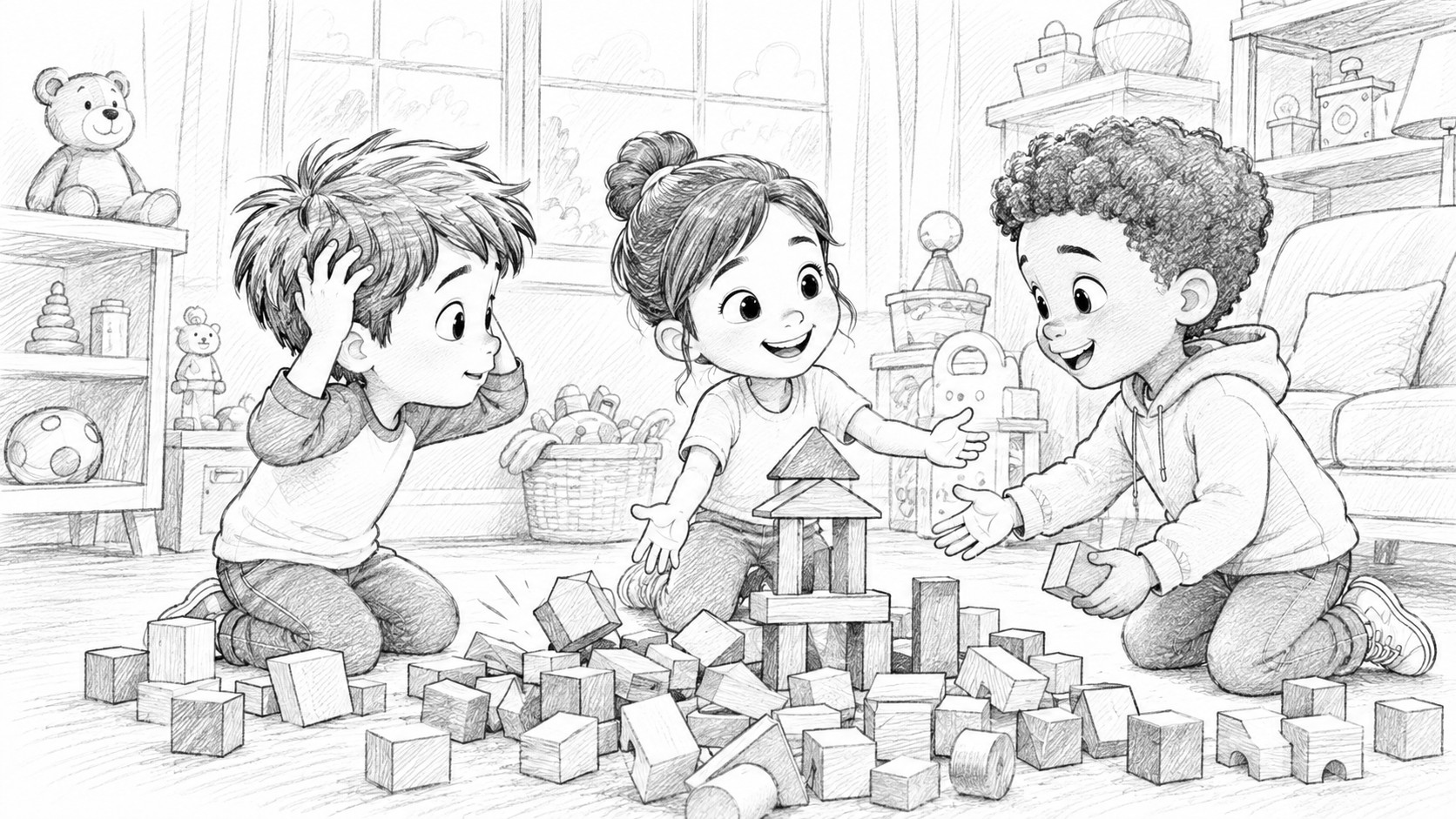
Imagine the playroom is quiet, filled only with the happy hum of two kids deep in an imaginary world.
They have spent the last hour building a sprawling, magnificent city out of wooden blocks.
Then, it happens. A sudden turn, a clumsy elbow, and the entire tower comes crashing down in a loud, chaotic clatter.
The silence that follows is heavy. You can practically see the anger rising in your child’s chest, ready to erupt over an honest mistake.
These clumsy, accidental moments are the true testing grounds of early childhood friendship. It is incredibly hard for a young, developing mind to separate intent from outcome.
To them, a broken tower is a ruined day, regardless of whether their friend meant to knock it over or not. The instinct to shout, blame, or retaliate is powerful and overwhelming.
This is precisely where we must introduce the profound virtue of grace.
Grace is that gentle wave that washes over the stinging feeling of a ruined game.
It is the deep breath your child takes instead of yelling in frustration.
Most importantly, it is the quiet, beautiful strength required to look at a friend and say, “It is okay, I know you did not mean to.” Teaching grace in these messy, unpredictable moments gives your child a lifelong emotional superpower.
You cannot always protect your child from the friction of friendship. Eventually, someone will spill juice on their favorite drawing.
Alternatively, they will be the one who accidentally steps on a friend’s toy. Therefore, literature offers a safe, comforting space to practice these exact scenarios before they happen.
We have curated a list of beautiful, unique stories that tackle the clumsiness of human connection. These books show children how to extend grace, offer sincere forgiveness, and ride the gentle wave of social repair.
Horrible Bear! by Ame Dyckman
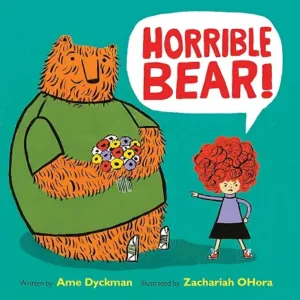
This book is loud, energetic, and incredibly relatable for any child who struggles with big, explosive feelings.
It tackles the volatile nature of early childhood accidents with brilliant humor and deep empathy. It is the absolute perfect antidote to the sudden, red-faced anger of a disrupted playdate.
The bright illustrations and exaggerated emotions make it an absolute joy to read aloud.
Furthermore, it completely normalizes the fact that we all lose our temper sometimes when our things get broken.
What kids notice: They are completely captivated by the little girl’s dramatic, shouting tantrums and the bear’s genuinely confused, innocent reactions.
Story snapshot: A little girl is furious when a massive bear accidentally breaks her kite. She screams at him, calls him horrible, and absolutely refuses to forgive him.
Later, she accidentally breaks her own beloved toy and realizes that innocent mistakes happen to everyone. She finds the profound grace to return to the bear, offer a sincere apology for her outburst, and fix the friendship.
Why this book helps: It perfectly captures how quickly a perfectly good day can turn sour over a simple misunderstanding.
Most importantly, it teaches the incredible grace required to admit you overreacted, step back, and offer forgiveness to a friend who just made a clumsy mistake.
The Sandwich Swap by Kelly DiPucchio and Queen Rania of Jordan
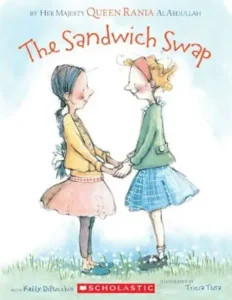
This story is incredibly beautiful, vibrant, and culturally rich. It handles the specific awkwardness of a friend accidentally insulting something you love. The pacing is wonderful, pulling the reader through the escalating tension of a lunchroom disagreement.
It brings a necessary dose of levity to the drama of friendship. By focusing on food, children can look at social conflicts much more objectively.
What kids notice: They love the massive, hilarious food fight that breaks out in the cafeteria when the two girls finally lose their tempers.
Story snapshot: Lily and Salma are best friends who do everything together. However, Lily thinks Salma’s hummus sandwich looks gross, and Salma thinks
Lily’s peanut butter sandwich looks ridiculous.
Harsh words are exchanged, feelings are deeply hurt, and the entire school takes sides. Eventually, they extend the grace to actually try each other’s sandwiches, realizing they both were wrong and missing out on something wonderful.
Why this book helps: It models the ultimate form of social grace: apologizing when your words cause unexpected harm. It empowers children to step away from their assumptions, gracefully admit they were wrong, and embrace the beautiful differences in their friendships.
Enemy Pie by Derek Munson
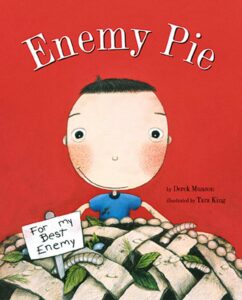
This book feels like a classic, timeless summer story.
It is clever, engaging, and wonderfully relatable for any child who has quickly decided they do not like someone.
The narrative perfectly illustrates how a lack of grace can build a massive wall between potential friends.
The pacing is delightful, and the father’s wise, quiet guidance is a wonderful model for parents. Above all, it handles the concept of giving someone a second chance with brilliant subtlety.
What kids notice: They are intensely curious about the secret, gross ingredients that might be hiding inside the legendary “Enemy Pie.”
Story snapshot: A young boy is having a perfect summer until Jeremy Ross moves in down the street and immediately becomes his number one enemy.
The boy’s father offers to make “Enemy Pie” to get rid of Jeremy, but the secret recipe requires the boy to spend one full day playing with his enemy.
By the end of the day, the boy realizes Jeremy is actually great, and he frantically tries to stop him from eating the toxic pie.
Why this book helps: It shows that extending grace often means pausing our initial judgments. Most importantly, it teaches children the grace of changing their minds and welcoming someone they initially wrote off as a problem.
Desmond and the Very Mean Word by Archbishop Desmond Tutu
This story is a profoundly moving, gentle masterpiece. It is atmospheric and deeply emotional, carrying the weight of a true story told by a Nobel Peace Prize winner.
The prose is simple, but the emotional truth of the narrative resonates deeply with anyone who has ever been verbally hurt by another child.
It tackles the sting of cruel words head-on. However, it quickly pivots into an empowering story of freeing your own heart through the act of forgiveness.
What kids notice: They notice the heavy, sad expression on Desmond’s face and how the mean word physically seems to follow him around like a dark cloud.
Story snapshot: Young Desmond is proudly riding his new bicycle when a group of older boys shout a very mean, unforgivable word at him. Desmond is furious and plans his revenge.
However, an incredibly wise mentor helps him see that carrying onto that anger is only hurting Desmond himself. Eventually, Desmond finds the incredible grace to forgive the boy who hurt him, releasing the heavy burden from his own shoulders.
Why this book helps: It provides a stunning, real-world metaphor for grace and emotional freedom.
Consequently, it teaches children that their heart has the magical capacity to heal, and that extending grace to someone who makes a terrible mistake is actually a gift you give to yourself.
A Perfectly Messed-Up Story by Patrick McDonnell
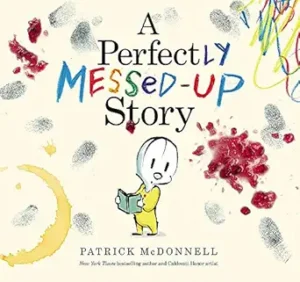
This book is completely out of the box, visually breaking the fourth wall to talk directly to the reader. It is bright, graphic, and guaranteed to make a frustrated child giggle.
It uses the physical pages of the book to represent how messy and ruined life can sometimes feel.
By removing the traditional narrative structure, children can engage with the concept of a “ruined plan” much more objectively. It brings a necessary, hilarious perspective to childhood perfectionism.
What kids notice: They laugh out loud when real-life jelly and peanut butter suddenly plop right onto the beautiful illustrations of the book.
Story snapshot: Louie is a happy little character skipping through what he thinks is a perfectly pristine, beautiful storybook. Suddenly, jelly drops on the page. Then peanut butter.
Then orange juice. Louie is devastated that his perfect story is completely ruined and refuses to go on. However, he eventually takes a deep breath, extends grace to the unseen messy reader, and realizes the story is still worth finishing.
Why this book helps: It normalizes the inevitable friction and mess that happens when things do not go exactly according to plan. Furthermore, it gives kids a funny, low-stakes visual for practicing the grace needed to accept a messy situation and keep playing.
Stick and Stone by Beth Ferry
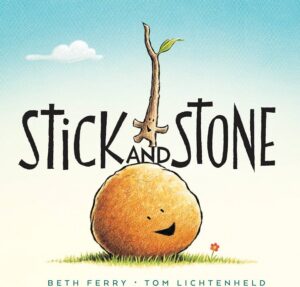
This story is incredibly sweet, whimsical, and gentle. It has a classic feel that makes it perfect for a calming bedtime read after a tough social day at the playground.
The journey is simple, but the feelings of loyalty and standing up for a friend are very real.
It avoids heavy-handed lecturing that sometimes plagues books about bullying or mistakes. Instead, it lets the beautiful, sparse artwork carry the emotional weight.
What kids notice: They love the clever rhyming scheme and the funny visual of a round stone getting stuck in a tight puddle.
Story snapshot: Stick and Stone are lonely until they find each other. When a prickly pinecone makes fun of Stone, Stick steps up and fiercely defends his new friend. Later, when Stick gets trapped in a massive puddle, Stone rolls into action to save him. Together, they show that true friendship is a constant, graceful exchange of helping each other out of tough spots.
Why this book helps: It highlights the sheer beauty of showing up for someone else. It teaches children that true grace is found in the willingness to stand by a friend, forgive their clumsy moments, and offer a helping hand when they stumble.
Extra Yarn by Mac Barnett
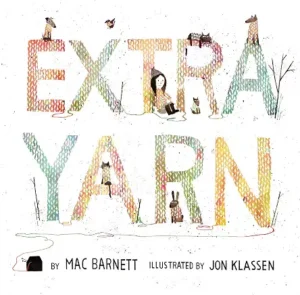
This book feels like a modern fairy tale wrapped in a quiet lesson about generosity and grace. The artwork is rich and textured, visually representing the expanding nature of kindness against a gray, bleak world.
It is a quiet book, perfect for calming down and resetting after a high-emotion argument. The imagery stays with you long after you close the cover.
What kids notice: They are mesmerized by how the gray, dull town slowly fills with bright, vibrant colors as the little girl knits sweaters for everyone.
Story snapshot: A young girl named Annabelle finds a magical box of yarn that never runs out. She knits a colorful sweater for herself, her dog, and eventually every single person and building in her dreary town. Even when an evil archduke steals the box, Annabelle extends grace. She does not lose her joy or her kind heart, proving that her inner magic cannot be taken away by someone else’s poor choices.
Why this book helps: It completely shifts the focus from retaliation to maintaining a soft heart. Furthermore, it teaches children that extending grace sometimes means refusing to let someone else’s bad behavior change your own kind nature.
The Squirrels Who Squabbled by Rachel Bright
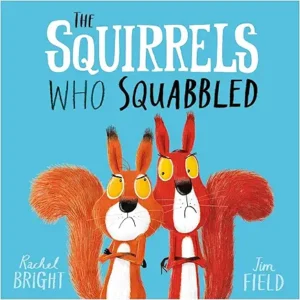
As always, Rachel Bright delivers big laughs wrapped around a deeply profound social lesson.
The energy is frantic, silly, and incredibly engaging for young readers. It strips away the heavy emotional baggage of sharing and replaces it with an adventurous chase.
The rhyming text and expressive animal faces make it an easy, delightful read. Yet, the message about letting go of petty grievances hits home perfectly.
What kids notice: They laugh out loud at the intense, ridiculous physical comedy of two squirrels racing through a dangerous river just to grab a single pinecone.
Story snapshot: Greedy Cyril and peaceful Bruce are both desperate to secure the very last pinecone of the autumn season.
Their squabble turns into an epic, chaotic race that accidentally sends the pinecone—and both squirrels—tumbling into a rushing river.
After surviving the waterfall, they realize their fighting was foolish. They extend grace, share a laugh, and decide that sharing a meal together is far better than fighting.
Why this book helps: It brilliantly shifts the focus from the awkwardness of an argument to the joy of letting things go. Consequently, it teaches children that extending grace sometimes means simply dropping the rope, laughing at the silliness of a fight, and choosing connection over winning.
Put Your Child in the Heart of the Story
Books are truly incredible teachers. However, reading a book with your own name in it is pure magic. Therefore, Scrively helps you create custom children’s books easily.
You can build a story where your child is the brave protagonist. For instance, they can practice extending grace, forgiving a friend who broke a toy, and navigating awkward social mistakes right on the page. Ultimately, this places them at the very heart of their own emotional growth.
Navigating early childhood friendships is rarely smooth. In fact, playdates will always cause some friction and accidental messes. However, every awkward moment is a profound chance to learn.
By reading these stories, you give your child the right words. Most importantly, you teach them that true friendship means having the courage to extend grace when someone messes up. Finally, they will learn to be beautiful, forgiving friends in any situation.
The next time your child gets caught in a tricky, clumsy friendship moment, remember to take a deep breath.
These messy moments are exactly how they learn to ride the social waves. By offering them stories of grace, empathy, and forgiveness, you are handing them a profound emotional toolkit. Ultimately, they will learn that the relationship is always more important than the broken block tower.