The Dreamer’s Path: Children’s Books That Build Vision and Purpose
You see it in the quiet moments of deep play.
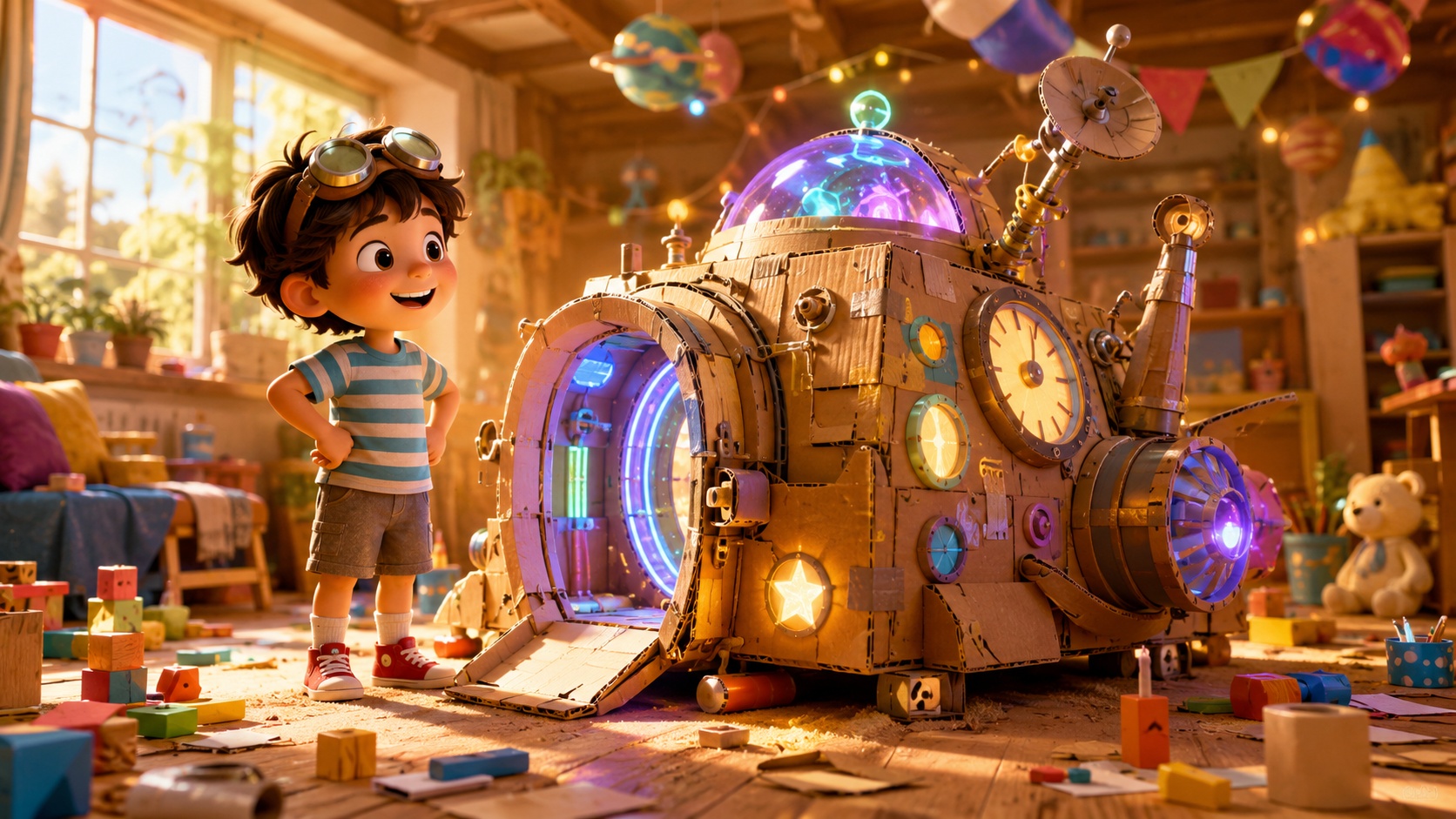
Your child is hunched over a scatter of wooden blocks. Or maybe they are staring at a blank piece of paper. Suddenly, an empty cardboard box becomes a time machine. They are seeing something that isn’t quite there yet.
They are imagining a world slightly different from the one they are sitting in.
That invisible spark is the very beginning of vision. It is the raw material of a dreamer’s path. But having a dream is only the first step. The real magic happens next.
The real magic happens when a child learns how to hold onto that dream when it gets difficult.
Because it is incredibly easy to have a big idea. But it is significantly harder to protect that idea. It is tough to nurture it. It is exhausting to take the small, occasionally frustrating steps required to bring it to life.
Often, children want their big ideas to materialize instantly. When the block tower falls, the dream can quickly dissolve into frustration. When the drawing doesn’t look like the image in their head, they want to give up.
They need a roadmap for their imagination.
Teaching a child the virtue of vision is about showing them the process. It is about proving that every big achievement starts as a simple thought. It involves helping them understand the power of setting small goals.
Vision is the beautiful intersection of wild creativity and steadfast hope.
It is the deep, unwavering belief that they have the capability to shape their environment. They can shape their future. And they can do it one tiny, deliberate action at a time.
The books below are curated to ignite that exact spark. They celebrate the messy, beautiful process of creation. They show children that their ideas matter. They prove that their unique perspective is desperately needed.
Let’s explore the stories that give our children the courage to dream big. Let’s give them the vision to see it through.
What Do You Do With an Idea? by Kobi Yamada
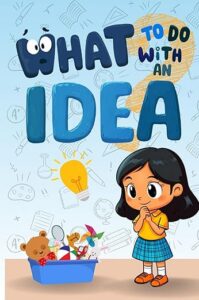
This remarkable book is a masterclass in personifying the creative process. It treats an “idea” not as a fleeting thought, but as a living, breathing companion.
Your idea requires care. It requires feeding. And most importantly, it requires your attention.
The story visually transforms as you read. It starts in stark, cautious black-and-white. Then, it explodes into vibrant color as the child’s confidence grows. It is a deeply moving experience.
The brilliance of this narrative lies in its emotional accuracy. It perfectly captures the vulnerability of having a new thought. Will people laugh? Is it too weird? The book gently guides the reader through that hesitation.
What kids notice: Children are immediately drawn to the golden, egg-like creature that represents the “idea,” and they love watching it follow the boy around, growing bigger and brighter on every single page.
Story snapshot: A young boy discovers a strange, glowing “idea” that he is initially afraid of, but as he finally begins to feed it with his attention and love, it grows until it eventually changes the world.
Why this book helps: This story is foundational for developing vision because it normalizes the fear of being misunderstood, beautifully illustrating that every big achievement starts as a simple thought and giving children the courage to believe in their own creative potential.
Mae Among the Stars by Roda Ahmed
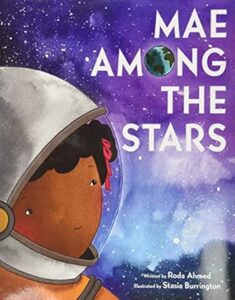
Inspired by the life of Dr. Mae Jemison, this story is a gorgeous testament to unwavering ambition.
The illustrations are sweeping and starlit. They capture the absolute boundless nature of a child’s imagination. Reading it feels like a warm hug and an inspiring pep talk woven into one beautiful narrative.
This book deals directly with friction. It shows the clash between a child’s big dream and the sometimes limiting expectations of the outside world.
It heavily emphasizes the importance of parental support. Because of this, it is an incredibly powerful read-aloud for your family.
What kids notice: Young readers are captivated by little Mae floating in her homemade cardboard rocket ship, and they obsess over the beautiful, starry skies that fill the pages whenever she dreams of space.
Story snapshot: Young Mae dreams of dancing in space, and while some adults suggest she pick a more realistic profession, her parents encourage her to dream big, telling her that with hard work, anything is possible.
Why this book helps: This narrative is a masterclass in setting goals because it teaches children to anchor themselves in their own beliefs, demonstrating that a steadfast vision combined with hard work can literally take you to the stars.
The Most Magnificent Thing by Ashley Spires
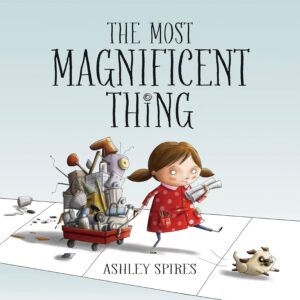
This story is wonderfully honest. It embraces the messy, frustrating reality of bringing a vision to life.
The illustrations are lively and expressive. They perfectly capture the manic energy of creation. And then, they capture the inevitable, crushing crash of disappointment.
It is a deeply relatable book. It is perfect for any child who has ever thrown their hands up and shouted, “I quit!”
It completely strips away the illusion of instant success. Instead, it normalizes the drafting process. It normalizes making mistakes. And it normalizes taking a walk to cool down.
What kids notice: Kids highly relate to the girl’s escalating frustration, and they love pointing out the funny, discarded inventions she builds along the way alongside her adorable, loyal dog.
Story snapshot: A young girl has a crystal-clear vision of how to build something magnificent, but as she tinkers, it keeps turning out wrong until a massive meltdown and a walk around the block help her finally see the solution.
Why this book helps: A crucial part of the dreamer’s path is resilience, and this book explicitly shows that realizing a vision requires managing the gap between what you see in your head and what your hands can initially produce.
Iggy Peck, Architect by Andrea Beaty
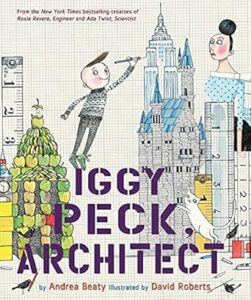
Rhyming, rhythmic, and endlessly clever. This book is a joyous celebration of unique passions.
The artwork is structured and detailed. It reflects Iggy’s architectural mind perfectly. Yet, it is filled with hilarious, chaotic background moments.
It is a thoroughly engaging read. It bounces along with an upbeat, infectious energy.
This story shines a spotlight on a specific problem. What happens when a child’s inherent vision clashes with a rigid environment? It is a fantastic exploration of staying true to your passions.
What kids notice: Children laugh out loud at the incredibly bizarre materials Iggy uses to build his structures, especially the towers made of dirty diapers and the bridges built from fruit.
Story snapshot: Iggy Peck has been building spectacular structures since he was a baby, but when his second-grade teacher strictly forbids architecture, his vision is stifled until his unique skills are needed to save a class field trip.
Why this book helps: Iggy’s story is a profound lesson in maintaining your vision even when it isn’t currently popular, validating the intense interests of children and empowering them to keep dreaming and building.
Maybe by Kobi Yamada
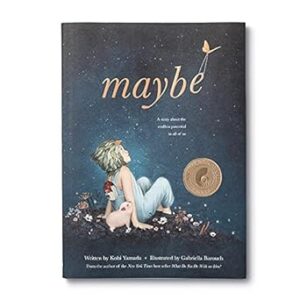
Lush, ethereal, and deeply poetic.
This book feels like a quiet, profound meditation on a child’s future. The artwork features a young girl exploring breathtaking, magical landscapes.
It perfectly reflects the boundless possibilities of an open future. Simply put, it is a book designed to inspire awe.
Rather than focusing on a specific career, this story focuses on potential. It focuses on the infinite potential within the child themselves. It asks the reader to consider why they are here.
What kids notice: Children are enchanted by the tiny, flying pig that accompanies the girl on her journey, and they get lost in the rich, detailed illustrations of giant flowers and soaring bridges.
Story snapshot: This lyrical exploration of human potential follows a young girl as she realizes her life is a blank canvas, gently asking the reader to consider what unique gifts they bring to the world.
Why this book helps: This book expands the concept of vision beyond just picking a job, nurturing a deep internal sense of purpose and encouraging children to see themselves as capable of extraordinary things.
The Boy Who Harnessed the Wind by William Kamkwamba
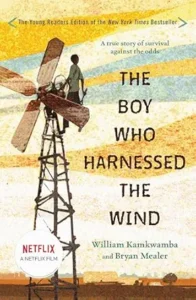
Based on a true, awe-inspiring story.
This book grounds the concept of vision in real-world stakes. The collage-style artwork beautifully captures the landscape of Malawi. It also captures the intricate details of William’s scrap-yard inventions.
It is a story of profound hope. It is a story of incredible ingenuity.
This narrative moves vision away from personal ambition. It moves it toward community salvation. It shows what happens when a brilliant mind looks at a pile of junk and sees survival.
What kids notice: Readers love the transition from the dry, dusty farm to the triumphant flow of water once the windmill works, and they are fascinated by how everyday trash becomes a machine.
Story snapshot: When a terrible drought hits his village in Malawi, William studies science books and uses scrap metal to build a functioning windmill, bringing electricity and water back to his starving people.
Why this book helps: There is no better example of vision in action, proving to children that you do not need fancy resources to bring an idea to life; you only need curiosity and the ability to see potential where others see trash.
Dreamers by Yuyi Morales

A deeply personal and visually stunning memoir.
This book explores the immigrant experience. It views that experience through the lens of dreams, hope, and the power of libraries.
The vibrant, symbolic artwork is layered with cultural meaning. It is layered with raw emotion. It is a poetic tribute to the courage it takes to build a new life.
This story redefines what it means to be a “dreamer.” It isn’t just about inventing a product.
It is about holding onto a vision for a safe future. It is about hoping for a beautiful life for your family.
What kids notice: Children are drawn to the beautiful, swirling colors, the magical way the books fly around the library, and the deep, visible bond between the mother and her baby.
Story snapshot: A mother and her young child leave their home to migrate to a new country, struggling to understand the new language until they discover the public library, which helps them find their voices and hold onto their dreams.
Why this book helps: This book teaches children that having vision also means having hope, building profound empathy while showing that the ability to dream is a universal human survival tool.
Rosie Revere, Engineer by Andrea Beaty
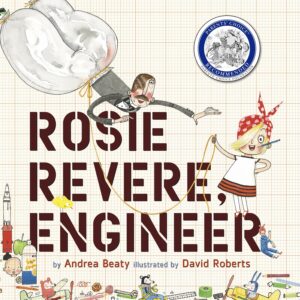
This book is an absolute joy to read aloud.
It features a snappy rhythm. It features charming, quirky illustrations. It perfectly captures the spirit of a quiet child with a loud, bustling imagination.
The artwork is packed with hilarious historical details. It is packed with mechanical details that beg for a second look.
The emotional core of this book revolves around fear. Specifically, the fear of failure. It masterfully reframes “failing” as an essential and thrilling part of success.
What kids notice: Children love Rosie’s wild inventions, especially the helium pants and the cheese-hat, and they are highly tuned into her embarrassment when her uncle initially laughs at her.
Story snapshot: Rosie hides her brilliant inventions because she is afraid of failure, but when her great-great-aunt Rose helps her see that her crashed cheese-copter was actually a perfect first attempt, Rosie finds her courage.
Why this book helps: This is the ultimate playbook for the dreamer’s path because it directly combats perfectionism, teaching kids that the only true failure is quitting and freeing them to experiment boldly.
Going Places by Peter and Paul Reynolds
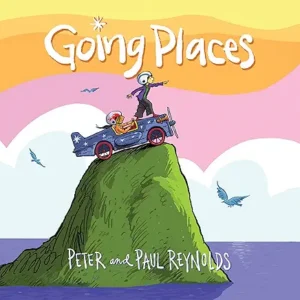
This is a brilliant celebration of thinking outside the box.
The story starts with a very standard classroom assignment. Every student is given an identical kit to build a go-kart. They are all given the exact same set of instructions.
But true vision doesn’t always follow the instructions.
The artwork is energetic and playful. It perfectly captures the joy of rebellious creativity. It shows that rules are sometimes meant to be creatively broken.
What kids notice: Readers are instantly captivated by the contrast between all the normal, boring go-karts and the spectacular, flying machine that the main characters decide to build instead.
Story snapshot: While everyone else in the neighborhood follows the instructions to build a standard go-kart for a race, Rafael and Maya use their kit to build a flying machine, ultimately soaring past the competition.
Why this book helps: This book champions the idea of unique vision, showing children that just because everyone else is doing something one way doesn’t mean it is the only way to succeed.
Put Your Child in the Heart of the Story
Reading about brave dreamers is incredible. Reading about brilliant inventors is inspiring.
But what if your child could see themselves as the hero of their own story?
Scrively allows parents to create fully custom children’s books. These books help your child navigate specific emotional challenges. Imagine a book where your child is the one mapping out a big goal.
Imagine them overcoming their specific fears. Imagine them bringing their own unique vision to life.
With Scrively, you can build these stories in minutes. The platform is point-and-click simple. It allows you to create unlimited books that speak directly to your child’s heart.
It proves to them that their dreams are worth writing down.
The path of a dreamer is never a straight line. It is filled with brilliant sparks. It is filled with messy mistakes. And it requires the quiet, stubborn courage to try again tomorrow.
By filling your child’s library with these stories, you are handing them tools. You are handing them the tools they need to build their own future.
Keep reading. Keep imagining. And keep celebrating every single chaotic step along their unique path.