The Crowd vs. The Compass: Books That Teach Kids Conviction
You know the exact moment it happens.
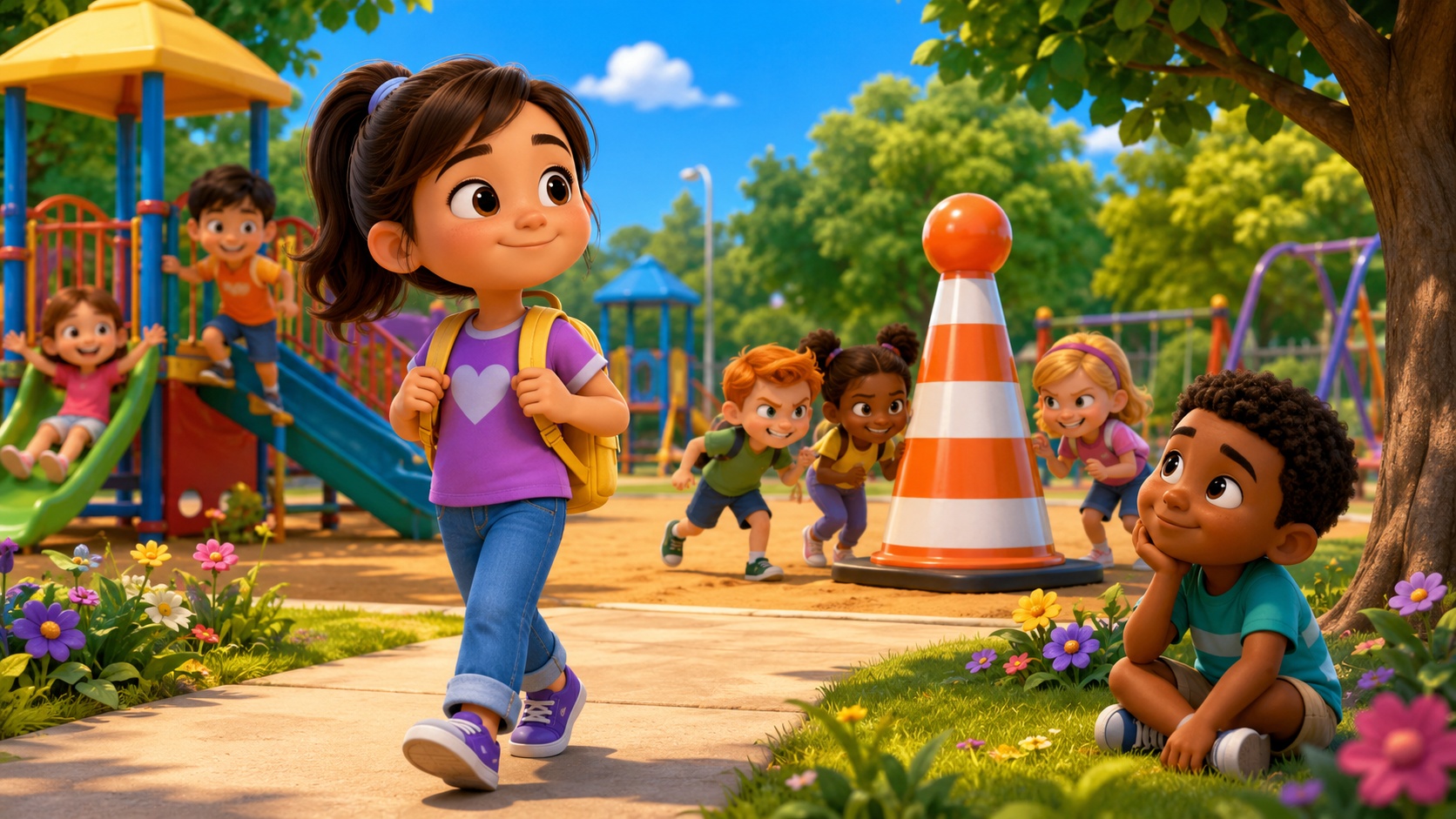
Your child is playing happily with a group of neighborhood kids. Suddenly, the entire dynamic shifts without warning.
Someone suggests doing something that isn’t quite right. Perhaps it is teasing another child, ignoring a playground rule, or simply going along with a bad idea.
You watch their little face process the heavy dilemma. They clearly know the rule, but they also desperately want to belong to the group.
This is the classic battle of the crowd versus the compass. Furthermore, it is one of the hardest emotional hurdles your growing child will face.
Standing up to peer pressure requires immense conviction and deep inner strength. Most importantly, it requires the courage to say no even when it feels incredibly lonely.
Children naturally want to fit in with their peers. Consequently, stepping away from the crowd goes against their basic social instincts.
However, a strong inner compass is essential for their long-term character development. We have to teach them that their voice matters, even when it shakes.
Fortunately, children’s literature offers a wonderful, safe space to practice this exact skill. Stories can clearly show kids what conviction looks like before they ever have to use it in real life.
By reading together, you can help them navigate these tricky social waters. For instance, you can discuss what they would do in the character’s shoes.
Therefore, we have gathered the best stories to help build your child’s moral courage. Above all, these books will help them find their true north.
Hunter’s Best Friend at School by Laura Malone Elliott
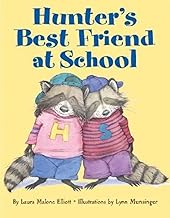
Friendships in early childhood are incredibly powerful and influential forces. Consequently, children often want to mirror exactly what their best friend is doing.
However, this becomes a very tricky situation when that friend starts making poor choices. This charming story perfectly captures that exact childhood dilemma.
What kids notice: Children immediately relate to Hunter’s strong desire to copy his favorite person, noticing how fun it seems at the very beginning.
Story snapshot: Hunter loves his best friend Stripe and enthusiastically wants to do everything he does. Therefore, when Stripe starts misbehaving in class, Hunter quickly joins in, only to realize that copying bad behavior doesn’t feel very good.
Why this book helps: This book introduces the complex concept of an inner compass in a highly relatable, gentle way. Furthermore, it deeply validates how hard it is to say no to someone you really like and admire.
Most importantly, it gives parents a perfect opening to discuss social boundaries. For instance, you can talk about how true friends do not expect you to get in trouble just to fit in.
Children learn that they can still be a deeply loyal friend while making their own choices. Ultimately, it shows that true leadership sometimes means being the first one to do the right thing.
One by Kathryn Otoshi

Sometimes the hardest thing to do is stand up to a loud, aggressive crowd. This brilliantly simple concept book tackles bullying and peer pressure using just colors and numbers.
It visually demonstrates how one single voice can change an entire group dynamic. Consequently, it is a masterclass in quiet, powerful conviction.
What kids notice: Kids are instantly drawn to the bright watercolor splatters and clearly understand the changing emotions of the colors as Red gets meaner.
Story snapshot: Blue is a quiet color, and Red is a hothead who loves to pick on Blue. The other colors are too afraid to step in, until One comes along and boldly shows them how to stand up and count.
Why this book helps: This abstract story makes the heavy topic of peer pressure incredibly accessible for younger children. Furthermore, it completely removes the shame often associated with being afraid of a bully.
The story clearly shows that the bystander effect is real and very common. However, it also proves that it only takes one brave person to break the spell of the crowd.
Most importantly, it empowers children to be that single voice of reason. Ultimately, it teaches that standing your ground gives others the courage to do the same.
A Bad Case of Stripes by David Shannon
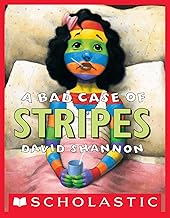
The intense pressure to conform can sometimes make us lose ourselves completely. This wildly imaginative story takes that concept to a very literal, visual extreme.
It is a vivid warning about the dangers of ignoring your own compass just to please the crowd. Furthermore, it is visually unforgettable and highly engaging.
What kids notice: Children are absolutely captivated by Camilla’s bizarre, ever-changing physical transformations and the bright, chaotic artwork.
Story snapshot: Camilla Cream secretly loves lima beans but refuses to eat them because all her friends hate them. Consequently, her deep desire to fit in causes her to break out in a terrible, uncontrollable case of colorful stripes.
Why this book helps: This book provides a hilarious but deeply meaningful look at the exhausting nature of people-pleasing. Furthermore, it highlights how hiding your true self actually creates more anxiety than simply being honest.
Children can clearly see that bending to the crowd’s expectations makes Camilla miserable. For instance, she literally loses her identity trying to be whatever other people want her to be.
Most importantly, the cure is simply admitting her own preferences out loud. Ultimately, it teaches kids that authenticity is the best medicine for peer pressure.
The Juice Box Bully by Bob Sornson and Maria Dismondy
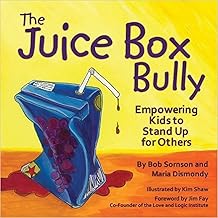
Group dynamics can either foster a toxic environment or build a supportive community. This story focuses heavily on the power of a positive peer crowd.
It shifts the focus away from the bully and directly onto the bystanders. Consequently, it teaches kids how to actively use their conviction for good.
What kids notice: Kids quickly spot how the new student acts out and they closely watch how the rest of the class decides to handle his bad behavior.
Story snapshot: Pete is the new kid at school and he starts acting like a bully to prove he is tough. However, his classmates have made a special promise to stand up for each other, and they refuse to let Pete ruin their positive classroom culture.
Why this book helps: This story brilliantly introduces the concept of “The Promise,” which acts as a collective moral compass for the classroom. Furthermore, it gives kids literal scripts to use when they witness bad behavior.
It shows that saying no to a bully is much easier when you know your peers have your back. Most importantly, it demonstrates that you don’t have to be mean to a bully to stop them.
The classmates stay firm but offer Pete a chance to change his ways. Ultimately, it teaches that true conviction includes offering grace and a path to redemption.
Say Something! by Peter H. Reynolds
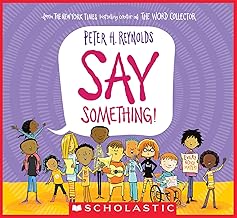
Having a strong inner compass doesn’t matter if you never use your voice. This beautiful, empowering book is a direct call to action for hesitant children.
It gently explains that there are many different ways to stand up for what is right. Therefore, it appeals to both loud, outgoing kids and quiet, observant ones.
What kids notice: Children love the simple, comic-style speech bubbles and the diverse cast of characters finding unique ways to express themselves.
Story snapshot: Through a series of beautiful illustrations, the book encourages children to make their mark on the world. It shows that whether you use words, art, or actions, your voice has the power to inspire others and change the crowd.
Why this book helps: This wonderful book totally dismantles the idea that you have to be loud to have conviction. Furthermore, it validates art, writing, and quiet actions as powerful tools for change.
It reassures children that their specific, unique voice is deeply needed in the world. For instance, it shows that stepping in to comfort a lonely friend is just as brave as shouting in a protest.
Most importantly, it combats the feeling of insignificance that often keeps kids quiet. Ultimately, it empowers them to trust their compass and share it with the world.
Spaghetti in a Hot Dog Bun by Maria Dismondy
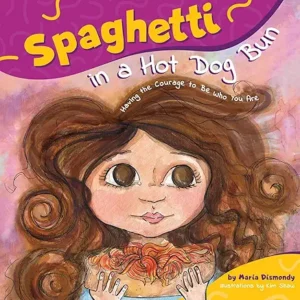
Sometimes the crowd is just one loud, critical voice trying to bring you down. This beloved story is a masterclass in maintaining your own boundaries.
It shows how a strong inner compass can protect a child’s delicate self-esteem. Consequently, it is essential reading for kids entering elementary school.
What kids notice: Kids always react to the teasing happening on the school bus and they deeply admire Lucy’s fun, unapologetic curly hair.
Story snapshot: Lucy loves her unique lunches and her big, curly hair, but a boy named Ralph constantly teases her for being different. When Ralph suddenly needs help, Lucy has to decide whether to follow the crowd’s mean spirit or follow her own kind heart.
Why this book helps: This narrative perfectly isolates the moment of choice every child faces when confronted with cruelty. Furthermore, it shows that stooping to a bully’s level actually damages your own inner compass.
Lucy’s grandfather gives her incredible advice about treating others right, even when they are wrong. Most importantly, the book proves that kindness requires a massive amount of conviction.
Choosing to be kind to someone who was mean to you is the ultimate rebellion against the crowd. Ultimately, it teaches kids to anchor their actions in their own values, not in other people’s behavior.
Dare! by Erin Frankel
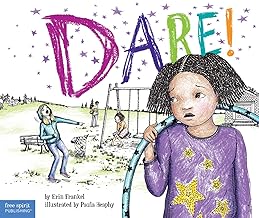
The bystander effect is one of the most difficult crowd dynamics to overcome. This powerful book addresses the specific anxiety of watching someone else get hurt.
It provides a very realistic look at how fear keeps the compass hidden. However, it also offers a clear, brave path forward.
What kids notice: Children deeply relate to Jayla’s internal panic and the very real fear that the bully might turn on her next.
Story snapshot: Jayla is terrified of a bully named Sam, so she stays completely quiet when Sam picks on another girl. Eventually, Jayla realizes that her silence is making her feel terrible, and she finally dares to stand up to the intimidation.
Why this book helps: This story is incredibly validating for kids who have frozen in the face of peer pressure. Furthermore, it does not shame the bystander, but rather explores the very real fear that causes inaction.
It breaks down the complex emotions of guilt and anxiety that come from ignoring your compass. For instance, Jayla physically feels sick when she doesn’t do the right thing.
Most importantly, it gives children a realistic, step-by-step model for breaking away from the silent crowd. Ultimately, it teaches that reclaiming your voice brings immense inner peace.
Stick and Stone by Beth Ferry
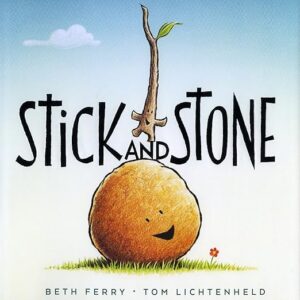
Sometimes, conviction is as simple as standing next to someone who is alone. This sweet, rhyming story breaks the concept down to its most basic, beautiful roots.
It is the perfect introductory book for toddlers and young preschoolers. Consequently, it lays a gentle foundation for future, harder conversations.
What kids notice: Young readers absolutely love the funny puns and the expressive, simple faces drawn on the natural objects.
Story snapshot: Stick and Stone are both very lonely until they happen to meet on the playground. When a prickly Pinecone comes along and starts making fun of Stone, Stick immediately steps in and firmly tells Pinecone to vanish.
Why this book helps: This book perfectly distills the essence of loyalty and conviction for very young minds. Furthermore, it models immediate, decisive action against unkindness without using scary or overwhelming scenarios.
Stick doesn’t pause to worry about what Pinecone thinks of him. Instead, he simply consults his compass and protects his new friend.
Most importantly, it emphasizes that a crowd of two is much stronger than a crowd of one. Ultimately, it teaches little ones that true friends always stand up for each other.
Put Your Child in the Heart of the Story
Sometimes the absolute best way to teach conviction is to let your child experience it safely first. With Scrively, you can effortlessly create 100% custom kid’s books tailored to your child’s specific social challenges.
Therefore, you can make them the brave hero who stands up to peer pressure in their own personalized adventure. Most importantly, you can give them a literal roadmap for doing the right thing.
When kids see themselves making strong, positive choices in a story, they naturally build real-world confidence. Try building a custom Scrively book today and watch their inner compass grow.
Staying True to the Compass
Navigating the powerful pull of the crowd is a lifelong journey for all of us. Consequently, we cannot expect our children to master this skill overnight.
However, every time we read these powerful stories together, we are actively strengthening their inner compass. We are giving them the necessary vocabulary to identify peer pressure when it happens.
Most importantly, we are reminding them that their unique, authentic voice is incredibly valuable. Keep reading, keep talking, and keep cheering for their brave choices.