How Your Child Learns to Help (Without You Forcing It): Books That Show the Way
You see it in small, almost invisible moments.
A child pauses before walking away and turns back to pick something up. A hand reaches out to steady a friend. A quiet voice says, “Do you want to play with us?”
These moments don’t usually arrive with fanfare. They don’t feel like lessons being learned. They feel ordinary—until you realize something deeper is taking root.
Helping others isn’t something children always do naturally at first. Sometimes they’re unsure. Sometimes they don’t notice. Sometimes they’re still learning how to step outside their own world long enough to see someone else’s.
And that’s okay.
Because helping isn’t about being told what to do. It grows slowly, through experience, modeling, and stories that show what it looks like to care.
Books give children a front-row seat to empathy in action. They let them watch characters notice, hesitate, try, and grow. And in those moments, something begins to shift—quietly, steadily, meaningfully.
These are the stories that help that shift happen.
A Sick Day for Amos McGee by Philip C. Stead

Amos McGee spends his days caring for animals at the zoo. He plays chess with an elephant, runs races with a tortoise, and sits quietly with a shy penguin. His kindness feels steady and unremarkable—until one day, Amos gets sick.
When Amos doesn’t show up, the animals notice. And instead of waiting, they decide to go to him. What unfolds is a gentle reversal: the ones who were helped become the helpers.
Children see that helping others builds relationships—and those relationships come back around in meaningful ways.
What kids notice in this story
Helping creates connection that lasts beyond one moment. Caring for others builds trust. Sometimes, the people you help will one day help you too.
The Rabbit Listened by Cori Doerrfeld

When something goes wrong, a child sits surrounded by well-meaning animals offering solutions, advice, and distractions. But none of it helps—until the rabbit arrives and simply listens.
This story shifts the idea of helping away from fixing and toward presence. It shows that sometimes the most meaningful help is quiet, patient, and attentive.
Children begin to understand that helping doesn’t always mean doing something big—it can mean simply being there.
What kids notice in this story
Helping can look like listening. You don’t have to solve everything. Being present can matter more than having the right answer.
Last Stop on Market Street by Matt de la Peña
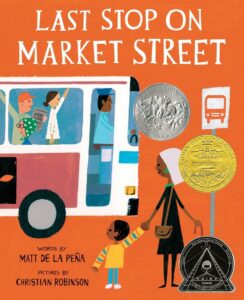
A bus ride becomes something more as a young boy begins to see the world through a different lens. Along the way, he encounters people whose lives look different from his own—and learns to notice what others might need.
The story gently expands a child’s awareness. Helping others begins with seeing them—really seeing them.
It’s not framed as a task. It’s framed as a way of moving through the world with attention and care.
What kids notice in this story
Helping starts with noticing. Everyone has a story. Small acts of kindness can happen anywhere, even in everyday moments.
Stone Soup by Marcia Brown

Three hungry travelers arrive in a village where no one wants to share. Through creativity and persistence, they slowly draw the villagers into contributing small pieces—one carrot, one potato, one spice.
What begins as reluctance turns into shared effort. The villagers discover that helping doesn’t have to come all at once—it can begin with something small.
The story shows how helping can grow when people feel invited, rather than pressured.
What kids notice in this story
Helping can start small. Everyone has something to give. When people work together, something bigger can happen.
Ordinary Mary’s Extraordinary Deed by Emily Pearson

Mary performs one simple act of kindness. That act ripples outward, passed from one person to another, growing into something far beyond what she could have imagined.
The story highlights the unseen impact of helping. Children begin to understand that even the smallest action can travel far.
It reframes helping as something powerful—even when it feels small.
What kids notice in this story
One small act can lead to many more. Helping doesn’t stop with you. Kindness can spread in ways you don’t always see.
Strictly No Elephants by Lisa Mantchev
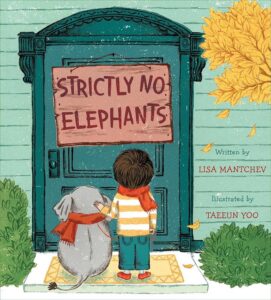
A boy and his tiny elephant are turned away from a pet club. Instead of giving up, they create a new space—one where everyone is welcome.
This story reframes helping as creating belonging. It’s not just about responding to needs—it’s about shaping environments where others can feel included.
Children see that helping can mean making room for others.
What kids notice in this story
Helping can mean including others. You can create spaces where everyone belongs. Kindness can reshape situations.
Those Shoes by Maribeth Boelts
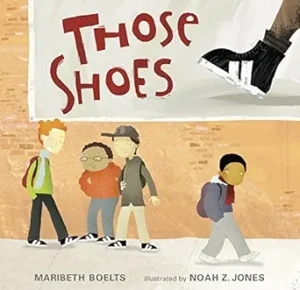
A boy wants a pair of shoes that everyone else seems to have. When he finally gets them, they don’t fit—but instead of holding on, he chooses to give them to someone who needs them more.
This story explores the tension between wanting something and recognizing someone else’s need. Helping others sometimes involves letting go.
Children see the emotional complexity behind generous choices.
What kids notice in this story
Helping can mean giving something up. Other people’s needs matter too. Generosity can feel both hard and meaningful.
I Walk With Vanessa by Kerascoët
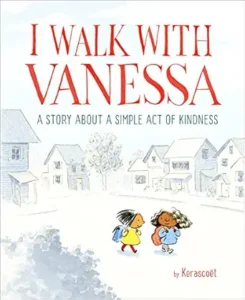
Without a single word, this story follows a child who notices another being bullied. Instead of looking away, she chooses to walk alongside her.
The quiet power of this action transforms the situation. Others begin to follow. What started as one child helping becomes a collective shift.
Children see how helping can interrupt something difficult and create change.
What kids notice in this story
Helping can be quiet but powerful. Standing with someone matters. One action can influence others.
Kindness Is Cooler, Mrs. Ruler by Margery Cuyler
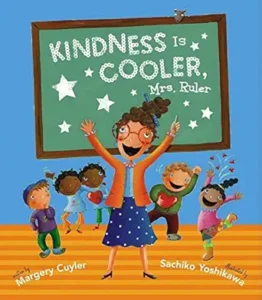
A classroom takes on a kindness challenge, and students begin to notice everyday opportunities to help—holding doors, sharing supplies, offering support.
The story makes helping visible in ordinary life. It shows that kindness isn’t rare—it’s something children can practice in small, consistent ways.
Helping becomes part of the rhythm of the day.
What kids notice in this story
Helping happens in everyday moments. Small actions add up. Kindness can become a habit.
Should I Share My Ice Cream? by Mo Willems

Gerald faces a dilemma: should he share his ice cream with Piggie? He wrestles with the decision—thinking through what it means to help or care for a friend.
While humorous, the story captures an internal process children recognize. Helping often involves pausing, considering, and choosing.
It shows that even thinking about helping is part of the journey.
What kids notice in this story
Helping sometimes requires thinking it through. You can pause before deciding. Caring about others influences your choices.
The Lion and the Mouse by Jerry Pinkney

In this wordless retelling of the classic fable, a small mouse helps a powerful lion. The contrast is striking—and meaningful.
The story challenges assumptions about who can help and how. Size, strength, or status don’t determine someone’s ability to make a difference.
Children see that everyone has something to offer.
What kids notice in this story
Anyone can help, no matter their size. Small actions can have big impact. Helping goes both ways.
Helping Others Takes Time—and That’s Okay
Helping doesn’t appear all at once. It develops slowly, through moments that are easy to miss if you’re not looking for them.
You might see hesitation. You might see missed opportunities. You might see your child unsure of what to do.
And then, one day, you see something different.
A pause. A choice. A small action that wasn’t there before.
That’s how it grows.
Helping others isn’t about perfection. It’s about awareness—learning to notice, to care, and to act in ways that feel genuine.
When you create space for those moments—when you point them out gently, when you model them, when you read stories that reflect them—you give that growth somewhere to take root.
Bringing the Story Into Your Child’s World
Stories don’t stay on the page. They carry into everyday life—into classrooms, playgrounds, living rooms, and small in-between moments.
And sometimes, the most powerful shift happens when your child begins to see themselves inside those stories.
That’s where something like Scrively becomes meaningful. When your child becomes the character—when they see themselves helping, noticing, and making a difference—the story becomes personal.
It moves from something they watch to something they begin to believe about themselves.
And that belief is where helping truly begins.
Because over time, those small actions—the ones that don’t look like much at first—start to add up into something lasting.