Best Books for Kids Learning to Take Turns (Ages 4–7)
Waiting can feel unbearable at this age. Not abstractly difficult. Physically difficult.
Like something in your child’s body is buzzing, tightening, pushing them forward while the world insists on slowing down.
You see it during board games, playground turns, classroom discussions, even casual conversations at the dinner table.
The frustration arrives fast. The fairness feels fragile. And “just wait your turn” rarely lands the way you hope it will.
That’s because turn-taking isn’t really about rules. It’s about emotional regulation. It’s about staying connected while attention moves elsewhere. It’s about holding disappointment without tipping into overwhelm.
For kids ages 4–7, those skills are still under construction.
Waiting can feel like losing control—or losing connection altogether. And when that fear shows up, impatience often follows.
Stories help in a different way. They let kids experience waiting without pressure.
They get to watch someone else go first. They get to feel the stretch of anticipation safely.
They get to see that the story—and the relationship—keeps going even when they aren’t “up next.”
The books below don’t rush that process. They don’t lecture.
They simply offer a steady place to practice waiting, fairness, and shared moments—one familiar page at a time.

Waiting Is Not Easy! — Mo Willems
What kids notice in this story:
Kids immediately recognize the physical discomfort of waiting—the pacing, the worry, the spiraling thoughts.
They feel the tension build and release in real time. Waiting becomes something visible, expressive, and oddly relatable.
Story Snapshot:
Gerald is asked to wait while Piggie prepares a surprise. He tries to be patient, but the waiting itself becomes the main event—until the reveal arrives in a quietly satisfying way.
Why this book helps kids learn to take turns:
This story validates how hard waiting feels without asking kids to suppress it. By turning anticipation into the story itself, it helps children stay engaged during pauses rather than unraveling.
That emotional endurance carries over naturally into shared games and conversations.
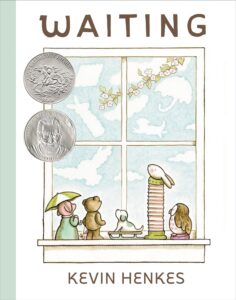
Waiting — Kevin Henkes
What kids notice in this story:
Kids notice the quiet stretch of time. They notice how waiting can feel long, but not empty. They feel the softness of anticipation without pressure to perform or rush.
They also notice that nothing bad happens while they wait.
Story Snapshot:
Five toys sit on a windowsill, each waiting for something different—a breeze, the moon, a chance to wave. The story unfolds slowly, following time as it passes gently rather than urgently.
Why this book helps kids learn to take turns:
Turn-taking begins with tolerance for pause. This book helps children experience waiting as safe and meaningful, not as loss or exclusion.
By normalizing stillness and delayed moments, it supports the emotional regulation kids need to stay connected while someone else goes first—whether in play, conversation, or shared attention.

Duck! Rabbit! — Amy Krouse Rosenthal
What kids notice in this story:
Kids notice the back-and-forth of disagreement.
They feel the pull of wanting to be right—and the surprise of realizing more than one perspective can exist at once.
Story Snapshot:
Two characters argue over what they see in a picture: a duck or a rabbit. The debate continues playfully as the image shifts.
Why this book helps kids learn to take turns:
Turn-taking isn’t just about objects—it’s about conversational space. This story helps kids stay engaged while another viewpoint takes center stage, strengthening emotional flexibility and shared attention.
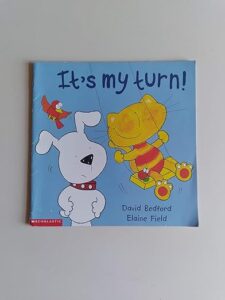
It’s My Turn! — David Bedford
What kids notice in this story:
Kids notice how frustration builds when turns feel unclear or unfair. They recognize the moment where impatience tips toward conflict.
Story Snapshot:
During shared play, a child struggles with waiting and fairness. The story follows the emotional repair that allows play to resume.
Why this book helps kids learn to take turns:
By staying close to everyday moments, this book helps kids tolerate the discomfort of waiting without feeling blamed. It reinforces the idea that turns protect fun rather than interrupt it.

A Bargain for Frances — Russell Hoban
What kids notice in this story:
Kids notice the sting of unfairness and the quiet discomfort of going along with something that doesn’t feel right. They sense the relief when balance returns.
Story Snapshot:
Frances enters into playful agreements with a friend that slowly become one-sided. She must decide how to respond without losing the relationship.
Why this book helps kids learn to take turns:
Turn-taking relies on emotional safety. This story helps kids feel what fairness looks like in practice, supporting patience while also honoring personal boundaries.
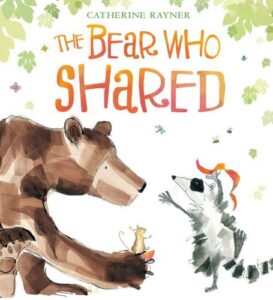
The Bear Who Shared — Catherine Rayner
What kids notice in this story:
Kids notice the tension between wanting control and wanting connection. They feel the loneliness that creeps in when sharing—and waiting—breaks down.
Story Snapshot:
Bear loves his things and doesn’t like to share. Over time, he discovers how taking turns opens the door to companionship.
Why this book helps kids learn to take turns:
This gentle story shows that waiting and sharing are relational acts. It supports kids who struggle with delayed gratification by emphasizing emotional warmth rather than rules.

A Chair for My Mother — Vera B. Williams
What kids notice in this story:
Kids notice patience stretched over time. They feel the rhythm of saving, waiting, and working toward a shared goal.
Story Snapshot:
After a fire, a family saves coins together to buy a comfortable chair. The story follows their steady progress and shared anticipation.
Why this book helps kids learn to take turns:
This book reframes waiting as purposeful rather than punishing. It helps kids practice delayed gratification and shared effort—skills that support turn-taking in both play and conversation.
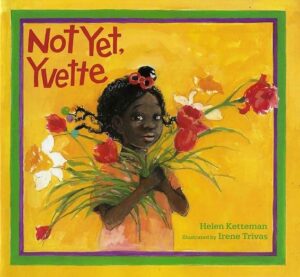
Not Yet, Yvette — Helen Ketteman
What kids notice in this story:
Kids notice how hard it is to hear “not yet” when excitement is high. They feel the emotional stretch between anticipation and patience.
Story Snapshot:
Yvette wants to join activities before she’s ready. The story gently follows her learning to wait for her moment.
Why this book helps kids learn to take turns:
This story supports emotional readiness rather than rushing maturity. It helps kids stay engaged during waiting periods without feeling excluded or left behind.
Supporting Turn-Taking Without Turning It Into a Battle
These books work best when they’re not used as proof. You don’t need to pause the story to explain the message. Let the repetition do the work.
When turn-taking feels especially hard, it can help to pair these stories with books that explore sharing and social comfort more broadly. See list here
And if your child struggles with the social side of waiting—joining in, holding space while others speak—this guide may also feel supportive
A Gentle Closing for Growing Patience
Patience grows slowly. Not through reminders, but through repetition. Through familiar stories. Through moments where waiting doesn’t feel like failure.
When kids reread these books, they aren’t stalling—they’re rehearsing. They’re building a nervous system that can hold anticipation without collapsing.
And if your child enjoys seeing themselves reflected in stories—where fairness, waiting, and shared moments unfold gently—Scrively offers a space where kids can create personalized stories that explore those experiences safely. You can explore it here: https://www.scrively.com.