Stories That Speak Two Languages: Best Bilingual Family Books
Raising kids in a bilingual household is a gift. But let’s be real—it can also feel like a juggling act.
You want your child to feel proud of both languages, not confused or embarrassed. And sometimes you just need a little help sparking that pride.
That’s where stories come in.
The right book can show kids a family that sounds like theirs, switching between English and Spanish, Mandarin, or Arabic at the dinner table.
These books don’t just entertain—they remind children that their words matter in every language they speak.
Representation is powerful. When kids see bilingual families in the pages of books, they realize they’re not “different”—they’re part of something vibrant and celebrated.
Parents, too, find encouragement knowing they’re not alone in raising multilingual children.
And for families who aren’t bilingual, these books offer windows into worlds where two (or more) languages live together under one roof.
That’s empathy and cultural appreciation in action.
Below, you’ll find a carefully chosen list of books across different formats: board books for the littlest readers, picture books for preschoolers and early elementary kids, early readers for children gaining independence, and even a parenting guide that helps adults nurture bilingual pride at home.
Each one is designed to celebrate the beauty of bilingual living—and make storytime a bridge between languages.
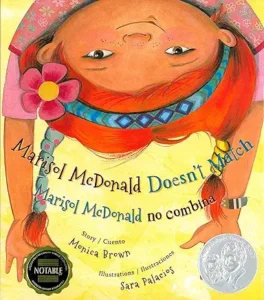
Marisol McDonald Doesn’t Match — Monica Brown
Meet Marisol, a Peruvian-Scottish-American girl who loves mixing things up—her outfits, her sandwiches, and her languages.
She’s constantly told she doesn’t “match,” but Marisol learns to embrace her vibrant, bilingual identity with confidence and joy.
Her spirit shines through every page, showing that “not matching” can actually mean standing out in the best way.
Why it’s perfect: It normalizes code-switching and celebrates kids who live between worlds with flair.
Plus, it empowers children to embrace their uniqueness and reject stereotypes.
Perfect for: Ages 5–8, kids who are navigating bilingualism and cultural identity at school.
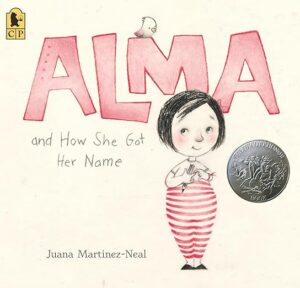
Alma and How She Got Her Name — Juana Martinez-Neal
Alma Sofia Esperanza José Pura Candela thinks her name is too long—until her father tells her the story behind each part of it.
With gentle illustrations, this book unpacks the heritage and love woven into names. Children learn that words—especially names—carry history, family ties, and pride.
Why it’s perfect: It helps kids see how names (and the languages they come from) carry family history and pride.
It’s a conversation starter for parents to explain their own naming traditions.
Perfect for: Ages 4–7, families introducing kids to cultural heritage through language.
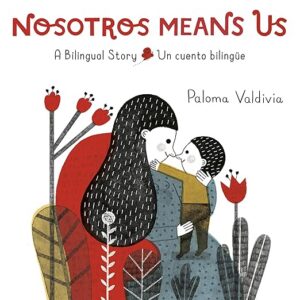
Nosotros Means Us: Un cuento bilingüe — Paloma Valdivia
This lyrical bilingual picture book celebrates the bond between parent and child.
Spanish and English flow seamlessly on every page, showing that love is expressed in two languages with the same tenderness.
The story also encourages kids to repeat phrases aloud, deepening language learning through rhythm and repetition.
Why it’s perfect: It mirrors real bilingual households where switching languages is part of daily affection. It’s also an excellent tool for parents who want to teach a second language through everyday phrases of love.
Perfect for: Ages 3–6, bedtime reading for families who want simple, heartfelt bilingual text.
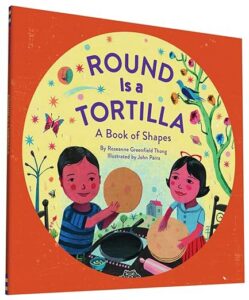
Round Is a Tortilla — Roseanne Greenfield Thong
This colorful picture book introduces shapes through Latino culture—triangles are slices of quesadilla, circles are tortillas, rectangles are ventanas.
Spanish words appear naturally, making vocabulary learning fun. The vibrant illustrations pull kids into a playful mix of culture and geometry.
Why it’s perfect: It’s an easy entry point for young readers to pick up Spanish words while exploring cultural imagery. Teachers also love it for classroom shape lessons with a multicultural twist.
Perfect for: Toddlers and preschoolers discovering shapes, culture, and new words all at once.
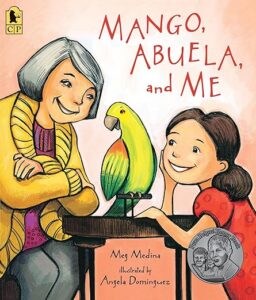
Mango, Abuela, and Me — Meg Medina
When Mia’s abuela moves in, they discover a language gap—Mia speaks English, Abuela speaks Spanish.
With the help of a parrot named Mango, they find creative ways to learn from each other and connect deeply.
The story portrays bilingualism as an intergenerational bridge that strengthens family ties.
Why it’s perfect: It shows how love and patience bridge language barriers in multigenerational families. Kids learn that bilingualism is not just practical—it’s relational.
Perfect for: Ages 5–8, kids with grandparents who speak another language at home.
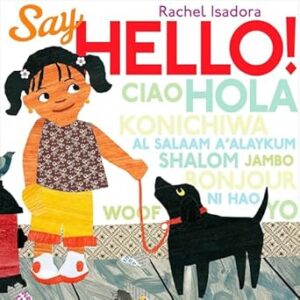
Say Hello! — Rachel Isadora
Carmen walks through her neighborhood and greets friends in many languages—Spanish, French, Japanese, and more.
Bright illustrations and simple text make this a lively, interactive read-aloud. Kids love repeating the greetings, turning the story into a playful language-learning experience.
Why it’s perfect: Kids see their own neighborhoods reflected and learn friendly greetings in multiple languages. It also introduces the idea of celebrating linguistic diversity right outside their front door.
Perfect for: Ages 3–6, storytimes that invite kids to repeat phrases out loud.
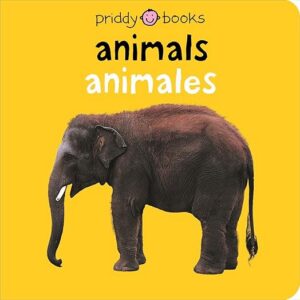
Bilingual Bright Baby: Animals / Animales — Roger Priddy
This sturdy board book introduces animals in English and Spanish, paired with simple photos.
The repetition of words helps toddlers make early connections, and the chunky format withstands lots of eager page-turning. It’s a safe and practical way to start bilingual learning in babyhood.
Why it’s perfect: Durable format + simple bilingual vocabulary = confidence boost for toddlers. Parents love how quickly kids repeat words after just a few readings.
Perfect for: Babies and toddlers in bilingual homes just starting to explore words.
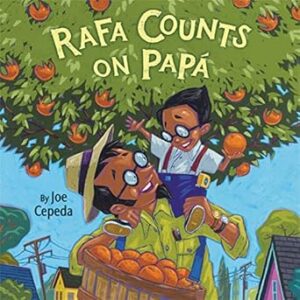
Rafa Counts on Papa — Joe Cepeda
Rafa loves counting everything—from stars to mangoes to the games he plays with his Papa.
Sprinkled with Spanish numbers and phrases, this warm story blends math with bilingual dialogue. The father-son relationship is front and center, showing love expressed through play.
Why it’s perfect: It combines learning (numbers) with bilingual exposure in a natural way. Plus, the father-child bond is beautifully highlighted.
Perfect for: Ages 3–7, families who want a playful mix of math and language learning.
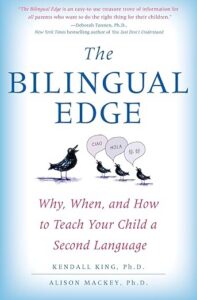
The Bilingual Edge — Kendall King and Alison Mackey
This parenting guide tackles the “how” of raising bilingual kids, from common myths to practical tips.
Written by two linguistics experts (and parents themselves), it’s both research-backed and easy to read. It reassures families that bilingualism is possible, even if parents don’t speak the second language fluently themselves.
Why it’s perfect: It gives parents strategies for making bilingual learning part of daily routines. It also helps reduce guilt and anxiety around whether you’re “doing it right.”
Perfect for: Parents of bilingual or aspiring bilingual families who want a confidence boost.
Book Buying Tips for Bilingual Families
- Check which languages are featured and how prominently.
- Look for stories that mix languages naturally, mirroring real family conversations.
- Choose durable formats for toddlers (board books) and engaging plots for older kids.
- Pick titles where culture, not just vocabulary, shines through. Kids connect with food, traditions, and family rituals.
- Rotate books often—repetition builds confidence, but variety keeps interest high.
How to Make Your Own Bilingual Family Book
Create a personalized story where your family’s languages and traditions shine.
This isn’t just a fun craft—it’s a way to make your child the hero of their own bilingual journey.
- Pick two languages to highlight (or more if your family uses them).
- Choose familiar settings: family dinner, bedtime, or visiting grandparents.
- Add bilingual dialogue bubbles or repeating phrases kids can learn.
- Layer in cultural foods, songs, or rituals unique to your family.
- Preview and print so your child sees themselves in the story.
- Invite kids to illustrate or decorate pages so they take ownership of their language story.
Create your own bilingual family favorite with Scrively. Unlimited books. Unlimited topics.
Small stories grow big confidence. Every time you share a bilingual book, you’re giving your child more than words—you’re giving them pride in who they are and the languages they love.
And in the end, those stories become family treasures, passed down and remembered for years to come.