What Actually Helps Kids Learn Kindness? These Stories Show Them How
You notice it in the in-between moments.
When a child watches another struggle but isn’t sure whether to step in. When someone is left out at recess. When a small choice could go either way — toward kindness, or away from it.
Kindness often lives in those quiet decisions.
It’s not something children automatically know how to do. Not because they don’t care — but because they’re still learning how their actions affect other people.
They’re learning how to notice.
They’re learning how to respond.
They’re learning that what they do matters.
Kindness grows slowly like that. Through everyday experiences, not big speeches. Through modeling, not pressure.
And stories help make that invisible process visible.
In books, children can step into moments they haven’t lived yet. They can feel what it’s like to be excluded, to be helped, to help someone else — and begin to connect those experiences to their own world.
These books don’t push children to “be nice.” They help them understand why kindness matters — and what it actually looks like in real life.
—
Books That Help Kids Understand Kindness
When We Are Kind by Monique Gray Smith
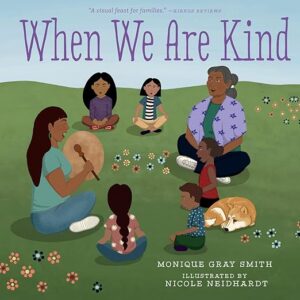
This book expands the idea of kindness beyond just what you do for others.
It shows kindness as something that flows outward — toward friends, family, strangers, and even yourself.
The language is gentle and rhythmic, helping children feel the emotional impact of caring actions.
What kids notice in this story
Kindness can be shared in many ways.
It includes how you treat yourself too.
Caring actions create connection.
—
What Does It Mean to Be Kind? by Rana DiOrio
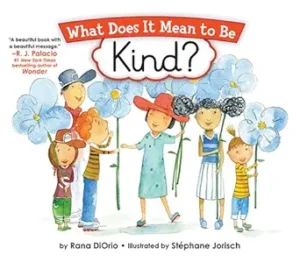
This story explores kindness through everyday examples children recognize.
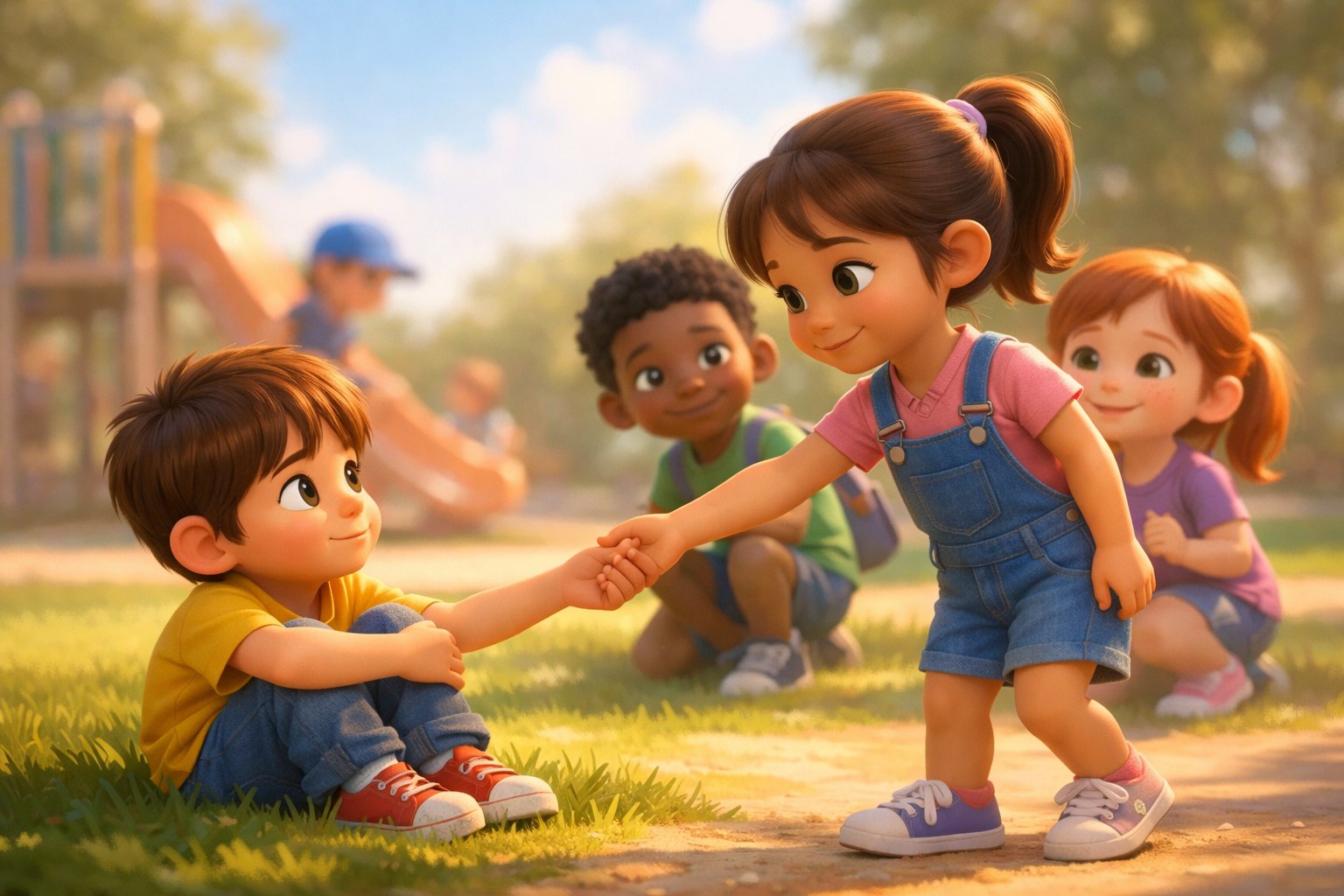
Helping someone up. Including someone new. Choosing to listen. Letting someone go first.
It makes kindness feel accessible — not like something special or rare, but something children can practice in small ways every day.
What kids notice in this story
Kindness shows up in small moments.
You have many chances to practice it.
It’s something you choose again and again.
—
Each Kindness by Jacqueline Woodson
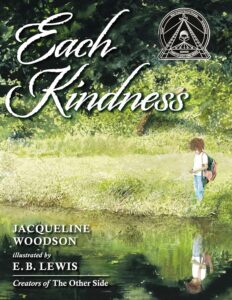
This story lingers in a different way.
A new girl arrives at school and is repeatedly left out. The main character has chances — small, everyday chances — to be kind, but doesn’t take them.
And then those chances are gone.
It’s a quiet, honest look at missed opportunities and the weight they can carry. It doesn’t force a lesson — it allows space for reflection.
What kids notice in this story
Kindness has moments that pass.
You don’t always get another chance.
Your choices affect others more than you realize.
—
The Invisible Boy by Trudy Ludwig
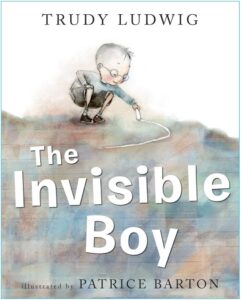
This story centers on a child who feels unseen — the one who doesn’t get picked, who isn’t noticed, who quietly fades into the background.
When a new student arrives, one small act of inclusion begins to shift everything. It’s not loud or dramatic. It’s simple. But it matters.
This book gently shows how powerful it can be to notice someone who might otherwise be overlooked.
What kids notice in this story
Some people feel invisible.
You can choose to include someone.
Small actions can change how someone feels.
—
All Are Welcome by Alexandra Penfold
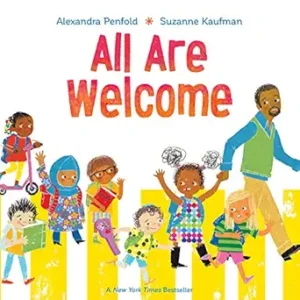
This story paints a picture of a classroom where differences are not just accepted — they’re embraced.
It highlights diversity in a warm, inclusive way, helping children see that kindness includes making space for everyone.
The repetition reinforces a simple but powerful idea: everyone belongs.
What kids notice in this story
Everyone is different.
Everyone belongs.
Kindness includes making space for others.
—
Lubna and Pebble by Wendy Meddour
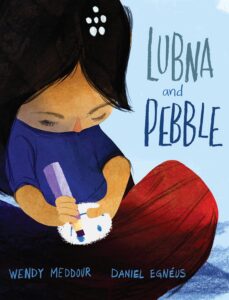
This story takes place in a refugee camp, where a young girl finds comfort in a small pebble she treats like a friend.
When a new child arrives, she’s faced with a choice — hold onto her comfort, or share it.
It’s a tender story about generosity, empathy, and connection in difficult circumstances.
What kids notice in this story
Kindness can mean sharing something important.
Others may be hurting in ways you don’t see.
Connection can grow through giving.
—
The Smallest Girl in the Smallest Grade by Justin Roberts
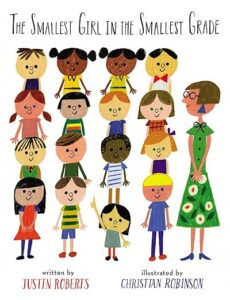
Sometimes kindness begins with noticing what others overlook.
This story follows a quiet girl who sees everything — the bullying, the exclusion, the unkind moments — and eventually finds her voice.
It shows that kindness can also mean speaking up.
What kids notice in this story
You can notice what others miss.
Kindness can include speaking up.
Even small voices matter.
—
A Chair for My Mother by Vera B. Williams
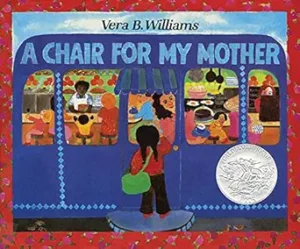
This story focuses on a family working together to rebuild after loss.
Neighbors, friends, and community members show up in ways that feel natural and supportive.
Kindness here is steady, practical, and deeply human.
What kids notice in this story
Kindness can come from a community.
Helping others can be part of everyday life.
Care can be quiet and consistent.
—
We’re All Wonders by R.J. Palacio

This story invites children to see the world through the eyes of someone who feels different.
It gently encourages empathy — not through instruction, but through perspective.
Children begin to understand how their actions might feel from someone else’s point of view.
What kids notice in this story
People experience the world differently.
Kindness includes understanding others.
Everyone wants to feel accepted.
—
You Matter by Christian Robinson
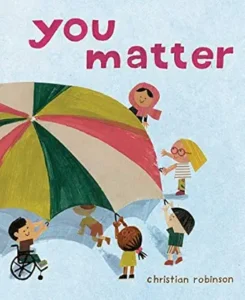
This book expands the idea of kindness into something broader — recognizing that every person has value.
It moves through different perspectives, helping children see themselves and others as important.
That awareness naturally supports kinder behavior.
What kids notice in this story
Everyone matters.
You matter too.
Kindness grows from seeing value in others.
—
Can I Play Too? by Mo Willems
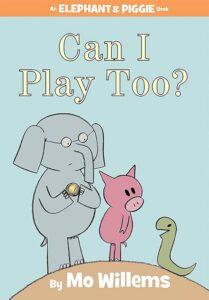
This simple, playful story tackles inclusion in a way children instantly understand.
When a snake wants to join a game that seems impossible for him, the characters have to figure out how to include him.
It’s light, but meaningful — showing that kindness can involve creativity.
What kids notice in this story
Inclusion sometimes takes effort.
You can find ways to include others.
Kindness can be creative.
—
Kindness Grows in Everyday Moments
You don’t need perfect situations to teach kindness.
In fact, it’s often the imperfect ones that matter most.
The moments when something goes wrong. When feelings get hurt. When a child isn’t sure what to do next.
Those are the moments where awareness begins.
Where empathy starts to form.
Where kindness becomes more than just an idea.
These stories give you a way to revisit those moments together — not as corrections, but as shared reflections.
Over time, those reflections shape how children see others.
—
Bring Kindness to Life with Stories
One of the most powerful ways to deepen kindness is to make it personal.
That’s where Scrively can help.
When children see themselves inside a story — including others, noticing feelings, making thoughtful choices — it becomes something they can imagine doing in their own lives.
It shifts kindness from something they’re told… to something they experience.
—
Keep Coming Back to These Stories
Kindness doesn’t develop all at once.
It builds gradually, through repetition and real-life experience.
You’ll start to notice small shifts.
A pause before reacting.
A moment of awareness.
A quiet choice that leans toward care instead of indifference.
Those moments matter more than they seem.
And when you return to these stories — during hard days, social challenges, or simple routines — you give those lessons time to settle in.
Over time, kindness becomes less about what children are told to do… and more about who they are becoming.