“It Wasn’t Me”: Books About Being Blamed Unfairly
“But I didn’t do it.” Sometimes your child says those words quietly. Sometimes they arrive through tears, crossed arms, or a voice loud enough to fill the kitchen. Being blamed unfairly can feel especially lonely when the grown-up in charge already seems to have made up their mind.
You may want to settle the situation quickly. A broken toy needs attention, siblings are upset, and dinner is waiting. Still, a little space between the accusation and the verdict can change the conversation. Your child needs to know that you will listen before deciding what happened.
These children’s books about being blamed unfairly offer a gentler place to practice that pause. Some follow innocent characters caught in other people’s assumptions. Others explore excuses, misunderstandings, and the temptation to blame someone else. Together, they make room for both fairness and responsibility.
You don’t have to turn reading time into an investigation. Try wondering aloud about what a character knows, what they are guessing, and whose voice has been missed. If the story brings up a real worry, listen. Your child can ask for help without having to build a perfect case.
Eight Stories That Make Room for Everyone’s Side
I Didn’t Do It! by Tony Ross
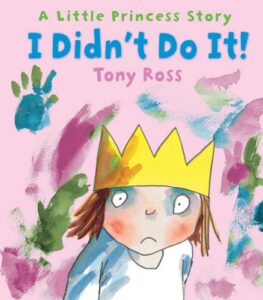
Few things are more frustrating than repeating yourself to people who have stopped listening. Tony Ross’s Little Princess knows that feeling. This lively picture book gives younger children a familiar voice for the protest that comes when everyone points in their direction.
Ross’s expressive illustrations keep the castle setting playful. You can enjoy the humor while noticing how quickly certainty spreads when someone accepts another person’s accusation.
What kids notice: The Little Princess keeps saying she is not responsible. Children may recognize how difficult it feels to stay calm when the same explanation is brushed aside again and again.
Story snapshot: Things go wrong around the castle, and the Little Princess gets the blame. Her denials meet disbelief, turning a series of mishaps into a story about being heard.
Why this book helps: It opens a simple question: “What could someone ask before deciding she did it?” You can also offer words your child may borrow: “Please listen to my side.” Then show that those words work by giving them your attention.
Escape Goat by Ann Patchett
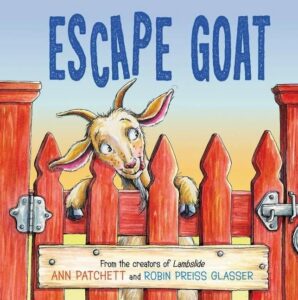
Sometimes a convenient explanation becomes a family habit. In this farmyard story, a goat makes an easy target whenever something goes wrong. Ann Patchett’s playful storytelling and Robin Preiss Glasser’s illustrations make that unfair pattern visible without beginning with a lecture.
This is a useful read when a child seems to have acquired a permanent label, such as the messy one or the troublemaker. A reputation should never substitute for listening.
What kids notice: Blaming the same creature can become almost automatic. Children can look for the difference between seeing what happened and reaching for the easiest explanation.
Story snapshot: The Farmer family keeps holding its escape-prone goat responsible for mishaps. A young family member pays closer attention and challenges the habit of putting every problem on the goat.
Why this book helps: It gives you a friendly way to examine repeated blame. Ask, “Would we think the same thing if someone else were standing there?” The conversation can help a child feel less trapped by yesterday’s mistake and more willing to hear someone else fairly.
Broken by X. Fang
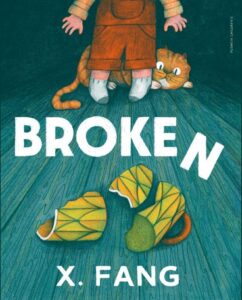
A broken object can make a child’s stomach drop. Before anyone has spoken, they may already imagine anger, disappointment, or punishment. Written and illustrated by X. Fang, Broken stays close to that vulnerable moment.
The story is especially helpful alongside books about false accusations. It reminds us that children sometimes struggle to tell the truth because they are frightened, not because they are beyond trust.
What kids notice: Mei Mei’s worry makes a small accident feel enormous. The pictures invite you to pause over her feelings rather than hurry straight to a lesson about what she should do.
Story snapshot: Mei Mei accidentally breaks her grandmother’s cup and lets the cat take the blame. Her guilt grows, opening a story about honesty, forgiveness, and the care that can follow a mistake.
Why this book helps: Fairness includes making honesty possible. You might say, “If something breaks, I want you to come to me. We can work out what happens next together.” That reassurance does not remove responsibility. It gives your child a safer starting point for taking it.
Betty Bunny Didn’t Do It by Michael B. Kaplan
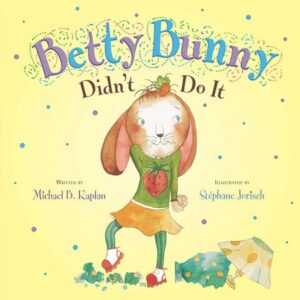
Betty Bunny brings a very different perspective to the words “I didn’t do it.” Here, an imaginative excuse grows out of a real mistake. Michael B. Kaplan and illustrator Stéphane Jorisch let the humor lead into a conversation about honesty.
Reading this beside a story about an innocent character helps children notice that the same words can appear in very different situations. Listening carefully still matters.
What kids notice: Betty Bunny’s explanation is wonderfully far-fetched. Young readers can enjoy its silliness while thinking about why someone might wish a mistake belonged to somebody else.
Story snapshot: After breaking a lamp, Betty Bunny blames the Tooth Fairy. Her family’s response draws her into the complicated business of telling the truth, making excuses, and understanding what honesty means.
Why this book helps: It offers a low-pressure way to separate imagination from an account of what happened. Rather than asking whether your child has ever lied, try, “What might make it easier for Betty to tell the real story?” That keeps the conversation curious instead of accusatory.
Who Wet My Pants? by Bob Shea
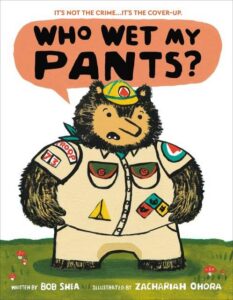
Embarrassment can send blame flying in every direction. Bob Shea’s story, illustrated by Zachariah OHora, takes that uncomfortable feeling somewhere wonderfully absurd. Its bear is determined to find someone responsible for his wet pants.
The humor works best when you leave room for kindness. Children do not need to be laughed at for having an accident in order to enjoy a very flustered fictional bear.
What kids notice: The bear is upset, but his companions respond with understanding. Their reactions offer an alternative to teasing, arguing, or joining the search for someone to blame.
Story snapshot: Reuben discovers that his pants are wet and accuses his friends. While he insists that somebody else caused the problem, the others try to reassure him that accidents happen.
Why this book helps: It shows how shame can make an explanation harder to hear. Ask, “What would you want a friend to say if you felt embarrassed?” You can also remind your child that being accused does not mean they must accept blame to make someone else feel better.
Scapegoat: The Story of a Goat Named Oat and a Chewed-Up Coat by Dean Hale
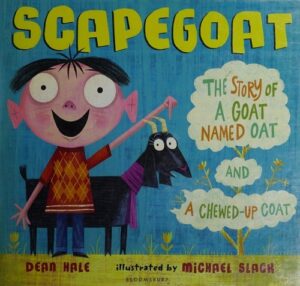
Dean Hale’s bouncy, rhyming story makes unfair blame almost impossible to miss. With Michael Slack’s comic illustrations, a family goat becomes the convenient explanation for a boy’s misbehavior.
The exaggerated situation gives children some distance from their own sibling squabbles. They can spot a pattern on the page before talking about what a similar pattern might feel like at home.
What kids notice: One character keeps escaping responsibility while another keeps receiving it. Repetition helps young listeners notice that a familiar accusation is not automatically a fair one.
Story snapshot: Jimmy Choat blames his family’s goat, Oat, for the trouble he causes. The story builds its comedy around that repeated excuse and the goat’s position as the household scapegoat.
Why this book helps: It makes the idea of scapegoating concrete. Ask, “Who needs a chance to explain?” If your child describes being blamed repeatedly, resist turning it into another lesson for them to solve. A grown-up may need to step in, listen to everyone, and change the pattern.
What James Said by Liz Rosenberg
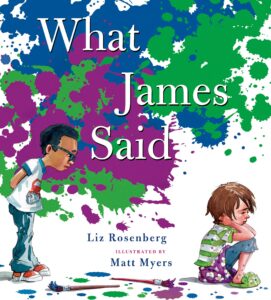
Sometimes the trouble begins with something passed from person to person. Liz Rosenberg’s story, illustrated by Matthew Myers, explores how a friendship can become strained when a child believes an upsetting report about what a friend has said.
It is a helpful choice for playground misunderstandings, especially when “someone told me” starts to sound as certain as “I heard it myself.”
What kids notice: Hurt feelings can grow before the two people at the center of a misunderstanding have spoken. Children may recognize the urge to pull away when they think a friend has been unkind.
Story snapshot: A girl hears that her friend James has said something hurtful about her. Her reaction puts their friendship under strain as the story explores the gap between a reported remark and what was meant.
Why this book helps: It invites a gentle check before a verdict. You might practice, “I heard something that upset me. Can we talk about it?” For younger children, a trusted adult can help with that conversation. They do not have to untangle a painful rumor alone.
Who Broke the Teapot?! by Bill Slavin
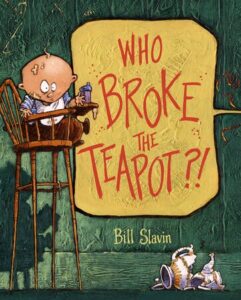
A broken teapot sets off a noisy household mystery in Bill Slavin’s picture book. The question in the title is simple. Finding a fair answer becomes much more complicated once everyone has something to say.
The busy, comic presentation gives you plenty to look at together. Let your child take time with the pictures rather than rushing to identify a culprit.
What kids notice: A household can become very loud when everyone wants to explain themselves. Looking closely at the illustrations gives children another way to follow events besides accepting the loudest voice.
Story snapshot: Mum discovers her broken teapot and wants to know who is responsible. The family’s explanations and the unfolding visual story turn that demand into a lively puzzle.
Why this book helps: It makes a good invitation to slow down. Ask, “What do we actually know so far?” Being fair can mean admitting that an answer is not clear yet. You can model that patience without asking your child to become the family detective.
Put Your Child in the Heart of the Story
Sometimes a child needs another chance to imagine being listened to. A personalized story from Scrively can place your child at the center of a meaningful adventure, making story time feel especially close to home.
You might explore a character who asks for help, listens to another person, or finds the courage to explain a misunderstanding. Keep the invitation gentle. Your child does not need to retell a real conflict or supply the correct answer. A story can simply give you a shared language for fairness, care, and trying again.
A Fair Hearing Starts with a Pause
When your child feels blamed unfairly, you may not know the whole story immediately. You can still offer something important: “I’m listening. Tell me what happened.” If emotions are running high, make room to settle before sorting out the details.
These books give your family practice at noticing assumptions, making honesty safer, and hearing a quieter voice. Over time, those small pauses can become a habit. Your child learns that mistakes can be addressed, misunderstandings can be repaired, and everyone deserves a fair hearing.