Before You Fix It, Help Your Child Feel Heard: 8 Books About Empathy
Your child comes home upset, and your mind starts moving. You could call someone, explain the misunderstanding, suggest a different game tomorrow. You love them. Of course you want to make the hard thing easier. Sometimes your best ideas arrive before your child has finished telling you what happened.
Then you hear, “You’re not listening.” It can sting, especially when you were trying so hard to help. But your child may be asking for something smaller and more immediate: a little room to finish, a face that stays gentle, someone who understands why this mattered.
Listening before you fix it gives empathy somewhere to begin. You can still help solve the problem. First, you can sit beside the feeling and ask, “Do you want to tell me more?” Your child gets to experience what it means to be heard, and you get a clearer picture of the help they actually want.
These children’s books about empathy give you a tender way to explore that pause together. Some are funny, some quiet, and some invite you to look beneath a first impression. You do not need to turn every page into a lesson. A shared story and one thoughtful question can be enough for tonight.
Children’s Books About Empathy That Make Room for Someone Else’s Feelings
Across these eight books, understanding takes several forms: accepting sadness, noticing what someone is trying to express, and hearing a different point of view. Choose the story that fits your child’s day. Let their response guide the conversation rather than trying to reach a particular answer.
The Shadow Elephant by Nadine Robert
 When someone you love feels low, it is tempting to brighten the room immediately. This story lets you notice that impulse with kindness. Nadine Robert’s writing and Valerio Vidali’s illustrations give a sorrowful elephant space to feel different from his colorful savannah companions.
You can read it slowly, leaving room around the pictures. The contrast between light and shadow offers something to talk about before your child has found words for the feelings themselves.
What kids notice: The elephant’s mood does not match the world around him. Your child may recognize how lonely it feels when everyone else seems cheerful and you cannot simply join in.
Story snapshot: An elephant feels down, and the things around him do not lift his spirits. The story explores sadness, acceptance, and emotional connection, making room for care that does not depend on finding a quick fix.
Why this book helps: Ask, “Can someone still be a good friend when they cannot make the sadness go away?” You can connect the answer to sitting nearby, listening, or asking whether company would feel welcome. Staying can be a meaningful response.
I’m Sad by Michael Ian Black
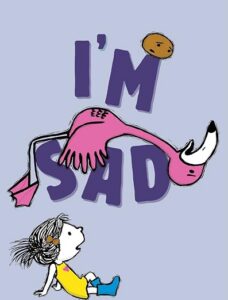 A girl, a flamingo, and a potato make an unlikely friendship trio. That silliness gives you an easy opening into a serious subject. Illustrated by Debbie Ridpath Ohi, this story lets sadness share the page with humor without making the sad character the joke.
If your child reaches for a goofy distraction whenever someone cries, you may recognize the good intention here. The friends want to help. They also have something to learn about what help can look like.
What kids notice: What cheers up Potato does not necessarily cheer up Flamingo. Children can enjoy the mismatch while noticing that their own favorite comfort may not be someone else’s.
Story snapshot: Flamingo announces that he feels sad. The girl and Potato try to cheer him up, but their attempts do not work. They discover that friendship can mean sticking beside someone through a feeling rather than changing it.
Why this book helps: Try asking, “What could they ask Flamingo before trying another idea?” Let your child invent a question. Later, you might borrow it yourself: “Would you like a distraction, or would you like me to listen?”
Niko Draws a Feeling by Bob Raczka
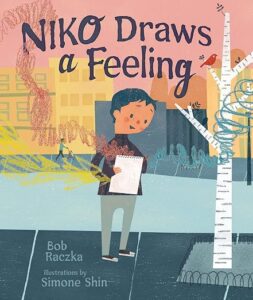 Sometimes a child is telling you something without telling you a story in words. Niko makes pictures inspired by his experience of the world. With illustrations by Simone Shin, this book invites you to look at expression with curiosity.
It is a lovely choice when your child brings you a drawing that seems mysterious. You can pause before naming what it must be and let the artist show you what matters.
What kids notice: Niko’s art does not have to look like a familiar object to mean something. A sound or the warmth of sunlight can become a picture, even when other people do not immediately understand.
Story snapshot: Niko draws the feelings and experiences that inspire him, but others struggle to appreciate his pictures. Meeting Iris opens the possibility of friendship and being understood through his unusual way of making art.
Why this book helps: Ask your child, “What would you like me to know about your picture?” Then wait. This gives you a small, practical way to listen without replacing their meaning with your own. Understanding can begin with an invitation.
Adrian Simcox Does NOT Have a Horse by Marcy Campbell
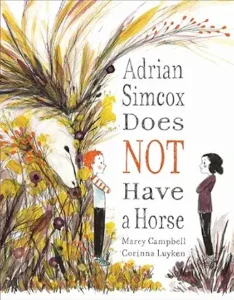 Your child may be very sure another child is wrong. You may even agree with the facts they have noticed. This story, illustrated by Corinna Luyken, asks what else deserves attention before a correction becomes a public judgment.
It gives you a way to talk about curiosity when being right feels urgent. You can acknowledge your child’s questions while helping them consider the person on the other side of the disagreement.
What kids notice: Chloe keeps gathering reasons Adrian cannot own a horse. His small house and worn shoes become evidence in her argument, revealing how quickly observations can turn into assumptions.
Story snapshot: Adrian tells people about his beautiful horse. Chloe does not believe him and complains at school and to her mother. As she learns more about Adrian, her judgment gives way to appreciation for his imagination and the possibility of friendship.
Why this book helps: Ask, “What might Chloe learn if she listened a little longer?” You can discuss how to ask a question without embarrassing someone. Empathy leaves room to understand another child’s world before deciding what to say.
When Sadness Is at Your Door by Eva Eland
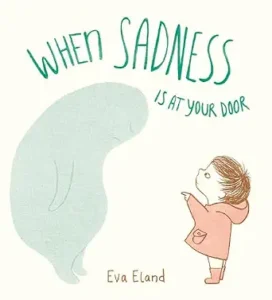 Sadness can feel enormous when you cannot see its edges. Written and illustrated by Eva Eland, this gentle book imagines the feeling as a visitor with a shape and a face. You and your child can approach it together.
The quiet pace suits an evening when conversation feels difficult. You can let the pictures carry some of the meaning and allow your child to respond with a word, a gesture, or silence.
What kids notice: Sadness becomes something a child can spend time with. It can be named and noticed, which offers a different starting point from trying to push it away immediately.
Story snapshot: A child encounters sadness as a visitor. The book suggests sitting quietly, drawing, and walking outside with it, treating the emotion respectfully rather than demanding that it disappear.
Why this book helps: Wonder together, “If your friend’s sadness came to visit, what could you ask?” Keep any activity optional. A walk might help one person; quiet company might suit another. Listening includes making room for the answer you did not expect.
The Hug by Eoin McLaughlin
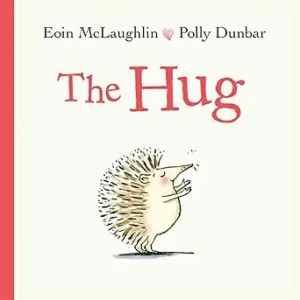 Sometimes someone knows exactly what comfort they want. This tender story, illustrated by Polly Dunbar, centers two characters looking for a hug. Its two perspectives give you an inviting way to notice a shared need.
You can enjoy the book’s meeting-in-the-middle design with your child. Reading from each side makes space for both characters before bringing their experiences together.
What kids notice: Hedgehog and Tortoise are different, yet both are looking for affection. Seeing each character’s search can make the eventual meeting feel especially warm.
Story snapshot: A sad Hedgehog and a sad Tortoise each seek a hug. Their stories approach from opposite directions and meet in the middle, where they find the comfort they have both been seeking.
Why this book helps: Use the story to ask what makes comfort welcome. You might practice, “Would you like a hug?” A friend can also want space or someone nearby. Your child can learn to offer warmth while leaving the other person free to choose.
Big Feelings by Alexandra Penfold
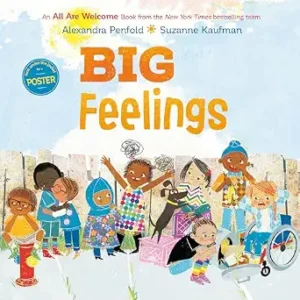 Listening gets harder when your child has a big feeling of their own. With illustrations by Suzanne Kaufman, this energetic book explores emotional challenges and the possibility of talking them through together.
It broadens empathy beyond comforting one sad friend. You can explore what happens when several people share a situation but bring different feelings, wishes, and points of view to it.
What kids notice: A shared experience can hold frustration, anger, and overwhelm. Your child may recognize the difficulty of making room for another opinion when their own plan matters so much.
Story snapshot: Children navigate big emotions when things do not go as planned. Talking, compromising, and considering another perspective help them find a way to begin again together.
Why this book helps: After reading, ask how two children could feel differently about the same event. You can model holding both answers: “You were disappointed, and your friend was worried.” Hearing both experiences gives you a better starting point for deciding what comes next.
The Breaking News by Sarah Lynne Reul
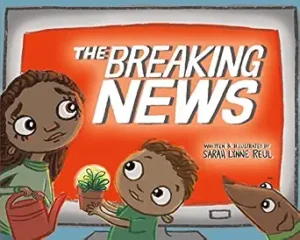 Your child notices when the grown-ups feel different, even when nobody has explained why. Written and illustrated by Sarah Lynne Reul, this story takes that awareness seriously. It offers a thoughtful bridge from noticing distress to choosing a manageable act of care.
You can share it when unsettling news has changed the atmosphere at home. Leave space for your child’s questions before moving toward what your family might do.
What kids notice: Familiar adults become distracted and exhausted. The young girl sees the change and wants to help, a wish your child may recognize when someone they love seems troubled.
Story snapshot: Devastating news unsettles a girl’s community. Her teacher encourages the class to notice helpers. Although she wants to make a big difference, the girl begins with small acts of kindness.
Why this book helps: Ask what the girl notices before she acts. You can explain that children are not responsible for fixing grown-up problems. When they want to offer kindness, you can help them choose something small while still listening to their own worries.
Put Your Child in the Heart of the Story
A personalized Scrively story can place your child inside a familiar moment: a friend is upset, and your child has an idea that might help. The meaningful turn could come when they pause and ask what happened before offering it.
You might imagine your child sitting beside a disappointed teammate or listening to a friend describe a difficult morning. Let the other character have a voice and a preference. Your child does not need to solve everything to play an important part in the story.
Seeing their own name inside that moment can make the invitation feel personal. Afterward, ask which part they would want to try. Perhaps it is one question, a patient pause, or remembering to ask whether help is wanted. Keep the practice small enough to belong in an ordinary day.
You Can Begin by Staying a Little Longer
You will sometimes jump in too quickly. So will your child. You can return to the conversation with, “I started giving ideas before I heard the whole story. Tell me the rest.” That repair offers something worth seeing: listening is a choice you can make again.
The next time your child brings you a hard moment, take one breath before answering. Let them finish. Ask what they need. You may still find a useful next step together. First, they will have had the chance to feel that you were there with them.